Essential Tools for Classic Car Restoration
You opened the garage door, a classic car is waiting for you in front of you, and there is only one question spinning in your head: which tool should I start with? You are right, because this question is far more critical than it seems. Everyone talks about the cost and duration of a restoration, but no one ever tells you which tool to pick up on day one. Yet you are going to be getting under a vehicle weighing several hundred kilograms; the right tool is not a matter of comfort, it is a direct matter of personal safety. If you are ready, let us tackle the tool side of this business together with a realistic budget plan.
Starter Set: The Essential Hand Tools You Cannot Do Without
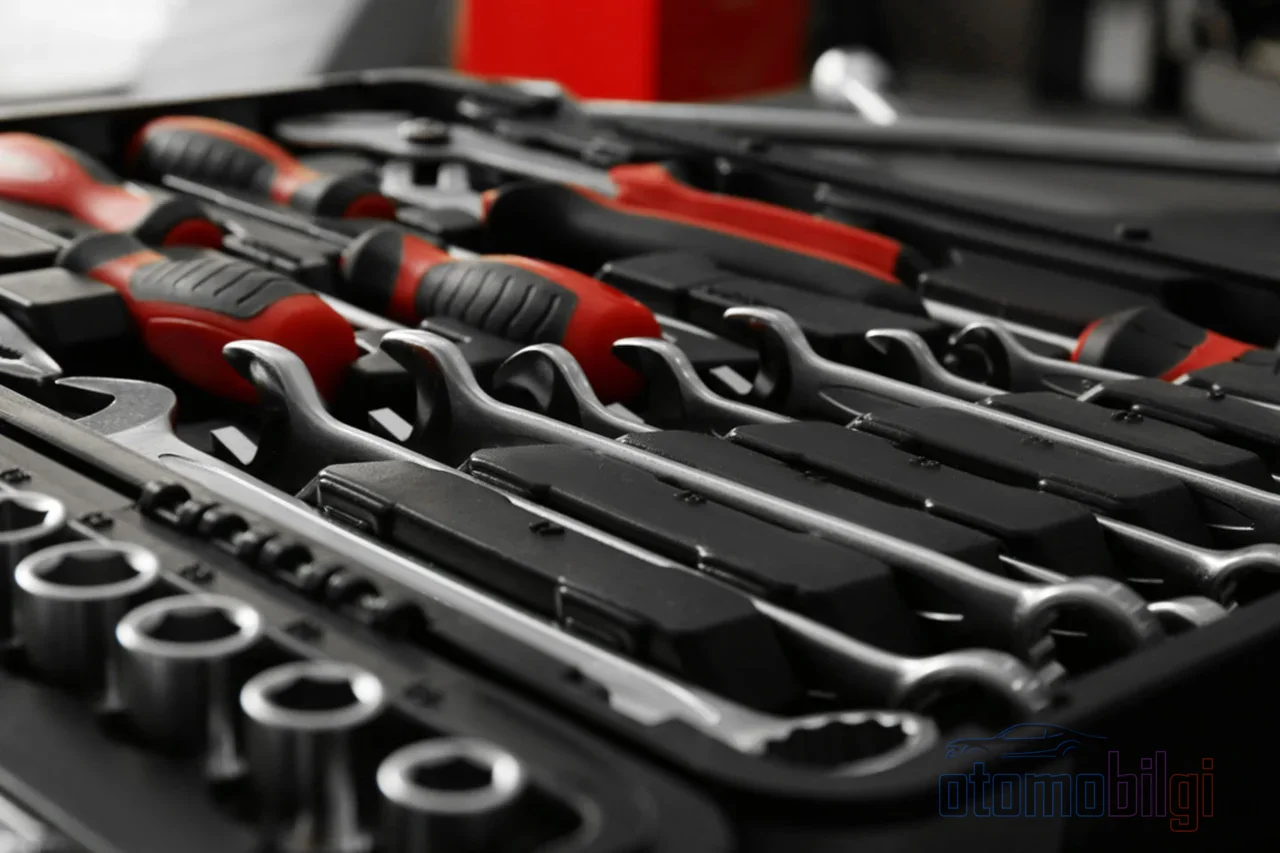
In a classic car, parts have often not moved in decades. Rounded bolt heads, seized connections and fragile trim pieces are on the agenda; using tools of the correct size and type prevents unnecessary breakage. That is why the backbone of your first investment will be basic hand tools.
- Socket and ratchet sets in multiple drive sizes, along with a combination wrench set
- Screwdrivers, socket screwdrivers, hex and Torx key sets
- Pliers, locking pliers, side cutters and pry bars
- Hammers, rubber mallets and trim removal tools
- A breaker bar for turning seized bolts - the classic car owner's best friend
Think of the torque wrench as a privileged member of this list. Proper installation neither loosens the bolt nor breaks it; that delicate balance is exactly what a torque wrench provides. A torque wrench from a cheap clone, however, usually neither loosens nor shows the correct value - we will come back to that shortly.
Highlights
- A three-stage investment approach: basic tools, then engine equipment, then grinding-welding-painting
- For high-speed and safety-critical tools - grinders and torque wrenches - never buy a cheap clone
- For rust inspection you do not need expensive equipment; good lighting, a scraper and a small probe tip are enough
- Safety equipment is not optional; goggles, gloves, a respirator and a fire extinguisher are part of the basic investment
Keeping the Car in the Air: Choosing a Jack, Jack Stands and a Lift
Restoration means spending long hours under the car: repeated suspension teardowns, drivetrain removals, chassis access... Here, solid support equipment is non-negotiable. The basic formula is simple: a quality floor jack and heavy-duty jack stands. In jack tests conducted in 2026, models offering concrete safety mechanisms stand out; jacks with a familiar locking mechanism are reassuring in this regard.
With jack stands, the subtlety lies in placement: there is plenty of room for human error in balance and ground conditions. Using certified jack stands is a safety measure that admits no bargaining; do not skip the wooden blocks alongside them either. If the car is immobile, wheel dollies are lifesavers for positioning it inside the garage.
A lift or jack stands?
If your garage is spacious, a 4-post lift lets you park a second car underneath; in a narrow garage, a cheaper and easier-to-install 2-post lift is sufficient. On a lift, the vehicle is fully raised off the ground, making work under the chassis comfortable and safe. For a small garage and a limited budget, though, a quality floor jack and sturdy jack stands are more than enough to get started. The decision is yours: whatever your budget and garage size say.
Engine and Rust: Where Things Get Tough
Engine tools
An engine hoist is one of the most important tools for removing the engine without damaging the chassis; an engine stand, which lets you rotate the removed engine for access to the block, crankshaft and cylinder head from behind, is its natural companion. A transmission jack allows manual and automatic gearboxes to be safely removed and installed. A harmonic balancer puller, piston ring compressor, spring compressor, bearing and seal drivers, and compression and leak-down testers are among the specialist tools to buy when the job calls for them - you don't have to get them all upfront.
Rust removal and grinding
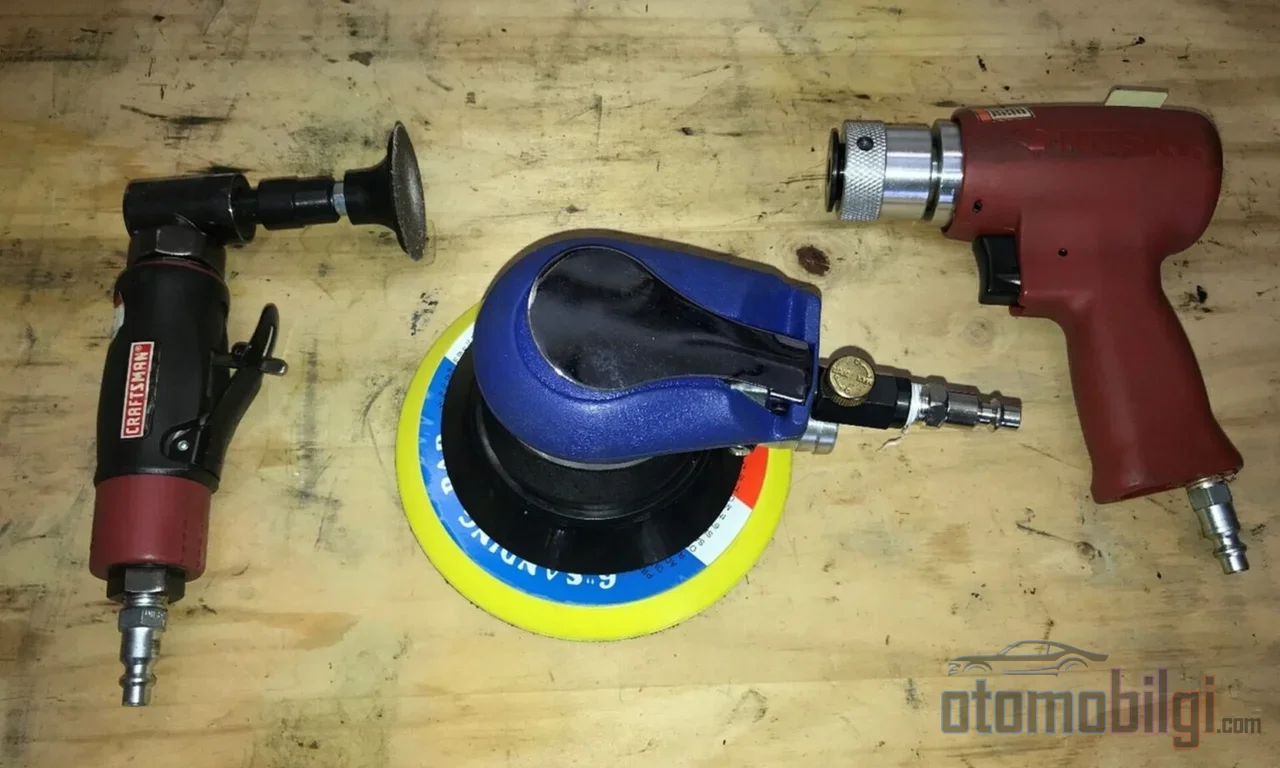
An angle grinder, with its ability to remove rust, cut metal and polish edges alongside bodywork, is a true must-have for every hobbyist. Choose a model with an adjustable handle and a guard. On the bodywork side, hammers, dollies, sheet metal shears, a stud welder and welding clamps will be on the task list.
Understanding how deep the rust goes doesn't require expensive equipment: wire brushes, scrapers, small-tipped probe tools and - most importantly - good lighting often work better than expensive machines. Sandblasting cleans classic vehicles and delicate surfaces without damaging the material and reveals the true condition of the surface; laser cleaning removes rust, paint and oil through photothermal and photomechanical effects without compromising the integrity of the underlying material. These are professional services; not equipment you would set up in your garage, but you need to know when to use them.
Paint Preparation: The Real Battle Begins Before Spraying
The bitter truth about paintwork is this: many restoration mistakes are made before the paint is ever sprayed. Accordingly, the list of preparation tools grows: a dual-action sander, masking materials, a spray gun, an air compressor, a moisture separator, polishing tools and a respirator for breathing protection. For a home garage, an 80-gallon 5 HP compressor is enough to power sandblasting, grinding and painting the whole vehicle.
For small parts such as carburetors, manifolds and rocker arms, a medium-sized sandblasting cabinet is one of the most frequently used pieces of equipment in restorations. When vintage wheels are involved, a leverless tire mounting machine installs tires without using metal tools, eliminating the risk of scratching expensive, delicate wheels - again, a professional piece of equipment to consider when the need arises.
Measurement, Diagnosis and Order: The Big Impact of Small Details
Calipers, micrometers, straightedges, feeler gauges, dial indicators, multimeters, test lights and vacuum gauges; measuring tools play a critical role for internal engine parts, brake system, electrical faults and transmission adjustment. In the inspection before buying a vehicle, a flashlight, a magnet for detecting filler and a compression tester prevent bad decisions - a good inspection is the cheapest way to prevent bad decisions.
Restoration produces an incredible amount of parts and bolts. A wheeled tool cart, parts boxes, magnetic trays and labeled bags; are the heroes that prevent loss and wasted time. Plenty of rags and an oil pan are also the hidden members of this list.
Cheap Tool Traps and Where Professional-Grade Is a Must
Let's take a realistic look at the cheap-clone tools on the market. Low-quality tools can damage original parts and create a safety risk; the common cause of rounded fasteners and damaged original components is low-quality torque tools and fabricated equipment. So a cheap socket set can get you by at first, but there is no compromise in two categories: high-speed, safety-critical tools - grinders above all - and the torque wrench. Never go cheap there.
The approach that sums up workshop experience is clear: if you like buying tools constantly, go cheap; if you want to buy once and use for a lifetime, invest in quality. Heavy or long-duration jobs almost always demand professional tools. Structural rust repair, chassis work, paint application and complex mechanical rebuilding; require the trio of experience, precision and special equipment. These jobs, attempted without tools and experience, end up far more expensive in the long run.
| Tool category | Can it be done with cheap tools? | Note |
|---|---|---|
| Rust inspection (brush, scraper, light) | Yes | More useful than expensive equipment |
| Basic hand tools | Partly | A quality set is a long-term gain |
| Torque wrench | No | Cheap clones are a safety risk |
| Grinders and high-speed tools | No | Safety-critical; branded is a must |
| Structural rust, chassis and paint work | Professional | Requires experience + precision + special equipment |
Phased Investment: Which Tool Should Be Bought When?
The short answer: start with basic hand tools, a torque wrench, a floor jack, jack stands, lighting, storage and measuring tools; an engine hoist, engine stand, transmission jack and special pullers come in the second phase; grinding, welding, sanding and painting equipment in the third phase. This order protects your budget and ensures the tools you have at each stage actually get a job done.
There is also a list of purchases regretted for being made too early: heavy fabrication equipment with no clear use, single-purpose special tools, compressors bigger than needed and cheap tools that damage parts. Buy special pullers, body pullers and diagnostic tools only when the job comes up. And there is a golden rule: first evaluate the vehicle, then buy tools according to the real need. More tools do not speed up a restoration; planning and experience matter more than the number of tools.
As for safety, never postpone it: safety glasses, gloves, hearing protection, a welding mask, a respirator, a fire extinguisher and ventilation; these are not luxuries to buy later, they are part of the core investment. If you live in a coastal area, there is also the humidity issue: connections corrode faster and metal tools left unprotected fall prey to surface rust - keep your tools dry and well maintained.
The bottom line? If you have the right starter set, a solid lifting solution and a phased investment plan, that classic beauty in the garage is waiting for you. Get your tools ready; the rest is patience and passion.
Sources
- Car Restoration Tools: Essential Equipment for Every Stage of a Build
- Classic Car Restoration Tools: What Every Owner Should (& Shouldn't) Buy
- 4 Garage Equipment Must-Haves for Car Restoration Beginners
- Tested: The Best Car Jacks for 2026
- Jack Stands vs. Car Lift
- Budget vs Premium Tools: When Does Quality Really Matter?
- Restoration and Delicate Surface Cleaning
- Laser Rust Remover: Safe, Fast and Eco-Friendly