How to Polish the Chrome on a Classic Car?
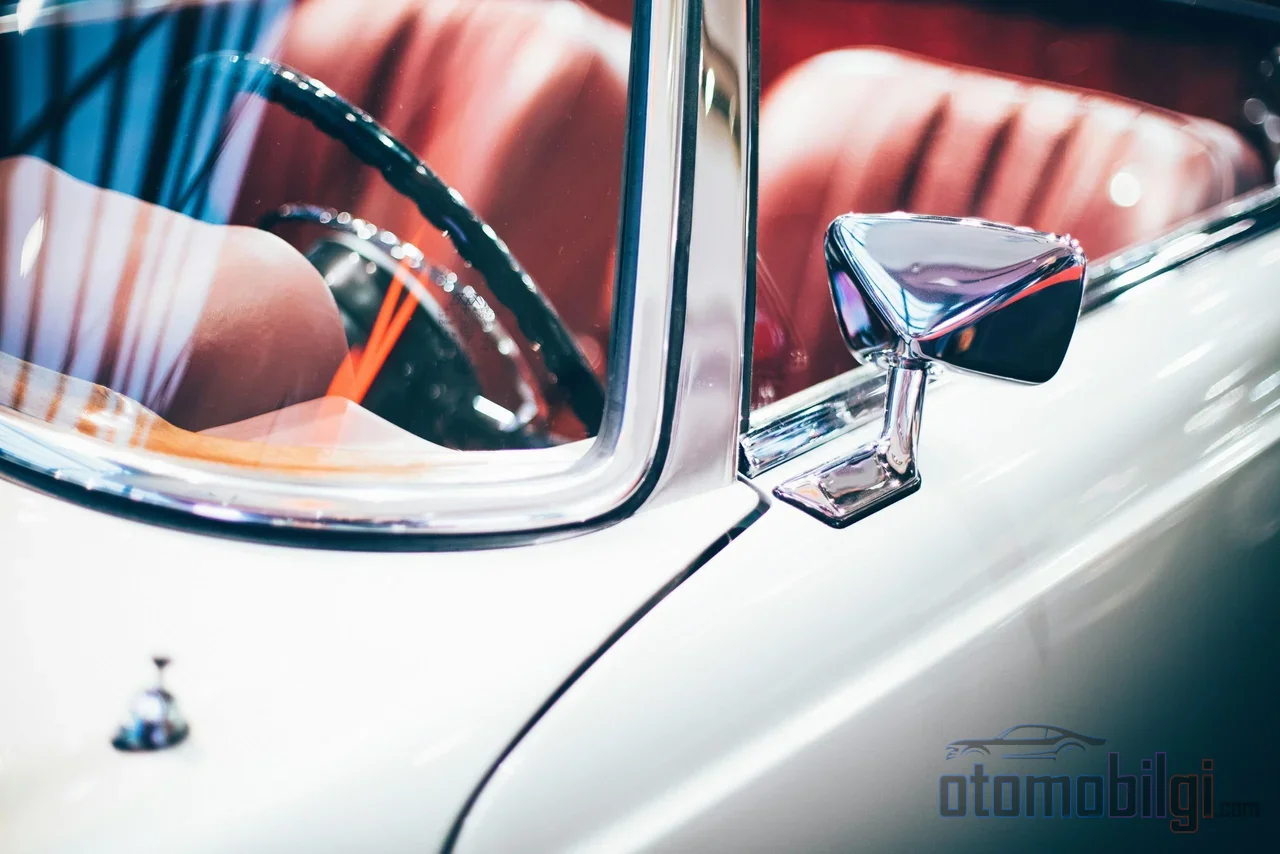
Have you ever stopped to think what that thing is that makes you freeze in front of a classic car? Most of the time it's not the engine, it's that mirror-like chrome surface on the bumper playing with the sunlight. II. Ever since designers began making chrome bumpers part of a car's style after World War II, these shiny details have become the identity of classics; But here's the thing: the part you're proudest of is also the part that betrays you fastest: a little moisture, a little neglect, and that eye-catching surface gives way to dull spots and tiny pits. So how do you polish chrome on a classic car, when is hand polishing enough, and when does the part pack its bag and head off to a plating shop? If you're ready, let's begin, because here a wrong move doesn't come back - it comes back as permanent damage. Before You Start Polishing:
Reading the Surface Polishing chrome is detective work first.
You need to understand the condition of the surface before applying polish, because a wrong diagnosis means wrong treatment, and wrong treatment on chrome is often irreversible. The shiny metal parts you'll encounter on classics are actually not all one type: chrome plating, nickel plating, polished aluminum, stainless steel and anodized surfaces can all be fitted to the same car together. The deep, warm reflection of chrome plating comes from the nickel layer beneath it; masters achieve that depth by polishing each layer separately under the next. The most practical first test is the fingernail test:
slowly run your fingernail over the suspect area. If your nail catches on pits, that means there is pitting there. Corrosion under the chrome usually shows itself as fine blistering or dull spots; previous repairs may have used hard solder, lead or filler, which changes the nature of the job. previous repairs may have used hard solder, lead or filler, which changes the color of the job. Damage near bumper attachment points and weak edges should be taken more seriously than a few dents in the middle area.
Highlights
- The golden rule of chrome care: always start with the gentlest method and get more aggressive only if needed.
- polish only if the dullness is mild. If the chrome plating has peeled off, home polishing won't help:
- the solution is replating. the solution is replating.
- Replating costs can range from 60 to 8,500 pounds depending on the part.
- wrong intervention cannot be undone. How to Polish Chrome:
How to Polish Chrome: Step-by-Step Hand Polish
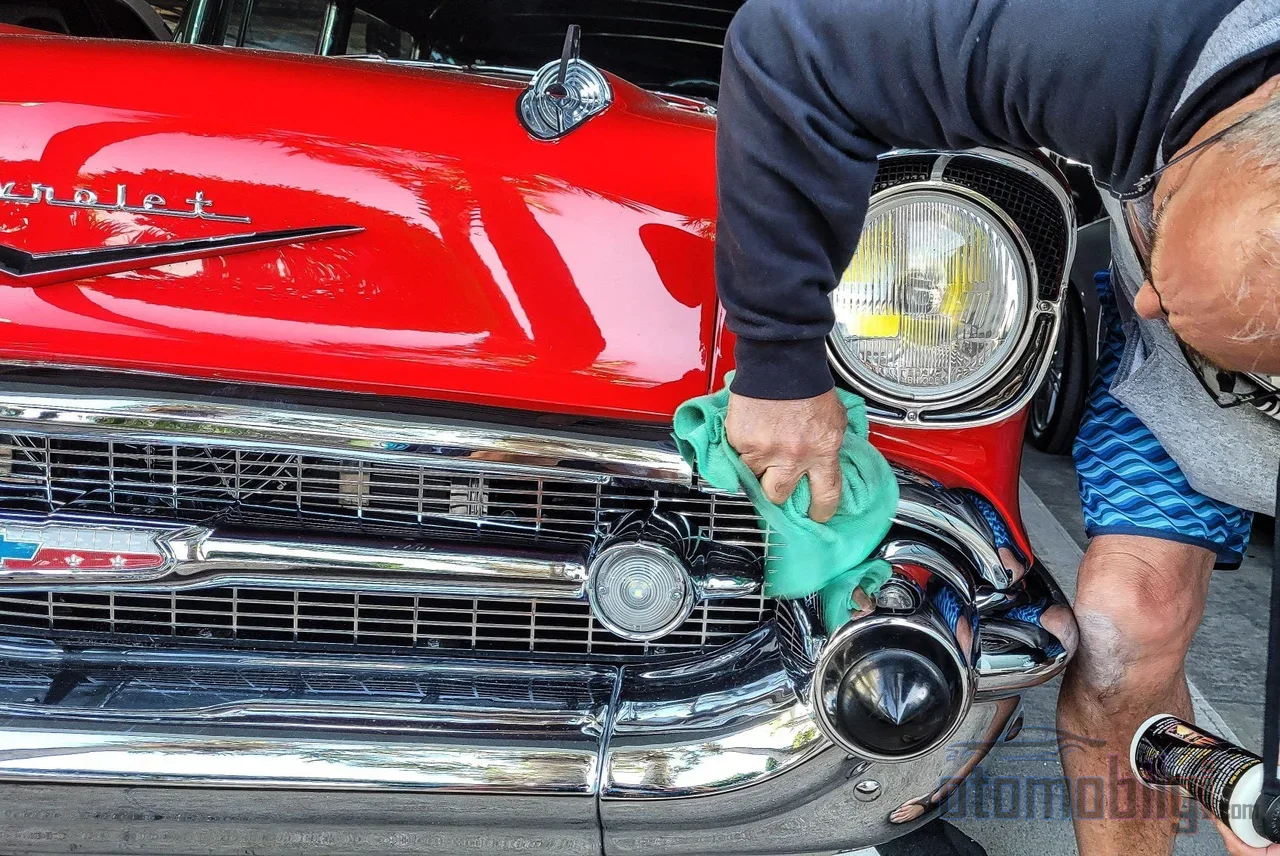
There is one golden rule here that you need to memorize: always start with the gentlest method. It happens very often that you find the surface is actually not bad at all, and it's just a layer of dust and oxidation dulling it. Being aggressive without reason means gifting a healthy chrome a lifetime of polish marks.
Washing and drying Washing and drying
First wash the surface with a pH-balanced car shampoo, then dry it thoroughly with a microfiber cloth. If you skip this step and go straight to polishing, trapped dust particles will leave fine scratches on the surface along with the cloth. Cleaning is not a chore, it is a protective stage before polishing.
Step 2: Applying the polish
If the surface is clean and only slightly dull, use a fine-grit metal polishing compound. Take a dime-sized amount of the compound on a low-pile, soft microfiber cloth and polish gently in circular motions; 10-20 seconds is usually enough. Focus on oxidized and darkened areas, and use a soft brush or cotton swab for tight corners and ornament gaps. Do not wait for the compound to dry; immediately buff the surface with a clean, dry microfiber cloth until it shines like a mirror.
Step 3: Do not forget protection
The protective layer left by the polish is the first line of defense against rust and tarnish, but you are not alone: you can apply a wax or polish sealant on top of it. If you want longer-lasting protection, ceramic sealant products are also among the options. Throughout the season, wash and polish your car's chrome a few times, and before winter storage, apply a thin layer of protective oil to every chrome part. This little ritual ensures you bid the winter a fond farewell when spring arrives.
Which Polish Should You Choose, and What Should You Avoid?
The abundance of options on the shelves is blinding, so let's clarify things. For chrome in good condition, a spray cleaner and a microfiber cloth are enough on their own. For slight dullness or surface pits, a fine-grit metal polishing compound is the right choice; in an independent test conducted in 2026, the highest score for most cars' chrome went to a metal polishing compound free of hazardous substances in its safety data sheet. There are also polishes on the market sold in separate tubes for heavy-duty and fine work; while increasing the grit size as the problem worsens may seem smart, the limit with chrome is very clear: aggressive polishes can leave polish marks, and these marks cannot be removed later.
There are also legendary materials: super-fine 0000-grade steel wool, the kind with four zeros, is a favorite of classic craftsmen for polishing chrome, stainless steel, and anodized aluminum. Opposing it stands the safe-method school: absolutely avoid harsh abrasives, household detergents, and any treatment on an uncoated surface. You can strike the balance as follows: use steel wool only as a fine-grit, reputable method, in cases where the risk is worth taking, with very light pressure and at your own responsibility; if in doubt, stick to the mildest product. Also, do not leave the cleaner sitting on the chrome; residual product damages the surface over time, and rinse the cloth thoroughly as well.
What If the Chrome Plating Peels Off? A Guide to Replating
This is the crux of the matter: if the chrome plating has peeled off or the surface is deeply pitted, no household polish can save you. We can compare this to covering up a cavity with toothpaste; it may fool you for a short while, but the underlying problem remains. In this case, the solution is replating, and that is serious workshop work.
The process works as follows: the part is first stripped down to bare metal by reverse electrolysis or chemical stripping. This stage has a nice side effect; the damage hidden by the old plating also comes to light. Then the pits are ground down to their deepest point and the part is polished, and dents are corrected. Afterwards, a process called triple plating is applied: layers of copper, nickel and chrome are deposited onto the prepared metal in order. Steel parts and parts made of a cast alloy known as pot metal differ from each other in workmanship and cost; restoring pot metal parts is technically difficult, risky and expensive work.
The cost side can bring surprises: replating prices range from 60 pounds to 8,500 pounds depending on the size of the part, the condition of the pits and the desired plating standard. Many in the classic car community are surprised by these prices, and there is no cheap alternative; an economical chrome alternative has yet to emerge. For vehicles whose original bumper cannot be found, there are workshops that produce reproduction bumpers from polished stainless steel; this is an alternative route for those who cannot risk losing the original part, but that is a completely different story.
The Permanent Price of Wrong Intervention
In the classic car world, everything has a rule, and every rule has a painful story. In chrome, the hero of this story is usually the well-intentioned but impatient vehicle owner. Most of the mistakes made during polishing are irreparable, because the chrome plating is very thin; once it has been worn away, it does not come back.
Sending the part to a plating shop is not always a guarantee either. The polishing bench at the workshop can grind away the fine details of a pot metal part and ruin it; an ornament with no reproduction available on the aftermarket is thus permanently lost. There is an even more delicate matter: a part is original only once. Survivors, as vehicles that have survived in their original condition are known, can fetch as much money as fully restored examples; for this reason, even having healthy original chrome replated based on your decision is a weighing of value. A plating surface that has been wrongly maintained, however, never returns to its former appearance. If you neglect maintenance after plating, the result is again permanent deterioration; shine can only be preserved with regular maintenance.
The Short Answer: What Is the Right Way to Polish Chrome?
Here is the summary of the summary: always start chrome polishing with the gentlest method, that is, first wash with a pH-balanced shampoo; on a surface in good condition, a spray cleaner and a microfiber cloth are sufficient. For slight dulling, do a short and gentle polish with a fine-grained metal polish, then apply a protectant. But if the pits turn out to be deep in the fingernail test, or the chrome has peeled, do not waste time with polish; the address for that part is a workshop that does triple plating. And at every step, do not forget this question: is this part original, and if I damage it, can a replacement be found?
Chrome maintenance is actually a microcosm of classic ownership: it requires patience, it does not tolerate excesses, and it rewards the patient far more beautifully than the impatient. What condition is your car's chrome in, or have you still not done the fingernail test?