EVT S1: Türkiye's Forgotten Electric Sports Car
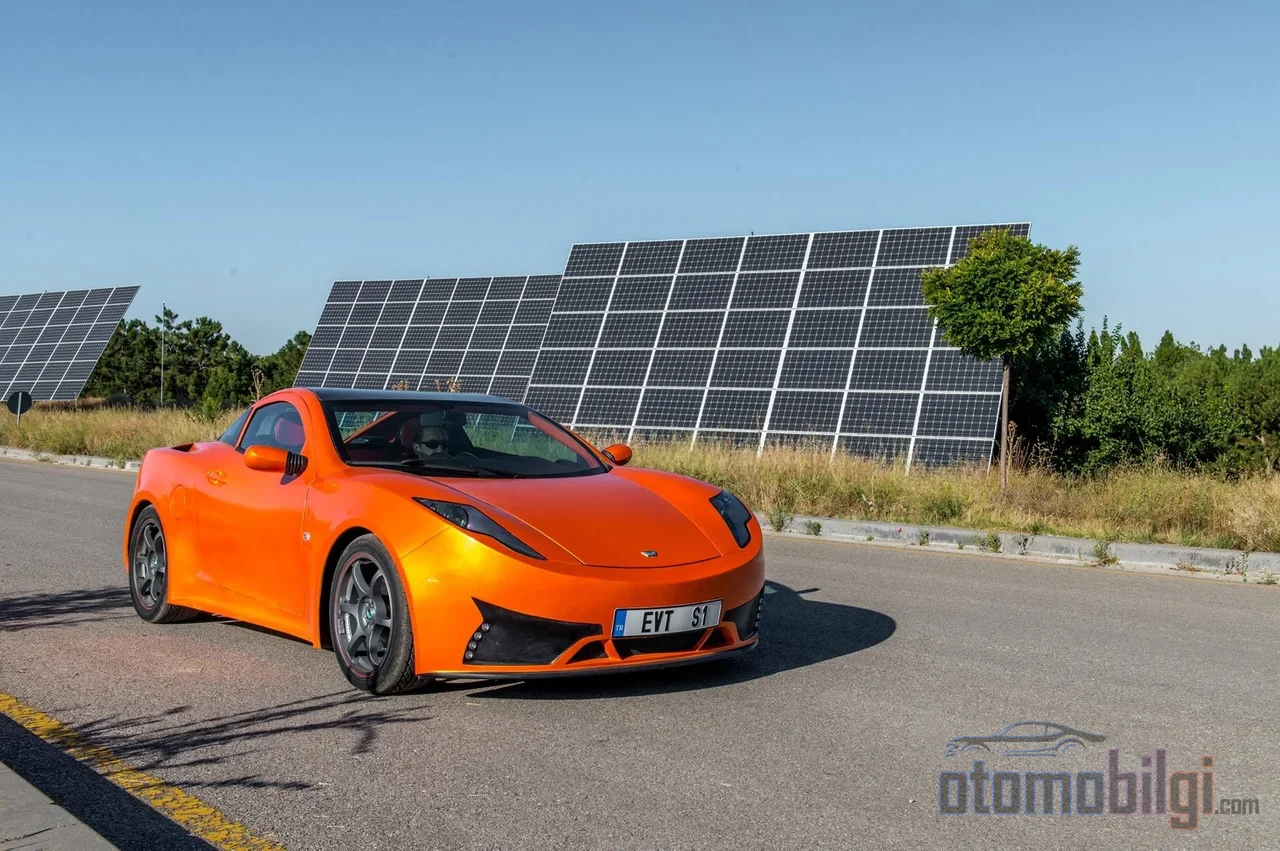
Imagine a world where Togg set off from Gemlik and every new electric model makes the news. Now scroll back in time: In 2015, in a technopark at a university in Ankara, a fully electric, carbon fiber-bodied sports car with 141 horsepower was conducting test drives. It even had a name: the EVT S1. So why is this vehicle not on launch stages today, but on forgotten archive pages? Its story is more interesting than you think.
What is the EVT S1, and where and how was it born?
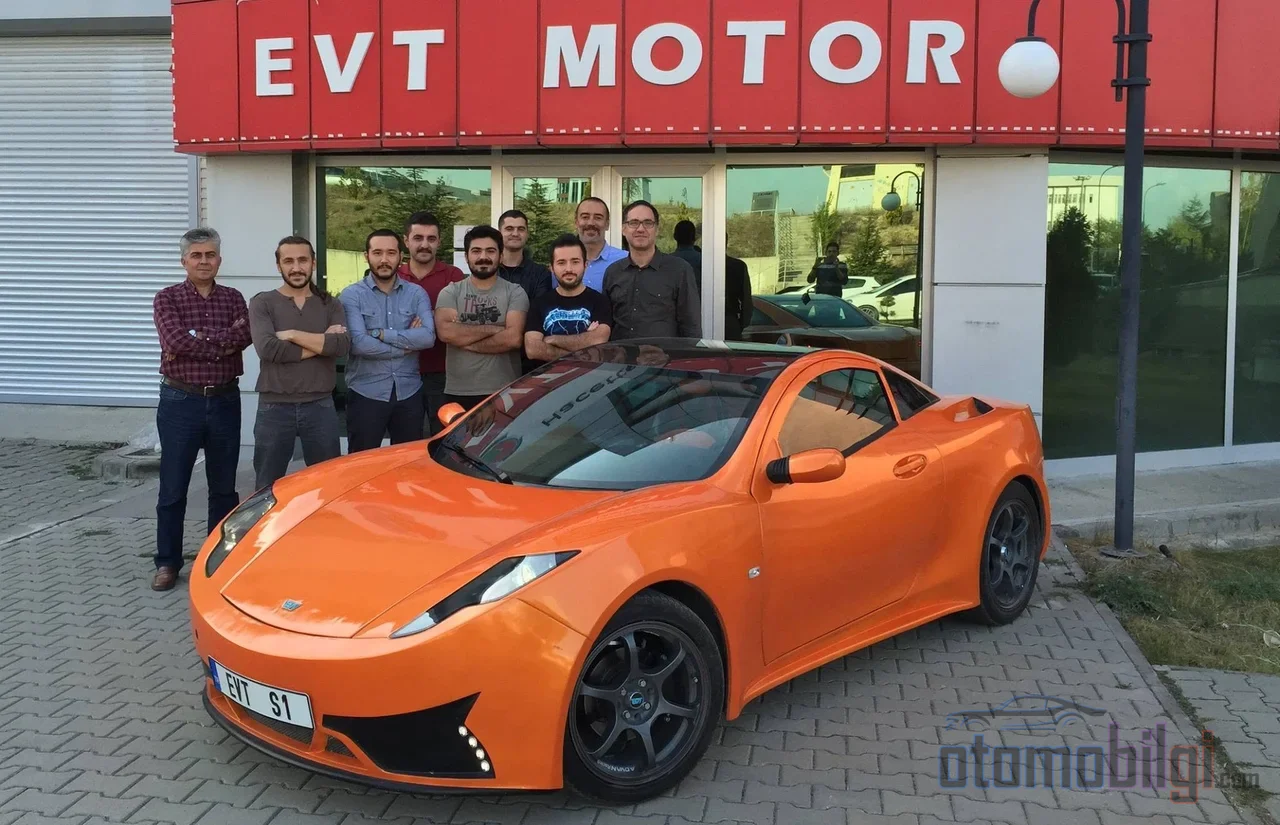
The EVT S1 is a prototype developed at Hacettepe Technopark and introduced at the time as the first Turkish automobile powered by electricity. Behind it was an interesting team: technopark engineers and faculty members of Hacettepe University's Department of Automotive Engineering. One of them was Engin Tanik, my father's high school classmate. So theorists and practitioners sat at the same table and worked together for about three years. Some accounts state the duration as 3.5 years; it probably varies depending on which stage of the design was counted from.
When the vehicle was shown to the public in 2015, interest was great. Think about it: in those years, even in the rest of the world, electric vehicles were still seen as "the weird neighbor's car," and Tesla's Model 3 had not even been announced yet. A sporty-looking electric car coming out of a university technopark and hitting the streets for test drives was a serious undertaking. The project team conceived of it not as a showcase product, but as a vehicle that would go into mass production. And it is exactly at this point that the story both rises and begins to break.
Highlights
- Introduced in 2015, the EVT S1 was defined as the first Turkish automobile powered by electricity
- 35 kWh battery, 141 horsepower, 0-100 km/h in 7.5 seconds
- A Hacettepe Technopark-university joint effort lasting approximately 3 years
- 1,000 units planned initially for mass production, but the project never reached production
What were the technical specifications of the EVT S1?
Here is the car's full list of specs. For durability, the chassis used aluminum alloy, while the main body favored fiber polymer, carbon fiber, and glass fiber. The logic behind this material choice is simple: a lightweight body means a longer range with the same battery. It is the same thing you feel when riding a bicycle: the lighter you are, the less effort it takes to move forward. Thanks to this, the team described the EVT S1 as a model that was lighter than other cars in the same segment and covered more distance with less energy.
| Feature | Value |
|---|---|
| Battery capacity | 35 kWh |
| Motor power | 141 horsepower |
| 0-100 km/h acceleration | 7.5 seconds |
| Maximum speed | 180 km/h (limited for battery protection) |
| Energy consumption | 10 kWh per 100 km at a constant speed of 90 km/h |
| Charging time | 10 hours normal, 30 minutes fast |
| Weight | 1,500 kg |
| Trunk volume | 2 compartments, 350 liters total |
A few details are also noteworthy. The vehicle had an automatic transmission, and its maximum speed was deliberately limited to 180 km/h; reason: to protect the batteries. In other words, rather than pushing performance to the limit, the engineers had the battery's lifespan in mind. The operating cost, calculated at the prices of the time, was also a draw: approximately 4 kurus per kilometer at a constant speed of 90 km/h. By another calculation, the energy cost of the Istanbul-Ankara distance came to 18 TL. All of these figures are valid at 2015 price levels; comparing them with today's prices would be misleading, but under the conditions of the day they were impressive figures.
Handling and design: was it really a sports car?
The EVT S1 was not merely a box that looked like a laboratory experiment. The records indicate that it had a sports car design and performed successfully in test drives. Its 0-100 km/h acceleration in 7.5 seconds was a figure that could comfortably beat the mid-segment gasoline cars of those years. In other words, the car's promise was not "a boring city car with long range" - it was a serious sports automobile.
Having two trunks with a total capacity of 350 liters was also a practical touch: once the engine block disappears in an electric vehicle, splitting the cargo space into front and rear is the standard play of modern EVs today. The EVT S1 had already played that game back in 2015. Could this prototype really have been roaming Turkiye's roads with a few more years of support and investment? Note that question down; we will come back to it.
Series production plan and a quiet ending
As of October 2015, the situation was clear: the project was waiting for its series production certificate to be issued. If the certificate came through, the plan was to produce and sell 1,000 units in the first stage. In other words, the team had no intention of settling for the prototype in hand; a scalable business plan was on the table.
What happened next? This is the most frustrating part of the story. The archives contain no official statement about the project's later years, no detailed closure report, and no first-hand information about the support process. Video narrations and social media posts agree that the car never made it to series production; but no official explanation for the reason was ever recorded. For this reason, it is not possible to back the statement "support never came, the project died" with definitive documentation. What is known is this: there was a prototype, there was a plan, there was interest; series production never began and the project quietly came to an end. Its disappearance is in itself a lesson, actually.
From Devrim to Anadol: which lineage does the EVT S1 belong to?
To understand the EVT S1, you need to look at the bigger picture. Devrim, the first automobile designed and produced in Turkiye, was built in 1961 at the Eskisehir Railway Factory on the orders of then-President Cemal Gursel; around 200 Turkish engineers accomplished this feat under difficult conditions in only 4.5 months. The first domestic brand to enter series production, however, was Anadol: Anadol, whose production began on December 19, 1966, stayed on the roads until 1991 thanks to its durability and simple technical construction.
Within this lineage, there is also a strategic turning point. One of the most critical decisions in the development of the Turkish automotive industry is considered to be the preparation of the "Assembly Industry Directive"; the first assembly attempts date back to 1928-29, to Ford's operations in Istanbul's Tophane/Salipazari district. So the automobile story on these lands is very long, but the "we design and produce" part has always been a tough exam.
The early and forgotten link in the road leading to Togg
Now let's return to the big picture. Togg came to life with the initiative founded in November 2017; the pre-show version of the C-SUV model was introduced on December 27, 2019, and production began in 2022 at the factory in Gemlik, Bursa. SIRO, established in Gemlik as a partnership between Togg and China's Farasis, today produces battery cells and modules. In 2024, the Turkish automotive industry became Europe's fourth-largest manufacturer with the production of 1,468,393 motor vehicles. Some accounts frame this journey as the realization of a 61-year-old dream stretching from Devrim to Togg.
But the interesting part is this: Years before Togg, back in 2015, an electric vehicle with 100% Turkish engineering already existed. The main narrative usually jumps straight from Devrim to Togg; yet on the line between them stands a trial link like the EVT S1. Perhaps it never reached series production, perhaps it left no corporate legacy; but it was a prototype that stood as proof against the perception that "it can't be done here." Considering Togg's current battery investment and electric-focused vision, it becomes clearer just how prescient the EVT S1's direction was back in 2015.
What happened to the EVT S1 and why should it be remembered?
Summary answer: The EVT S1 is a domestic electric sports car prototype developed over roughly three years of work by Hacettepe Technopolis engineers and Hacettepe University faculty members, featuring a 35 kWh battery, 141 horsepower, and introduced in 2015. While the series production certificate was pending, the planned production run of 1,000 units never materialized, and the project quietly ended without an official explanation.
In my view, there are two reasons it should be remembered. First, heroes always take center stage in historical writing; but what really makes the story interesting are the endless attempts. Devrim tried, Anadol produced, the assembly industry grew, the EVT S1 jumped early to electric, and Togg found scale. The second reason is more current: today, when we talk about electric vehicles, we know what infrastructure, what battery technology, and what engineering know-how are required. The engineers of the EVT S1 demonstrated all of this years ago with a hand-built prototype. Being forgotten does not mean it should be treated as if it never happened. Do you think a prototype emerging from a university lab will be treated better next time? I hope so. Because the most beautiful part of this story is that it doesn't end, in the hope that there will be a next time.
Sources
- The first domestic electric car
- Türkiye's First Electric Car, the EVT S1!
- Devrim (automobile)
- Anadol
- Togg
- The Togg project from yesterday to the future
- The Automotive Industry and the Domestic Car
- The Past and Present of Our Assembly Industry
- Togg became an important threshold for the developing automotive ecosystem