From Nobel 200 to Onuk Sazan: Forgotten Turkish Car Startups
Share This Page
Türkiye's first mass-produced car was the Nobel 200, which went on sale in 1958; From this tiny vehicle produced in Şişli, Istanbul under Fuldamobil license, to handmade sports prototypes like the Onuk Sazan, dozens of local ventures lived along that road, but most could not get beyond a single prototype. This is the story of those forgotten projects that remained in the shadow of Devrim and Anadol, whose names few of us know.
Highlights
- The Nobel 200 was produced in Şişli between 1958 and 1961; it consumed only 4 liters of fuel per 100 km.
- The Devrim was completed in 129 days (135 days in some accounts) and 4 prototypes were produced.
- Türkiye's first automotive factory was established in Tuzla in 1954.
- The EVT S1 was an electric sports car born from the work of 11 engineers over 3.5 years at Hacettepe University.
Nobel 200: The first mass-produced three-wheeler to come out of Şişli
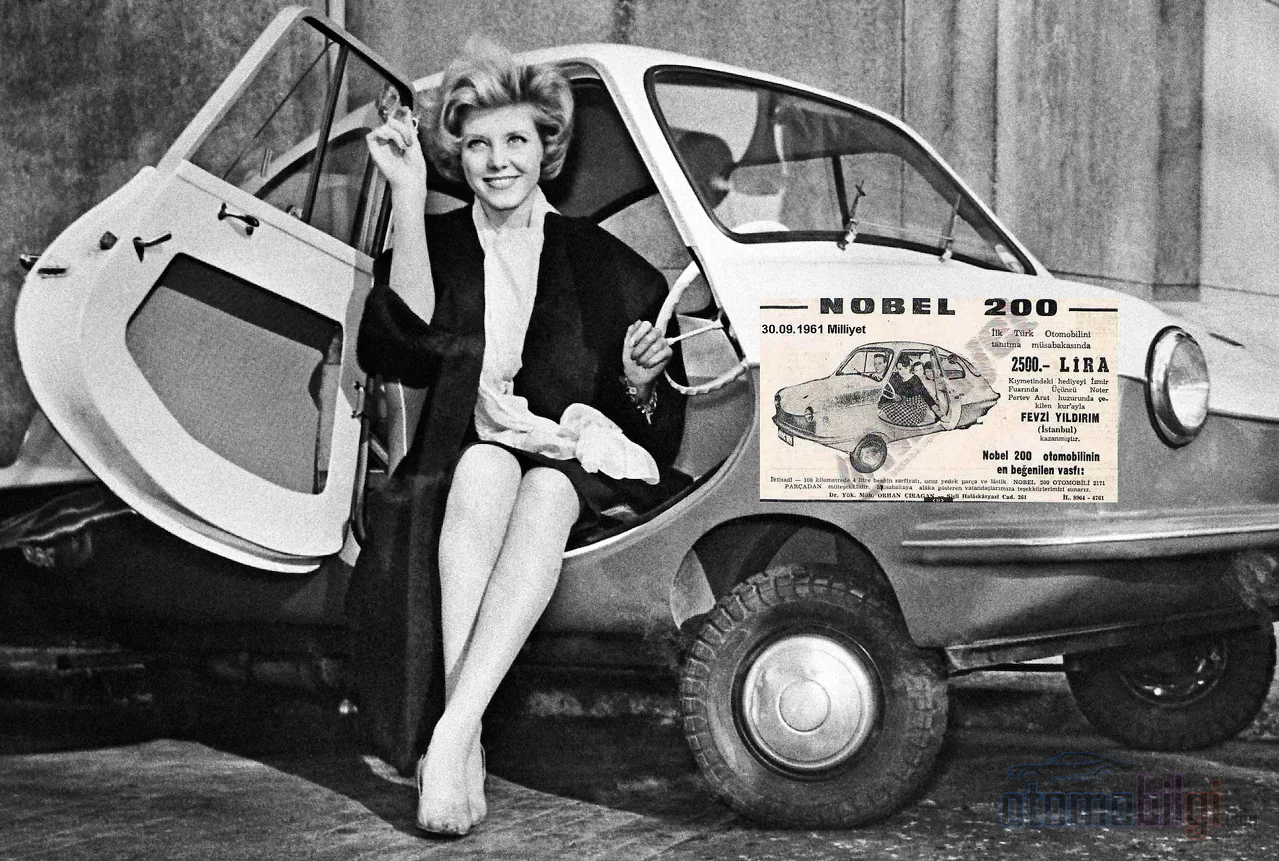
Imagine: it is 1958, on Halaskargazi Avenue, a workshop with an announcement of a car produced under license from Germany hanging on display. This is exactly how the first car to enter mass production in Türkiye began. The Nobel 200 was a licensed version of the German Fuldamobil and was produced between 1958 and 1961. Its design belonged to journalist Norbert Stevenson, who had studied mechanical engineering for a period at the Technical University of Berlin; the project came to life in Germany in 1949 under the Fuldamobil brand with the approval of a Bosch dealer in Fulda.
So what was this vehicle like? It was a rear-engined, rear-wheel-drive microcar; it seated two people and its 2-door coupé body had a single door. Its most interesting version was even the 3-wheeled model, with two wheels at the front and one at the rear. With Sachs' 10 HP gasoline engine of 191 cc, it consumed only 4 liters of fuel per 100 kilometers - even our most economical cars today can barely approach that figure. It was produced by assembling 2,171 parts of various sizes, it even had a pickup truck model, and it is reported that it was put on sale for 12,500 TL with a tax reduction.
The interesting part is this: Nobel was not only a Türkiye adventure. The Fuldamobil was produced in many parts of the world between 1950 and 1969 under different names; it was called Nobel in England and Chile, Bambi in Argentina, Bambino in the Netherlands, Attica and Alta in Greece, Hans Vahaar in India, and Fram King Fulda in Sweden. How many Nobels were produced and what the localization rate was are not clearly stated in sources even today. We do not even have definitive information about the name of the company that produced it. In other words, the records of our first domestic car are this faint - a bit sad, isn't it?
Was the first domestic car the Devrim or the Nobel 200?
This question has been debated for years, and the answer actually depends on how the label is defined. The Nobel 200 was offered for sale before the Devrim, but it was a licensed production; that is, the design and concept came from Germany. The Devrim, on the other hand, was the first car designed entirely in Türkiye. On the instruction of Cemal Gürsel, approximately 200 Turkish engineers and technicians worked on this project at the Eskişehir Railway Factory (the predecessor of today's TÜRASAŞ).
The project was completed in 129 days; some accounts mention this period as 135 days, because which stage should be considered the starting point can be interpreted differently. Four prototypes were produced - two were black and two were cream-colored - and for these four cars, 10 engines of 3 different types were manufactured. On October 29, 1961, they were introduced with a ceremony on Republic Day. However, it never progressed to mass production; production stopped at four units. Lack of investment interest is cited as the reason behind this; detailed discussions about the project's internal dynamics continue even today.
From assembly to production: The Tuzla, Çiftçiler and Anadol line
The country's automotive journey actually begins with a point that is often forgotten: the factory established in Tuzla in 1954 under the name Turkish Willys Overland. 25% of its capital was of American origin, and it produced civilian and military jeeps and pickup trucks by assembling imported and domestic parts. Today it is referred to as Türkiye's first automotive factory. The continuation of the story is also interesting: In the 1980s, Yıldız Technical University and the Turkish Armed Forces launched a joint military jeep project (some records cite 1986, others 1988), the first design went into production in 1990, and in the 1990s 100% domestically produced GT and GTD model military jeeps were manufactured. The brand registration was obtained in 1995, and the Tuzla 1013 is described as Türkiye's first mass-produced military vehicle.
Another early-period player was Çiftçiler. A family company that had been engaged in industrial and commercial activities in Istanbul since 1933, it started assembling Volkswagen pickup trucks and minibuses from 1954; in 1964, it launched Türkiye's first pickup assembly operation using Volkswagen bodies shipped painted and with body assembly from Germany. In other words, what we call the "domestic Volkswagen" era was actually an assembly operation completed here with the bodies.
The real breakthrough in mass production, however, came from the Koç front. In 1959, Otosan was founded through a Ford and Koç venture; in 1960, 4 Ford Consuls and 8 Ford Thames were produced per day. Then in 1966, the Anadol hit the roads: its prototype was prepared by British Reliant, and this vehicle with a fiberglass body and mechanical parts from Ford was produced with 53% domestic materials. Subsequently, Tofaş was founded in 1968, and the Fiat-licensed Murat 124 was produced in 1971 ( 134,867 units between 1971 and 1976); Oyak-Renault was founded in 1969 and the Renault 12 arrived in 1971. Türkiye was now moving toward becoming a real manufacturing industry - but very few projects on this path were able to put forward their own design.
Zafer: The car stopped by pressure
In the mid-1960s, TOE attempted a partnership with Volvo, but the agreement did not materialize. Then in 1968, a car project under the Zafer brand began with a Triumph partnership. First a sedan, then a station wagon and pick-up were planned. The vehicle reached the launch stage - then, due to pressure from certain individuals and circles, production was abandoned. Told in a single sentence, this story is actually one of the most striking examples of why domestic car ventures in Türkiye often stall. The engineering was ready, the launch had been held, the plans had been drawn up... and then suddenly everything stopped. Why do you think that was? This is exactly why we must not forget these projects.
There is another lost story from the same period: In 1980, Otosan's Çağdaş model, designed entirely in Türkiye with a Wankel engine, won an industrial design award but never made it to mass production. An award-winning Turkish design was doomed to stay on display.
Handmade dreams: Maral, Diardi, Şamil, Türkar and EVT S1
Now we come to the most emotional part of the story: projects born in garages, workshops, and university corridors. These are not multi-million dollar factories, but stubbornly built cars.
- Maral: Classic car enthusiast Prof. Dr. Hasan Yurdakul started producing a classic-type car in 1996, making it entirely by hand; this production is said to have continued for years.
- Diardi: A car built by hand by an entrepreneur - unfortunately, what we know about it is limited to this.
- Şamil 1 and 2: Registered by Fatih Başoğlu in 2007. Even projects that made it to the registration stage are rare, so this was a step in itself.
- Türkar: Türkiye's first 4×4 domestic jeep, reportedly produced in 2009.
- EVT S1: Its name is short for "Elektrikli Vasıta Türkiye" (Electric Vehicle Türkiye). An electric sports car developed at Hacettepe University through the 3.5 years of work by 11 Turkish engineers; it is reported to have been produced in 2015.
This list may seem short to you, but behind every line lie years of effort. Their single common trait? None of them made it to mass production. Just think of the EVT S1: Building an electric sports car in 2015 was a pioneering step even globally. Türkiye attempted this move at an institutional level a full decade later.
Onuk Sazan and Etox: Sports cars that remained at the prototype stage
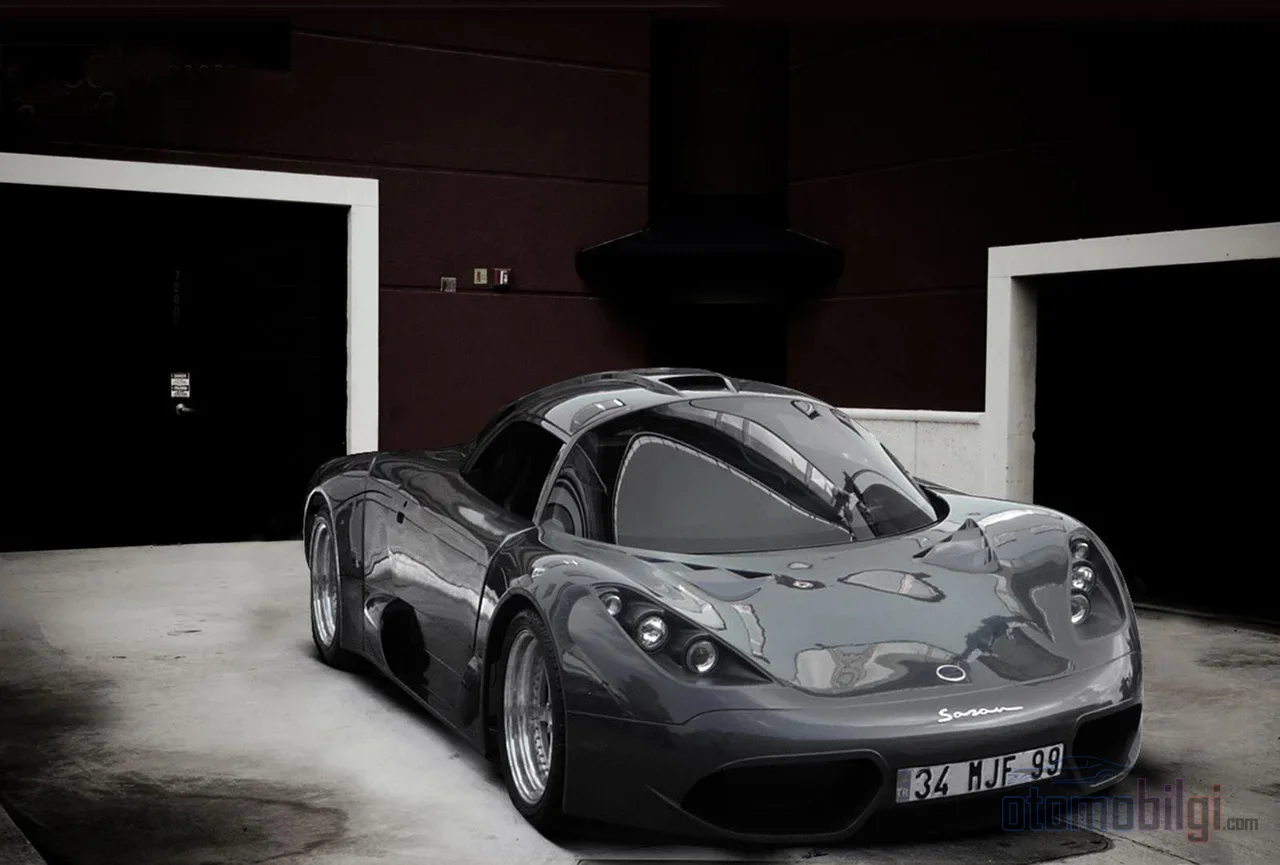
Mixing a shipyard into car production? Yes, that is exactly what happened. Within Yonca-Onuk Shipyards, which produces military attack boats and luxury motor yachts, Dr. Ekber Onuk developed sports cars: the Onuk Sazan, along with the Sazan LM and STC20 beside it. These vehicles were displayed at the İstanbul Autoshow and greatly surprised visitors - a company producing military boats had unveiled Türkiye's most ambitious sports car prototype.
Another sports car venture was Etox. It is described as the second sports car produced in Türkiye after the Anadol STC-16, but unfortunately it too could not get past the prototype stage. Two ventures, two prototypes, zero mass production. And yet, it must be acknowledged: even today, when you see photos of these cars, you find yourself asking "what would it have been like to drive?"
From Babayiğit to Togg: The legacy of the forgotten ones
All these stories gained renewed momentum in 2011: with the "searching for a babayiğit" call made that year, the domestic car process started again. In 2015, the intellectual property rights of the Saab 9-3 were purchased under the leadership of TÜBİTAK, and on November 2, 2017, the joint venture TOGG, composed of Anadolu Group, BMC, Kıraça, Karsan, Turkcell, Vestel and Zorlu, was announced. In other words, the line stretching from Nobel's workshop in Şişli to Devrim's workshop in Eskişehir, from Maral's handmade garage to Onuk's workshop next to the shipyard, finally met a corporate and collective structure.
The lesson to be drawn from this, I think, is very clear: the dream of manufacturing cars in Türkiye never ended; what ended was the dreams' chance of survival. From Nobel 200 to Onuk Sazan, every project was the seed of the next. Whether Togg managed to fill this gap, the coming years will show - but we can say this already: remembering the much earlier attempts whose owners deserved to sit in that seat is one of the most enjoyable parts of this journey.
Sources
- Nobel (automobile)
- The First Domestic Car NOBEL 200
- The Devrim Car - Eskişehir Governorship
- Türkiye's automobile journey from Devrim to TOGG
- Claims about the Tuzla Jeep Factory established in 1954
- Çiftçiler Holding
- The Automotive Industry After the Republic
- A brief history of the Turkish automobile
- With Doctor Ekber Onuk on the automobile industry
- The Turkish automotive industry