Signatures 700 Case: 601 People and 2,504 Years of Prison Sentences
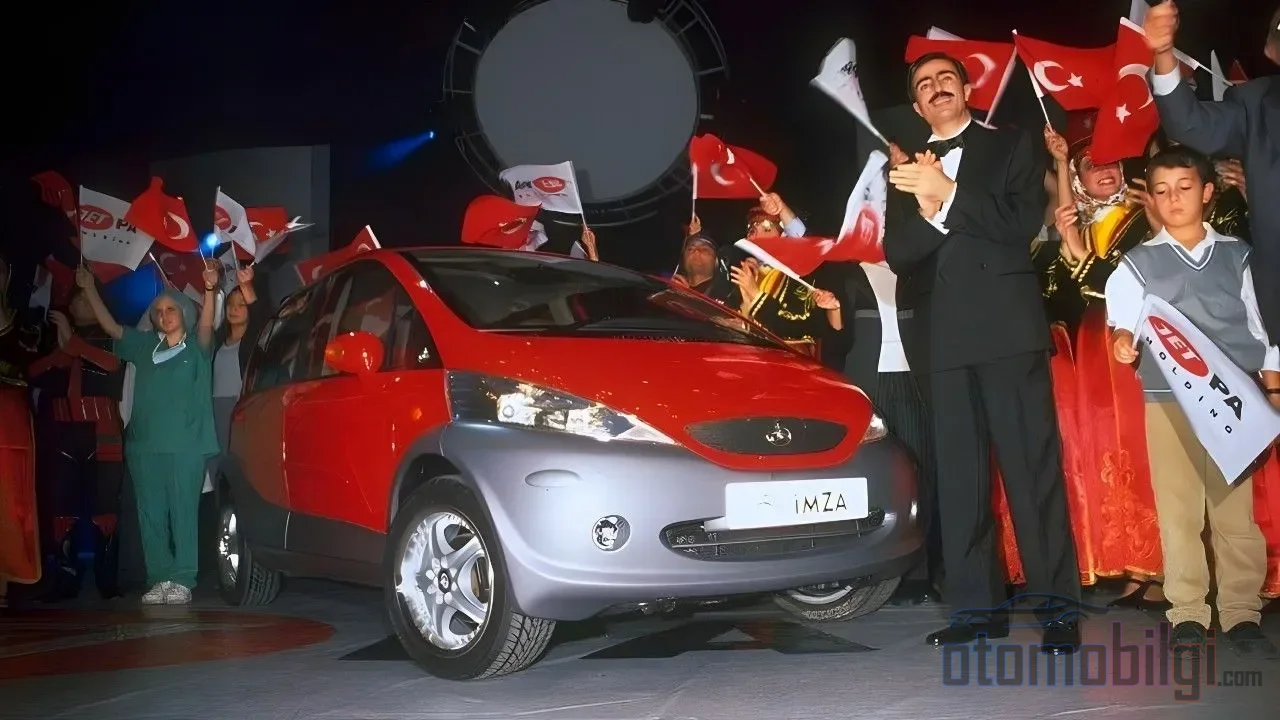
In mid-1999, every television channel was broadcasting the same footage: A ceremony in Siirt, a shiny car paraded in a convoy, and a man speaking into the microphones. The promise was big; Turkiye's own car, being unveiled at a date deliberately timed to coincide with the 700th anniversary of the Ottoman Empire's founding and Republic Day. The car's name was Imza 700. Three years later, there was neither a production line nor a sales dealership; all that remained were a few concrete pillars, two mock-ups, and the unfinished dream of thousands of people. So why did this project remain nothing more than a mock-up? Get ready, because the answer is full of lessons, both technical and human.
To understand this story, we first need to get the sequence right: "they presented it to us, promoted it, collected money, and then everything fell apart." And you should definitely read to the end, because the story of the Imza 700 is actually one of the most painful links in a long chain stretching from the Devrim to Togg.
JetPA and Jet Fadil: The ambitious venture from Siirt
JetPA, or Jet Otomobil Pazarlama, was founded by Fadil Akgunduz in Siirt on November 23, 1996. Akgunduz was known to the public by the nickname Jet Fadil; he was someone with an engineering background whose name was heard in business and politics. Between 1997 and 2000, the company imported and marketed various models of the Malaysia-based Proton, including the Persona. In other words, JetPA had entered the automotive industry not as a manufacturer, but as an importer; keep this detail in mind, it will be important later.
In 1998, the company signed off on a radical decision (the wordplay is pure coincidence, promise): to manufacture its own car. The project would be named Imza 700. The figure 700 was chosen to match the 700th anniversary of the founding of the Ottoman Empire; the unveiling was also timed to coincide with Republic Day 1999. The ceremony was broadcast on many channels of the era such as ATV, Kanal 7, Kanal 6, Show TV, Flash TV and TGRT. The advertisements used an emotional language of promise, built on street-level phrasing like "Koc family, may we be sacrificed for you." In other words, from day one the project was conceived more as a media event than an engineering project.
Highlights
- JetPA was founded by Fadil Akgunduz in Siirt on November 23, 1996; the Imza 700 unveiling took place in 1999.
- The car's unveiling was broadcast live on many television channels of the era such as ATV, Show TV, Kanal 7 and TGRT.
- It was reported that approximately 300 million dollars was collected from those who supported the project in Germany.
- In expert examination, the vehicle produced looked less like a car and more like a 1/1 scale mock-up; the factory had no press shop or paint shop.
- Akgunduz was sentenced to a total of 2,504 years in prison and a 12 million lira fine on the grounds that he defrauded 601 people.
The promise was big: Money, rallies and big dreams
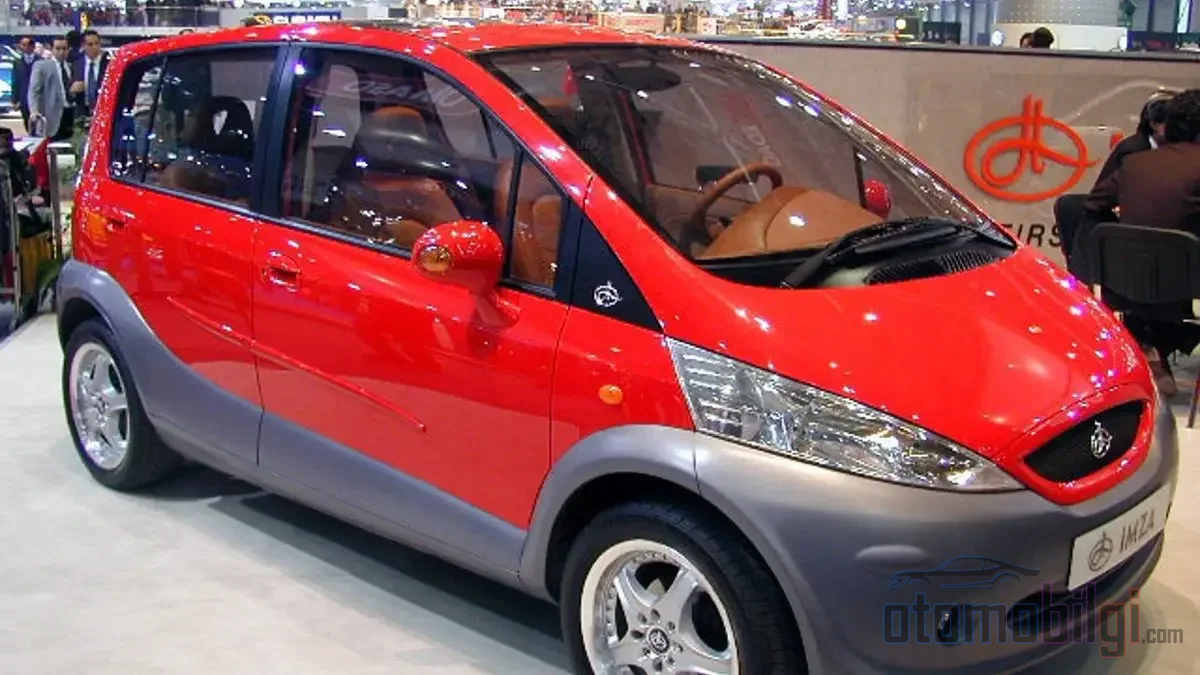
So what exactly was the Imza 700? The short answer: a massive project on paper. It was said that a factory would be built in Siirt with a budget of approximately 2 billion dollars, the car would be manufactured and exported to Europe. The prototypes were driven around the streets of Siirt and displayed at rally venues; it was even claimed that they were positioned as an alternative to BMW and Mercedes. In some accounts, it is said that the vehicle was unveiled at the Geneva Motor Show in 2000, but this information does not appear in strong archival sources, so it should be approached with caution.
The money side of the story is even more striking. It was reported that roughly 300 million dollars was raised for the project from entrepreneurs and small investors living in Germany; news reports of the time stated that this money later vanished like a shot. Thousands of people, adjusting for the era's currency, gave their money in the hope that a factory would be built in their hometown. This also formed the basis of the legal process we will describe later.
The prototype reality: A car, or a 1/1 scale model?
Now we come to the most striking part of the story. Years later, an automotive writer had the opportunity to examine the Imza 700 prototype at the fair up close, and the conclusion was brutal: the vehicle resembled a 1/1 scale display model far more than a pre-production car. There was no engine, no drivetrain, and most of the interior details and trim parts were missing. In other words, what greeted you when you opened the hood was nothing but a dark void. Just like the cake in the shop window: elegant on the outside, foam on the inside.
The technical press kit was also inconsistent within itself. The Imza 700 was to be produced with a two-stroke engine that no car manufacturer used, one seen only in fields like chainsaws or model airplane engines. Think of it this way: it is like fitting a bicycle bell to a Formula 1 car; it may seem technically possible, but it makes no sense in the real world.
The factory plan shared the same fate. In the factory model, the buildings were arranged in a neat order, but there was no test track, no vehicle stock area, all building heights were identical to one another, and most critically: no press shop or paint shop could be found. The press shop shapes the sheet metal, and the paint shop gives the vehicle its color; without the two of them, there can be no car factory. The architectural layout actually resembled a textile facility more than an automobile factory. The financial figures did not match each other either: when the sales volumes, investment amount and revenue assumptions were read separately, the math simply did not add up; moreover, the additional logistics costs that would arise because Siirt had no automotive supply industry had not been factored in. Claims were also put forward that the vehicles were produced abroad and brought into the country for promotional purposes; in that case, the title of "domestic car" remained, from start to finish, nothing more than marketing language.
No supply industry, no car: A simple but brutal truth
Let us pause here and talk a little automotive logic, because the deepest reason for the Imza 700's collapse lies exactly here. Producing a car does not mean erecting one giant building and doing assembly inside it. Just imagine: a car contains thousands of parts, and every part needs a supplier, a press, a mold, and a shipping network. That is why the automotive industry everywhere in the world starts with assembly first, then the supplier industry takes root, and finally it reaches its own production and engineering infrastructure. Skipping these three steps and playing straight for the top is like jumping to the 20th floor without an elevator.
Look at Turkiye's own automotive history: An assembly line established in 1929 in a free zone in Istanbul was shut down by the economic crisis of the 1930s. A journey that began with commercial vehicle production in the 1960s expanded into automobile production in the 1970s. In other words, the sector grew over decades, piece by piece, patiently, with real engineering and real investment. The Imza 700 benefited from none of this accumulated experience; there was neither an experienced engineering team, nor a ready supply chain, nor a realistic production plan. That is why the project was bound to fall into the gap between promise and reality.
Devrim and Anadol: The real travelers of the same road
When evaluating the Imza 700, two real examples stand before you as reference points: Devrim and Anadol. Devrim, in 1961, was brought to the prototype stage by engineers through a genuine R&D effort, but could not move to mass production; automobile demand in Turkiye was limited at that time, and there was no mass production, distribution, or dealership infrastructure. So even Devrim's failure was not technical, but mostly market- and planning-related; at least the car was real, it worked, and serious engineering stood behind it.
Anadol, on the other hand, is the opposite lesson: although its design belonged to the British Reliant, the first vehicle rolled off the line at Otosan's Istanbul factory on December 19, 1966, was launched on February 28, 1967, and was produced until 1984. Anadol could survive because it was built on the existing industrial infrastructure with a real production model. That is exactly the difference from the Imza 700: Devrim was real engineering but had no market; Anadol was real production and met its market; the Imza 700 was a promise that had neither real engineering nor a real market. This three-way comparison actually summarizes the essence of the story in a single sentence.
The final act: Lawsuits, bankruptcy, and the empty land
So how did this story end? After the ceremony and the glossy promotion, no concrete production step was taken except for a few buildings completed with two mock-ups produced in Siirt. Only a few concrete pillars remained at the factory site; the oddities at the transfer desk of Siirtspor, which was sponsored under the name Siirt JetPAspor (such as Sergen Yalcin being transferred and then loaned out to major clubs without ever playing) also gave hints about the project's financial discipline.
The legal process took a long time. Akgunduz was prosecuted in Turkiye on fraud charges; in one case, the court sentenced him to a total of 2,504 years in prison and a fine of 12 million lira on the grounds that he defrauded 601 people; this decision's appeal and subsequent status cannot be verified with clear archival records, so it must be reported as an alleged court ruling, not as a definitive conclusion. In a case filed in Germany, it was ruled that 35 thousand euros be paid with interest, and this ruling was also recognized by the Bakirkoy Civil Court of First Instance. A bankruptcy ruling was issued for JetPA Holding, and the liquidation process was covered in the news; Sacit Duran, one of the holding's founders, accused Akgunduz of seizing his shares fraudulently. It was reported that in the following years, a total of 190 million dollars was also raised for tourism projects named Caprice, and that in this context Akgunduz was arrested in 2015 and released in 2017. In short, the Imza 700 was not a single unfinished project, but the first link in a long chain of legal destruction.
So why did the Imza 700 remain a mock-up? A clear answer
The short and clear answer is this: The Imza 700 remained a mock-up because, without a real engineering infrastructure, supply chain, and production plan, it was a promise that tried to survive through media shows and the money it raised. The prototype was not a working car, but an incomplete mock-up; the factory plan did not even include a press shop or a paint shop; there was no automotive supply industry in Siirt, and the financial figures did not add up internally. In an environment where even the Devrim's serious engineering could not achieve series production, and even the Anadol's real production stopped in 1984, it was impossible to sustain this venture that had no technical basis.
Let us also note the reverse perspective: Akgunduz and his advocates claimed that the investments were blocked by external forces or the government, and that Akgunduz was an entrepreneur who was obstructed; In 1999, as an independent parliamentary candidate from Siirt, he also kept this claim on the agenda. However, the technical observations, the incomplete factory plan, and the financial inconsistencies cannot support this claim. Time also set up an interesting equation: In 2011, an automotive writer stated that a new domestic car with an internal combustion engine was economically meaningless, and that a domestic car could only make sense if it were electric. Years later, Togg set out on exactly this path, namely with an electric car and a modern production facility built from scratch; When the facility in Gemlik was preparing for trial production, comments were made that the unfinished story of the Devrim was being completed. The Imza 700, on the other hand, stands in this chain as a lesson in the opposite direction: the dream of a domestic car does not become real through marketing, money, or showmanship; it only becomes real through engineering, planning, and patience. The next time someone promises you a car at jet speed, ask about the press shop first. If there is no answer, it is exactly the right time to leave.