Turkish Willys Overland: The Forgotten Salt Adventure of the Willys Jeep
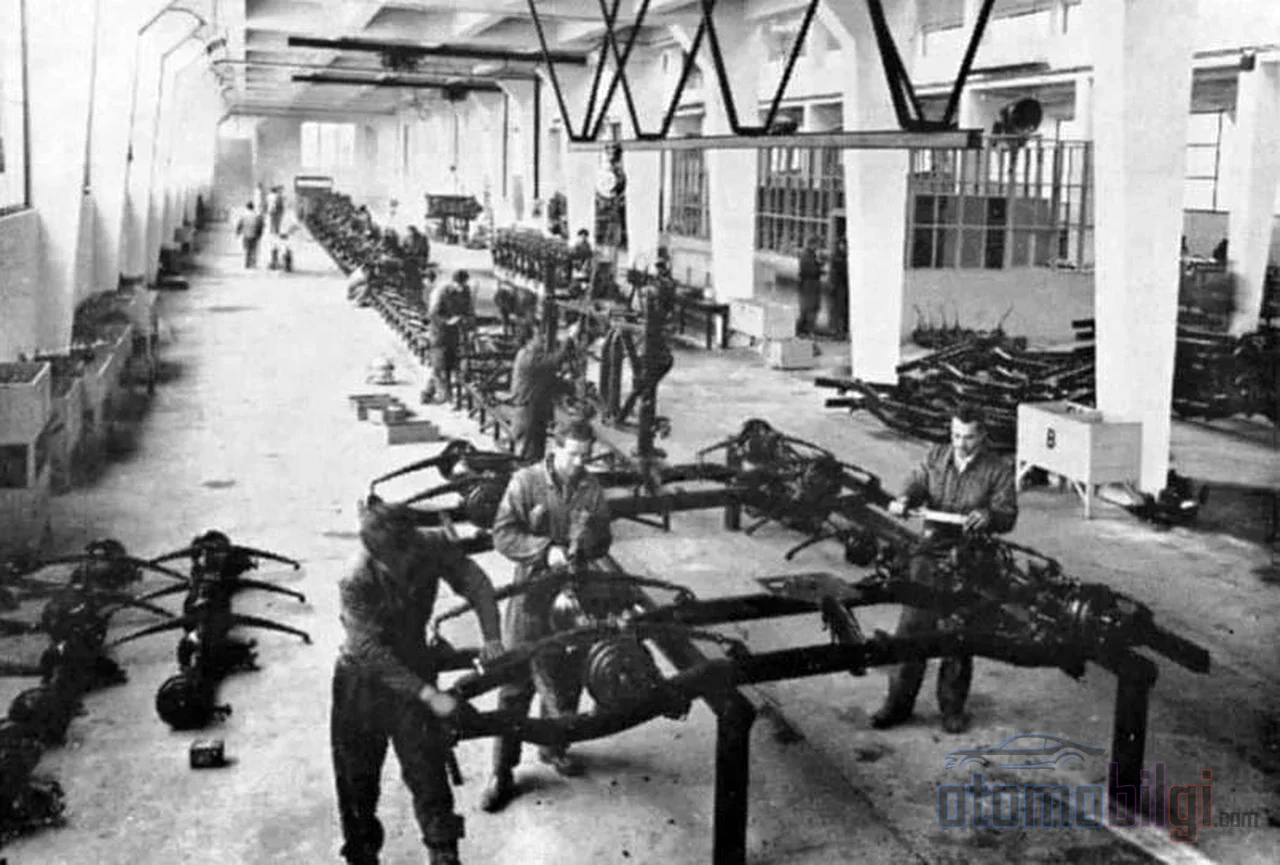
Have you ever passed along a village road in the Aegean on a calm Sunday morning? A tick tick tick sound comes from among the vineyards, followed by a wrinkled but vigorous Willys Jeep that has been worked on for years. But have you ever wondered: where was that jeep made? The answer doesn't come to most people's minds, because the story begins in a factory established in 1954 in Istanbul's Tuzla district. We know Devrim, we love Anadol, but ten years before either of them, serious work was being done in Tuzla. Let's remember that factory together.
Turkish Willys Overland: The Factory Established in Tuzla in 1954
In the early 1950s, while Turkiye was trying to shake off the fatigue of the post-war period, the automotive industry was mostly a dream. But in 1954, a factory was established in Tuzla under the name Turk Willys Overland, and many sources today cite it as Turkiye's first automotive factory. The establishment was the result of production negotiations with the USA; Ferruh Verdi took on the role of representative on the Turkish side.
The figures show it was no small undertaking: the factory was built on a 33-hectare site and its total cost was 7 million lira. In the first phase, parts brought from the USA were assembled together with local parts. So it wasn't fully local production from day one; but it was a beginning that became localized piece by piece. Civilian and military Jeeps and light commercial vehicles came off these lines; the factory was transferred to the Turkish Armed Forces in subsequent years.
Highlights
- Established in Tuzla in 1954 under the name Turk Willys Overland, it cost 7 million lira on a 33-hectare site
- The first models assembled were CJ-3B jeeps
- In 1961, four assembly lines, 768 employees and an annual production capacity of over 7,000 were reached
- Willys Jeeps from the 1950s are still used in Aegean villages today
Where did the Willys brand come from?
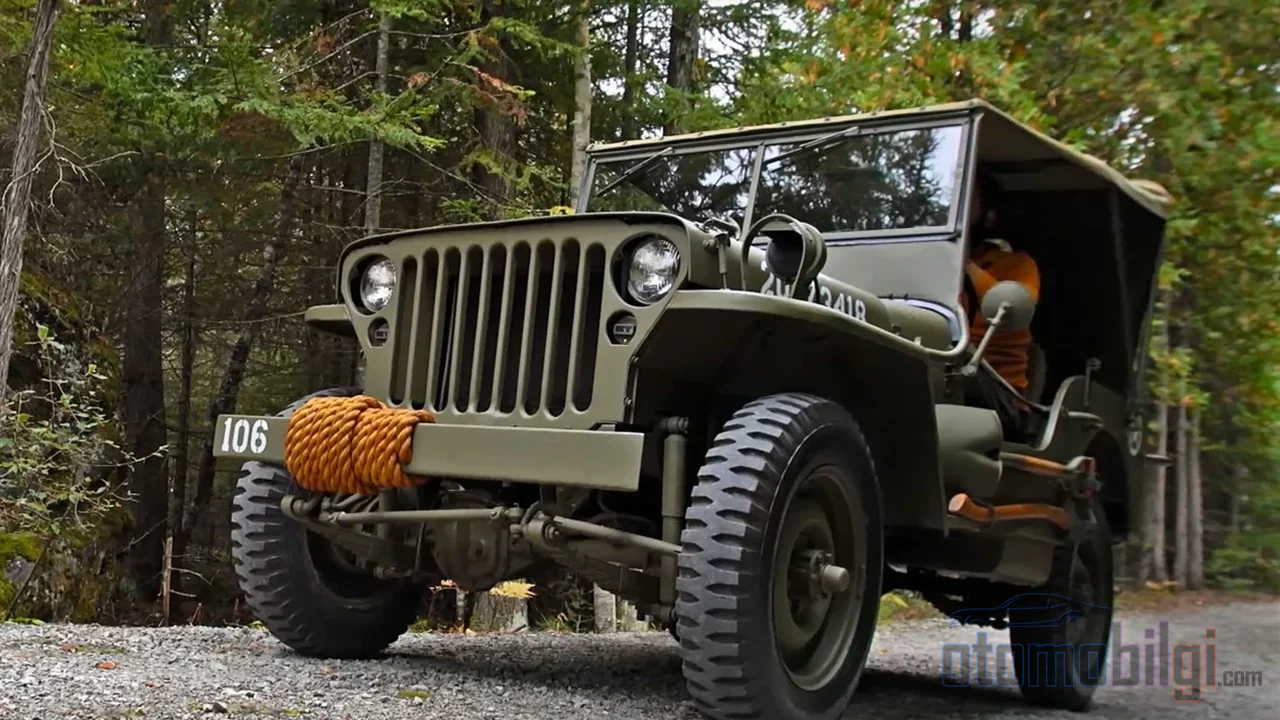
The Willys in the factory's name has its own turbulent story. John North Willys was born in New York in 1873 and started his business life in the bicycle trade. In 1899, he saw the future of the automobile at a car show in Cleveland and opened an Overland dealership in Elmira. He bought the factory in 1907 because it couldn't supply the vehicles he was selling, and in 1912 the company took the name Willys-Overland Motor Company. For a time it even became America's second largest automaker after Ford. In 1915, the headquarters was established in Toledo, Ohio; brands like Duesenberg, Stearns and Moline Plow joined the organization.
But the price of aggressive growth was heavy. The company took on heavy debt, John North Willys was appointed US Ambassador to Poland in 1930, the company entered bankruptcy proceedings in 1933, and Willys passed away in 1935. What truly made the brand immortal was the 4x4 military jeeps of the 1940s. These vehicles, which left their mark on World War II, also came to Turkiye after the war through aid programs; they were quickly embraced in rural areas and in the army. The idea of establishing the factory in Tuzla was nourished precisely by this interest.
Tuzla's place in the transition line from assembly to production
Reading Tuzla's story on its own is incomplete; because there was an earlier attempt at the idea of manufacturing automobiles in Turkiye. In 1929, Ford set up an assembly line in Istanbul's Tophane; the factory began production in December 1929 by assembling its first 8 cars. Academic studies describe this facility as the first foreign investment in Turkiye's automotive industry. However, the economic conditions of the 1930s did not make this venture permanent.
The Tuzla factory was the second important link in this chain: it started with assembly in 1954, and by 1961 it had reached a picture that commands respect even by today's standards, with four assembly lines, 768 employees and an annual capacity of over 7,000. What came after? In 1961, Devrim, produced in 129 days at the Eskisehir Railway Factory, arrived; the famous (and unfair) prototype story was born when the car presented to President Cemal Gursel on October 29, 1961 ran out of fuel after 100 meters, and series production never materialized. On December 19, 1966, the first mass-produced domestic automobile, the Anadol, took the stage and was produced until 1991. So the chain is as follows: the Ford Tophane attempt, Tuzla assembly, the Devrim prototype, Anadol mass production. Each link learned something from the one before it.
Tuzla 1013: The factory's unforgettable second life
In fact, the most interesting chapter of Tuzla begins after 1954. Starting in 1986, localization efforts for jeeps began; described as a joint project between Yildiz Technical University and the Turkish Armed Forces, this process was effectively set in motion in 1988. In 1990, series production began with the fully domestically designed GT and GTD military vehicles.
In 1995, the Tuzla 1013 name and the T logo were registered by the Turkish Patent Institute; type approval certificates were obtained from the Ministry of Industry and Commerce, and conditions for export were established. In the project, everything including the engine was produced in Turkiye: the gearbox, terrain gears, differential, shafts, drivetrain, chassis, bodywork, and the entire interior and exterior components were all produced at the 1013 Army Supply Main Repair Factory. Among the models were command vehicles, personnel vehicles, mobile weapon carriers, ambulances, personnel carriers and funeral vehicles. Moreover, the cost was roughly one quarter or one fifth of imported equivalents, depending on the model; Iran and Pakistan wanted to buy the vehicles, but the legislation of the time did not allow it.
Why did the factory close, and what is it doing today?
Here is the bittersweet part of the story. Between 1988 and 2006, more than ten thousand military vehicles were produced in 15 different models (the figures given range from over 10 thousand to around 13 thousand; differences in scope and counting make this natural). But in 2006, production was halted without any official explanation. Only the claim that the need no longer existed was given as the reason.
Even the experts who took part in the project cannot give a clear answer. Prof. Dr. Rahmi Guclu argues that technically these vehicles were superior to and much cheaper than their imported equivalents; although opinions circulate behind the closure such as an army concept change or imports becoming easier, he thinks the matter should be investigated. He also criticizes the lack of visibility in public opinion: He says the discourse of "we cannot produce a domestic vehicle" does not align with the reality of completely domestic design and production between 1988 and 2006.
Today the factory operates under the name of the K.K. Logistics Command 7th Maintenance Center Command Factory, producing parts and providing logistics support. The vehicles it produced are still in the Turkish Armed Forces inventory; some can still be seen at barracks and ceremonies. And yes, some of those Willys Jeeps from the 1950s are still traveling through Aegean villages today, passed down from generation to generation.
Which was Turkiye's first automobile factory?
The short and clear answer is this: According to the majority of sources, the Turk Willys Overland factory established in Tuzla in 1954 is known as Turkiye's first automobile factory; however, Anadol is positioned as Turkiye's first mass-produced domestic automobile, while Devrim is positioned as the first automobile designed and produced in Turkiye. Three titles, three different awards; no one takes away anyone's crown.
A footnote on a matter we owe you: There is a claim circulating on social media that the Tuzla factory also produced under Bussing license. This claim cannot be verified in archival sources, so we do not present it as fact on this page. What is true is this: The story of Tuzla is a milestone that very few people remember in the chain extending from the 11,000 units of assembly in the 1960s to today's production of 1.2 million units and 18.5 billion dollars of exports.
The next time you hear that tık tık tık sound on a village road, you will now know: that sound is not just an engine, but the breathing sound of an adventure that has been going on since 1954.
Sources
- The Willys Jeep's Journey in Türkiye: Tuzla from 1954 to Today
- The Mysterious Story of the Tuzla Military Jeep Factory
- The mysterious story of the Tuzla Jeep Factory
- Claims about the Tuzla Jeep Factory established in 1954
- The Turkish automotive industry
- Ford Motor Company Exports Inc., Istanbul Automotive Assembly Factory (1925-1944)
- From an annual production of 11 thousand to 1.2 million