Farmers' Volkswagen: Türkiye's Forgotten VW Experiment
Share This Page
Think of Türkiye in 1975: the ghost of the Devrim was just fading from the streets, the Anadol was only just getting used to the roads, and Tofas was still considered a baby. Right in the middle of it all, a piece of news was making the rounds: a Volkswagen-brand pickup truck was being produced here, on our own soil. Yes, you read that right - long before the Dogusan, a VW-badged vehicle had taken to the roads in Türkiye. So what was this vehicle, who made it, and why does almost nobody talk about it today? Let's unpack this together, because it is a truly little-discussed chapter in Turkish automotive history.
Volkswagen EA489: The Grasshopper Relative They Called the Ant
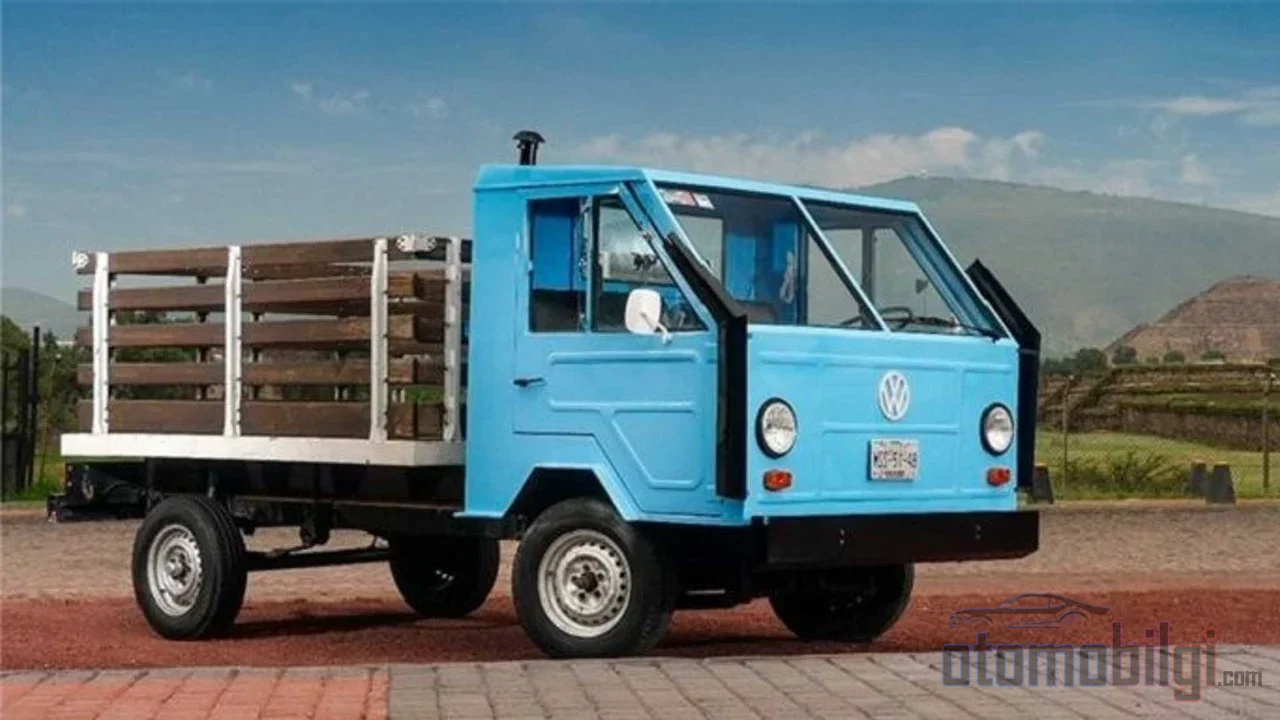
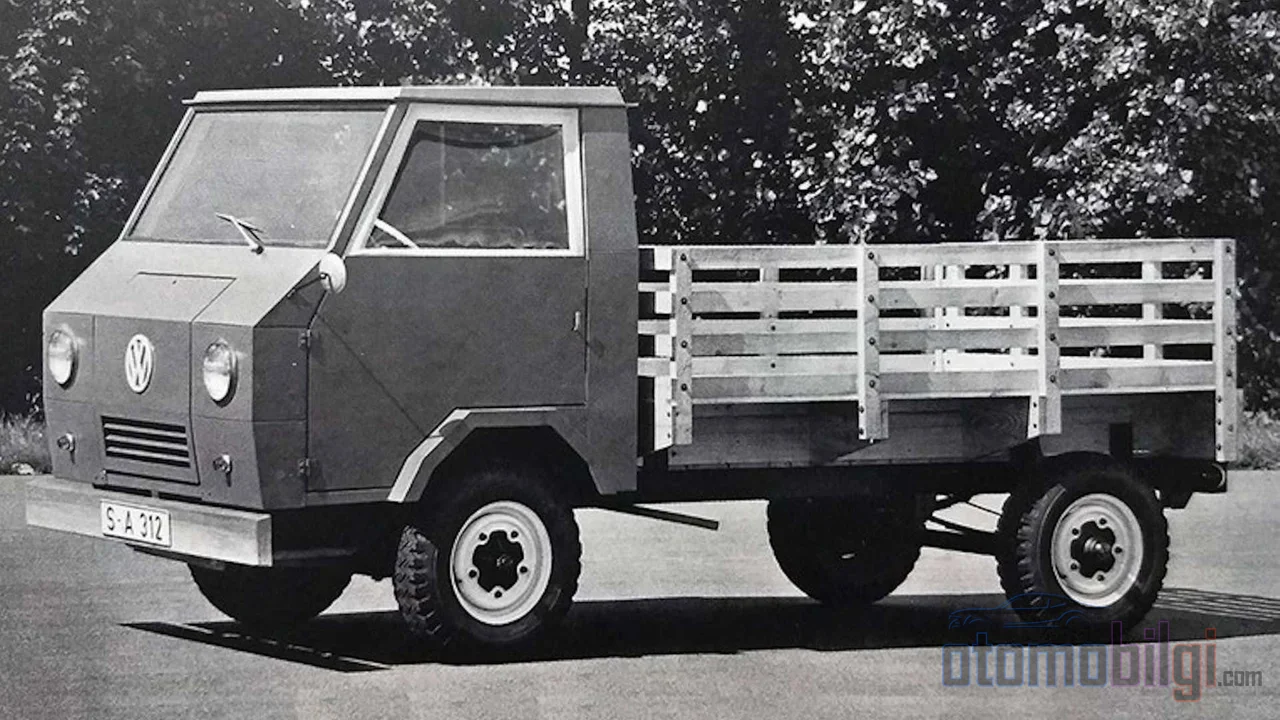
First, let's meet the main character. The Volkswagen EA489 Basistransporter was a super-simple light commercial truck that VW produced from 1975 to 1979. In Mexico it was known as the "Hormiga," Spanish for ant - a small but hardworking bug that fit everywhere. It was VW's second simply-built light commercial vehicle; its godfather of a name was the Plattenwagen.
The logic of the project was very simple: to build a vehicle far cheaper than its rivals, light and easy to maintain. In other words, VW thought something like this: "Let's sell developing countries not fancy cars, but a hardworking mule that gets the job done." Nice idea, right? It was such an odd project that the EA489 was never sold in Germany, where it was designed and primarily produced. The Germans could not ride in this vehicle they themselves built, in their own country; the vehicle was entirely focused on export markets and developing countries.
Production began in Hannover, then moved to the Puebla plant in Mexico. But the most interesting part: in some countries the vehicle was shipped as a CKD, that is, a completely knocked-down body kit, and assembled there. That list included Australia, New Zealand, the Philippines, Pakistan, Indonesia, Papua New Guinea, and right here - Türkiye. 2,600 units were produced in Germany and 3,600 in Mexico; it is considered one of the rarest VW models in the world.
Who Were the Ciftcilers and How Did This Project Come to Türkiye?
Now the second character enters the scene: Ciftciler. Today the first name that comes to many people's minds when VW is mentioned may be quite different, but the truth is: Ciftciler Holding's first company served as the uninterrupted distributor of Volkswagen and Audi in Türkiye from 1951 to 1994. Even before the Dogusan, the VW door in Türkiye was Ciftciler's. So in the 70s, when VW was mentioned in Türkiye, only one family came to mind: Ciftciler.
Moreover, this was not their first attempt. In 1964 the Holding had begun pickup assembly operations in Türkiye for the first time; VW vehicles shipped from Germany painted and with body assembly completed were put together here. So they had assembly experience in hand, they had the team, and they had the distributorship. Through the efforts of the late Sait Ciftci, this business was taken a step further, and VW pick-up assembly began in their own factories. In today's terms, it was a genuine attempt at real industry, not, as one distributor put it, "just a seller."
Highlights
- The EA489 Basistransporter was VW's simplest truck, produced between 1975-1979.
- This is the only Volkswagen model produced in Türkiye.
- The manufacturer was VW's distributor of the time, Çiftçiler.
- 2,600 units were produced in Germany and 3,600 in Mexico; the number for Türkiye is unclear.
- The vehicle was never sold in Germany, where it was designed.
Technical Specifications of the EA489: Small Engine, Big Job
Now, we said "small engine, big job" in the title, but hold on, let's make a correction: the engine isn't all that small, and the detail that completes the job is this - a boxer engine mounted at the front, not the rear. We're talking about that legendary air-cooled setup we know from the VW Beetle 1303. So no radiator, no water, no freezing worries; a simple, durable structure with a repair shop to be found on every corner. In my opinion, a sensible choice for a work vehicle operating in tough conditions back then.
When we look at the vehicle's specs, the picture is quite clear: a two-wheel-drive... a front-wheel-drive truck with a 2-door all-metal cab. Its gearbox is 4 forward + 1 reverse, and all gears are synchronized - quite modern by the standards of that era. The suspension is independent with torsion bars at the front, and leaf springs on a rigid axle at the rear. With a curb weight of 1290 kg, this vehicle could carry a load of 1 ton; it could do more work than its own weight. Take a look at the table below, the numbers speak for themselves:
| Specification | Value |
|---|---|
| Engine | 1584 cc, flat-4 cylinder, air-cooled gasoline |
| Power | 37 kW / 50 hp @ 4000 rpm |
| Gearbox | 4 forward + 1 reverse, all gears synchronized |
| Drive | Front-wheel drive |
| Payload capacity | 1 ton |
| Curb weight | 1290 kg |
| Dimensions | 4064 x 1684 x 1988 mm |
| Wheelbase | 2395 mm |
| Top speed | 85 km/h |
Wait a minute, a top speed of 85 km/h? Did you know that even a scooter goes faster today? But back then, speed was not the goal for work vehicles; the goal was to take your load and arrive at your destination safe and sound. Think about it: you deliberately keep a truck's speed low, the engine never strains, and it insistently becomes long-lasting. It's actually a philosophy resembling the speed limiter of a modern vehicle.
Was This Production in Türkiye, or Assembly?
This is exactly where the most interesting, most honest debate of the story begins. The EA489 is known as the only Volkswagen model produced in Türkiye, and it hit the roads in the 1970s at Çiftçiler Otomotiv's factory. However, it is quite natural that there is debate over whether this process was full production or CKD (completely knocked down) body kit assembly. Why? Because the vehicle was assembled from kits that arrived disassembled from Germany - in other words, an assembly-heavy process between design and production.
We need to be realistic about this: Saying "it's produced" does not mean every part was made from scratch inside the factory. Even today, the concepts of assembly and production are intertwined around the world. What Çiftçiler did is best described as "CKD assembly," in my opinion; that is, kits arriving from Germany being assembled in Türkiye. But this is also a fact: this was no ordinary import, it was a factory-level organization. No need to exaggerate, and absolutely no need to belittle it either.
As for the number in Türkiye... Unfortunately, we have no clear figure for how many EA489s were produced in Türkiye. Whether it started in 1975 or 1976 is also a mystery. To me, this uncertainty is the most striking aspect of the story; so few documents have survived that the story of a car is practically being told before it turns into an urban legend.
Who Were the Rivals? Anadol, Skoda and International
When the EA489 entered the Türkiye market, it was not alone; it had serious rivals in the pickup class. Here are three names sold in the same segment at that time:
- TOE manufacture International Harvester 1100 D
- Otosan manufacture Anadol pickup
- Çelik Montaj manufacture Skoda 1202
Now look at this list: an American-origin work vehicle, a Turkish-designed Anadol, and a Czechoslovak model. The Turkish pickup market in the mid-70s was far more colorful than one might think, wasn't it? Everyone came from a different school, and the EA489's trump card was certainly not speed or luxury; it was simplicity, cheapness, and easy maintenance. Like an ant: small, humble, but able to adapt to any environment.
Why Couldn't This Attempt Last?
Good question, and here we need to be honest: We have no clear and detailed explanation of why production ended. What we do know is this: the EA489 was already a short-lived project worldwide - it was produced for only 4 years, from 1975 to 1979, and then stopped completely. In other words, the end of the Turkish experiment was a natural part of the vehicle's global story. VW saw this plain pickup as such a marginal project that it would not even sell it in Germany; such a product cannot carry a long-term industrial strategy.
Let's also add the picture on the Turkish side: Tofaş had come on the scene in 1968 and Oyak-Renault in 1969, and the industry had begun its real transformation with these major partnerships. The Devrim was designed and produced in 1961, and the Anadol hit the roads in 1966 as the first mass-produced domestic car (1,750 units in its first year!). Within this great flow, a distributor-based, assembly-focused, short-lived pickup attempt naturally struggled to leave a lasting mark. The Turkish automotive industry went from roughly 11,000 units of annual assembly in the 1960s to 1.2 million units of production today; on that journey, there were attempts that got lost along the way, and the EA489 was one of them.
So Which Is the First and Only Volkswagen Produced in Türkiye?
As promised, let's wrap up the clear answer here. The first and only Volkswagen model produced in Türkiye is the EA489 Basistransporter; in the mid-1970s, it hit the roads through CKD body kit assembly at the factory of the VW distributor of the time, Çiftçiler Otomotiv. Production in Germany and Mexico continued until 1979; the number produced in Türkiye, however, remains unclear to this day. The distributorship began in 1951 and lasted until 1994; it was even announced in 2019 that VW had chosen Türkiye for a new factory, though that plan was later postponed. So the story of VW and these lands has continued ever since that little ant - it's just that very few of us remember that chapter in between.
In my view, the real value of this story is this: The grand narratives always revolve around Devrim, Anadol and Tofaş, but in that key period like the mid-70s, there were other attempts as well. Çiftçiler's EA489 venture was not a distributor's, but an industrialist's courageous yet humble step. Had you ever heard of this vehicle? If anyone has seen it on the roads or heard about it from grandparents, we'd love to hear in the comments - I think this story deserves to be much better documented.
Sources
- Volkswagen EA489 - Wikipedia
- Çiftçiler Holding - Wikipedia
- Çiftçiler Holding - Corporate
- The First Volkswagen Produced in Türkiye - Otometre
- Locally Produced Volkswagen - Otometre
- Volkswagen Type EA489 Basistransporter - Below The Radar
- A Call for VW's 'Return to the Past' - Milliyet
- Devrim (Automobile) - Wikipedia
- History - Tofaş
- The History and Story of Anadol Cars - Arabam.com
- From 11,000 Annual Production to 1.2 Million - Milliyet
- Volkswagen Chose Türkiye for Its New Factory - Euronews
- Volkswagen Postpones Its Investment - BBC Turkish