How Did the Anadol STC-16 Become Türkiye's Sports Car?
Share This Page
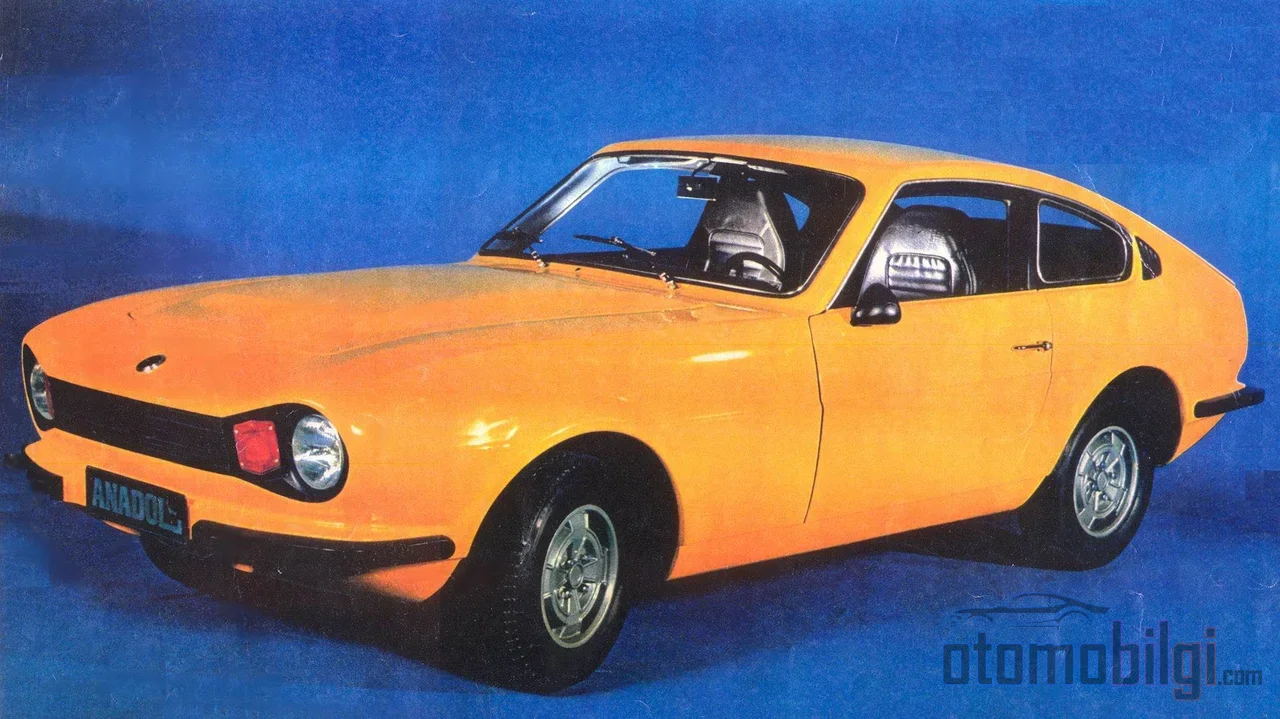
Here's a thought: The first sports car designed in Türkiye, put into series production, and leaving behind a legend that became a classic, had a lifespan of just two years. And all because of an oil crisis. What's more, the car was so good that at a test track in England, people mistook it for a new British model. This is exactly where the story of the Anadol STC-16 begins: the story of a great dream, a masterful design, and terrible timing.
How Was Türkiye's First Series-Production Sports Car Born?
First, a bit of context is needed. The Devrim, produced in 129 days at the Eskişehir Railway Factory in 1961, was Türkiye's first attempt at an automobile, but it never went into series production. The honor of series production came in 1966 with the Anadol; Otosan, a partnership between Ford and Otokoç, put the first Turkish series-production car on the roads, based on the British Reliant design. As the Anadol family grew, in 1971 a completely different idea took shape in the mind of Erdoğan Gönül, who had become Otosan's General Manager: why not give the Anadol brand a sports car?
Gönül managed to convince management, and approval for series production was granted. The goal was clear: to attract the attention of the upper income group and bring prestige to the brand in rallies. The name STC is known by two different interpretations; one is "Sport Turkish Car 1600", the other is "Sport Touring Coupé 1600". It didn't take young people long to come up with their own translation: Super Turkish Monster 1600. I'll admit, the second one suits it much better in my opinion.
Highlights
- Only 176 units were produced between 1973-1975
- The design belongs to Eralp Noyan, a graduate of the Royal Academy of Fine Arts in Belgium
- 1599 cc Ford Kent engine, 68 PS of power, a top speed of 174 km/h
- The body is entirely fiberglass, with a curb weight of only 920 kg
- The fiberglass color is Ford Signal Yellow, the famous "Alanya Yellow"
From Eralp Noyan's Drawing Board to the Roads
So where did the shape of this car come from? The answer lies in a young designer: Eralp Noyan. After graduating from the Royal Academy of Fine Arts in Belgium, Noyan returned to Türkiye in 1969 and had done on-the-job training at Otosan. His initial designs were revised, and for a while British designer Carl Orsen was even assigned to the task. But then a turning point occurred: Crosswhite, who was also responsible for Hyundai's design, saw Noyan's drawings and asked that the job be given to him. Noyan renewed his designs in six months, and the characteristic silhouette of the STC-16 emerged.
Behind the drawings were some interesting sources of inspiration. Traces of the Datsun 240Z, Saab Sonett, Aston Martin, Ginetta, Marcos, and others are debated; Noyan, however, had stated that he drew inspiration from the Supermarine Spitfire fighter aircraft for both the interior and exterior design. The engineering team was strong as well: Ekber Onuk, Günay Atuk, Kadri Nişel, Necdet Oral, and Zeki Diker. And the story of the chassis is a classic tale of garage culture: engineers cut open an Anadol chassis and produced the first test carrier in just 1 week. Turning a chassis into a sports car with shears is, in my view, one of the most romantic scenes in Türkiye's automotive history.
The project's development process took 11 months and the first three prototypes were built. Domestic tests were carried out at Cengiz Topel airfield and on the Istanbul–Adapazarı section of the E-5; the first crash tests also took place during this period. Then came the international exam.
M.I.R.A. On the track, "320-E": The English Couldn't Believe This Car Was Turkish
Production Manager Nihat Atasagun took the car to the M.I.R.A. test track in England. The test plate there was "320-E", and because of this plate the car was stopped in many places it passed through and asked for information. In fact, in many places it was thought to be a hidden new model of an English brand. A car sent from Türkiye being mistaken for an English car in England... In my opinion, this is precisely the sweetest detail of the STC-16 story.
On the track the car was tested by many English drivers and the feedback was taken seriously: changes were made to the car in line with performance, handling and safety suggestions. The fruit of these tests was harvested in April 1973; the first STC-16 rolled off the production line. Production speed was at first one car per week, then grew day by day. So almost every day a new sports car was being born in Türkiye. Being able to write this sentence in 1973 is still exciting.
What Kind of Car Was the STC-16 Technically?
Looking at the technical picture, we see that the STC-16 followed the classic sports car formula of its era: front engine, rear-wheel drive, two seats and low weight. The body was monocoque fiberglass, while the chassis was entirely steel. The engine was the familiar 1599 cc Ford Kent block of the Anadol family; the transmission was also sourced from the high-performance Ford Cortina and Capri. 68 PS may sound modest by today's standards, but it was quite sufficient for pushing a 920-kilogram body.
| Feature | Value |
|---|---|
| Engine | 1599 cc Ford Kent, 4 cylinders |
| Power | 68 PS @ 5200 rpm |
| Torque | 116 Nm @ 2600 rpm |
| Top speed | 174 km/h |
| 0-100 km/h | 15-17 seconds |
| Kerb weight | 920 kg |
| Dimensions | 3980 x 1640 x 1280 mm |
| Brakes | Solid discs at the front, drums at the rear |
| Body / chassis | Fiberglass monocoque / steel |
Weight distribution was 55%/45%, turning circle just 9 meters, fuel tank 39 liters. Its being a two-seater is still debated today: while a marketing book cites the car's two-seater layout as the reason it didn't catch on, Noyan objected to this view; according to him, every sports car of the era was a two-seater and the issue was about culture. I think it's an unfair criticism too; you don't blame a Lotus for being a two-seater.
Why Is "Alanya Yellow" Always the One Remembered?
Imagine an STC-16. The color that comes to mind is most likely a bright yellow, right? This color is Ford Signal Yellow, coded FEU1022-KL in the Akzo scale, and it has become known among the public as Alanya Yellow. This shade, which became the signature of the STC-16, fit the car's retro-futuristic lines incredibly well. Still, not every example was yellow; a small number of red (with white stripes) and white (with blue stripes) examples were also produced. If you saw an Alanya Yellow STC-16 on the road today, I guarantee you would brake in astonishment - everyone who sees one takes a photo, no joke.
How the Oil Crisis Ended a Legend
Here comes the bitter part of the story. The 1973 global oil crisis changed the picture in Türkiye, just as it did all over the world. Three obstacles suddenly appeared in the STC-16's path: fuel prices soared, body costs rose because fiberglass is also a petroleum derivative, and the car's high fuel consumption turned into an ever more expensive luxury by the day. Moreover, the price had already skyrocketed; while other Anadol models sold in the 50,000-55,000 TL range, the STC-16 was above 70,000 TL.
Under these conditions, the customer base inevitably narrowed: rally drivers and sports car enthusiasts. Total production remained at just 176 units, and most of them rolled off the line in 1973. It was a short-lived production run, yes - but hardly a stillborn project. Because the STC-16 never left the race tracks and rally roads.
The Beast That Shone in Rally Fields
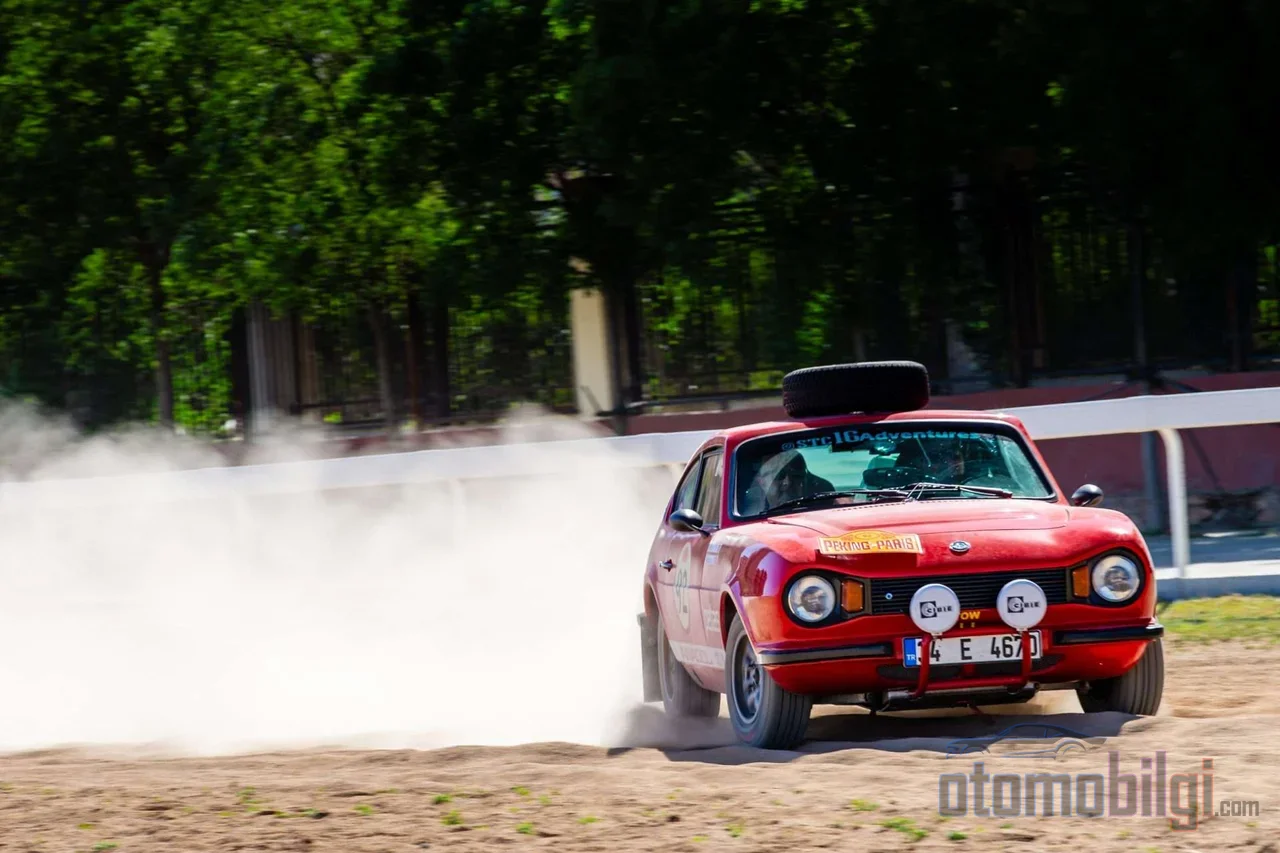
The standard STC-16 may look like a gentle coupé, but the rally versions were a different beast altogether. With lightweight chassis and modified 140 HP engines, they raced - and won - in Türkiye and world rallies. Drivers such as Renç Koçibey, Demir Bükey, Romolo Marcopoli, İskender Aruoba, Serdar Bostancı and Cüneyd Işıngör sat at the wheel. So the STC-16 was not just a car that was sold; it was a source of pride for Turkish motorsport. The lightness of the fiberglass body was worth its weight in gold in racing; climbing from the standard 68 PS engine to 140 HP was practically witchcraft by the standards of the era.
How Many STC-16s Are Left Today?
Giving an exact number is unfortunately not possible; estimates of the remaining running examples range from 25 to 35. The figures are estimates and differ from one another, but the common point is this: the STC-16 is now a serious collector's item. It is even seen in second-hand listings that a 1973 model example is listed for millions of lira. In 2024, an example brought back to life by Ali and Alican Eriç completed a 14,500-kilometer rally marathon from China to France in just 37 days, led by Serdar and Murat Bostancı. Imagine a nearly 50-year-old Turkish sports car running nonstop from China to France - I still get goosebumps. The car's trace in popular culture is also compelling; it starred in the 2014 film "Zaman Makinesi 1973" (Time Machine 1973).
The designers' journey is interesting too: Eralp Noyan and Ekber Onuk were working on new sports cars at the Yonca-Onuk Shipyard in Tuzla in 2004; the duo later worked together on the design of the Kaan-class composite-hull fast attack craft. From fiberglass to an automobile, from an automobile to a war boat... Apparently, once the love of composite materials enters your door, it never lets go. Let us also note with sadness that Noyan has left us.
Conclusion: Short-Lived but Unforgettable
The Anadol STC-16 was the first car designed and put into series production in Türkiye after the Devrim, and the first Turkish-made sports car. Its production run of 176 units does not make it a failure; what makes it a success is that it proved Türkiye could design a car, produce it, and earn applause at Britain's most prestigious test track. This story, cut short by a historical disaster like the oil crisis, still deserves to be told with pride today. If one day you see an Alanya Yellow STC-16 at a classic car meet, go up to it and look carefully at its chassis - remember the story of the Super Turkish Monster, born from the cutting of an Anadol, with a hint of Spitfire.
Sources
- Anadol STC-16 - Wikipedia
- The architects of the Anadol STC 16 pursue new sports cars - Hürriyet
- A4 STC-16 - Anadol Fan Club
- Why Was Türkiye's First Domestic Sports Car STC-16 Forgotten? - Webtekno
- Devrim (car) - Wikipedia
- The Devrim Car - Eskişehir Metropolitan Municipality
- anadol stc 16 - ekşi sözlük