How Did the Renault 9 Enter Production in Turkiye?
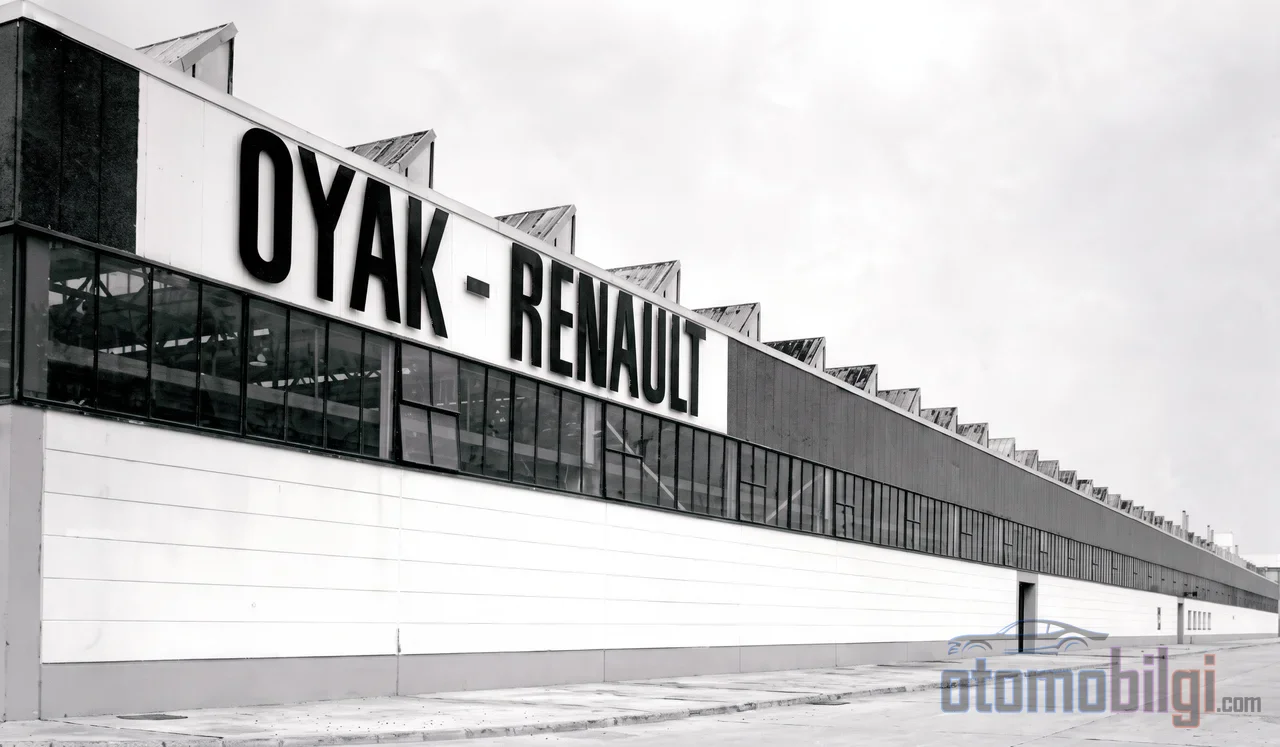
Spring of 1985... At the Oyak-Renault factory in Bursa, the lines are slowly speeding up and something serious is happening: The facilities, which have been producing only the Renault 12 for 14 years, are preparing for a second model. That model's name is the Renault 9. So how did the Renault 9 enter Turkish production, and why did this transition change the Turkish automotive industry so much in the post-Anadol era? The answer is not as simple as you think; because this story contains both a major engineering leap and the reality of assembly with imported parts, all at once. If you're ready, let's take a journey to the Turkiye of the '80s.
The road from single-model to multi-model production
First, let's set the scene. Oyak Renault Otomobil Fabrikalari A.Ş. was founded in 1969 as a partnership between OYAK and Renault; during its founding period, the partnership shares were distributed as 44 percent to Renault, 43 percent to OYAK, and 13 percent to Yapi ve Kredi Bankasi. On May 14, 1971, the first Renault 12 came off the line, and in the same year 1,514 vehicles were produced by a team of 381 people. Sounds small, doesn't it? But every big thing starts small.
The following years gained momentum. In 1973, with the Renault 12 TS, local production of critical parts such as the engine block, crankshaft, pistons, cylinder head, gearbox, and gears began. In other words, the factory was no longer just tightening screws; it was doing real manufacturing. The 50,000th vehicle came off the line in 1975, and the 150,000th in 1978; in 1980, the first export was made, with 700 Renault 12s and 112 engines shipped to Egypt. In 1983, the 250,000th vehicle arrived, and in the same year the first engine running on unleaded gasoline began to be used with the Renault 12 GTS.
But there was a problem: The factory was still producing a single model. Meanwhile, in the same period, automakers around the world were in a race to diversify their models. It was impossible to remain lasting in this race with a single model. This is where the Renault 9 comes in.
1985: The Renault 9 enters the Bursa lines
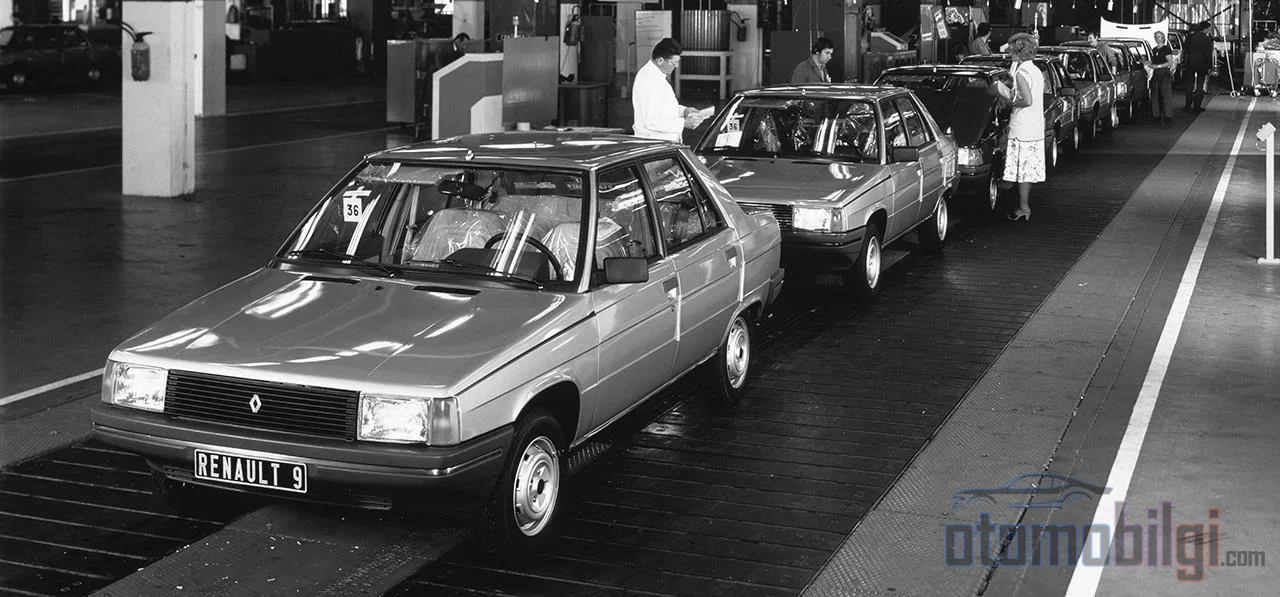
The Renault 9, after intensive prototype, testing, and research work in Bursa, was put into production in 1985 as the second model. The first version on the Turkish market was the GTL, which was released for sale on April 1, 1985. Another important development took place in the same year: While Otosan started producing the Ford Taunus, the Renault 9 began coming off the lines on the Oyak-Renault side. In other words, 1985 went down in history as the year when brands manufacturing in Turkiye diversified.
Highlights
- The Renault 9 entered production at the Oyak-Renault Bursa factory as the second model in 1985; the GTL version was released for sale on April 1, 1985.
- The Renault 11, Turkiye's first hatchback, came off the line in 1987 with its 1.4-liter GTS version.
- Firsts such as automatic transmission, central locking, and aluminum alloy wheels were included in production with the Renault 11.
- Turkiye production of the Renault 9 continued from 1985 to 2000; its interior and exterior design were renewed many times.
- Starting from 1980, the 1200 cc Erk diesel engine began to be used in Anadol pickups.
What did the Renault 9 change with the innovations it brought?
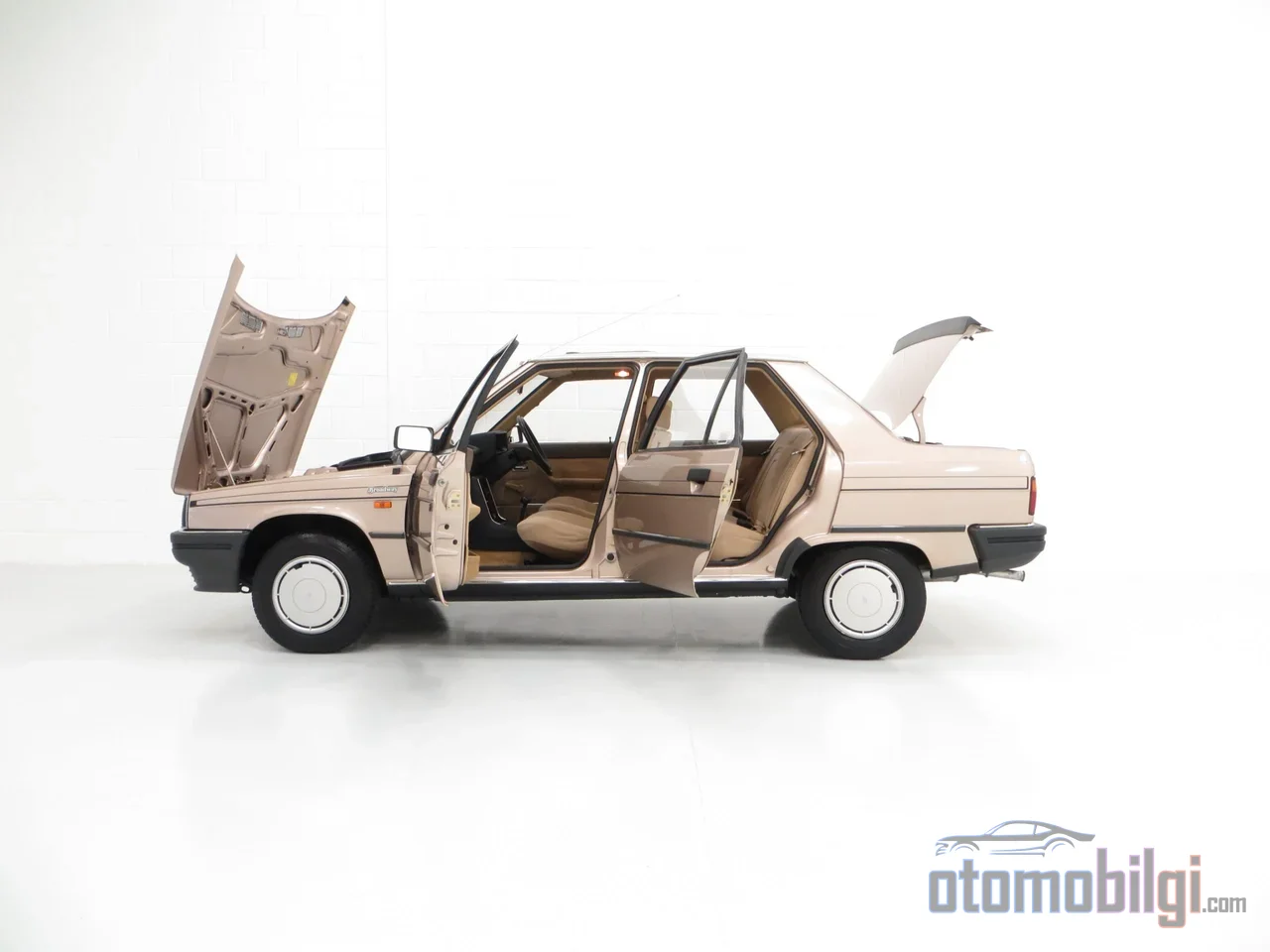
The Renault 9 was not just a new body, but a new technology package. The model featured innovations considered serious for the time, such as an electronic ignition transversal (crosswise-mounted) engine and intermittent windshield wipers. To liken electronic ignition to everyday life: The old ignition systems did their job, but the electronic one was like a lighter that fires exactly right every time, instead of a glowing match; more reliable, more economical.
Renault 9 GTL: First generation, 1985-1987
The early figures of the GTL, the first version to enter production in Turkiye, were as follows: top speed 165 km/h, with consumption of 5.8 l/100 km outside the city, 8.2 in the city, and 7.9 combined. Quite a balanced family car profile by the standards of the day, right? As for the local content side, the situation is interesting: The Renault 9 GTL was assembled in Bursa, but many of its parts were imported from France. I will return to this detail shortly, because this is exactly the most crucial point of the story.
Technical specifications of the Renault 9: A table that varies by version
Now let's refresh our knowledge a bit: A car's performance figures vary depending on the measurement standard and engine version. For example, the 1.4 gasoline engine is quoted as 83 hp under the SAE standard and 72 hp under the DIN standard; these two numbers are the same engine expressed with different measurement methods. The 0-100 km/h acceleration values are also published in a wide range from 11.9 to 21.4 seconds due to different engine and equipment combinations. So it would be unfair to judge based on a single number.
With broad, cross-verifiable data, the clearest picture is as follows:
| Feature | Renault 9 (L42) 1.4 gasoline | Renault 9 diesel (GTD/TD) |
|---|---|---|
| Engine displacement | 1398 cm3 | 1.6 liters |
| Maximum power | 72 hp @ 5750 rpm | 54-55 HP @ 4800 rpm |
| Maximum torque | 106 Nm | 102 Nm @ 2250 rpm |
| 0-100 km/h | 12.5 s | Not announced by the manufacturer |
| Top speed | 178 km/h | Not announced by the manufacturer |
Note: No estimate was made here for the diesel version's 0-100 km/h and top speed values, as no reliable and cross-verifiable data was published. Also, over its many years of production, the model's engine options included gasoline units ranging from 60 to 80 HP and diesel options; in the 1991-1996 Spring period, a 1389 cm3 engine coded C1J was used, and consumption at a constant speed of 90 km/h was measured at 6.1 l/100 km.
1987: The Renault 11 and Turkiye's first hatchback
Two years later, the second act begins. In 1987, production of the Renault 11 began at the Oyak-Renault facilities in the Akcalar, Nilufer area of Bursa. This was Turkiye's first hatchback model; that is, a car of practical living, with a rear door integrated with the trunk. A brief reminder: A hatchback, as opposed to a sedan's separate trunk lid, is a body type loaded through a large rear-opening door. Grocery shopping, picnics, the dog, the bicycle... Everything started coming in and out through that door.
The Renault 11's journey in Turkiye began with the second version, the 1.4-liter GTS. And the gains were not limited to the body style: With this model, features such as automatic transmission, central locking and aluminum alloy wheels were included in Turkish production for the first time. These fittings, which seem ordinary today, were considered luxuries in 1980s Turkiye. During the production period between 1987 and 1996, versions like the Flash also rolled off the lines.
The Anadol front in the same period: Here comes the Erk diesel
In those years, it was not only the French partnership in Bursa that was evolving; Otosan in Istanbul, Anadol's hometown, was evolving too. The Anadol A1, whose production began on December 19, 1966, was Turkiye's first mass-produced domestic passenger car, and seven different models appeared between 1966 and 1991: A1, A2, STC-16, SV-1600, Bocek, A8-16 and the Otosan 500 Pickup. From 1980 onwards, pickups began using a 1200 cc Erk diesel engine in addition to the 1300 cc gasoline engine. The diesel engine's fuel economy was a huge relief for operators in commercial use.
So the 1980s was a decade in which everyone manufacturing in Turkiye diversified, whether domestic or foreign brand. The era of a single uniform vehicle on the assembly line was closing, and an era of multi-model, multi-technology production was opening.
Was it assembly, or full production? Here lies the heart of the story
Now let's get to the full answer to the question at the beginning. The entry of the Renault 9 into Turkish production can be summarized in one sentence: In 1985, at the Oyak-Renault plant in Bursa, it was put into production as the second model after the Renault 12, following intensive prototype and testing work, and the GTL version went on sale on April 1, 1985. But this transition carries a two-layered reality.
On the one hand, the factory's own narrative positions 1985 as a period in which engineering competence strengthened and the localization rate increased significantly compared to previous years. Indeed, since 1973, engine and transmission parts had been produced locally and could be exported; these are signs not of an assembly industry but of a manufacturing industry. On the other hand, many parts of the early Renault 9 GTL were imported from France. So 1985 was not a magic key; it was a gradual but determined step that filled the missing link in the domestic automobile industry's transition from assembly to full production.
I think that is exactly why it is such a good story. There are no ridiculously ambitious promises here; there is the trace of patient accumulation, of know-how built up model by model. The Turkish production of the Renault 9 lasted 15 years, from 1985 to 2000, and during this time the interior and exterior design was renewed many times; generations like the Broadway and the Spring rolled off the line. A model staying on the line for 15 years was also proof that the factory could now produce to world standards.
The trace that extends to today: The 8 millionth vehicle and beyond
So what do you think became of that 1985 second-model decision? Today, Oyak-Renault is one of Turkiye's largest automotive production centers, with an annual production capacity of 390,000 vehicles; more than 75 percent of production is exported, and on average a vehicle rolls off the line every 56 seconds. In 2021 the 7 millionth automobile and engine was produced, and in 2025 the 8 millionth vehicle came off the line in Bursa with the Duster. In 2026, production of the Clio 6 and Renault Boreal began.
I don't know which of these could have been predicted on the day the Renault 9 entered the production line, but one thing is certain: Today's Bursa would not exist in a world where a factory running on a single model did not dare to move to multi-model production. That second model decision in 1985 was a corner that seemed small but set the direction. And those who take the corner correctly win the race.