Why Was the Renault 12 Toros So Beloved in Turkiye?
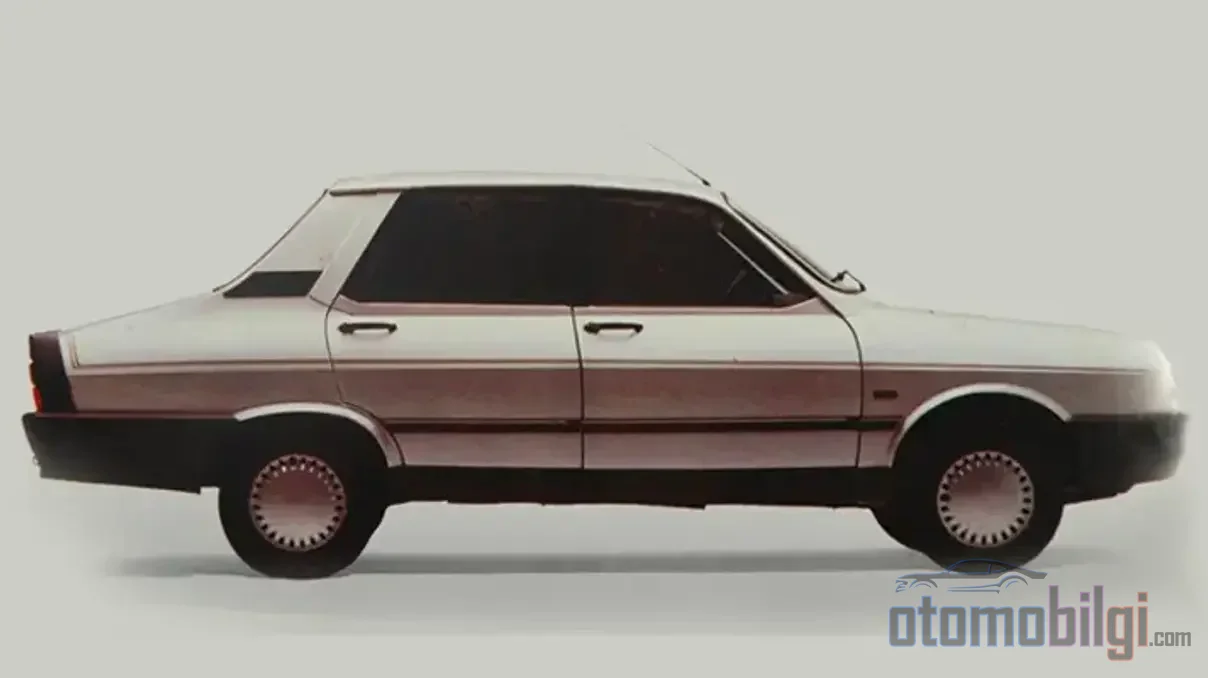
Think of a car that went out of production in France in 1980; nine years later, in another country, under a new name, it starts being sold at dealerships as brand new. What's more, this is not a nostalgia craze, but an official production decision. This is exactly how the story of the Renault Toros begins, and for a full eleven years it settles into the lives of the streets, taxis, government offices, and families. So why did this car, based on an old model, remain in such high demand for so long?
A Chapter Closes in France, a New One Begins in Bursa
Let's set the context first, because the story of the Toros actually goes back much further. Oyak-Renault was officially established on December 4, 1969, with an announcement in the Trade Registry Gazette; its partnership structure consisted of 44% Renault, 43% Oyak, and 13% Yapi ve Kredi Bankasi. The goal was a Renault 12 manufacturing and assembly facility with an annual capacity of 20,000 vehicles on two shifts. The first Turkish-made Renault 12 rolled off the line in Bursa on May 14, 1971, becoming both the factory's and the country's first front-wheel-drive car.
Let's pause and think for a moment: In its early years, this facility looked like a typical assembly plant; in 1971, only 1,514 vehicles were produced with 381 employees. But in 1973, a step was taken covering the engine block, crankshaft, and gearbox, and many mechanical parts moved to domestic production. So the transition from assembly to manufacturing happened concretely in this period, at this factory. Over its 29-year production life, the Renault 12 sold over 600,000 units, and on June 19, 1980, it shipped its first export batch: 700 Renault 12s and 112 engines were sent to Egypt. The export journey, which began in 1974 with 20 vehicles sent to Lebanon, extended to a wide list ranging from Senegal to the Ivory Coast.
By the end of the 1980s, the Renault 12's production in France had long since ended (it started in 1971 and stopped in 1980), but the line in Bursa was still running. Oyak-Renault had on its hands a solid, familiar vehicle with low running costs; the only question was how to carry it into the late '80s. The answer: a thoroughly revised body, a few new mechanical parts, and a new name. Launched in the second half of 1989, this car was the Toros, and it held the title of being the last car in the world produced under the Renault 12 name.
Highlights
- Produced between 1989 and 2000, the Toros is the last car in the world produced under the Renault 12 name.
- The C1J engine with a displacement of 1397 cc delivers 62 HP of power and a top speed of 160 km/h.
- When demand concentrated on the 5-speed gearbox, production of the 4-speed version ended in 1991.
- Production was halted in 2000 because compliance with the European Union Euro emission standards could not be achieved.
The Car That Took Its Name from a Mountain Range
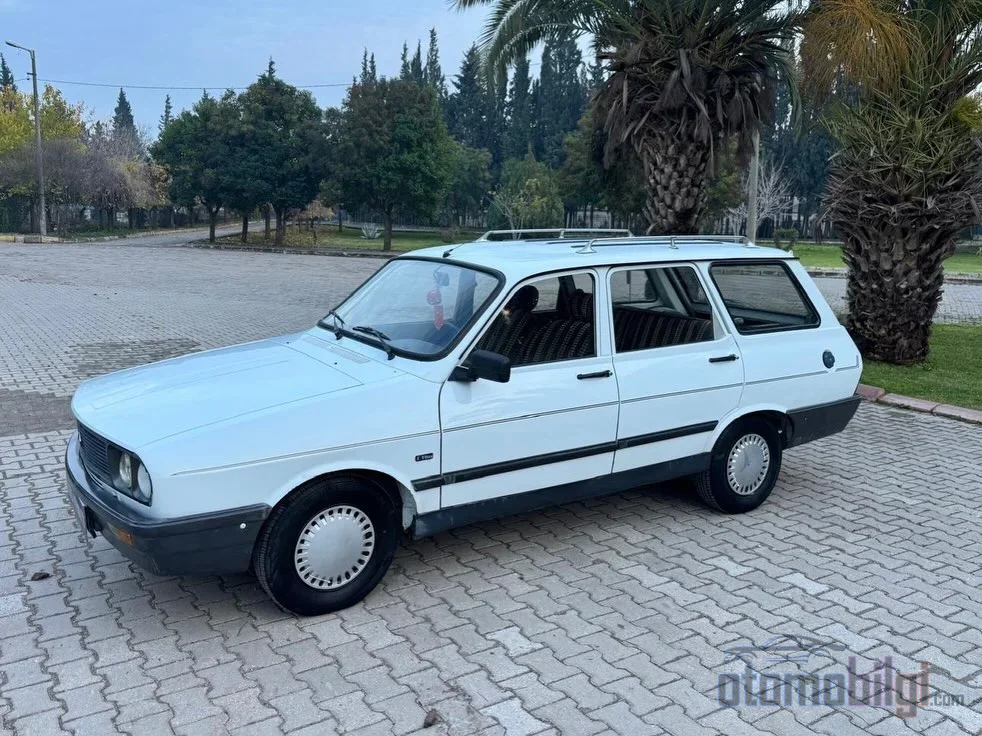
The marketing department's job was not difficult; in fact, quite the opposite - it was up in the hills. While rival companies used local names like Murat and bird names, Oyak-Renault chose a different path: It borrowed the name of the Taurus Mountains because they symbolize grandeur, durability, and strong pulling power. The aim was to reinforce Renault 12's already well-known solid and reliable image with a Turkish name; at the same time, to keep the old model alive without losing sales share to the new product range (R9, R11, R21, R25).
This name choice worked so well that it even made history on the advertising front. In the commercial filmed in 1989, two Toros models were lifted by helicopter to the peaks of the Taurus Mountains. This film by Yorum Agency won the Jury Special Award at the Renault advertising competition in Paris, where giants such as Publicis, Saatchi & Saatchi and Lintas competed. A car commercial winning awards is one thing; but photographing a car bearing the mountain's name at the summit of those very mountains sums up in a single frame just how apt the naming strategy was.
What Sets the Toros Apart from the Renault 12? Contents of the Facelift
The change distinguishing the Toros from the old Renault 12 was a facelift package commissioned from a design firm in France: a 5-speed manual transmission option, plastic bumpers, a plastic side step extender, and new-type front indicator lights. It may sound modest; but it was a sensible package considering the sole aim was to update the old body. The car hit the road with a long gear ratio that reduced fuel consumption in city traffic, and a look suited to the expectations of its era.
On the technical side, the C1J coded engine did most of the work: 1397 cc displacement, 62 HP (DIN) power, and a 160 km/h top speed. The dimensions also preserved the classic Renault 12 silhouette. Here are the basic technical specifications:
| Specification | Sedan | Station Wagon |
|---|---|---|
| Length | 4318 mm | 4350 mm |
| Width | 1616 mm | 1616 mm |
| Height | 1470 mm | 1470 mm |
| Kerb weight | 890 kg | 950 kg |
| Engine | C1J 791 - 1397 cc, 62 HP (DIN) | |
| Top speed | 160 km/h | |
| Production years | 1989-2000 | |
The robustness inherited from its distinguished family ancestors was a bonus: Its predecessor, the Renault 12 GTS (1983-1984), had the extraordinary equipment of its time; it was the first car with an optional air conditioner and the first with power windows, and the 1400 cc C1J engine from the Renault 18 in France had carried over to all R12 models. Oyak-Renault's 250,000th automobile was also an R12 GTS (August 16, 1983).
What Changed Over Eleven Years of Production?
In 1989, the Toros launched in four versions: a 4-speed sedan and SW, plus a 5-speed sedan and SW with the NG1-062 transmission from the Renault 18. Demand for the 5-speed was so intense that 4-speed production was discontinued in 1991. Over time, the NG1-062 transmissions, known for their stiff gear changes, were replaced by the more user-friendly Elba-made NG1-063 5-speed transmissions; road holding was also improved with Monroe brand gas shock absorbers.
Beyond that, its eleven-year life passed surprisingly quietly. The visible change was limited to improvements in plastic quality; in the 1999-2000 period, tinted glass was adopted. In other words, we are dealing with a car that acts like a visual time machine: if the vehicle that came off the line in 1991 and the one produced in 1999 were parked side by side, only a careful eye could tell the difference. Was this immutability a weakness, or was it part of the product's identity? We will return to that shortly.
The Car That Settled into the Streets: Taxi, Government Office, Family Car
The Toros's place in urban culture was no coincidence. For many years it was used as an official vehicle by the police force, the military, and government institutions; there were even armored versions - with windows that would not open due to their thick glass and optional sunroofs. Most of the first models delivered to government offices were the 4-speed versions produced until 1991. A vehicle that enters through the state's doors becomes a reference for reliability in the public eye; and the Toros made full use of this mechanism.
But its true settlement happened within daily life. While the taxi-yellow version was exported to Azerbaijan, the SW model was sent to Nakhchivan as an ambulance. In other words, the Toros was not merely a car that was sold; it was a vehicle that existed simultaneously at the hospital door, at the taxi rank, in the courtyard of a government office, and in a large family's weekend plans. Throughout the 1990s, the country's automotive production rose roughly 3.5-fold, from 67,817 units in 1980 to 239,015 in 1990; the sector gained a competitive structure geared toward exports. In this expanding market, the Toros was one of the most familiar and most accessible faces.
In the public memory, the Toros is remembered not for its handling or agility, but for an entirely different quality: its progress over rough roads and its ability to carry loads. This description paints the picture of a car that did not struggle under heavy loads and shrugged off broken asphalt and harsh winter conditions. Its simple mechanical design meant low maintenance costs and easy repairs, which reinforced this image. Having someone in every neighborhood who could fix a Toros was a reassurance more valuable than the car itself.
The "White Toros" and a Dark Page in Memory
Not everything in the Toros's social footprint consists of smiling memories. The white armored models frequently used in official duties between 1991 and 1996 became entrenched in the public memory as the concept of the White Toros, and this concept is recalled together with the difficult and dark moments of that era. A car becoming a metaphor for an era is both the most striking and most painful proof of how deeply it was etched into society. When looking at a classic's story, this page should not be ignored either.
So Why Did It Not Advance, and Why Was It Loved?
The most contested heading in the Toros's story is this: Oyak-Renault made no serious development effort for the vehicle, and the Toros remained a technologically deprived, simple structure with no electronic components. For comparison, let us look here: The Renault 12 GTL, the same car's relative in Argentina, offered 1.4/1.6 engine options, electronic ignition, air conditioning, factory LPG, and a luxurious interior. In other words, the platform's potential had not been exhausted; the choice favored the cheapest and simplest production possible.
But the ironic part is this: This very simplicity also became the reason the Toros was loved. The scarcity of electronic components brought fault diagnosis down to a level anyone could understand; the simplicity of its mechanical structure kept maintenance costs low. The lack of technology was, in a way, the price of reliability. The explanation for demand never drying up over eleven years perhaps lies precisely in this tension: Nobody expected the Toros to be a modern car; everyone expected it to be a vehicle that worked and didn't leave you stranded on the road, and the Toros more than met those expectations.
2000: Emission Standards and the Farewell
As every beautiful thing must end, the Toros's end came too - and it preserved its determination until the very last moment. The reason production stopped was not technical but regulatory: Compliance with the European Union's Euro emission standards could not be achieved, and production was halted in 2000. The most striking detail lies in the moment of farewell: In January 2000, the Toros SW held the title of the best-selling domestically produced vehicle. In other words, we are talking about a car that was playing at the peak of the market even as it withdrew from production. When a product retires not because demand ever faded but because the rules changed, its chances of becoming a legend are inevitable.
The Toros Today: A Street Car That Has Reached Classic Status
After eleven years of production, the Toros began its second life. Today it is mentioned as a collector's item; examples with very low mileage are presented as collectible pieces. The second-hand market is still alive: on sahibinden.com, 1989-1998 models are listed in the 118,000-295,000 TL range as of November 2026 (these prices are current and can change rapidly), while car.com shows 242 Toros listings. In other words, the buying and selling of a model that has been on the roads for over thirty years is still running regularly.
Its footprints in popular culture are not small either. The Toros lives on across a wide area, from metal collectible toys to the Toros TX 1400 model in the game PUBG. The modern concept designs circulating on social media belong not to the manufacturer but to enthusiasts' imaginations; there is no concrete official step toward renewed production. But in my view, the real story is this: Even though the Toros is no longer produced, its place in street culture remains full.
Conclusion: Why Did the Toros Become the Car of Turkish Streets?
The answer to the question lies not in a single feature; but in several circumstances overlapping one another. First of all, there was an extremely mature, proven platform at hand: the legacy of the Renault 12, of which approximately 1.96 million units were produced worldwide and which was produced and assembled in 14 countries outside France. On top of that, government offices and taxis gave it credibility, its simple mechanical structure made it repairable in every neighborhood, its low price brought it within reach of the masses, and its robust build swallowed rough roads and heavy loads. The reason the Toros became the car of the streets was not that it was a perfect automobile; it was that it was always there when needed. A chapter closed in France in 1980 was written for eleven more years in Bursa, and what was written is still being read today.
Sources
- Renault Toros
- History - Our Milestones
- History of Renault Türkiye
- Bursa Plant (OYAK RENAULT) - Renault Group
- OYAK Renault
- Why Was the Toros's Suspension So Resilient on Anatolian Roads?
- Türkiye's Leading and Rising Manufacturing Sector: Automotive
- "Mountain Goat" Renault 12 Toros
- Renault R 12 Toros Prices & Models
- Renault 12 Toros second-hand listings