Ford Escort: The Story of 59,389 Units Produced in Türkiye
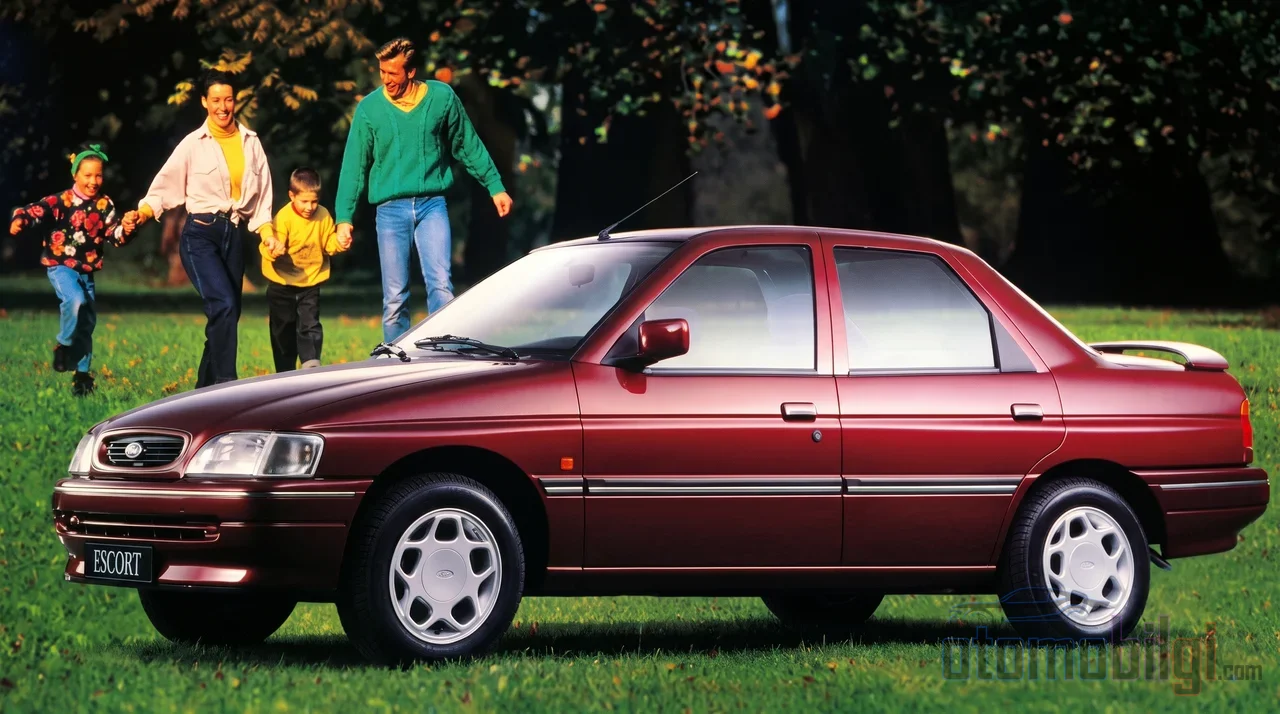
In Istanbul's Acibadem in 1993, a new car began rolling off the lines of the factory just behind the crowded streets of Uskudar: The Ford Escort. No one could fully predict that day that this vehicle circulating on the line would also change the fate of a company. Because until that day, Otosan had been producing trucks, pickups and light commercial vehicles for years; on the passenger car side, the Taunus was standing alone. The Escort represented at once the closing of this quiet period and a new beginning. So what was in the story of this car, of which exactly 59,389 units were produced in six years? Let us tell it step by step, together with every Escort that came off the line.
The Road That Began in Acibadem: How Did Otosan Get Here?
The root of the story goes back to 1928, when Vehbi Koc acquired the Ford dealership in Ankara. This dealership would become Otosan, established in Acibadem, Uskudar, Istanbul in 1959, and in 1960 the company would begin producing the Ford Consul automobile and the Ford Thames truck on the lines of that same factory. So the factory that gave birth to the Escort was one of Turkiye's most established automotive facilities.
The 1960s and 1970s were intense years for Otosan, both in terms of production and identity. In 1966, Anadol production began, and in this journey lasting until 1984, a total of 84,000 units of the Anadol took to the roads. In 1967 the Ford Transit came off the line, and in 1973 Turkiye's first sports car, the Anadol STC-16, was born. In 1983, Ford Cargo trucks were produced at the factory in Eskisehir Inonu, along with ERK, Turkiye's first domestic diesel engine. Otosan had become one of the names of the Turkish automotive industry associated with the word "first".
Then a long silence began on the passenger car side. The Anadol ended in 1984; no passenger cars were coming off the lines of Acibadem. This silence was broken by the Ford Taunus, the first vehicle it produced on September 12, 1985. The Taunus was a refined and solid family car produced in Istanbul; but by the 90s its design was aging, and its European counterparts were being renewed rapidly. The name to whom the Taunus would hand over the flag was a far more modern vehicle than itself.
Highlights
- Between 1993-1999, a total of 59,389 units of the Ford Escort were produced.
- The Escort took the place of the Ford Taunus, which had continued on the production lines since 1985.
- Production took place at Otosan's Acibadem Factory; in 1997 the company's name became Ford Otosan.
- In 1999, production was halted, as announced, for economic reasons.
Why and How Did Ford Escort Production in Turkiye Begin?
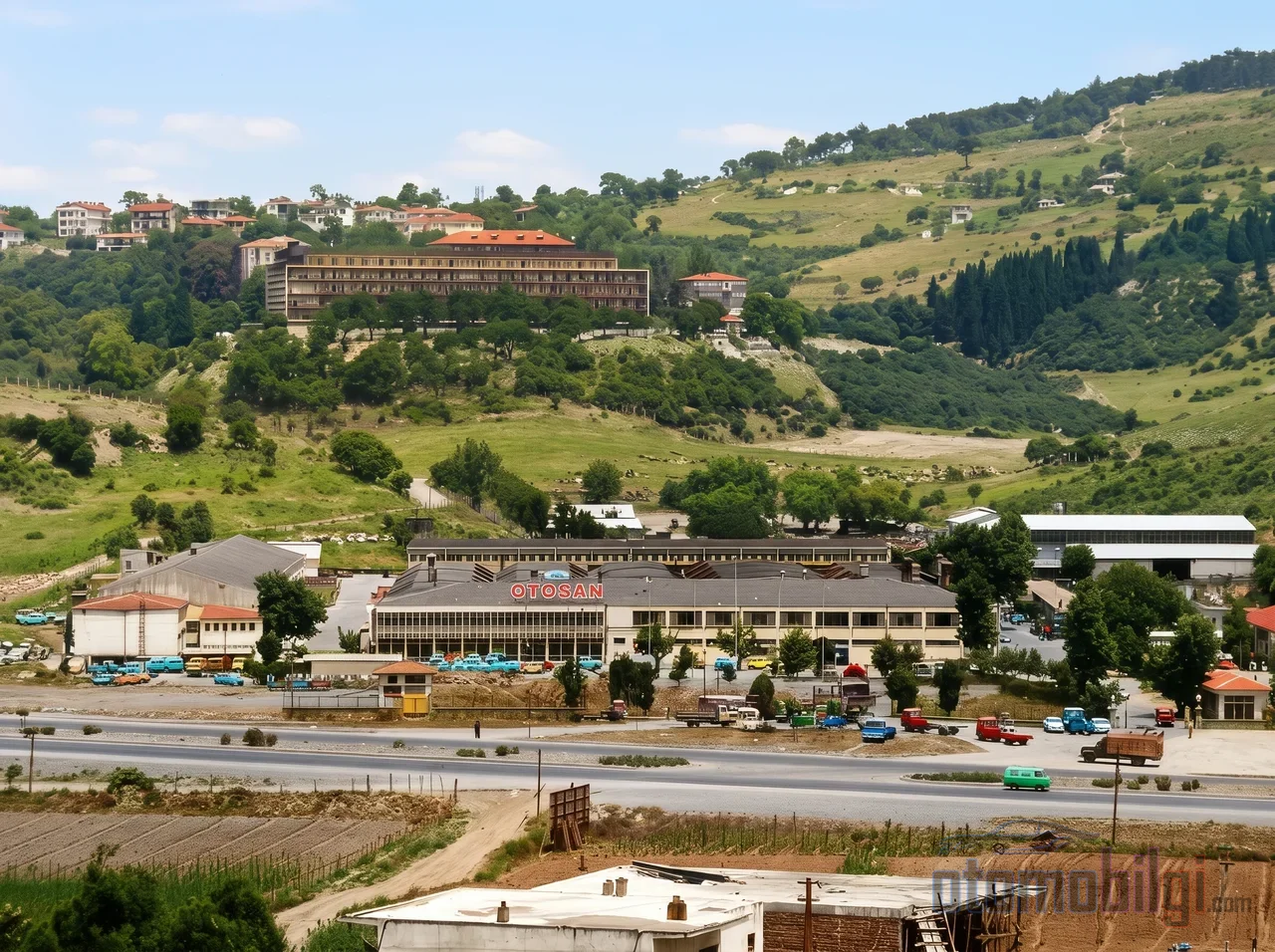
The entry of the new-generation Ford Transit into production in 1992 coincides with a period in which the Acibadem factory made a leap in terms of technology. The following year, the Escort came off the line and took over the Taunus's duty. This change was not merely a model change: the company, which had a production portfolio focused on trucks and light commercial vehicles, was stepping into the identity of once again being a true passenger car manufacturer.
It is also necessary to look at the photo of that era from the outside. Turkiye's total motor vehicle production was 67,817 units in 1980, and by 1990 it had reached 239,015 units, roughly 3.5 times that figure. In the 1990s, production of the Renault 21 began, and the first locally produced Opels and Toyota Corolla hit the roads. The Customs Union process and global manufacturers choosing Turkiye as a production base were accelerating the industry. It was precisely at this moment, with the pie growing, that the Escort took Otosan's passenger car seat.
A small but interesting footnote: The start year of Escort production is listed as 1993 in most records; while in the company's own planning presentation, the production launch is listed as 1994. This is not a contradiction, but a natural reflection of the transition calendar of the era; it can be read as the difference between the year the first cars rolled off the line and the year of the full-capacity launch.
The Escort Off the Line: Body Types and Engines
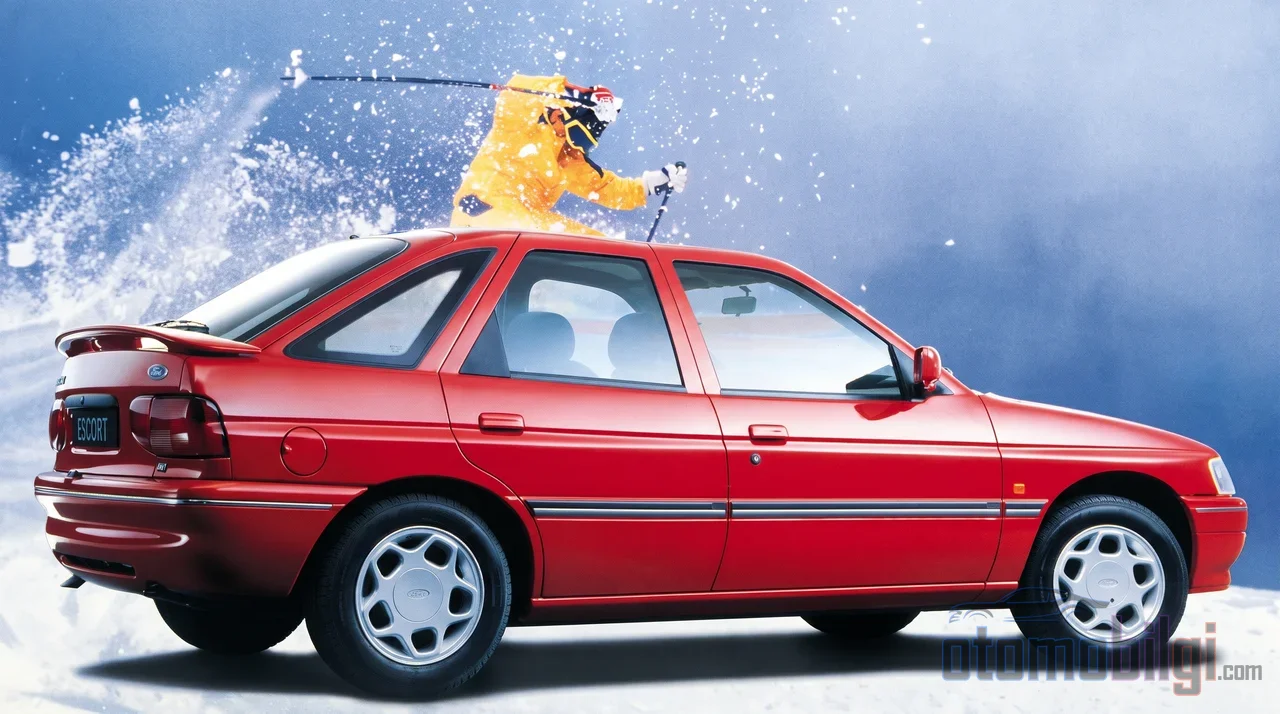
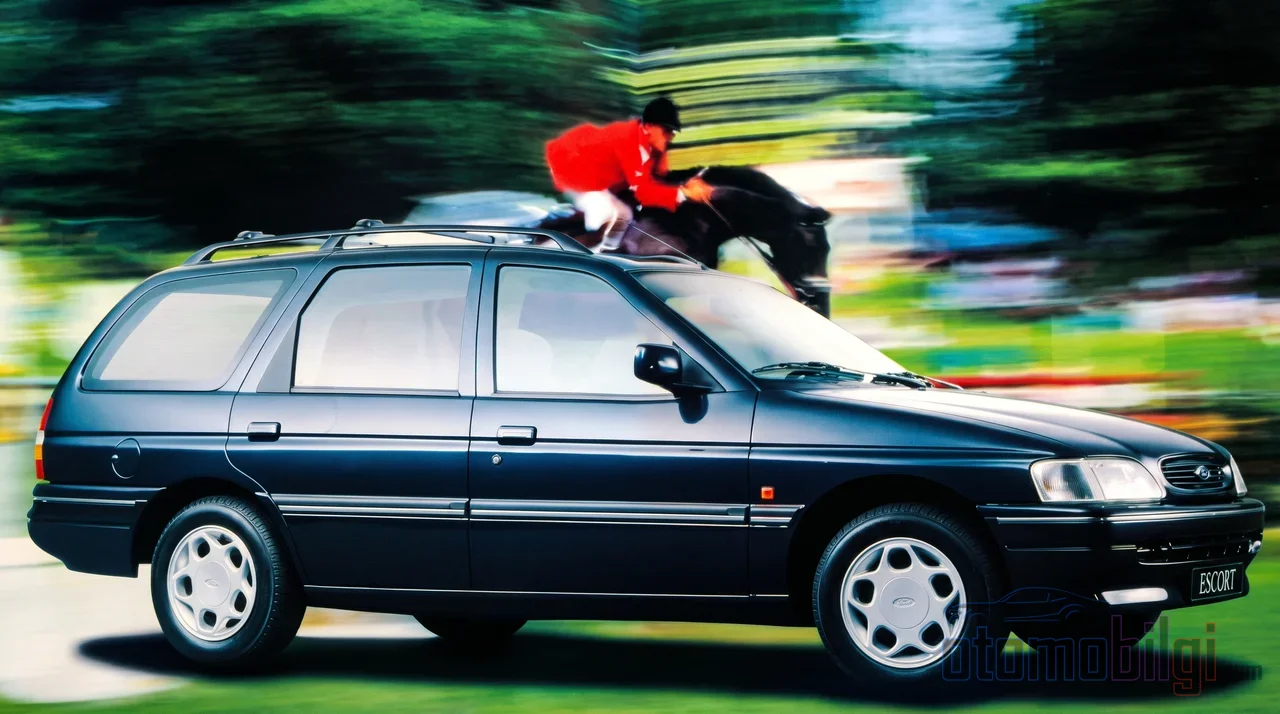
The Escort produced in Turkiye followed the same line as the sixth-generation family in Europe. During its production years, sedan, hatchback and station wagon body types came off the line; meaning customers could find an Escort suited to whatever lifestyle they desired. A sedan for the family, a hatchback for young single users, a station wagon for weekend getaways.
On the engine side, gasoline and diesel options met in the same power band. The Escort of that era offered both a 1.6 gasoline and a 1.8 turbo diesel unit delivering 90 HP; meaning the gasoline's naturally aspirated charm and the diesel's economy promised similar performance on paper. On the gasoline 1.6 engine, maximum torque reached 134 Nm.
Compared to today's scale, these figures may not look very impressive; but in the Turkiye of the 1990s, 90 horsepower was more than enough power for both city and intercity travel. Moreover, the Escort's biggest asset was not power, but the car's overall ease of use, its familiar technology, and the widespread Ford service network.
1993-1999 Ford Escort Technical Specifications
| Variant | Period | Engine | Power | Torque |
|---|---|---|---|---|
| Escort 1.6 16V (CL) | 10/1998 - 07/2000 | 1.6 gasoline | 66 kW / 90 HP | Not disclosed by the manufacturer |
| Escort Classic 1.8 TD | 10/1998 - 07/2000 | 1.8 turbo diesel | 66 kW / 90 HP | Not disclosed by the manufacturer |
| Escort VI Cabrio 1.6i | 1996 | 1.6 gasoline | 90 HP @ 5500 rpm | 134 Nm @ 3000 rpm |
Since the manufacturer never published an official and complete data set for the Turkiye-spec versions covering values such as 0-100 km/h acceleration, consumption and trunk capacity, we prefer to state this openly rather than share these figures here: these data were not disclosed by the manufacturer. Filling the table with a made-up number would have created a far worse reading experience than an honest "not disclosed".
Market Conditions of the Era and the Escort's Position
The Turkish car market of the 1990s was a period in which far fewer models competed compared to today, but the competition was fierce in every sense of the word. Alongside long-established names like Doğan and Sahin, models produced in Turkiye by brands such as Renault, Opel and Toyota were also on the market. In this picture, the Escort was the name that offered near-import quality through local production, knocking on the door of mid-segment buyers looking for a reliable family car.
In 1997, a significant step was taken in the company's structure: Ford raised its stake to 41%, equalizing it with Koc Holding, and the company's name became Ford Otosan. The Escort's production coincided exactly with the years when this partnership was being solidified. In other words, every Escort rolling off the line was part of the two giants' shared future plan in Turkiye.
1999: Why Was Production Stopped and How Many Units Were Produced?
The Escort's European journey was also wearing out by the end of the 90s. After its final facelift in 1998, the model continued production in Europe only in the United Kingdom. In Turkiye, production ended in 1999. According to news reports of the time, Ford Otosan stopped Escort production, which had been running for five years, for economic reasons. In other words, the decision that took the model off the line was not the vehicle's failure; it was the changing cost balances of the era.
The total production figure is confirmed identically by multiple independent records: A total of 59,389 units of the Ford Escort were produced in Turkiye between 1993 and 1999. This number may not seem huge in automotive history, but considering that Turkiye's total annual motor vehicle production in 1990 was 239,015 units, the volume a single model achieved in six years is by no means a result to be underestimated.
The Successor of the Taunus: The Escort's Place in Domestic Automobile History
In Turkish automotive history, some models are remembered not just for the number of units they sold, but for the role they took on. The Escort is exactly such a model. After the Anadol rolled off the line in 1984, the Taunus single-handedly carried Acibadem's passenger car line, and in 1993 it passed this duty to the Escort. The Escort carried out this duty until 1999, exactly six years.
With the Escort rolling off the line, an era closed at Acibadem; the company shifted its focus, moving its production infrastructure toward commercial vehicles and new-generation projects. But the Escort's story was more than a farewell story; it was an important link in the chain where the Turkish automotive industry evolved from assembly into a full-fledged manufacturing industry. Today, the fact that Koc Group companies on their own carry out a significant portion of Turkiye's automotive production and exports is the most concrete proof of that chain.
So the next time you see a well-kept 90s Escort on the street, stop and take a look: that car is part of a small but honorable story of 59,389 copies, continuing from where the Anadol and the Taunus left off.
Sources
- Ford Otosan - Wikipedia
- Ford-Otosan Turns 50 - OtoHaber
- Farewell from the European Escort - Milliyet
- Ford Escort production stopped - Hürriyet
- TÜBİTAK Ford Otosan presentation
- Turkish automotive industry - Wikipedia
- Production in Türkiye's automotive industry - DergiPark
- Building an automotive nation - Gazete Oksijen
- Ford Otosan - Invest in Türkiye