Was the Anadol A2 the World's First Full Fiberglass Sedan?
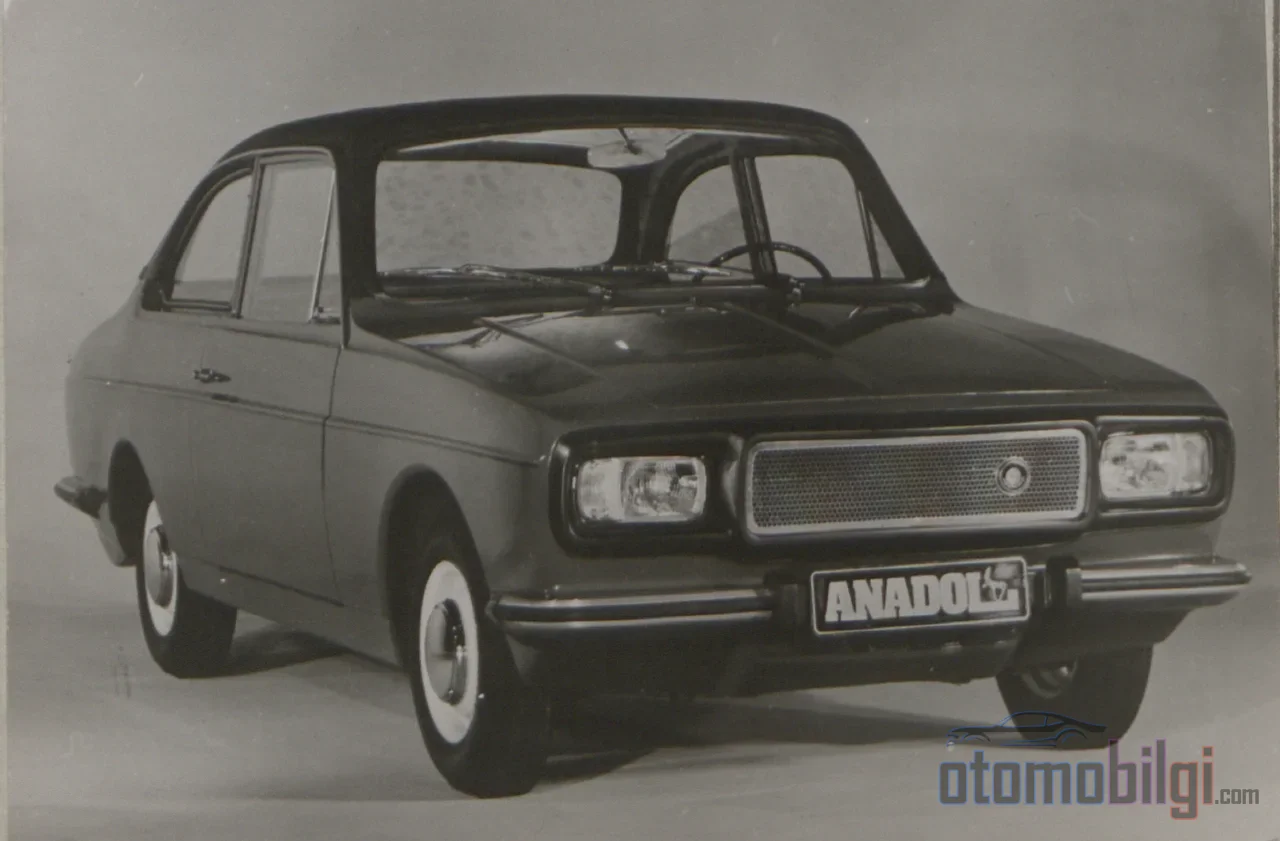
Imagine it's 1970 and you're working at a car factory. You have a 2-door coupe in hand, and you're asked to design a 4-door sedan on top of that. But here's the interesting part: the body isn't sheet metal, it's fiberglass. All fiberglass, 4-door sedan The answer is more interesting than you'd think - and Turkiye's first crash test is mixed into it.
Before starting the story, let's be honest: This title, that is, the claim of "the world's first full-fiberglass-bodied four-door sedan," is frequently repeated in the Anadol world and in the narratives of automotive historians. In other words, A2 being referred to with this title is a widely accepted view. But on the other side of the coin, there is no record from an international automotive authority independently verifying this claim. That's why in this article we will approach the title with the caveat of "it is claimed" and focus on the real story - that is, how that car was born, why it was made of fiberglass, and what it achieved.
How Was the Anadol A2 Born?
First, a bit of a timeline: Anadol, Turkiye's first mass-produced domestic car, rolled off the line at the Otosan factory in Istanbul on December 19, 1966. Produced by Otosan, a partnership between the Koc Group and Ford under the leadership of Vehbi Koc, this car went on sale on February 28, 1967. Its design was developed by the British firm Reliant, while Ford supplied the engine and chassis. In other words, the A1's foundations were the product of an international collaboration.
The prototype of the A2 project was completed in 1969. Based on the A1, it was transformed into a 4-door sedan body - which meant Turkiye's first 4-door car. Mass production began in 1970 and continued until 1981. Over those eleven years, the A2 did not remain a fixed design; it went through three major evolutions, becoming a bit more modern each time.
Highlights
- Production: Between 1970–1981 at Otosan
- Total sales: 35,668 units - the best-selling model of the Anadol family
- Body: Entirely fiberglass, 4-door sedan
- Engine: 1.3-liter Ford Kent (Crossflow in the SL version, 54 HP)
- Distinction: The first Turkish car to undergo a crash test
Why Fiberglass? The Answer Actually Lay in the Tooling Cost
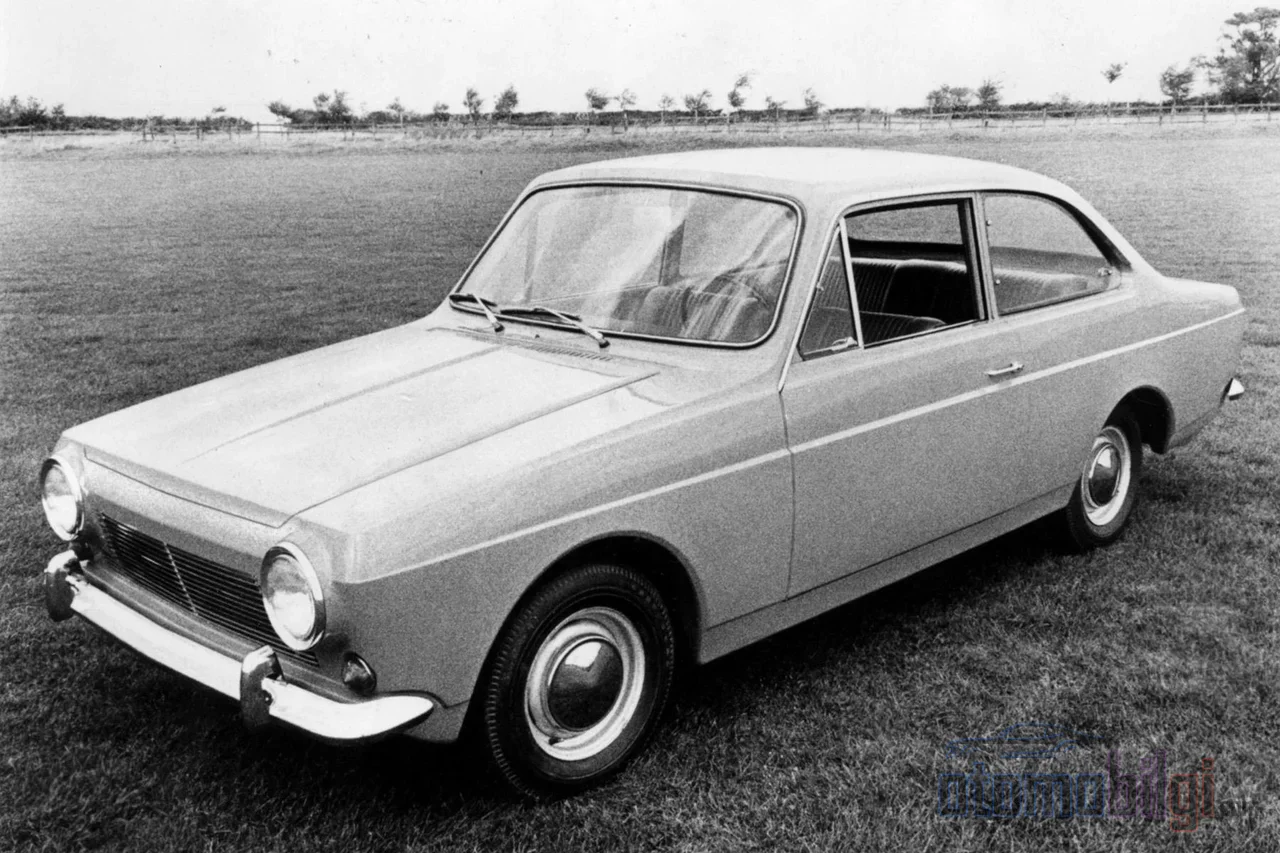
Here's my favorite part of the story. Because the choice of fiberglass wasn't a wild engineering passion, as most people might think - the reason was quite pragmatic: money.
Think of it this way: If you want to build a car with a sheet-metal body, you need to have steel dies made for use in giant presses. These dies are so expensive that they only pay for themselves in production runs of hundreds of thousands of vehicles. In the market of that era, that was an unimaginable figure. Fiberglass, on the other hand, was a completely different world: Glass fiber is laid inside the mold, resin is poured over it, and you wait for it to harden. The mold cost was much lower compared to sheet-metal dies. An ideal solution for small-scale production.
Where the idea came from is another interesting note: A fiberglass-bodied car of Israeli manufacture, exhibited at the 1963 Izmir Fair, had opened the doors to this material for the precursors of the Anadol project. British Reliant was also involved during the prototype process; while Ford took on the engine and chassis side.
The Pros and Cons of Fiberglass
Fiberglass's strongest selling point was that it did not rust. While steel-bodied vehicles quickly succumbed to corrosion in muddy and salty winter conditions, a fiberglass body was almost entirely unfamiliar with this trouble. Moreover, the body was light for its era; which counted as a plus in terms of performance and consumption.
But of course there is another side to the coin: The known chronic problem of FRP (glass fiber reinforced polyester) panels was their tendency to crack and break over time. In other words, the A2 was immune to rust problems but had a body that required careful use and maintenance. A quite reasonable trade-off under the conditions of the time - but still a trade-off.
Evolution Across Three Generations: From MkI to the A2 SL
The A2 is divided into three main phases over its eleven-year production life:
- MkI (1970-1972): The 4-door sedan version of the A1; with a round-lined nose and a 1.3-liter Ford Kent engine.
- MkII (1972-1976): The front and rear appearance was renewed; a more angular nose, a new radiator grille, rectangular tail lights, and modernized bumpers. (Like the A1, the A2 also underwent this revision in 1972.)
- A2 SL (1976-1981): The first Anadol model that Otosan officially referred to with the "SL" - that is, Super Luxury - suffix. It came with a more oval windshield, a one-piece red tail-signal unit, and an instrument panel moved to the steering column. On the engine side, the 1.3-liter Ford Kent Crossflow produced 54 HP. With 15,401 units, it became one of the most produced versions.
This evolutionary line is actually a living lesson in how the automobile design trends of the 1970s - the transition from round lines to angular forms - came to life in the hands of a small-scale manufacturer. The vehicle's total length is reported as 4,440 mm; this figure is given alongside the A1 in technical documents.
35,668 Units: The Champion of the Anadol Family
Let's get to the numbers, because numbers are the most honest part of the story. The A2 sold a total of 35,668 units including all its versions, making it the best-selling model of the Anadol family. This should be read as a natural consequence of a 4-door family sedan in an automobile industry where even marketing lessons were only just beginning to be discussed in those years: A vehicle that a whole family can ride in, and that can even be used for commercial work, always appeals to a broader audience than a one- or two-person coupe.
But those same years were also the years when competition intensified. In the early 1970s, Tofas and Oyak Renault emerged on the scene as the new strong players in the market; while in the world, sheet metal bodywork was becoming the standard. The Anadol line's failure to renew its design and engine technology, along with Otosan's shift toward the commercial vehicles it produced under Ford license, are cited among the factors that prepared the brand's end. The final curtain fell for the A2 in 1981.
The First Turkish Car to Undergo a Crash Test
Now for the least known but perhaps most special part of this story: The Anadol A2 was the first Turkish car to undergo a crash test in order to improve its safety. Yes, it may seem strange in a world where we read Euro NCAP results with our breakfast - but driving a car deliberately into a wall in 1970s Turkiye was a truly pioneering step for its time.
There are two known early crash tests in Turkiye: one was conducted for the Anadol STC-16, the other for the A2 SL. An honest note for the detail-minded: The speed at which the A2's crash test was conducted is not recorded. But the very existence of the test is proof that this fiberglass-bodied sedan was taken seriously in terms of safety, and that the engineers were curious about how the body would behave under real conditions.
But Was It Really "The World's First All-Fiberglass Sedan"?
Let's come to the clear answer to this question. The Anadol A2 entered production as Turkiye's first 4-door car; it was produced from 1970 to 1981 and, with sales of 35,668 units, became the best-selling model of the Anadol family. The title of the first 4-door sedan with an all-fiberglass body is a widely repeated claim attributed to the A2 in both Turkish and international automotive historiography; no independent global authority has separately confirmed this title. In other words: the claim is strong and widespread, but stands at the edge of definitive proof.
Its Place Between Devrim and Anadol
When placing the A2 on the map of Turkish automotive history, two names are inevitable: Devrim and Anadol. The Devrim of 1961 was, in engineering terms, the first Turkish car, but it remained at the testing stage and never entered mass production. Anadol, on the other hand, is the symbol of the transition to foreign-partnered mass production in 1967. The A2 is precisely the child of this second line: it does not claim to be 100% locally designed, but it lived through real production, real sales figures, and real roads. Seeing the difference between the two is the key to understanding the story without exaggeration.
The Cultural Legacy of the Fiberglass Body
The A2's fiberglass body also left a debatable legacy - beautiful or ugly? - on car culture: The joke "the donkey eats the Anadol," which circulated in the folklore of the era and was associated with the fiberglass body, is an urban legend born from the material's lightness and its "edible" implication. This quip we recall with a smile today is actually proof of just how unfamiliar and unusual a material fiberglass was in those years.
Let us close with this: When read together with its claims and its limits, the Anadol A2 is a sedan produced by a small market through a clever engineering and economic decision, one that opened its doors to more than 35,000 families, and became the first Turkish car to undergo a crash test. We can leave the certainty of its title up for debate - but the magnitude of that bold fiberglass experiment of the 1970s is beyond question.
Sources
- Anadol - Wikipedia
- Anadol A1/A2 - Wikipedia
- A2 - Anadol Fan Club
- Here is Türkiye's first crash test - E-Motoring
- Anadol: Türkiye's First Mass-Produced Car - Ototasarruf
- Anadol A2 Technical Specifications - Vehicle Catalog
- From Devrim to Anadol, Türkiye's domestic car journey - TRT Haber
- 'Anadols took to the track' - CNN Türk