Zafer's New Life in Israel: Autocars Co.
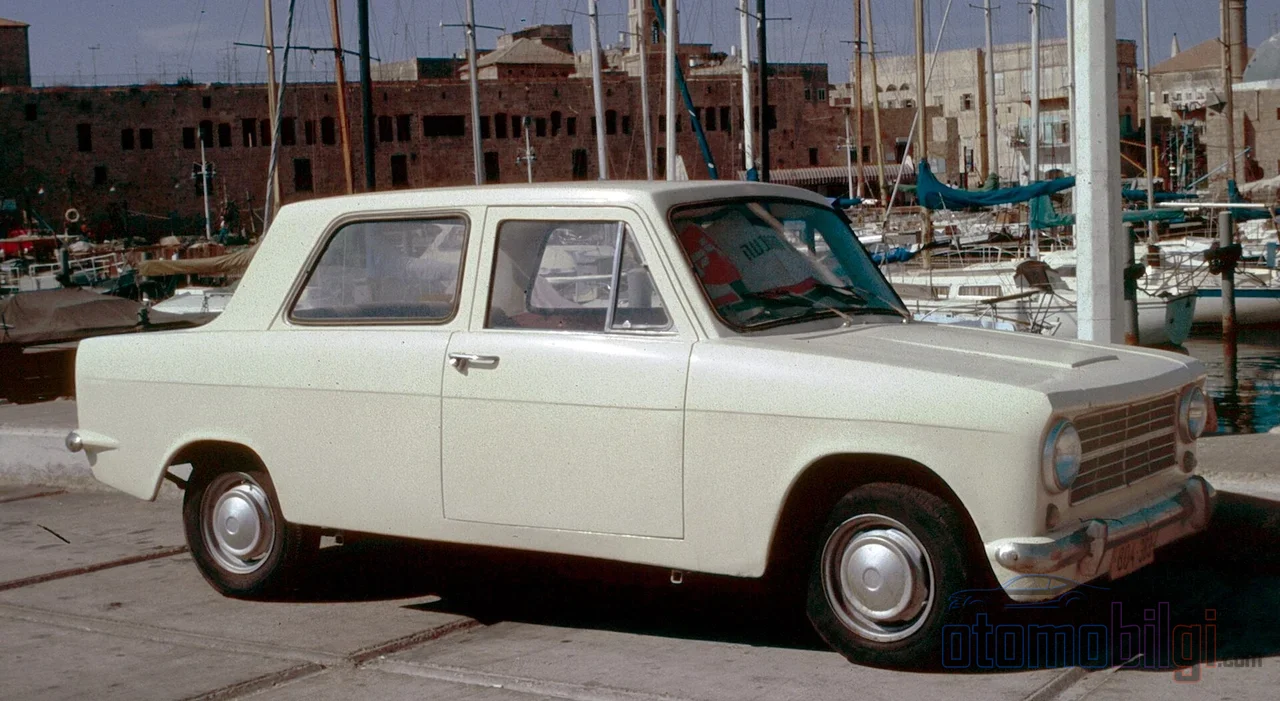
Imagine an automobile project being buried, and a ticket being found inside the coffin. Zafer, shelved in Turkiye in 1966, started turning on the roads of another country two years later. Its name had not even changed: Vehicles produced at the Autocars factory in Israel were known as the Triumph Zafer. So how does a domestic car dream come back to life in Haifa? Sit down - this story took a full six years, and it is little known.
What was the Zafer project, and why did it end in Turkiye?
In the Turkiye of the 1960s, talking about a domestic car did not only mean the sad story of the Devrim. At that time there was a serious mobilization in industrial circles, and one of the interesting branches of this effort came from TOE, i.e. Turk Otomotiv Endustrileri A.Ş., which produced tractors, trucks and pickups under the International Harvester brand. The company set out to develop its own car under the Zafer brand.
The journey, I suppose, did not go smoothly. TOE first tried to work with Volvo on a joint vehicle; when no agreement could be reached, the British Triumph came to the table. At the core of the project were Triumph's small family cars: the Triumph Herald produced between 1959 and 1971, and the Triumph 1300, designed to succeed it and debuting with front-wheel drive in 1965. The Zafer was to be built on exactly this technology.
Then things stopped. The Zafer was never seen on Turkiye's streets, and the reason production was halted has still not been fully explained today. In some accounts, it is said that Triumph chose Israel over Turkiye; in others, it is emphasized that the Israeli Autocars took over the project. Which side kept the initiative has not been clarified, but the result was the same: The project was closed in Turkiye around 1966, and the licensed production rights were moved to Haifa.
Highlights
- The Zafer was a domestic car project based on the Triumph 1300 that ended in Turkiye in 1966.
- Autocars was the first automobile manufacturer in Israel's city of Haifa and entered the industry in 1957.
- The Triumph Zafer was assembled in Israel using the CKD method between 1967 and 1973.
- From the same family, the Sussita 13/60 used the Herald engine producing 1296 cc and 61 hp.
Who is Autocars: Israel's first automobile manufacturer
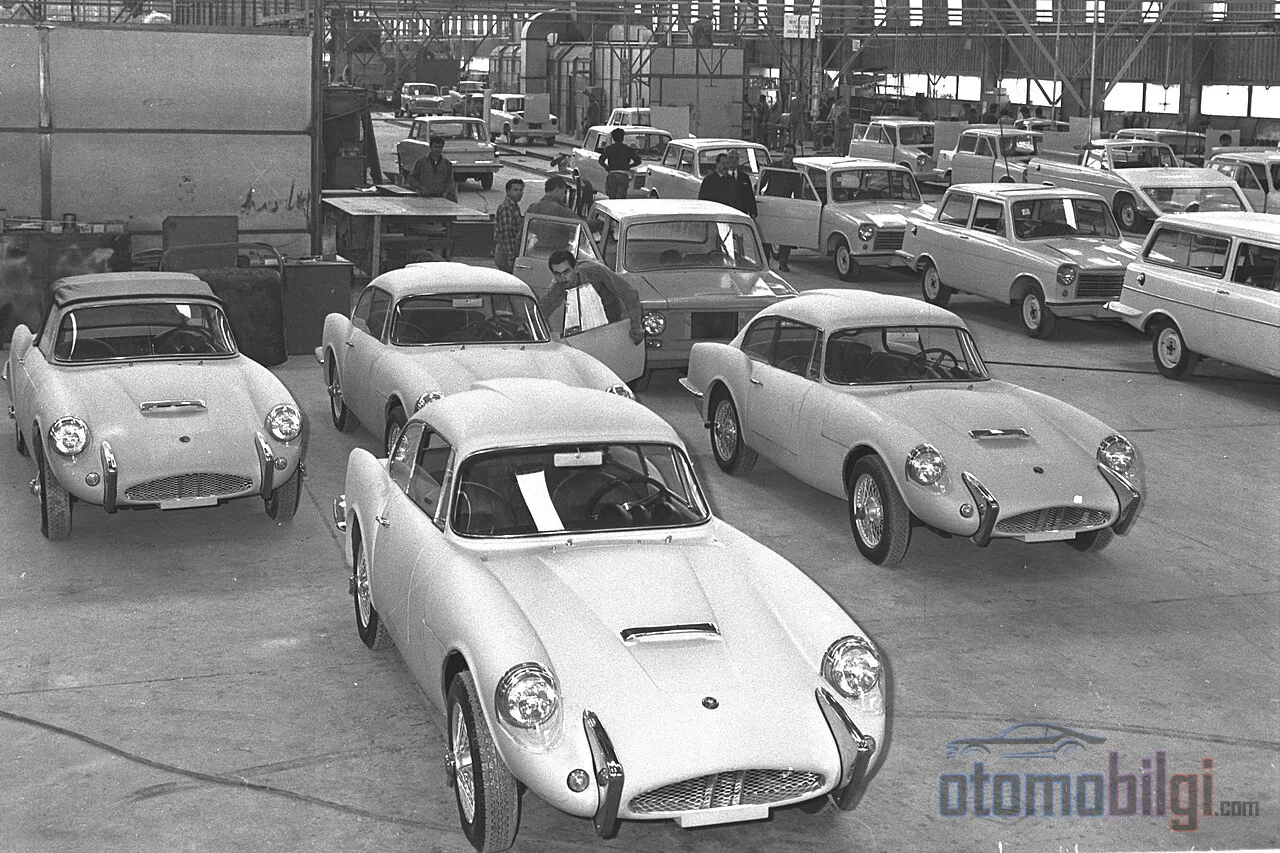
To understand the Zafer, one must first land in Haifa. Autocars Co. Ltd. was Israel's first automobile manufacturer, headquartered in Haifa. The company had entered the automotive industry in 1957; that is, while Turkiye's assembly industry was still in its infancy, Autocars had appeared on the scene, and from 1960 onward it began producing its Sussita cars. The Sussita remained in production, first in Haifa and later at the facility in Tirat, until 1978, and today it is considered a classic in Israeli automotive history. There are even urban legends still told today about the use of fiberglass in the body panels; it is said that animals like camels bit the fiberglass, but let's get back to our subject.
The beautiful part of the story is this: Autocars' connection with Triumph did not start with the Zafer. The company's Sussita models were already built on Triumph Herald chassis and engines. So the Haifa factory had long since learned the business of assembling vehicles from parts shipped in from Coventry. When the Victory project was cancelled, this ready-made infrastructure came into play.
What is CKD assembly, and how was the Victory produced in Israel?
CKD, or Complete Knock Down, is a much-loved method in the global automotive industry. Think of it as a model kit, like Legos: Vehicles are exported from the Coventry factory as parts, completely disassembled, and assembled on a separate chassis in the buyer's country. In the 1960s, developing countries used this method to gain customs advantages while also giving their own industries experience. Triumph Herald kits were assembled this way in many countries, and Israel was one of them.
The Triumph Victory, following exactly this model, was produced in Haifa using the CKD method for six years, from 1967 to 1973. Two more names appear in the story: vehicles produced under the same roof were also known as Gilboa and Carmel. So the Victory's Israeli adventure continued not under a single name, but as a small model family.
The Sussita family and the Victory's relatives
The Sussita models produced by Autocars in the same period are considered the Victory's technical relatives; these Herald-based vehicles also summarize the engine strategy among the models well:
| Model | Production | Body types | Engine |
|---|---|---|---|
| Sussita 12 / Carmel | 1968-1970 | Station wagon, sedan | Herald 12/50 engine, 51 hp |
| Sussita 13/60 / Carmel Ducas | 1970-1975 | Station wagon, sedan, pickup | Herald 13/60 engine, 1296 cc, 61 hp |
The 13/60 engine had a 1296 cc displacement, a Stromberg CD150 carburetor, and 61 horsepower; the 12/50 engine produced 51 horsepower. No separate official technical table specific to the Victory was published by the manufacturer, so what is known is based on the Herald engines it was derived from. Torque and acceleration figures have also not been reliably published for these vehicles; honesty is required at this point.
What was Turkiye doing in those same years?
Here is the dramatic part of the story: While the Victory was being produced in Israel, Turkiye was living through the most eventful years of its own automobile story. The Devrim was produced in 1961 with 24 engineers, through roughly four and a half months of work at the Eskisehir Railway Factory; it was introduced with a ceremony on October 29, 1961, but was shelved when economic support could not be found. Then in 1966, the Anadol arrived through the Otokoc-Ford partnership and became Turkiye's first mass-produced car; its design belonged to the British Reliant, and some of its parts came from Ford. In 1971 the Tofas Murat 124, and in 1972 the Anadol STC-16 with its production run of 176 units, took to the roads.
So the overall picture looks like this: While Turkiye was moving from assembly to production with the Anadol and the Murat 124, the Victory project it had abandoned was coming to life in another country. The two countries' automobile journeys were both part of the same technology transfer network; wherever the kits from Coventry knocked on a door, a local industry grew there.
Why is it significant that the Zafer was produced in Israel?
The short answer is this: The Zafer is the little-known tail of Turkiye's abandoned domestic car project that continued to live beyond the country's borders, and it summarizes how the global automotive economy of the 1960s worked in a single story.
Looking at it today, this episode tells us two things. First, no car project of that era was solely one country's story; licenses, kits and partnerships traveled along a network stretching from Europe to the Middle East. A negotiation that started with Volvo and continued with Triumph could eventually yield a product in a factory in Haifa. Second, the end of a project in one country did not mean the end of that project in the world. The Zafer's body grew cold in Turkiye, but it rolled on Israel's roads for six years.
The story of the Devrim is usually told as a fiasco left in the shadow of politics; yet in the domestic car mobilization of the 1960s there were also initiatives like the Zafer that later spilled over to other continents. Automotive history sometimes follows exactly such winding roads: a dream abandoned by one country keeps breathing on another country's assembly line for six more years. That is precisely why the Zafer's Israeli adventure is one of the most intriguing footnotes in automotive history.