Anadol Cagdas 1980: Why Wasn't the Award-Winning Prototype Produced?
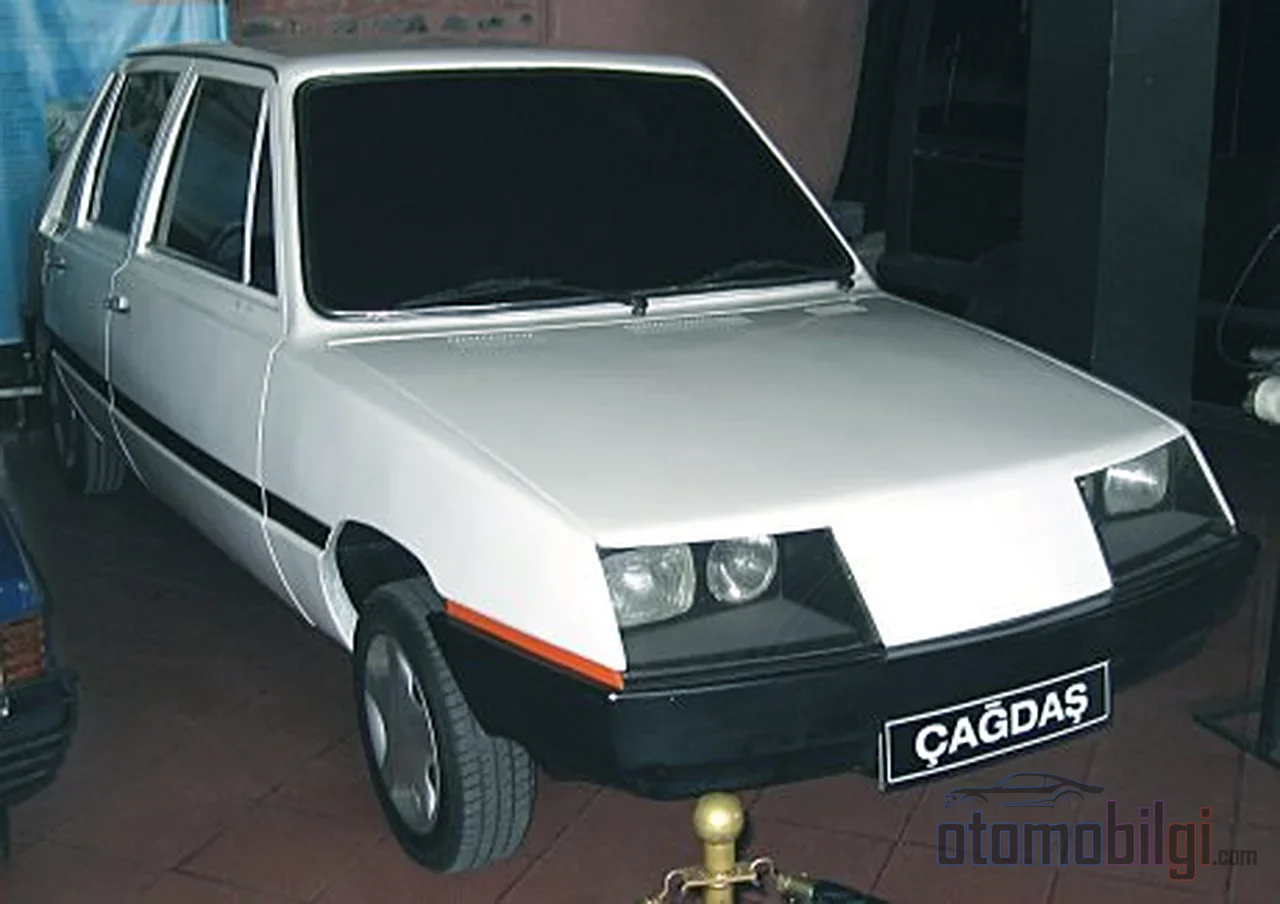
In 1961 Devrim was left stranded by the railway tracks, and in 2022 Togg took the stage. So what happened in between? A lot actually, but few people know it because most accounts skip it: Around 1980, there was an Anadol prototype powered by a Wankel-licensed rotary engine, which won an industrial design award but never made it onto the production line. Its name was Cagdas. Yes, you read that right: A Wankel engine with a rotating piston was tried in an Anadol. If you're ready, we're talking about one of the least-known experiments in Turkish automotive history.
I love this story, because it's an interlude wedged into that grand narrative we all know - bold in its own way and melancholic in its own way. Anadol had already been in series production since 1966; but in the late 1970s, Otosan's design team wanted to go far beyond a mere model refresh. The result: a prototype with a fiberglass body mounted on a steel frame, whose engine was developed by Claude (Klod) Nahum, and whose name was Cagdas. Now let's take a closer look at this car piece by piece.
How was the Cagdas project born?
First, let's think about the environment. Otosan had been producing the Anadol since 1966: the design belonged to Britain's Reliant, while the chassis, engine and gearbox came from Ford. In other words, the Anadol was a much-loved, best-selling car, but its heart was foreign. Throughout the 1970s, Jan Nahum and his team in Otosan's Design and Development Department carried out a series of prototype studies to change the Anadol's face. Most of these prototypes, as you might guess, never made it to production.
The team was after two things: moving to a more modern structure by reducing the share of fiberglass in the body, and closely following the world's automotive industry so as not to miss the trends. The first Cagdas study, hard as it is to believe, remained only in drawings and full-scale (1/1) model work; it is said that this first design drew considerable inspiration from the Citroën CX, produced between 1974 and 1991. So on paper, French elegance was to meet Anadol engineering. The next step was far more ambitious: a real prototype and a real engine.
Highlights
- Cagdas was an Anadol-based prototype developed at Otosan in the late 1970s.
- Its engine was the Wankel rotary engine developed by Claude (Klod) Nahum; its power output is reported in sources as ranging from 100-107 HP.
- The prototype won the Industrial Design award of the State Academy of Fine Arts in 1980.
- Series production never started; today one prototype is on display at the Rahmi M. Koc Museum.
What is a rotary engine, and how did it find its way into the Anadol?
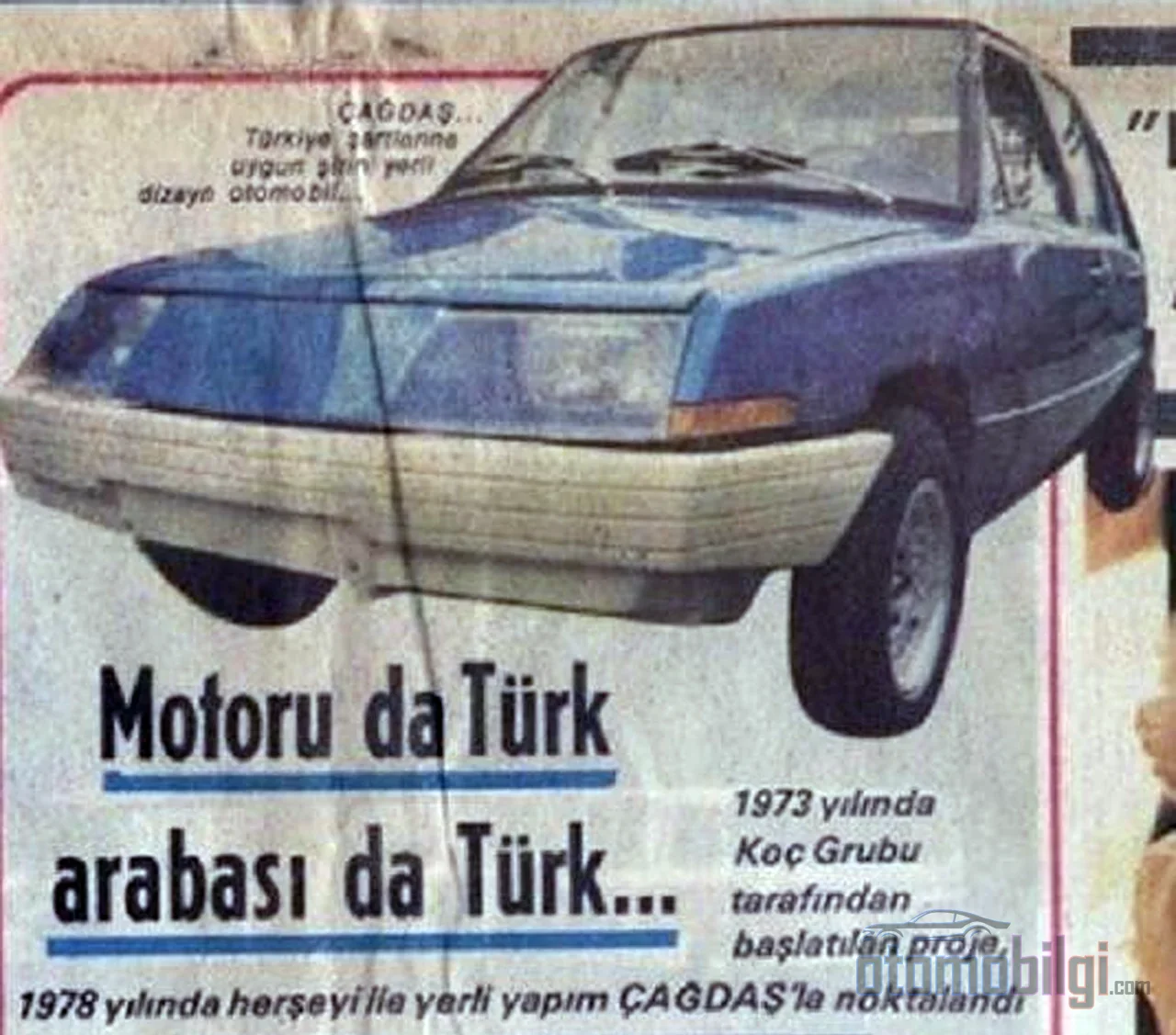
Let's chat a bit here, because the rotary engine is a genuinely fascinating thing. In the piston engines we know, there are pistons inside the cylinders that move up and down. In a Wankel engine, there is no such traffic: a triangular-ish rotor rotating inside the cylinder compresses and burns the air-fuel mixture that enters it. This rotary piston concept, developed by Felix Wankel, took its first form in 1954 through work carried out with NSU, under the name DKM54. Mazda, for its part, first brought this engine to series production in 1967 with the Cosmo model.
So why was this engine so appealing? It was small, had few parts, and ran very delightfully at high revs. For a car whose body was made of fiberglass and whose weight was kept low, an engine that was powerful for its size was exactly what was wanted. The Wankel at the heart of the Cagdas, despite its small dimensions, was producing around 100 HP; in some records this figure appears as 107 HP. For the late 1970s, that meant serious performance for a fiberglass-bodied Anadol. The person who undertook the engine's development was Claude (Klod) Nahum: a name well known to the automotive community, who also competed in rallies with the Anadol A1. This family connection around the Koc group during the same period also shows that the project was not merely a door experiment, but a serious engineering endeavor.
The design and the award: an admired car that never went into production
The Cagdas's body was made of fiberglass material mounted on a steel skeleton. In other words, the fiberglass approach of the Anadol tradition had not been entirely abandoned, but the structure was attempted to evolve toward a more contemporary engineering understanding. The entire vehicle, from its body to its engine, was designed under the Otosan roof; this model, developed entirely in Turkiye including its engine, is regarded as the first endeavor of this scope after Devrim. Of course, the question of who wears the crown of "first domestic car" is a bit of a tangled debate: in terms of design and engineering, the first Turkish car is Devrim; the title of series production is said to go to Anadol, or even, at the assembly level, to the Nobel 200, which began in 1958. The most honest framing for the Cagdas is this: a serious prototype with domestic design and engineering, born of the private sector.
And here comes the sweetest part of the story: In 1980, the Cagdas and its designer Jan Nahum were deemed worthy of the Industrial Design award given by the State Academy of Fine Arts. In other words, the car was not merely an experiment that attracted interest in a garage; it showed that the design world took it seriously too. The press loved the Cagdas as well: news came one after another that production would begin first in 1978, and then in 1980 or 1981. Everything seemed to be going well. So let us ask: why is this car not on the road?
Why could the Cagdas not move to series production?
The answer can be summarized in a single line: in Turkiye of 1980, the money, stability, and patience needed to put a new automobile program through production could not be found at the same time. The country was in the midst of the political, social, and economic turmoil of the 1980s, and in this environment entering a high-cost vehicle program would have been difficult for any company.
Then there was the engine side's own reality. The Wankel engine, just like everywhere else in the world, faced two major obstacles here: high research and development costs, and the known but never fully solved technical problems of rotary engines. These problems had even kept giants like Mazda busy for years; a relatively small R&D program could not have been expected to defeat them. The Wankel engine project was left unfinished and the dream of mass production was shelved. In 2002, a newspaper column summarized the situation very clearly: The Cagdas shared the same fate as the Devrim and faded into Turkish automotive history without ever reaching mass production.
What remains today?
There is a small but significant blur on the archival side of the matter, and an honest account should say so: the records do not fully agree on the number of prototypes produced and their fate. Some accounts mention two prototypes while a portion say there was only one; one record states that the prototype was destroyed, while others say it survives to this day. What is clear is this: today the Cagdas prototype is on display at the Rahmi M. Koc Museum in Istanbul, and one of the developed Wankel engines can also be seen at the museum. So the tangible evidence of the story still stands; if you want to see it, the door is open.
Was the Cagdas the only one? The other Anadols that never reached production
Hold on tight, because the Cagdas is not alone. Anadol's prototype history is actually quite crowded, and they all shared the same fate:
- FW11 (1977): 4 prototypes were produced of this model designed by Marcello Gandini for Anadol and Reliant; the costs seemed too high and the project was shelved. Reliant produced the same work under the name Scimitar SE7; the project was also purchased by Citroen and turned into the BX. So the Cagdas's rival design found life on other shores.
- A9: A Bertone design from the early 1980s. It became Anadol's last prototype, but it too never reached production and the prototype was destroyed.
- STC-16 and Bocek: These were the lucky minority that made it to production; 176 units of the STC-16 and 203 units of the Bocek were produced.
Let's also have a taste of the numbers: By 1984, a total of 93,188 Anadols had been produced, pickups included. The main series model A2, with 35,668 units on its own, was the backbone of the brand. Within this picture, the Cagdas's line of zero units is actually the most talkative part of the story. And Anadol itself came off the line in 1984, as a result of new production agreements with Ford; its place was taken by the Ford Taunus.
The balance sheet of the rotary dream
So what do we learn from this story? For one thing, the Cagdas reminds us that a car is not produced merely because it looks good on paper. A body that won an industrial design award, a domestic Wankel engine of roughly 100 HP, and even a determined engineering team cannot become a product rolling off the line without a suitable economic environment. In the late 1970s, in an industry growing through licensing agreements and dependent on foreign parts supply, going to mass production with an engine built from scratch was a massive investment; in that environment, daring to do so was nearly impossible.
But what we call failure is also relative. Even though Claude Nahum's rotary engine remained unfinished, it was written into Turkish automotive history as "we tried this"; Jan Nahum's team repeatedly demonstrated that the Anadol was not just an ordinary assembly product, and that design and engineering capacity was in place. Cagdas is an invisible but solid link in the chain between Devrim and Togg. Remembering this chain while watching Togg news helps me understand today's car much better.
Next time someone tells you that Turkish automotive history starts with Devrim and ends with Togg, smile and point them to the museum door: there, in a corner of the hall, a Cagdas carrying the Wankel dream beneath its fiberglass body will be waiting for you.
Sources
- Çağdaş - Anadol Fan Club
- Anadol - Wikipedia
- Turkish automotive industry - Wikipedia
- Devrim (automobile) - Wikipedia
- Wankel engine - Wikipedia
- Çağdaş also shared Devrim's fate - Milliyet
- Anadol Models That Never Entered Mass Production and the Çağdaş Experiment - otomobilgi.com
- Anadol Çağdaş - The First 100% Domestic Car After Devrim - donanımhaber forum