From Maral to Turkar: Handmade Domestic Car Attempts
Imagine a sports car shaped by hand with hammer and die in a professor's workshop in Istanbul. A supercar built over five years, single-handedly, by a shoe manufacturer. A commercial vehicle assembled by a group of entrepreneurs in Gaziantep. And an off-road vehicle project that gave birth to Turkiye's first domestic 4x4. Alongside factory chimneys, billion-dollar investments and giant partnerships, Turkish automotive history also has this quiet, sweaty, stubborn front: handmade domestic car attempts. If you're ready, let me tell you the story of Maral, Folkvan, Samil and Turkar. I promise, you already know Devrim and Anadol; these are far lesser-known stories, but just as passionate as theirs.
Individual Courage After the Factories Were Established
Turkiye's automotive journey became visible in 1961 in Eskisehir with the Devrim, completed in 129 days entirely by Turkish engineers; only four units of the project could be produced and it never entered mass production. In 1966, the fiberglas-bodied Anadol took the stage, and a total of 93,188 units were produced until 1984. Tofas and Oyak-Renault followed, and the assembly industry gradually turned into a genuine manufacturing industry and a strong parts industry.
This is exactly where the interesting part begins: as the industry settled in, some individuals left in the shadow of giant companies set out to build their own cars in their own garages and workshops. Most of these ventures remained at the margins of history - Zafer, canceled in 1968 under pressure, Imza 700, limited to mock-ups and buildings in 1999, and the Etox and Onuk models that never got beyond prototypes. But four of them still deserve to be talked about today.
Highlights
- Maral, a sports car produced entirely by hand since 1996 and seen on the roads
- Samil, the description of Turkiye's first super sports car, completed by shoe manufacturer Fatih Basoglu in 5 years
- Samil went on sale on listing sites in 2012 with a price of 280 thousand Euros
- The 2009 Turkar is remembered as Turkiye's first domestic 4x4 initiative
- The only verified technical specification of TURKAR: 2300 cc, 116 horsepower
Maral: The Handmade Classic That Went to Court with Morgan
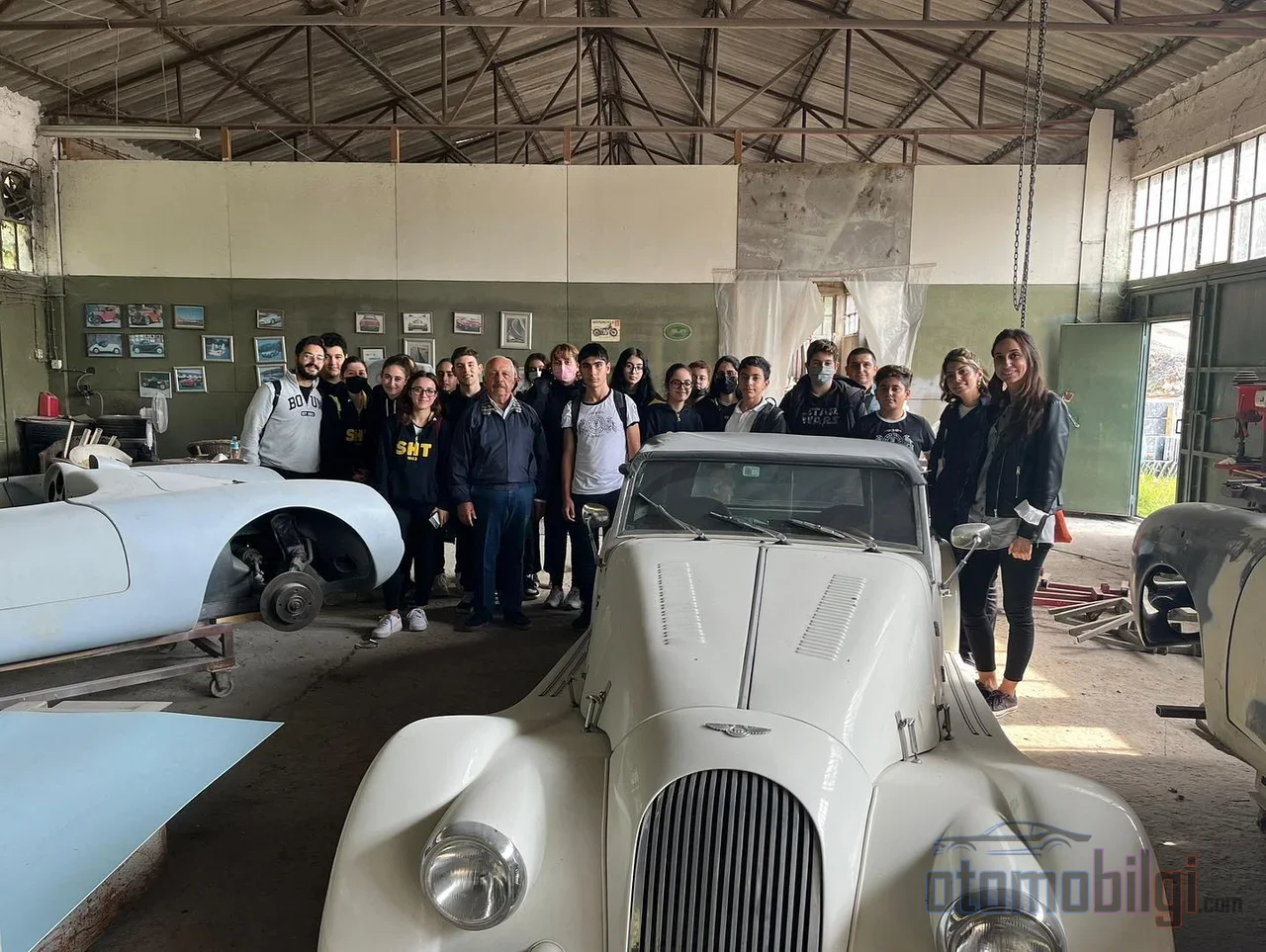
From insurance professor to workshop founder
The hero of the story, Prof. Dr. Hasan Yurdakul, does not look like someone who would build a car at first glance: Robert College, then an MBA from UCLA and USC in the US, a professorship at Marmara University, the founding of the insurance department, and advisory roles at İş Bankasi and the Mass Housing Privatization Administration. But Yurdakul has also had a secret life since 1970: collecting vintage cars.
The turning point came while he was working with the parts of a 1974 Fiat Spider. Realizing he was tired of staying faithful to the original, Yurdakul decided to build his own car. According to his own account, this decision was made in 1992; while records show the start of production as 1996 - the gap between setting out with the first sketches and the car was most likely bridged in those years, when the project moved into its disciplined production phase. Yurdakul also obtained an individual serial automobile manufacturing certificate in 1994; he says he was the fifth person to hold such a certificate.
The design, the lawsuit, and today
The Maral's look comes from classic two-door open-top sports cars of the 1950s; Yurdakul cites the late-1940s British Morgan as his inspiration but insists there is no one-to-one connection. The Morgan company took this similarity to a patent lawsuit in 1998, and the case was decided in Yurdakul's favor. So yes, you asked that question too, I know: the Maral is not a copy of a Morgan, at least not in the eyes of the law.
The vehicle is built entirely by hand, and although in small numbers, production continued into the 2020s. The engine is Fiat-sourced; no figures for its power, torque, or acceleration were ever disclosed by the manufacturer. Yurdakul also produces the more modern-looking two-seater Nily sports racing car, named after his daughter Nil, and builds yachts under the Linmar brand in the same workshop. In 2011, the Maral and the Nily were exhibited together at Design Week in Istanbul. If you ever spot a Maral on the road today, you should know that Yurdakul is the only person in Turkiye who builds it.
Folkvan: Gaziantep's Commercial Vehicle Initiative
Let's make this distinction upfront, because this is the most confusing point: the Folkvan is not a passenger car but a commercial vehicle project. Founded in Gaziantep in 2007, the Mujdeci company began producing and assembling commercial vehicles under the Folkvan brand, and the initiative was announced as the serial production of the second domestic commercial vehicle. As a distinctive workshop initiative, the Folkvan is proof that even at a time when industry was already well established in Turkiye, new vehicle brands could still emerge from Anatolian cities. Unfortunately, no reliable technical details about the vehicle have survived; figures such as engine power and torque were never disclosed by the manufacturer.
Samil: The First Super Sports Car From a Shoe Manufacturer
Now let's move on to perhaps the most cinematic part of the story. Fatih Basoglu is an entrepreneur who made shoes in Istanbul. In 2006 he registered the name Samil, and it took a full 5 years to complete the vehicle. The resulting car was declared Turkiye's first super sports car; in 2007, two cars named Samil 1 and Samil 2 were registered. So this was not a desk-bound dream but a registered car that could actually go on the road - though as of 2009 it was still at the prototype stage.
Then in 2012 things got interesting: Basoglu put the Samil up for sale on a classified ads site for 280,000 euros. Even today that is no small figure; for the Turkiye market of that era, it was downright crazy. No engine power, torque, or acceleration data for the Samil was ever published in any reliable source either. The vehicle waited for its buyer at the brightest moment of its story.
Turkar: The First Domestic 4x4 Attempt
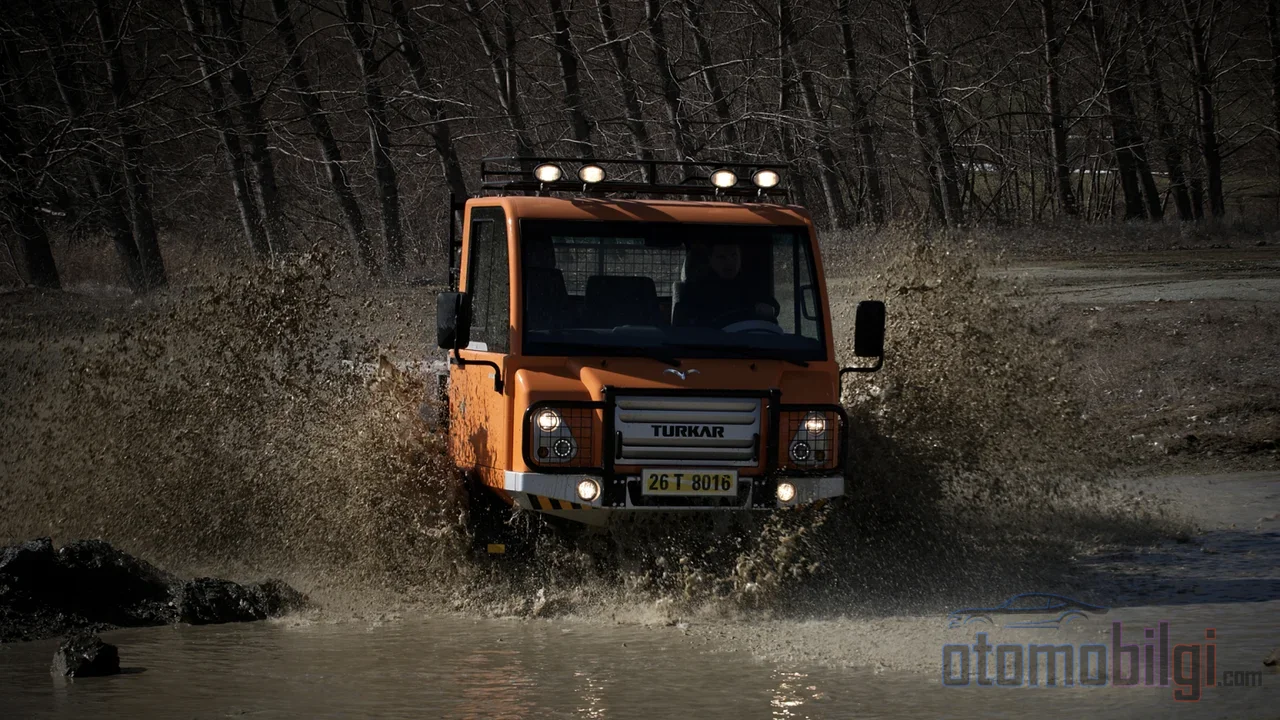
In 2009, the Turkar was built as Turkiye's first domestic 4x4 jeep. This date and title appear consistently in records of Turkish automotive history and in the period's publications. Later on, the same name spelled TURKAR was transformed by Hisarlar Group, together with Turkish engineers, into a product that was introduced in Germany as Turkiye's first domestically developed 4x4 off-road vehicle. Since the continuity between the two names is not clearly stated in the sources, caution is needed here: Rather than equating the 2009 Turkar one-to-one with the Hisarlar TURKAR, it is more accurate to treat them as carriers of the same name and the same 'first 4x4' claim.
TURKAR's technical data are the only verifiable set among these four vehicles: a direct-injection 2300 cc engine, 116 horsepower and a 6- or 12-speed gearbox option. Torque and acceleration figures, however, do not appear in reliable sources. Although electric vehicle and railway maintenance vehicle projects were derived from the TURKAR line in later years, these are separate stories.
Why Do These Ventures Matter?
So if none of them reached series production, why have you read this page? Because automotive history is not made up solely of winning stories. When we look at the line stretching from Devrim to Togg, individuals as well as giant industrial enterprises pursued the same dream during the decades in between. Maral, Folkvan, Samil and Turkar are precisely the undiscovered intermediate stops along this line.
The short and clear answer is this: Maral, Folkvan, Samil and Turkar are domestic car ventures handmade in the workshops of a single person or small teams, even after the automotive industry had become institutionalized in Turkiye; of these, only Maral managed to spread its production across several years despite the small numbers, Samil was registered but remained at the prototype stage, while Folkvan and Turkar left a short-lived mark on the commercial vehicle side.
It is enough to remember Maral for a legal victory that took Morgan to court, Samil for a 280,000-euro listing, Turkar for a single verified data set of 116 horsepower, and Folkvan for the daring of Gaziantep's industry. In a world today where a brand like Togg exists, these small stories may be all the more meaningful: because they remind us that the desire to build cars does not have to come with factory-scale size. Sometimes a garage, a hammer and a stubborn dream are enough - at least enough to write a story.
Sources
- Handmade Turkish classic - Pazar
- Domestic sports cars Maral and Nily moving ahead to 2021
- Turkish automotive industry
- Şamil is waiting for a buyer to hit the road - Anadolu Agency
- Şamil put up for sale - Milliyet
- Hisarlar Group presents its first domestic off-road vehicle - Anadolu Agency
- Yaşar's domestic car - Hürriyet Kelebek
- Türkiye's automotive journey from Devrim to TOGG - TRT Haber