How Did Scooby-Doo's Mystery Machine Become an Icon?
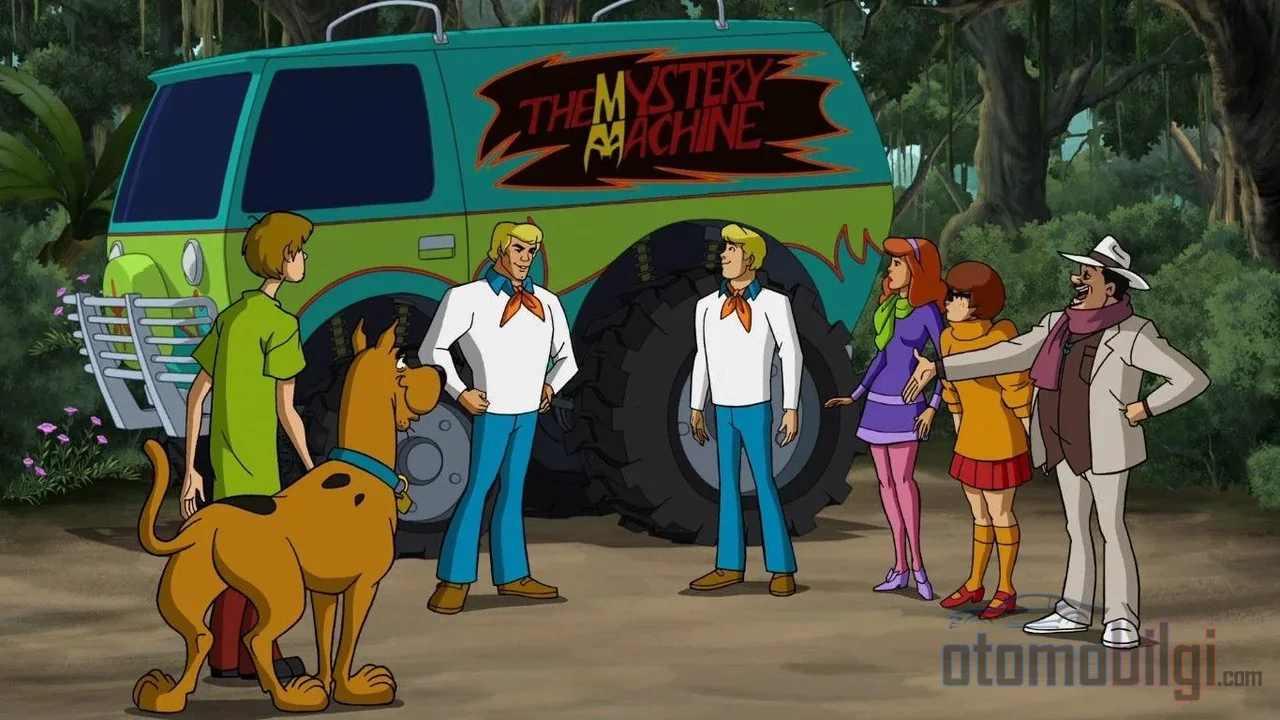
Suppose you can draw a cartoon vehicle with your eyes closed. A blue van, a green stripe, orange flowers on top... Yes, that vehicle is the Mystery Machine, and it's no coincidence - it's a story of becoming an icon for a full 57 years. So how did this vehicle, which started as a cartoon van in 1969, turn into real replicas that now trade for over 50 thousand dollars at auctions and toys on the shelves? Buckle up, this journey is quite fun.
The Birth of the Mystery Machine: A Van Painted with Flower Power
When Scooby-Doo hit the screens in 1969, the gang's vehicle came along with it: blue in the middle, a flowing green stripe underneath, and orange flowers on that stripe. On the upper panel, there was an orange, handwritten-style text on a green background: The Mystery Machine. The spare tire inside the flower-patterned cover at the front is also an integral part of the design.
This design was exactly the spirit of the era. The late 60s were the peak of the hippie movement and psychedelic aesthetic; bold colors, flower graphics, and handwritten lettering were the visual signature of those years. The Mystery Machine carried this wave into a cartoon vehicle and etched it into the viewer's mind. In fact, it was loved so much that, during the period the show aired, it managed to capture 65% of Saturday morning cartoon viewers.
Highlights
- The Mystery Machine first appeared on screens in 1969, and its design reflects the flower power aesthetic.
- The exact model of the base van is not known for certain; the main candidates are the Dodge A100 and the Chevrolet G-Series.
- In 2019, a replica sold at Barrett-Jackson for 59,400 dollars.
- The van in the 2002 live-action film was based on a 1972 Bedford CF.
- There is a wide merchandising world, including Hot Wheels and R/C models.
Who Painted the Van? Two Different Stories
The behind-the-scenes story is no small matter either. According to the show's lore, before Fred bought the van, it belonged to a music band called the Mystery Kids, and the band's pianist Flash Flannigan was the one who painted that famous paint job we know today. When the band broke up, the van went up for sale and Fred Jones bought it. This story was brought to the screen in the episode "It's Mean, It's Green, It's the Mystery Machine"; behind the incident where the van was thought to be moving on its own, of course, there was a mother using a remote control.
But wait, the story doesn't end there. There is a completely different narrative within the franchise: It is told that Daphne's father bought an old cargo van as a 16th birthday gift for his daughter, and the gang painted the vehicle together. So officially, there are two origin stories that contradict each other. That's quite a deep history for a cartoon vehicle, we must admit.
Which Real Van Is the Basis of the Mystery Machine?
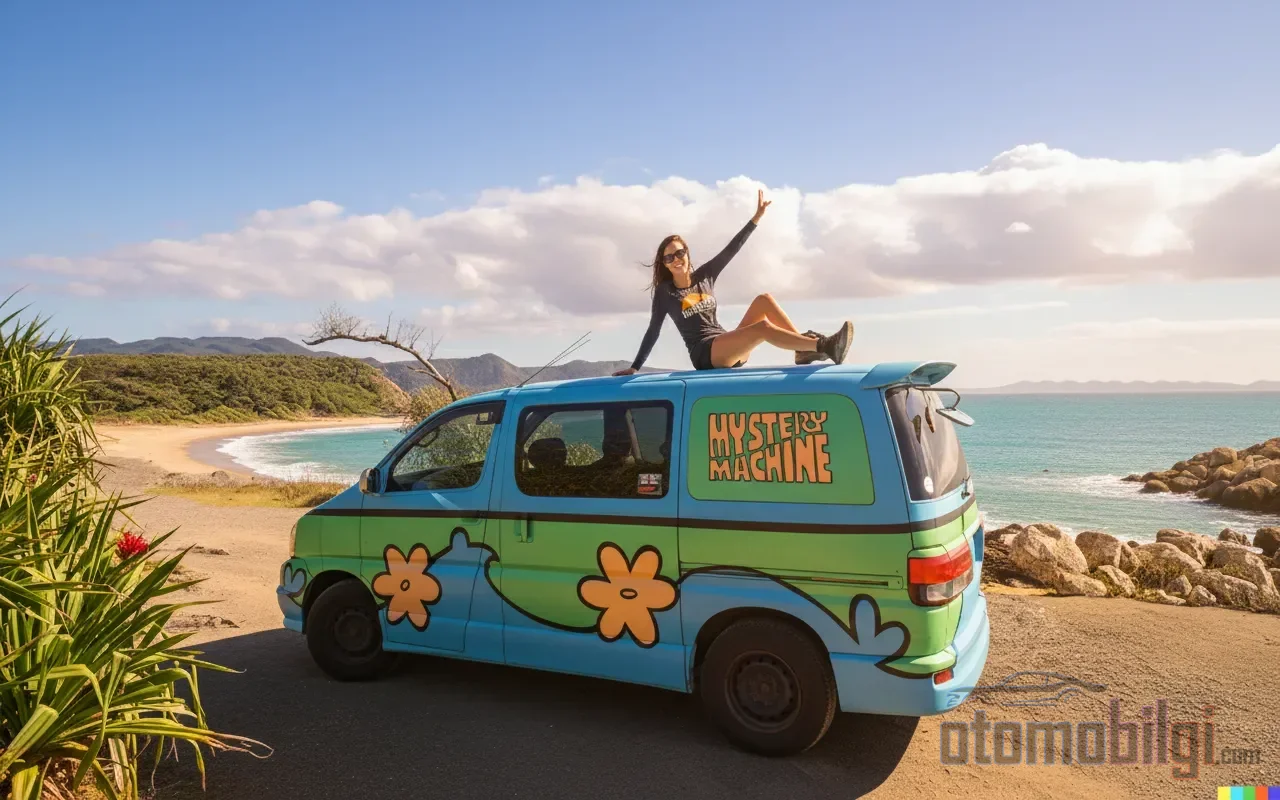
This is the question the fan community debates the most. Since the producers never announced a definitive model, the identity of the base van is a full detective case. As the name suggests, the Mystery Machine itself is a mystery.
- Dodge A100 (1964-1970): Its round headlights, chrome front bumper and door handles, and the stripe between them and the wheel wells match the Mystery Machine quite well.
- Chevrolet G-Series / G-Body (1964-1996): Its slanted windshield and the absence of a side cargo window are the strongest evidence for these fans. Chevrolet-focused publications go even more specific, arguing for a 1968 Sport Van 108 base or a 1965 Chevrolet Van front and rear.
- Ford Econoline: Although its name comes up among fans, the headlight socket structure seems to knock it off the list. Still, some sources count the Econoline among the candidates; there are even lists extending to the Ford Taunus Transit.
In short, there is no definitive answer, and there probably never will be. The general consensus is that the van has a 60s panel van look. This ambiguity is actually part of its iconic status: everyone sees their own favorite van in that paint job.
New Looks on Screen: From News Van to Monster Machine
The classic design remained almost untouched from 1969 into the 90s. Then things changed. In the 1998 Scooby-Doo on Zombie Island, the van was turned into a news van used for Daphne's news program: most of the flowers were gone, the round headlights became rectangular, and instead of the spare tire, a hood protruding over the front engine appeared. Although the original look returned with the early-2000s DVD movies, the news van era sparked quite a debate; the original hippie version always left a stronger impression.
On the live-action side, the 2002 film gave us a van based on a 1972 Bedford CF; the film being shot in Australia may have influenced this brand choice. The 2004 sequel, however, was based on the news van design.
The Wildest Variations
- In the 2008 Goblin King, the wizard Krudsky turns the van into a monster machine: green spiked wheels, a mouth that turns into a grille, and everything from bicycle seats to eyebrows.
- In Shaggy & Scooby-Doo Get a Clue, the van can turn into any vehicle in the world; the flowers become stars and the color order reverses.
- In Happy Halloween, Scooby-Doo!, the electric Mystery Machine X built by Bill Nye arrives: complete with autopilot, a touchscreen and an autoclave.
- Other series feature a red van, a satellite-equipped version, a variant that can switch to submarine mode, and even a horse-drawn "Mystery Machine Wagon".
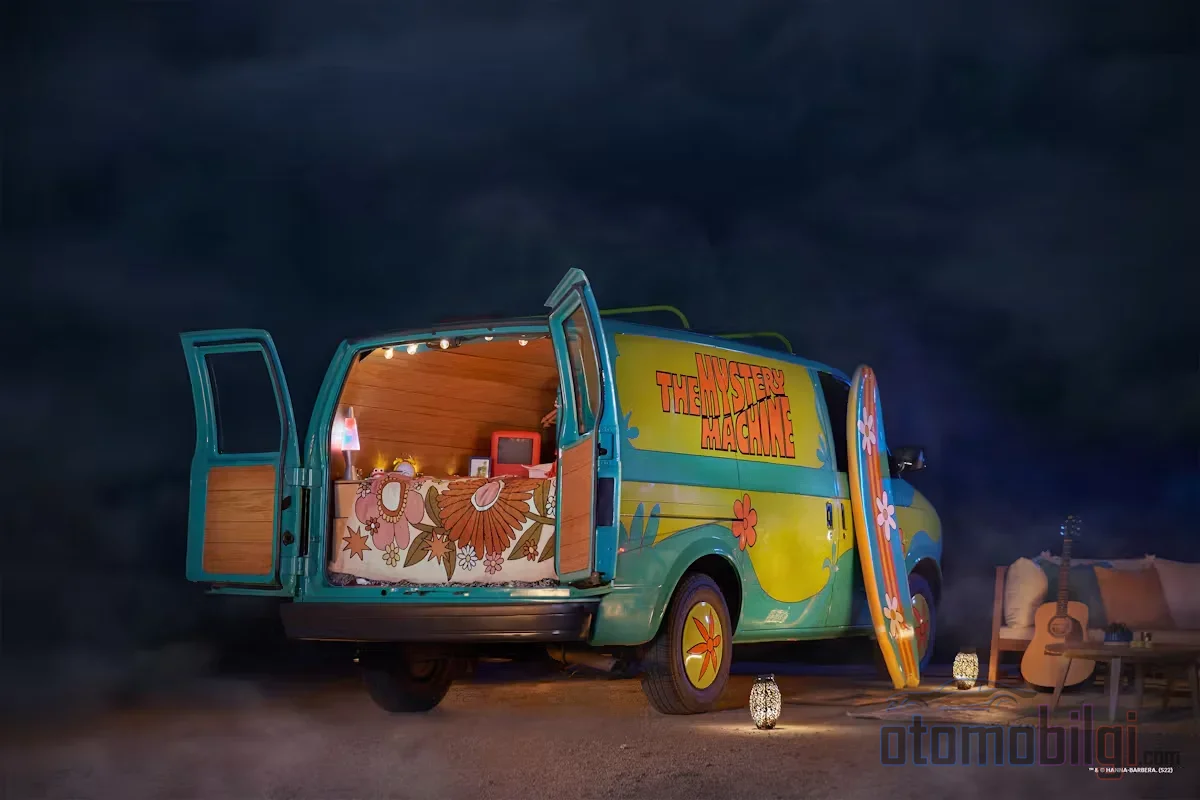
Although the interior layout has also changed frequently over the years, some details stayed faithful: bench seats, a magnifying glass, a map, a flashlight, a tiny laboratory for Velma in some adaptations, lava lamps and floral curtains. And we must not forget a GPS that gives funny instructions; so detective technology doesn't always advance seriously.
The Mystery Machine in the Real World: Replicas and Museum Vehicles
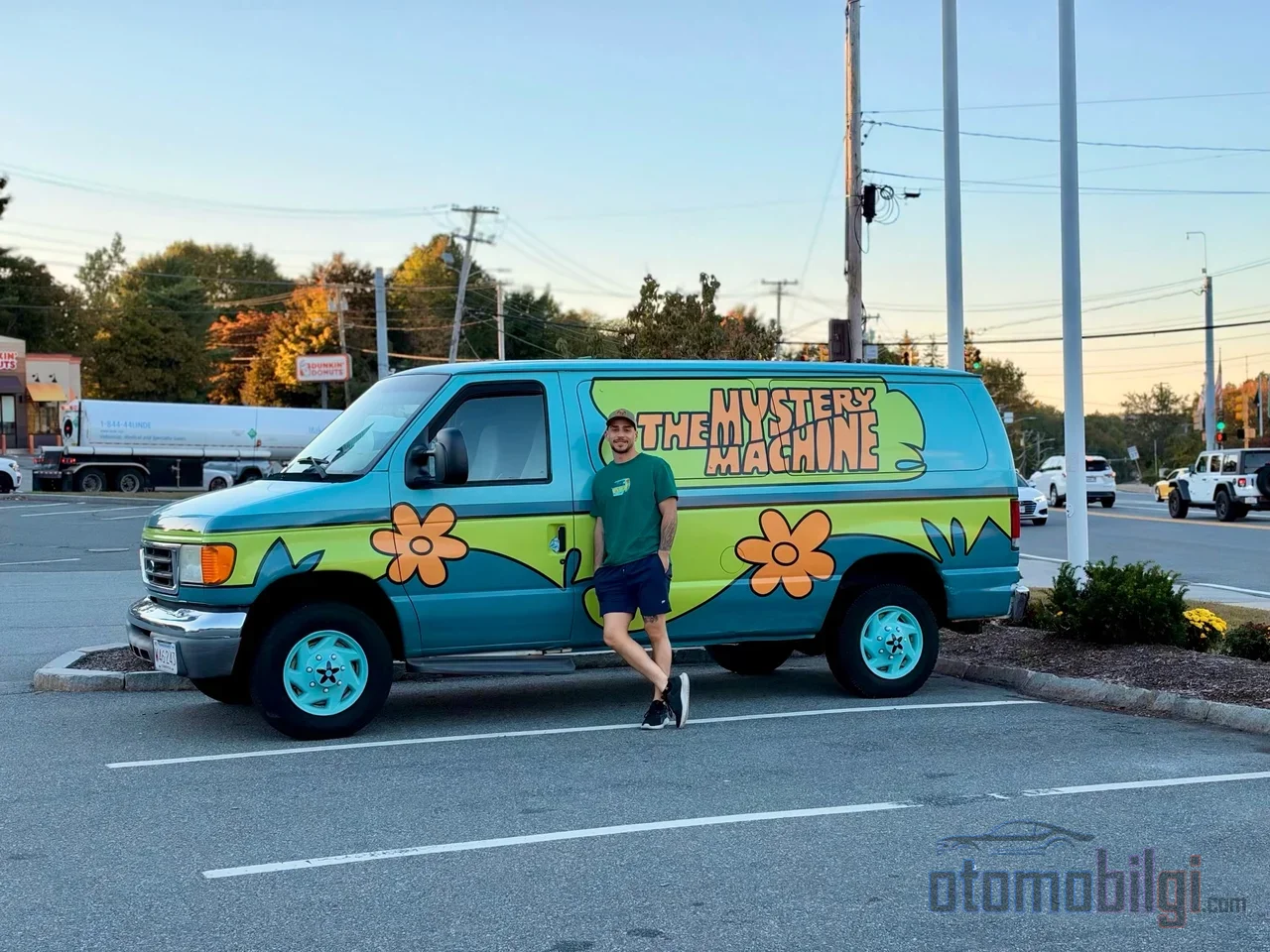
Now here's the part that excites me the most: this van no longer travels only on screens, but on real roads too. Vehicle customization shop owner Jerry Patrick turned a 1967 Dodge base into a faithful replica in about 90 days. For accuracy, they froze and examined old cartoon frames one by one; the result was a van capable of reaching 75 mph, with a renewed suspension and roughly 100 feet of LED lighting inside. In Texas, E.J. Salinas, meanwhile, uses his gifted replica around town and at school.
The market side is lively too. At Barrett-Jackson Scottsdale 2019, a replica based on a 1968 Ford Econoline found a buyer for $59,400; at the heart of the vehicle was a factory 302 cu in V-8 engine and a three-speed automatic transmission. The 2025 Scottsdale roster featured, this time, a re-creation based on a 1974 Ford Econoline from the collection of Dr. Stewart A. Included a 1974 Ford Econoline-based re-creation from the Berkowitz collection. Then in October 2026, a seller in New Jersey listed a 1972 Ford Econoline replica for sale through ClassicCars.com. In short, the replica market is thriving, with prices hovering above the $50,000 mark.
Good news for museum lovers: Volo Auto Museum displays the promotional Mystery Machine from the 2002 live-action film. On Hemmings listings you can find a 1979 Chevrolet G20 replica with a 5-liter V-8 engine; there are even studios that build full Mystery Machines from scratch with custom paint and wraps. West Coast Customs' announcement that it had built a full-size Mystery Machine caused quite a stir in the fan community.
From the Toy Shelf to the Collectors' Showcase: A Merchandising Empire
When a vehicle truly becomes an icon, its scale shrinks but its popularity does not. Hot Wheels' 1:64 scale Mystery Machine models have been on shelves for years; 50. anniversary change hands among collectors. On Walmart listings, it is possible to find a 1:24 scale remote-controlled Mystery Machine for $28. Racing Champions produced a diecast based on a 1975 Chevrolet Van in 1999; action figure and van sets from the 2000s are still active on the second-hand market.
There are plenty of assessments that place the Mystery Machine in the same league as other cult vehicles like the Ecto-1; it is even counted among legendary vehicles redesigned in Transformers format. The large lettering beside it and the gang's constantly-traveling lifestyle turned this van into more than just a means of transport - it became the team's mobile headquarters and the face of the franchise.
So How Did the Mystery Machine Become an Icon?
The short answer is this: Thanks to its original design that etched the flower power aesthetic of 1969 into cartoon history, its uninterrupted visibility of over 50 years, and its second life in the real world with replicas, museum vehicles, and toys, the Mystery Machine became one of the most recognizable automobiles in cartoon history.
The formula is actually simple but takes mastery. First, the design is unforgettable: anyone who sees the blue-green-orange combination once never forgets it. Second, the van is not an accessory but part of the story; No Scooby-Doo adventure is complete without that van parked in front of mysterious mansions. Third, and perhaps most importantly, a nostalgia passed down through generations: Parents who watched it in the 70s are showing the same van to their kids, and the cycle continues.
And of course, the fans' love... People freeze the cartoons and analyze them frame by frame, spend years building accurate replicas, and pay tens of thousands of dollars at auctions. I don't think a vehicle could prove its icon status any better than this.
Sources
- Scooby-Doo Mystery Machine: A Fascinating History
- Mystery Mystery Machine, Who Are You?
- Ranking All the Mystery Machines
- Top 5 Chevy Vans Of All Time: #2 The Mystery Machine
- Scooby-Doo Mystery Machines
- 1974 Ford Econoline "Mystery Machine" Re-creation
- Pick of the Day: 1972 Ford Econoline "Mystery Machine" Replica
- The Mystery Machine - Character Profile