How Long Does a Clutch Last, and How Can You Tell It's About to Wear Out?
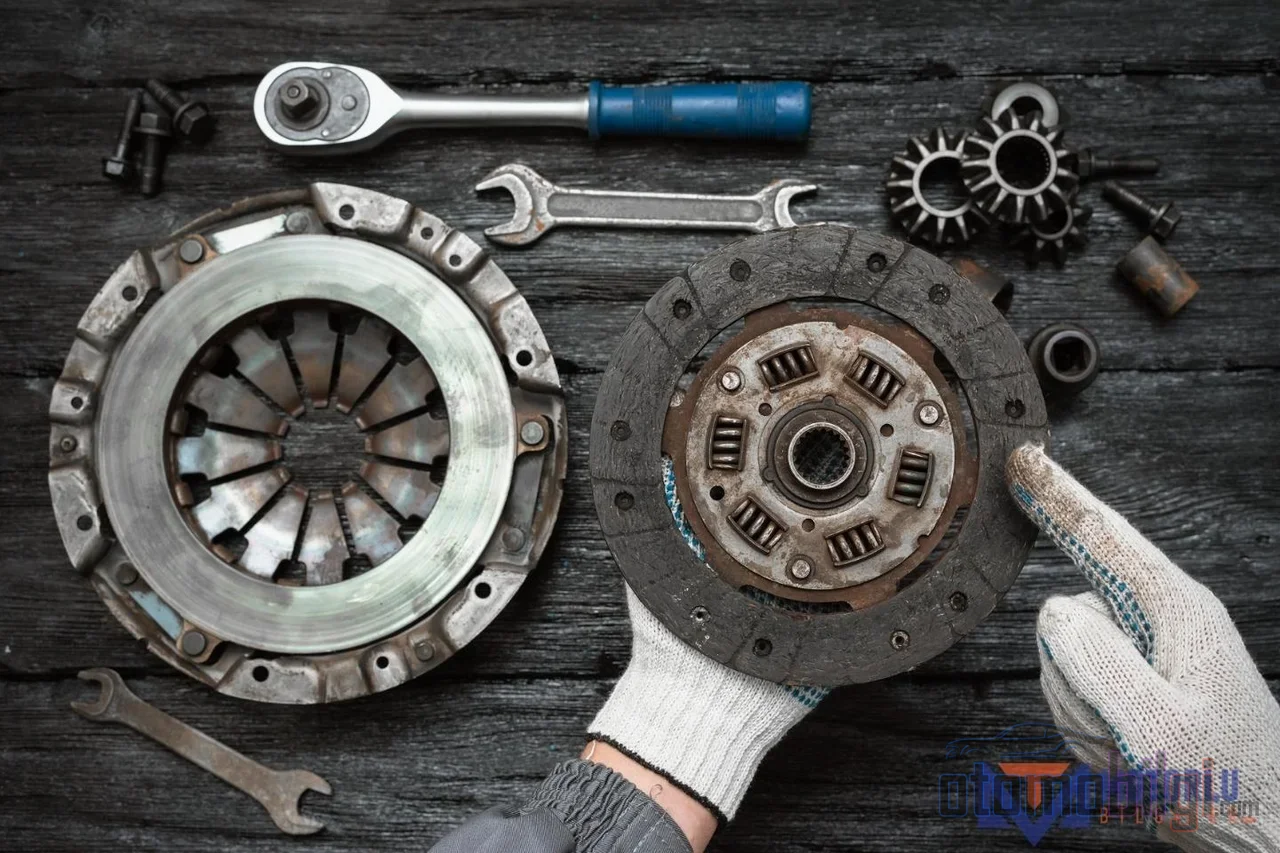
Imagine two cars of the same model: one's clutch wears out at 50,000 kilometers, while the other's is still as good as new at 200,000 kilometers. The difference is neither the brand of the part, nor luck. The clutch is the component of a car that wears out most in the driver's own hands; from the moment it leaves the factory, its life is largely determined by the person whose foot guards it. On this page, we will cover how long a clutch lasts, which habits shorten its life, and what signals the car gives before the lining is worn out.
What Does the Clutch Do, and Why Does It Wear Out?
The clutch is a mechanism that sits in front of the gearbox connecting the engine to the wheels, and serves to separate the two from each other. It consists of three main parts: the clutch plate (disc), which has the friction surface; the pressure plate, which presses this disc against the flywheel; and the flywheel, which carries the power transmission. When you press the pedal to change gears, the pressure plate separates from the disc and the connection between the engine and the gearbox is cut; when you release the pedal, the disc clamps back together and power is transmitted to the wheels.
Wear is inherent in the nature of the job. The friction surface of the disc wears down a little with every engagement; the release bearing and the pressure plate mechanism also fatigue over the years. The problem is that the rate of this wear is not constant. The same part can live three times as long depending on how it is used. In dry-type clutches, power transmission relies on the friction of a plate exposed to air; in wet clutches, oil lubrication is at work, and this structural difference affects both the rate of wear and the cost of maintenance. Most passengers' cars, however, have a dry clutch; and that is what we are mainly talking about here.
How Long Does a Clutch Last? What Do the Numbers Say?
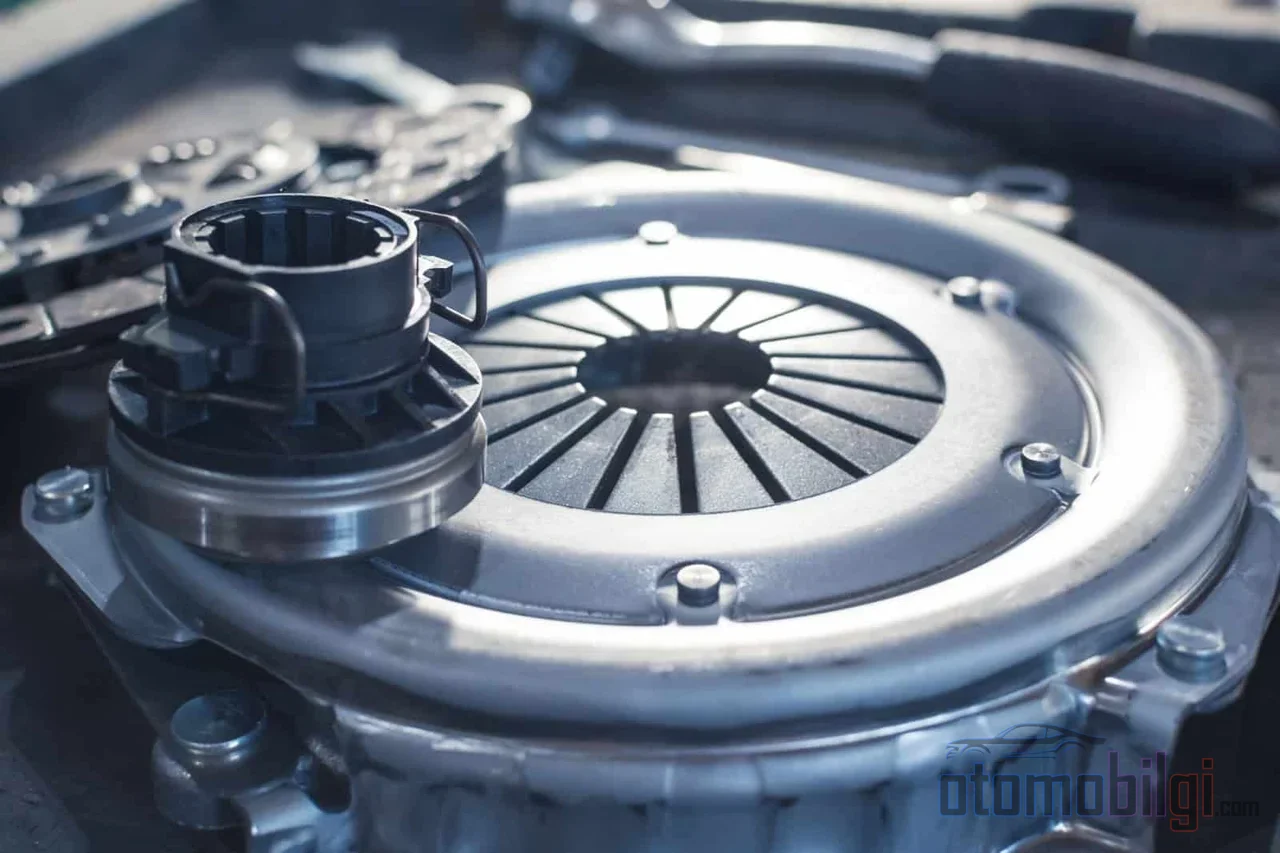
There is no single fixed figure; the given ranges are wide, and this width is not for nothing. Industry data describes the average clutch life as being in the range of about 32,000-240,000 km; the common finding is that most clutches need replacement at around approximately 96,000 km. Clutches worn out below 48,000 km have also been seen; and so have those still working beyond 200,000 km. In short, the answer to the question lies with the driver.
Highlights
- The average clutch life is in the range of 32,000-240,000 km; typical replacement is around ~96,000 km.
- The biggest factor determining clutch life is not the part, but driver habits.
- The most common first symptom is slipping: the revs rise, but the speed does not.
- Clutch replacement is an expensive repair that requires on average 4-8 hours of labor.
- In most cars, the clutch has no dedicated warning light; the symptoms come through noise, smell, and the pedal.
Conditions That Shape Its Life
Beyond the mileage, several conditions are decisive. Stop-and-go city use wears the clutch noticeably faster than smooth highway driving; every launch at a traffic light sends the disc a small but cumulative bill. Hot climates also shorten its life. Aggressive driving, unnecessary slipping, pulling heavy loads, and habitual misuse sit at the very top of the list. Let's take a closer look at each one; because the fate of the clutch largely depends on the relationship between the right foot and the left foot.
Driving Habits That Shorten Its Life
In the past, the clutch was seen as the learning price paid by newly licensed young drivers; and not much has changed today either. All of the habits below cause the disc or the pressure mechanism to work, rub, and heat up unnecessarily.
- Resting your foot on the clutch: This is the most common enemy of the clutch. Even lightly resting the left foot on the pedal creates partial disengagement over time and causes early wear. Once the gear change is done, the foot belongs on the footrest beside the pedal, not the pedal itself.
- Waiting at the biting point: Keeping the car balanced with the clutch at a light or on a hill means the disc is constantly slipping on the flywheel. Preventing the car from rolling back on a hill with the clutch is the same mistake in its steepest form; that job belongs to your brake, or to hill assist if equipped, or to the handbrake otherwise.
- Using the clutch and the gas together: Applying throttle before the pedal is fully released converts the torque acting on the disc into friction. While gas-clutch coordination matters at takeoff, the habitual late release keeps the disc hot.
- Waiting in gear at stops: If you will be stopped for more than 10 seconds at a traffic light or in a queue, shift into neutral and use the brake. The same rule applies to long waits, level crossings, and parking scenarios.
- Not pressing the pedal fully and pressing it unnecessarily: Pressing the clutch when no gear change is needed, or half-pressing while shifting, wears out the synchronizer rings and the pressure mechanism together. Gear changes should be quick and decisive; and once done, the pedal should be released immediately.
Here, one must not miss the measure: Using the clutch occasionally and briefly causes no serious damage. The harm lies in use where these habits have become constant and reflexive. Regular servicing also indirectly extends its life; because a low fluid level, a leak, or early symptoms can be noticed in time.
How to Tell if a Clutch Is Worn Out? Early Symptoms
The good news is this: Clutches rarely die suddenly. They almost always give a series of warnings before complete failure. The bad news is that most cars do not have a dedicated warning light for the clutch; however, the general engine or transmission warning light can give an indirect signal. Observation is the driver's job.
Slipping: The First and Clearest Warning
The most common symptom is slipping: when you press the gas, the revs rise but the car does not deliver the expected acceleration. If, while driving on a flat road at a quarter throttle, the engine sound falls ahead of the speed, there is a strong chance the disc cannot hold the flywheel. The burning smell of a slipping clutch is also characteristic; you can detect the heating of the friction surface through your nose. Gears dropping out without reason in a vehicle stuck in a lower gear is another face of the same problem.
Rising Biting Point
The point where the clutch starts transmitting power without being fully engaged is called the bite point. If this point gradually moves higher up the pedal over time - meaning the car only holds almost at the very end of the pedal travel - this is an early warning stage of wear, and it usually appears before slipping starts. Noticing this on the first test drive of a used car comes in handy at the negotiation table.
Sounds, Pedal Feel and Gear Difficulty
- A squeak or noise when pressing the pedal, a grinding sound when shifting gears.
- A soft, spongy, sticky, vibrating or loose pedal feel - these can also point to drivetrain issues such as air in the hydraulic lines or a faulty hydraulic cylinder.
- Particularly difficulty shifting into reverse and first gear.
- Weak acceleration despite pressing the throttle and increasing fuel consumption.
One more thing to know: The clutch cannot be visually inspected without removing the transmission. What can be observed from the outside are fluid leaks and unusual noises; the actual diagnosis is the job of the service shop. Continuing to drive with serious symptoms is not just a more expensive repair - it is a safety risk; a slipping clutch also places load on the transmission, differential and engine, paving the way for cascading damage.
Factors That Determine Replacement Cost and Price
Clutch replacement is one of the most expensive routine repairs on a manual transmission vehicle - the reason is not the parts, but the labor. An average replacement requires 4-8 hours of labor; on complex or newer vehicles this takes even longer. In the US market, as of 2026, the bill ranges from 500 to 2,500 dollars depending on vehicle type, parts quality and labor; for a standard manual car or pickup, the typical range is around 1,200-3,200 dollars. In the United Kingdom, the equivalent for most cars is 300-700 pounds.
What Inflates the Bill
The main items that drive up the cost are: vehicle make and model, the choice of original (OEM) or aftermarket parts, local labor rates, and additional repairs that emerge during the replacement. As the vehicle gets heavier and engine torque increases, the clutch assembly grows, and so does the labor. The real cost bomb, however, is vehicles with a dual-mass flywheel (DMF): The internal springs of this flywheel fatigue over time and can push the bill to two or three times that of a simple clutch kit. Jobs on performance and diesel vehicles are also above average. As for second-hand, fitting a removed clutch is technically possible, but since the actual condition of the part is unknown, it is a risky saving.
In summary: Clutch Life Is in Your Hands
The short and honest answer is this: A clutch lasts on average around 96,000 km; but proper use can extend this life beyond 200,000 km, while bad habits can cut it down to as low as 50,000 km. Your foot should rest on the footrest, not on the pedal; on hills the car should be held with the brake, not the clutch; during long stops, shift into neutral. When the symptoms appear - a rising bite point, squealing sounds, late engagement, revs climbing without speed increasing, a burning smell - waiting only inflates the bill. The clutch is a quiet component; but when it starts to speak, you need to take it seriously.
Sources
- Signs of a Failing Clutch | Parts Matter – DRiV
- How long does a clutch last? – Mr Clutch
- What Are The Signs That Your Clutch Needs Replacing? – U-Pull-It
- How Long Does the Clutch Last? – AutoZone
- How long does a clutch last? – HowStuffWorks
- Is your clutch slipping? – RAC
- Signs your clutch is going – Halfords
- High Clutch Biting Point? Here's Why – Kwik Fit
- Dual-Mass vs. Single-Mass Flywheel – Clutch Masters
- How Much Does It Cost to Replace a Clutch? (2026) – ConsumerAffairs