Women Drivers in IndyCar: From Danica Patrick to Today
Until that first day a female pilot put on her helmet and entered the Indianapolis 500 track, the doors of open-wheel racing were literally closed to women. Now there are names on the 2026 grid, there are milestones, and there are still doors that remain unopened. The story of female drivers in IndyCar is one of the bravest stories in motorsport - and trust me, telling it excites me every single time. Let's start from the beginning: How could Danica Patrick be the only one? Who paved her way, and who is walking that road today?
It All Started with Janet Guthrie
Janet Guthrie's story is truly a love story. Born in Iowa City in 1938, Guthrie became the first woman to qualify for both the Indianapolis 500 and the Daytona 500 in 1977. Just think about it: leaving her mark on two giant races in the same year. Moreover, the road was not easy. In 1976, she failed to qualify in her first attempt at the Indy 500. At exactly that moment, the legendary A.J. Foyt stepped in and lent her his backup car for testing. With her best practice lap in that car, Guthrie would have qualified comfortably - you'll understand what I mean in a moment.
Guthrie raced in the Indy 500 three times: in 1977 she started 26th and finished 29th, in 1978 she raced with a broken wrist and achieved an incredible 9th place, and in 1979 she started 14th and finished 34th. finished it. At the 1976 World 600, she was the first woman to compete in a superspeedway race, finishing 15th, 15th at the 1976 World 600. as the first woman to advance in a superspeedway race, and 12th in the 1977 Daytona 500. finishing and won the Rookie of the Year award. Her best IndyCar finish was 5th place, and her 6th place at Bristol in 1977 remained the best top-tier NASCAR result achieved by a woman in the modern era until 2014.
So why did such a talented driver have to retire early? The answer is sad but important: was unable to find corporate sponsorship. Years later, she openly stated that the old, closed-circle network within motorsport at that time barely opened its doors to female drivers. Guthrie's helmet and racing suit are on display today at the Smithsonian; her name was inducted into the International Motorsports Hall of Fame (2006) and into the Automotive Hall of Fame (as the 5th woman in 2019 as a woman). In 2024, she was also honored with the NASCAR Landmark Award. In other words, the groundwork she laid carried everyone who came after her.
Highlights
- 1977: Janet Guthrie was the first woman to qualify for the Indy 500.
- 2008: Danica Patrick, the first and only woman to win an IndyCar race.
- 2009: Patrick's 3rd place remains the best result by a woman in the Indy 500.
- 9 starts: Sarah Fisher holds the record as the woman who has raced the most in the Indy 500.
- 2026: Those Who Widened the Road:
Lyn St. James and Sarah Fisher James and Sarah Fisher
If Guthrie had only cracked the door open, those who came after him pushed it wide open. Lyn St. James finished the 1992 Indy 500 in 11th becoming the first woman to earn the race's Rookie of the Year award. He ran the race seven times in total and also shone in endurance racing: on his table are two 24 Hours of Daytona victories and one 12 Hours of Sebring win.
Sarah Fisher, on the other hand, is a different kind of pioneer. With nine Indy 500 starts, she is the woman with the most starts. In 2000, at just 19 years old, she became the youngest woman ever to race in the Indy 500. But her real distinction is this: she is the only woman to have been a team owner in IndyCar Series history, and also the youngest team owner in the series. In other words, she drove on the track, then founded her own team and joined those who run the grid. In my opinion, that is a move that takes as much courage as driving itself.
Let one more name be added to the list: Venezuelan Milka Duno also counts among the women who have raced in the Indy 500. And Simona de Silvestro? She won the rookie award at the 2010 Indy 500, was a full-time IndyCar driver for four seasons, became the first woman to score points and race full-time in Formula E, and even did an F1 test. But in 2015, the Sauber F1 seat she dreamed of never materialized because the sponsorship money fell short. You see, the money issue shows up in every story - we will get into that shortly.
Danica Patrick: The Name Who Changed History
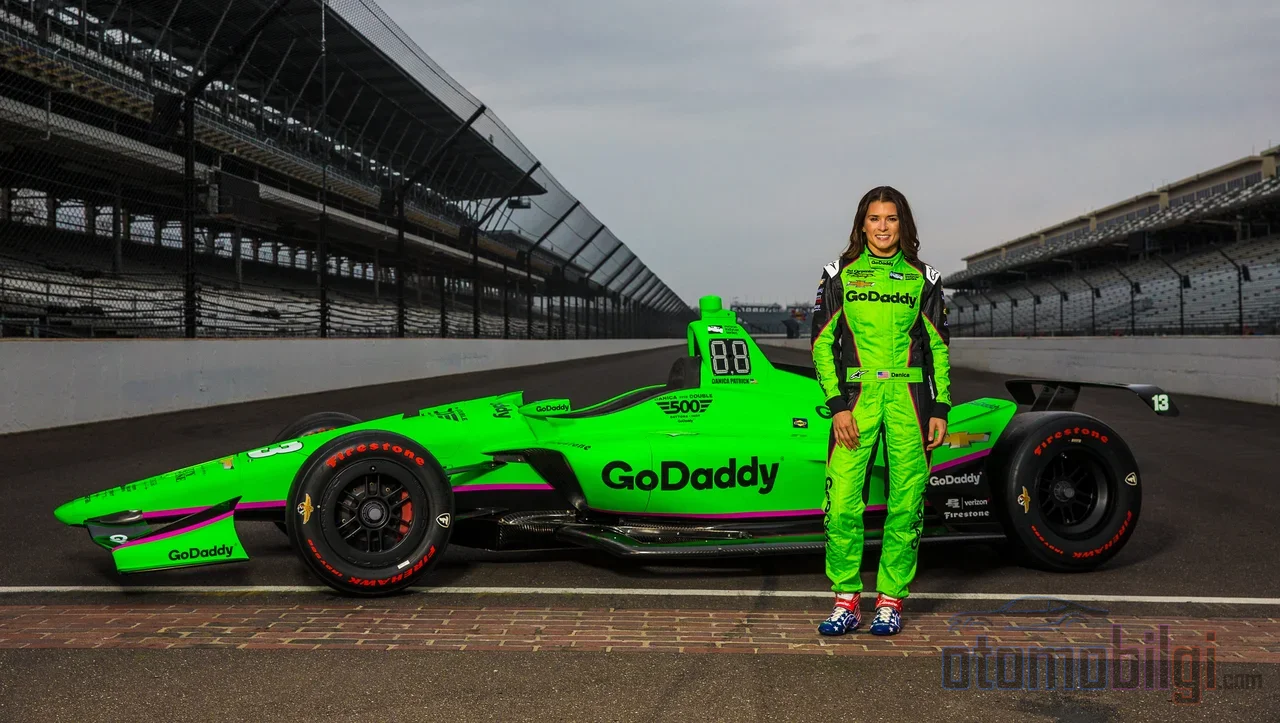
Now the star of this story takes the stage. Danica Patrick is the only woman to have won an IndyCar race. She took the rookie award in her first Indy 500 in 2005, and in 2008 she made history: the first woman driver to win an IndyCar race. And in 2009 she finished 3rd in the Indy 500, achieving the best result a woman has ever recorded in that race. In my view, the most striking part is this: she managed to do all of this on the path opened by the pioneers before Patrick, while carrying that path to a completely different level.
Patrick's impact was not limited to IndyCar. She moved to the NASCAR side and, in 2012, captured 10th place, the best ranking of her career. And at the 2013 Daytona 500 she became the first woman to take pole position, with a speed of 196.43 mph - that lap is still the fastest single-car pole lap in Daytona 500 history. A note for the technically curious: that speed in the pole lap is not the highest speed the car reached over the entire track, but is measured by the average speed of the two decisive laps; in a way, it is like answering the most critical question of an oral exam correctly on the first try.
Let's jump ahead to 2018: Patrick returned to the Indy 500 for a farewell race, and with a 4-lap average of 227.610 mph she entered the Fast Nine Shootout and qualified 9th. That race was her final IndyCar race; afterwards, she stepped in front of the microphone and began working as a TV analyst. Some drivers retire quietly; Patrick bowed out with a farewell performance on stage.
Can Women Win the Indy 500? Today's Answer
The clear answer to this frequently asked question is: No woman has won the Indy 500 yet, but none has backed away from the race. The best result is Danica Patrick's 3rd place in 2009, and the most starts are Sarah Fisher's 9 starts. Winning is less about talent and more about opportunity - and opportunity, as we will see shortly, is directly tied to the number of women on the grid.
That said, in some years there are no women drivers on the grid at all. The 2020 Indy 500 was exactly such an example: When Pippa Mann couldn't compete because she couldn't find sponsorship, there wasn't a single female driver in the race. It is known that Guthrie even spoke of the possibility of watching this situation with sorrow. So progress is not a straight line; sometimes it moves forward, sometimes backward.
Who's There in 2026? Katherine Legge and the New Generation
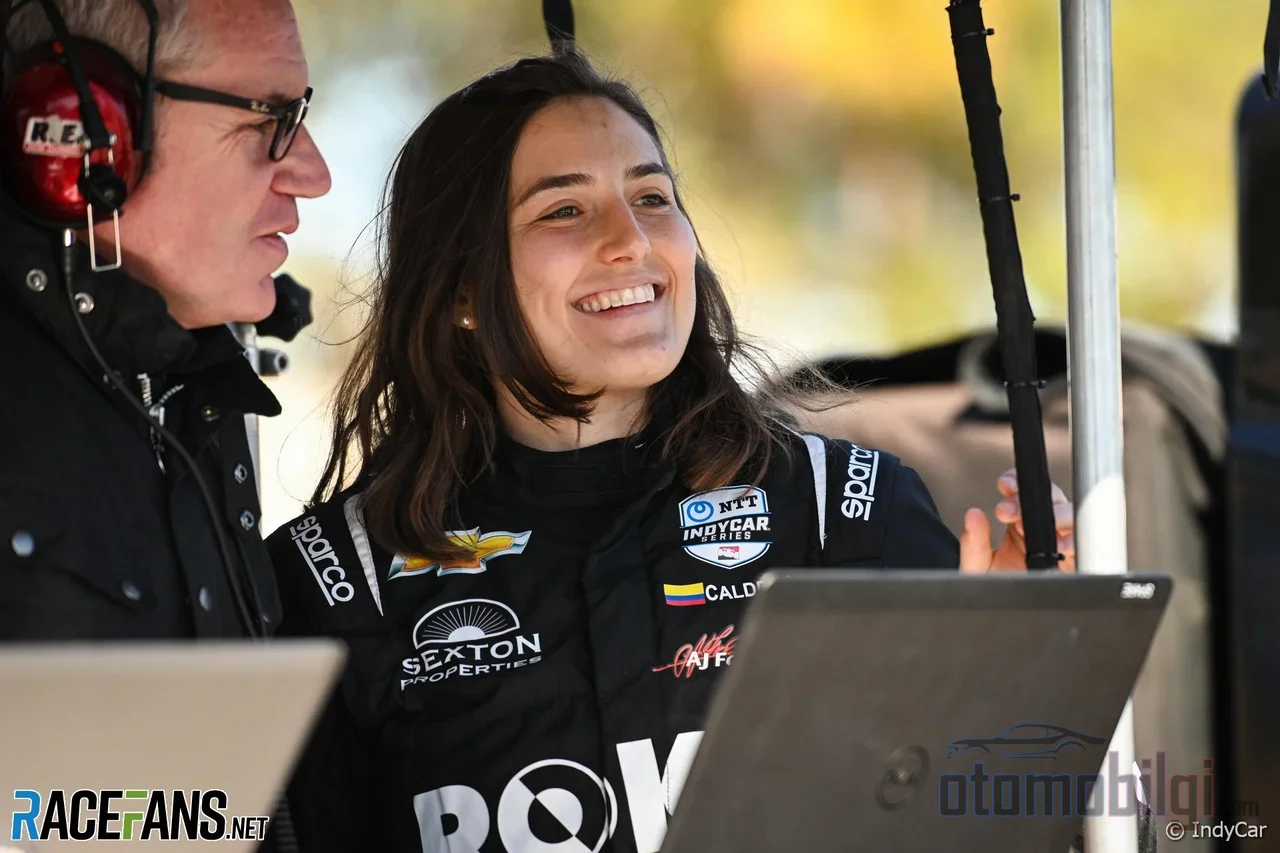
As we arrive at 2026, the women's story on the IndyCar grid revolves around Katherine Legge. Legge, in the 110th in 2026. Indianapolis 500 in 2026 with HMD Motorsports with AJ Foyt Racing in the No. 11 Chevrolet and entered as the only female driver on the grid. With a 4-lap qualification average of 229.456 mph, she started from 9th place (middle of Row 9) and found a spot right behind two-time Indy winner Josef Newgarden. It was her fifth Indy 500 start.
But the truly historic moment of 2026 was elsewhere: Legge became the first woman to attempt running the Indy 500 and NASCAR's Coca-Cola 600 on the same day, on May 24, 2026. This famous Indy-Charlotte Double means a cross-state journey after the race - one of the most exhausting single-day duties in the world. Unfortunately, the attempt ended early after an incident with Ryan Hunter-Reay. Still, even trying is history. I don't actually know anything new, but let's also take a look at Legge's track records: She holds the Indy 500 speed records with the fastest single-lap qualification of 231.627 mph and the fastest 4-lap average of 231.070 mph in 2023. Do you know what that speed means? More than about 100 meters per second - more than twice the speed of the car passing you on the highway.
Looking to the future, Jamie Chadwick's name stands out. Chadwick, who races in INDY NXT by Firestone (IndyCar's feeder series), also made headlines with a video in which she spoke with Legge about the growth of the sport. The 2026 main grid includes names like Palou, Kirkwood, Lundgaard, and O'Ward; there is not yet a permanent second female name. So the pipeline for female drivers to reach the main series is still under construction.
Opportunities and Obstacles: Money, Representation, and the Future
The bitter truth of this story is this: talent was never the problem; money was. Guthrie was forced into early retirement due to a lack of sponsorship, de Silvestro's F1 dream was left without a sponsorship budget, and Mann couldn't be on the grid in 2020. Moreover, women in motorsport attract far more attention than their male counterparts, but this attention doesn't translate into sponsorships. On the other hand, the picture is not entirely dark: support networks, inclusivity initiatives, and structures like Porsche's North American female driver program are opening doors for the new generation. Of course, there is also a debate: the criticism that quota-based approaches may tokenize female drivers and actually harm the efforts. The balance is something that must be struck between genuine opportunity and token representation.
Now let's give a collective answer to the question at the beginning: The road for female drivers in IndyCar opened with Janet Guthrie's bold first step in 1977; Lyn St. James and Sarah Fisher expanded it, Danica Patrick carried it to the summit - the only IndyCar win, the only Daytona 500 pole and the best result by a woman in the Indy 500 - and today Katherine Legge is living this legacy both in the 110. Indy 500 and with her historic Double attempt. There is no winning woman yet, but that is not a question mark; it is a countdown. Who do you think will claim the next milestone? I cannot wait for that day.