Most Common Defects Found in Vehicles That Fail the TÜVTÜRK Inspection
Share This Page
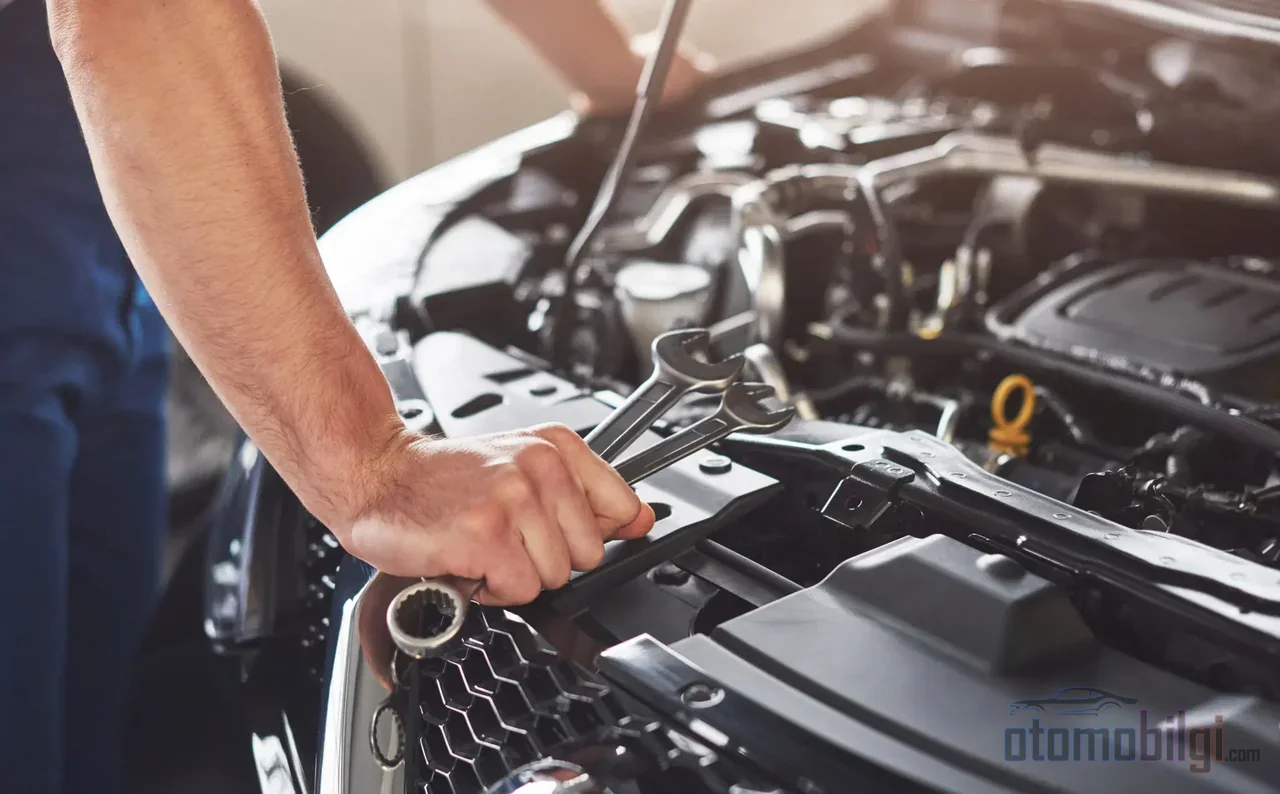
The most common defects found in vehicles failing the TÜVTÜRK periodic inspection; lighting system malfunctions, imbalances in brake values, absence of a valid exhaust emission measurement, and deficiencies in tire condition. Most of these items can be detected and fixed at home with a few minutes of checking, even just days before the inspection.
Key Points
- If the front service brake value difference on the same axle is greater than 30%, it counts as a severe defect.
- The legal minimum tread depth is 1.6 mm for cars and 1.0 mm for motorcycles.
- A vehicle that receives a severe defect report can undergo a re-inspection free of charge within 30 days.
- In 2026, the car inspection fee is 3,288 TL and the exhaust emission measurement is 460 TL.
- Approximately 6 million vehicles undergo periodic inspection in Türkiye every year.
The periodic inspection is a practical exam of your vehicle's maintenance schedule. A bulb replacement postponed for two years, neglected brake pads, tires whose pressure has never been checked - all of them confront you on the same day at the inspection line. Yet almost all of these defects are not faults requiring responsibility, but situations that can be prevented from the start with regular maintenance. In this article, we take a step-by-step look at which defects vehicles most commonly fail on, how you can spot each one in advance at home, and how the process works if you fail the inspection.
How the inspection result is determined: flawless, minor defects, severe defects
In Türkiye, vehicle inspections are mandatory under Article 34 of the Highway Traffic Law No. 2918 and are carried out by a single authorized organization. At the end of the inspection, the vehicle falls into one of three categories: flawless, minor defects, or severe defects/unsafe. This distinction can be reduced in practice to a single question: does the defect prevent the vehicle from being driven on the road? A minor defect does not; the vehicle can be used in traffic for 60 days, and if the deficiency is corrected within this period, the issue is closed. A severe defect, however, halts the inspection approval.
The concept of a severe defect is not an arbitrary judgment; it is defined by the Ministry of Transport and Infrastructure's defects table. The updated table, in effect from June 1, 2026, specifies item by item which deficiency falls into which defect group. For example, a front service brake value difference greater than 30% among the wheels on the same axle falls under severe defects; and so does the complete absence of a license plate. In other words, whether you pass or fail the inspection largely depends on measurable thresholds - which makes it possible not to leave preparation to chance.
Which defects do vehicles most commonly fail the inspection on?
One year of data from inspection stations paints a striking picture: the most frequently detected deficiencies are concentrated in the lighting and braking systems. The main items listed are as follows: imbalances in rear service brake values, insufficient parking brake, faulty low beam headlight adjustment, brake lights partially or completely not illuminating, and the reverse light not functioning. The absence of a valid exhaust gas emission measurement is also a significant reason for failure; aftermarket LED bulbs that don't meet standards cause problems in a similar way.
This list aligns with the picture worldwide. In international inspection statistics, brake system defects are the most common reason for rejection on a global scale; it is followed by lighting and signal failures, tire condition, and suspension. That stations in different countries produce the same ranking is no coincidence: these are systems that both wear directly with use and escape the driver's daily attention. Getting used to a slight deterioration in brake pedal feel, or failing to notice a burned-out bulb - the inspection line reveals this accumulation all at once.
Brakes and suspension: measured values and home checks
In the inspection line, the brake test is performed by measuring the braking force of each wheel individually. The two fundamental things compared are the difference between the wheels on the same axle and the overall braking performance. A left-right braking difference of 30% or more leads to a major defect; in a vehicle with ABS, an active ABS fault likewise stops the inspection. When the parking brake cannot produce sufficient holding force on its own, it goes into the report as a major defect.
You cannot measure these values at home, but you can feel the symptoms. Pulling to one side when braking, vibration in the steering wheel, stiffness from the pedal, or a hissing-like sound are the classic warning signs of uneven braking. The rule is the same on the suspension side: play or damage in axle connections is a major defect, and in daily use you can catch it with clues such as increased noise after a pothole or a yaw motion that releases late in corners. If any of these symptoms are present, stopping by a service center before the inspection appointment is, in most cases, the shortest path to passing in one go.
Tires and lighting: the two easiest-to-prevent reasons for rejection
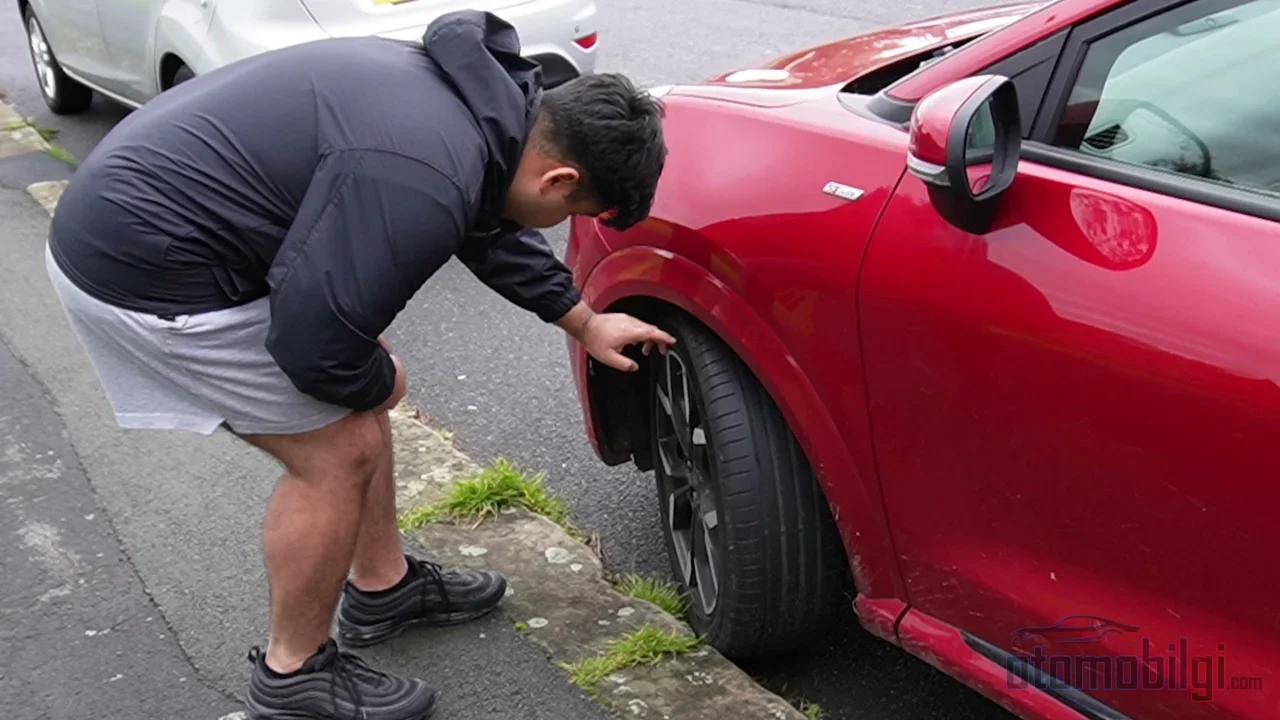
Tire defects belong to the group that can be completely eliminated with regular checks. The legal minimum tread depth is 1.6 mm; for motorcycles this limit is 1.0 mm. From an engineering standpoint, 1.6 mm is the legal minimum, not the safe minimum: the recommended depth is 4 mm for winter tires and 3 mm for summer tires, because as tread depth decreases, water drainage and wet-road braking distance deteriorate noticeably. Along with insufficient tread depth, bulges, cuts, sidewall damage, and incorrect size are also recorded as defects during inspection; incorrectly sized tires also negatively affect grip and braking distance.
A frequently asked question is whether the inspection can be taken with winter tires. Yes, it can: during inspection, the tire's condition is checked, not its type. Tread depth above 1.6 mm, undamaged sidewalls, and the correct size for the vehicle are sufficient. The preparation on the tire side also takes just a few minutes: measure the pressure and tread depth of each tire - including the spare - and look for cuts in the sidewalls.
Although lighting tops the list of most common defects, it is perhaps the easiest preparation item of all. Having one person stand in front of the car and switch on the brake lights, reverse lights, turn signals and headlights one by one takes five minutes. A misadjusted low-beam headlight setting is also a commonly encountered deficiency; you can only fully verify it with an alignment device, but if the headlight beam cuts unusually high or low above the ground, it points to a misadjustment. Also, non-compliant aftermarket LED bulbs will not pass the inspection - it is essential to use bulbs that match the original headlight technology.
Exhaust emissions test: what should be done before the measurement?
The emissions test is a separate leg of the inspection and requires a document that is valid for all vehicles. Fully electric vehicles are not subject to the test; hybrid vehicles consisting solely of gasoline-electric systems are also exempt from this test. You can have the test done without an appointment at authorized stations, and you can query the document's validity via e-Devlet. In 2026, the fee for this test is 460 TL for all vehicle classes.
The most common practical reason for failing the emissions test is the vehicle entering the test cold. If the measurement is done before the engine reaches its proper operating temperature, the catalytic converter performs poorly and the values come out bad; therefore, warming the vehicle up for at least 10 minutes before the test is the simplest and most effective preparation. Leaks in the exhaust pipes and faulty engine settings also directly spoil the values. If there is an abnormal noise coming from the exhaust or the vehicle's fuel consumption has noticeably increased recently, having a check done before the test saves time.
Pre-inspection checklist at home
The inspection operator itself lists the points to check before the inspection one by one for drivers. This list requires no technical knowledge, takes minutes rather than hours, and covers all of the most common defect items:
- Tire air pressure, tread depth and general condition (including the spare tire)
- All lighting systems: headlights, brake, reverse, turn signal lights
- Working condition of windows, mirrors and wipers
- Brake noise, vibration and pulling symptoms
- Active warning lights on the instrument panel
- Mandatory equipment: first aid kit, an ABC fire extinguisher of at least 1 kg, 2 reflective warning triangles, spare tire, lug wrench and jack
Mandatory equipment is an item that is easily overlooked: the reflective triangle must have an edge length of 45 cm and be visible from a distance of 150 meters. A seatbelt that does not work or does not retract, a crack larger than 40 cm in the windshield, or a crack in the driver's field of vision also fall under serious defects. For LPG vehicles, the tank's service life is 10 years; an expired tank prevents passing the inspection, and booking an appointment without planning a tank replacement means a wasted fee.
What happens if you fail the inspection?
The process for a vehicle that receives a serious defect report is clearly defined: the report states a 1 month (30 days) defect rectification period, and within this period, the vehicle undergoes a free re-inspection at any station serving the same vehicle group. If the deadline is exceeded, the inspection is repeated at full price. A vehicle with minor defects may remain on the road for 60 days; if the deficiencies are corrected within this period, the result is closed. Hiring a service to fix the defect does not change your re-inspection right - the re-inspection is evaluated only with respect to the corrected defects.
| Inspection result | Road use | Re-inspection |
|---|---|---|
| Defect-free | No obstacle | A new period begins |
| Minor defects | Usable for 60 days | Result is closed once deficiencies are corrected |
| Major defects/unsafe | Prohibited | Free within 30 days; full price if the deadline is exceeded |
On the cost side, the figures are clear too. In 2026, the inspection fee for cars, minibuses, pickups and SUVs is 3,288 TL including VAT; for buses, trucks, tow trucks and tankers it is 4,446 TL; for tractors and motorcycles it is 1,674 TL. If the inspection is delayed, a 5% late fee applies for each month; the fine for driving without an inspection is 2,719 TL and also carries the risk of 10 penalty points and being barred from traffic. This table shows how sensible it is to turn the inspection from a cost item into a planned maintenance check: a few bulbs and a tire pressure measurement eliminate both the loss of a re-inspection day and the risk of delay.
An inspection appointment can be made free of charge through the official website, call center, station kiosks and e-Devlet. On inspection day, you should bring your vehicle registration certificate, valid traffic insurance, identity document and valid exhaust emission certificate; if someone other than the vehicle owner takes the vehicle, a notarized power of attorney may be required. The queue at the station typically starts with the exhaust measurement, after which you move to the inspection line.
The maintenance calendar is the single correct answer to the inspection exam
Take another look at the list of most common defects: uneven brake values, parking brake, headlight adjustment, brake and reverse lights, emissions. None of these items are sudden, unforeseeable failures. Each of them is a condition that accumulates over the two-year period and could be caught with a single maintenance visit or a five-minute check at home. That is why the inspection station is the most honest exam of maintenance habits: a regularly serviced vehicle passes this line on the first try, while a neglected one encounters the top items on the list every time.
From 2027 onward, there is talk of transferring the inspection service under a new roof and halving the inspection duration; but no matter how much the process speeds up, what is being measured will not change. The defect thresholds are defined at 30%, 1.6 mm and 40 cm, and all of these are limits that can be checked at home. This part of vehicle ownership is an engineering problem predictable enough that it should not be left to chance - and the inspection schedule is the final audit of the maintenance calendar the vehicle should already be following.
Sources
- TÜVTÜRK issued a warning! These deficiencies may come up at the inspection
- Defects Table to be applied as of June 1, 2026
- TÜVTÜRK Inspection Guide FAQ
- TÜVTÜRK Exhaust Gas Emission Measurement
- TÜVTÜRK Most Common Inspection Failure Points and Preparation Guide 2026
- TÜVTÜRK Vehicle Inspection 2026: Fees, Appointment and Process
- What Is a Tire Defect in Vehicle Inspection?
- Major Defect List
- What Are the Major Defects in Vehicle Inspection?
- Major Defects in Vehicle Inspection
- 7 Details About Exhaust Emission Measurement
- I Failed the Inspection: Re-Inspection 2026, Duration and Fee
- Documents Required for Vehicle Inspection