Does a Hybrid Use Less Fuel at 110 or 130 km/h on the Highway?

Share This Page
Short answer: 130 km/h burns noticeably more fuel than 110 km/h, and this difference is felt more sharply in hybrids than in gasoline cars; because the electric motor, the hybrid's main asset, is disabled at highway speeds, leaving the internal combustion engine to fight the increasing aerodynamic drag on its own. In practice, every 10-20 km/h increase in speed means measurable additional consumption per liter, and going from 110 to 130 can easily change total fuel usage on a long trip by tens of percent. Below, I examine with figures why this difference arises, how much is consumed in which speed range, and what a hybrid driver on a long journey needs to pay attention to.
Highlights
- Measured highway consumption of a hybrid: 5.14 L/100 km at 100 km/h, 5.44-5.78 L/100 km at 110 km/h
- Aerodynamic drag increases with the square of speed; at high speeds it determines approximately 50% of fuel consumption
- The electric motor usually engages only at speeds below 50 km/h or under low power demand
- In the city, hybrids consume 44-50% less fuel than their gasoline counterparts, but this advantage drops to a minimum at constant highway speed
- A hybrid driven continuously at high speed under full load can consume as much fuel as a non-hybrid vehicle
Why Does Consumption Rise Sharply as Speed Increases? Physics' Simple Answer
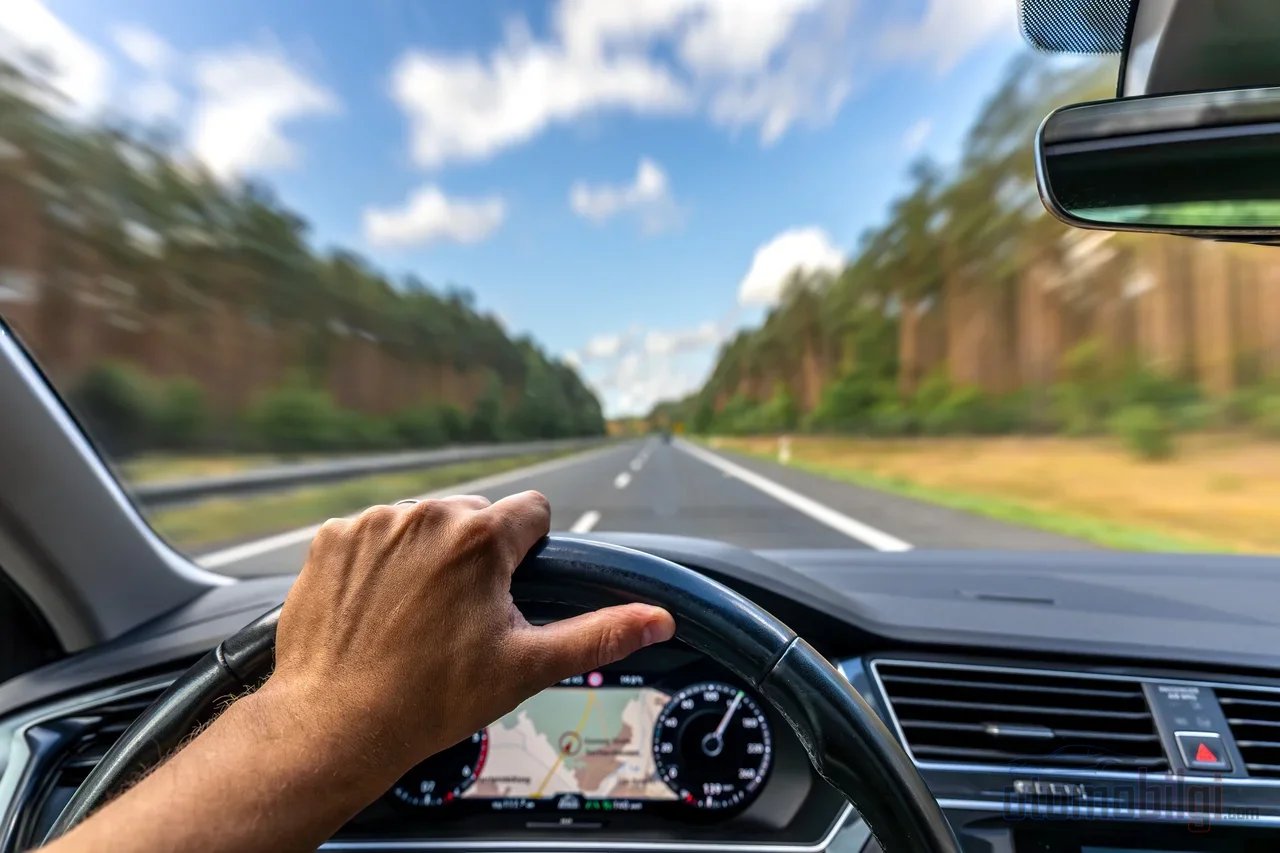
A vehicle on the highway must overcome two main resistances: rolling resistance and aerodynamic drag. Rolling resistance does not depend much on speed; the tires produce roughly the same friction with the road at every speed. Aerodynamic drag, however, increases with the square of speed. Increasing speed by 18% (from 110 to 130) increases the drag force by approximately 40%. And since the power the engine delivers against this force is multiplied by speed, it grows with the cube of speed. In other words, wind resistance is not a linear but an exponentially rising cost.
This cost's share in consumption also grows rapidly. While aerodynamics affects fuel economy only to a limited degree at city speeds, at high highway speeds drag can account for more than half of the fuel the vehicle uses. Therefore, a speed difference that goes unnoticed in the 90-110 km/h band becomes clearly visible on the liter gauge once you go above 130 km/h.
Reading this in reverse also gives a practical rule of thumb: a ten percent reduction in drag improves highway fuel economy by roughly five percent. Reducing speed itself works the same mechanics in the opposite direction; reducing speed is a far easier aerodynamic improvement than changing the vehicle's body.
What Does the Hybrid System Do on the Highway? Where Does the Electric Motor Fall Silent?
The design logic of a hybrid is based on this: when the internal combustion engine runs inefficiently, the electric motor steps in, and when it runs efficiently, it leaves the job to the gasoline engine. The electric motor typically operates at low speeds, generally up to about 50 kilometers per hour (depending on battery charge state) or under low power demand. Stop-and-go traffic is precisely why it is the hybrid's home turf: low speed, frequent stops, and acceleration are ideal conditions for electric mode.
On steady highway driving, however, the picture reverses. The power required at high speed is far beyond what the electric motor and battery can efficiently deliver; the system relies mostly on the internal combustion engine. Since the engine runs most efficiently at consistent high speeds, this is not actually bad news, but the hybrid's contribution in the city largely disappears here. The electric motor provides almost no energy at highway pace; it only offers brief support during acceleration and overtaking moments.
One noteworthy point: high-speed driving is actually less taxing on a hybrid battery. Because the battery does not enter frequent charge/discharge cycles, highway use is less stressful for battery health than city use. In other words, the hybrid advantage diminishes on the highway, but the system is not harmed.
The Atkinson Cycle and the Efficiency Band
The Atkinson cycle engine used in most hybrids is significantly more efficient than the Otto cycle; it achieves this by sacrificing low-end torque. At highway pace, the engine spins at mid-range rpm, within its efficient band, so the Atkinson engine itself runs quite efficiently. The problem is that aerodynamic drag increases exponentially with speed, so even a more efficient engine cannot fully compensate for the extra load that speed brings. The result: a hybrid's highway consumption is still better than a gasoline car's, but the gap narrows a bit more at each speed step.
110 or 130: What Do Available Measurements Say?
A speed-stepped test conducted with a hybrid car clearly shows the size of the difference: A vehicle consuming 5.14 L/100 km at 100 km/h rises to 5.44-5.78 L/100 km when the speed is increased by only 10 km/h. Speaking in terms of extra liters per liter when going from 100 to 110, there is an increase of up to half a liter per hundred kilometers. The critical point is this: the 6-12% consumption increase at 110 km/h sits on a much steeper curve at 130 km/h according to the square law of aerodynamics; because drag at 130 is about 40 percent higher than at 110. A controlled 110 vs 130 measurement conducted directly with hybrids is not widely available, but physics and existing speed-step data point to the same directional conclusion: 130 km/h is a noticeably more expensive travel speed than 110.
| Speed / Driving Condition | Consumption / Result | Note |
|---|---|---|
| 100 km/h (hybrid test) | 5.14 L/100 km | The most efficient measured highway speed |
| 110 km/h (hybrid test) | 5.44-5.78 L/100 km | 6-12% increase with a 10 km/h increase |
| 130 km/h (physical projection) | Noticeably higher | Drag is ~40% higher than at 110 |
| City / stop-and-go | 44-50% less than gasoline | The peak of the hybrid advantage |
| Steady high highway speed | Hybrid advantage is minimal | The electric motor is largely deactivated |
| Full load + sustained high speed | It can be matched with the non-hybrid | At maximum power demand, the engine runs alone |
How Does the Hybrid Advantage Fade as Speed Increases?
In city driving, the difference between hybrid versions and their gasoline counterparts has been demonstrated with measured tests: a hybrid Camry burns 50.2% less fuel than the gasoline variant; the Corolla saves 49.4%, while the Kluger saves 44.4%. These figures show how powerful regenerative braking and electric mode are in stop-and-go traffic. However, when the same ratio is carried over to constant highway speed, it fades quickly: on long journeys, constant acceleration gives the hybrid no opportunity to recover energy, and the system's city gain mechanisms are disabled.
Although the values reported by drivers on the highway vary by model and speed, the overall picture is this: while hybrids typically reduce fuel use by around 40% compared to gasoline vehicles, this ratio comes largely from city and mixed use. A hybrid traveling continuously at high speed under full load can consume as much fuel as a non-hybrid vehicle, according to the manufacturer's own statement. This does not mean the hybrid is a poor long-distance vehicle; it simply means that the savings math needs to be recalculated for speed.
There is also the matter of measurement methodology: catalog values fail to capture real-world consumption in every driving profile. For example, in actual use, plug-in hybrids can average around 6 L/100 km, which is above the advertised figure. In real-world tests weighted toward the highway, some hybrids were found not to approach their catalog figures, falling noticeably behind on 500-mile journeys. So before setting expectations based on the gauge during a steady 130 km/s trip, such realistic deviations need to be taken into account.
Practical Tips for the Hybrid User Doing Long Distances
Now that the numbers are clear, the question is: how do you achieve the most efficient driving possible with a hybrid on the highway? The applicable technique can be reduced to five points.
- Lower your target speed. In hybrids with a CVT, slower speeds yield noticeably better efficiency; although the best values were observed in the 50-70 km/s band, the practical result on the highway points the same way: traveling at 110 means measurable savings compared to 130.
- Use adaptive cruise control. With a safe following distance and smooth speed changes, it is the key tool of highway eco-driving; it cuts unnecessary acceleration-deceleration cycles.
- Accelerate gently and coast early. Avoiding sudden throttle input and lifting off early when going downhill or approaching an intersection is the fundamental way to get maximum benefit from regenerative braking.
- Choose the right drive mode. D mode is appropriate for normal driving, with B/E mode when needed; on short, low-speed sections (below about 40 km/s), quiet electric mode can be used.
- Do not expect miracles from Eco mode. In data-based driver experiments, some users report that Normal mode delivers better consumption in mixed driving; verifying the mode choice with your actual gauge rather than the look and feel is the healthiest approach.
Distance also needs to be factored in: in plug-in hybrids, efficiency changes dramatically depending on trip length. Consumption dropping to as low as 2-4 L/100 km on 25 km trips can double or triple on 200 km journeys; once the electric range (24-50 km on most models) is depleted, the vehicle reverts to engine-heavy operation. In conventional, single-fuel hybrids, efficiency does not vary this sharply with trip length; what matters most is speed and traffic profile.
Conclusion: What Speed Should You Drive At?
The highway math with a hybrid car can be summed up in a simple equation: the lower the constant speed, the less fuel; the hybrid's extra advantage is that it shrinks as speed rises. Traveling at 110 km/h noticeably reduces both aerodynamic drag and total consumption compared to 130; and the time lost is surprisingly small on most long trips. A driver who knows that the electric motor barely engages on the highway, that it does not harm the battery, and that at high speed the Atkinson-cycle engine does the main work alone can achieve the best result possible, approaching catalog figures with their hybrid on long journeys.
Sources
- Fuel Consumption at 100, 110, 120 & 130 km/h
- Reduction of Aerodynamic Drag Force for Reducing Fuel Consumption - Journal of Applied Fluid Mechanics
- The Effect of Aerodynamic Drag on Fuel Economy | ARC
- How Do Vehicle Aerodynamics Change Gas Mileage?
- Does a hybrid car work? - Consumer Reports
- Are Hybrids Good for Long-Distance Driving? - Car and Driver
- Do your homework before choosing a hybrid vehicle - AAA
- Understanding Hybrid Vehicle Fuel Economy - Mazda USA
- PHEVs Use More Fuel Than Advertised, Major Study Finds
- Plug-in hybrid vehicles are far more fuel efficient over short trips than long trips - Canada Energy Regulator
- How To Use A Hybrid Car - Rohrich
- Hybrid driving tips for best fuel economy - Toyota UK Magazine
- How to Maximize Your Hybrid Car's MPG - Brogden Honda
- ECO Mode ON/OFF experiment (with data) - Maverick Truck Club
- Best type of trip for good hybrid car fuel economy - PriusChat
- Fuel-efficiency of Hybrid cars on the highway - Team-BHP
- Our Hybrids Lied to Us: Real-World MPG Results