How Much Does Range Decrease as the Battery Ages?
Share This Page
An electric vehicle's battery loses an average of between 1.8% and 2.3% per year in capacity over the years; this means that after roughly 8 years, the battery retains just over 80% of its original capacity. Range loss should not be confused with the low range estimate you might see on a winter morning: consumption depends on momentary conditions and varies, whereas battery aging is permanent. What this article covers is the latter - how battery health declines over time, how this is reflected in range, and how much of the process is in your hands to slow down.
Highlights
- Average capacity loss 2.3% per year; only 1% per year
- in the best models. 3-year-old electric vehicles retain 97% of their range, and 5-year-olds retain 95% retain
- Frequent fast charging above 100 kW can raise the loss from 1.5% to 3.0% per year which can push it up to
- Industry-standard warranty: 8 years / 160,000 km, with a 70% capacity threshold
- In real-world conditions, batteries degrade more slowly than in laboratory tests; lifespan can be up to 40% longer
Why Does Range Decrease: SoH, SOC and Calendar Aging
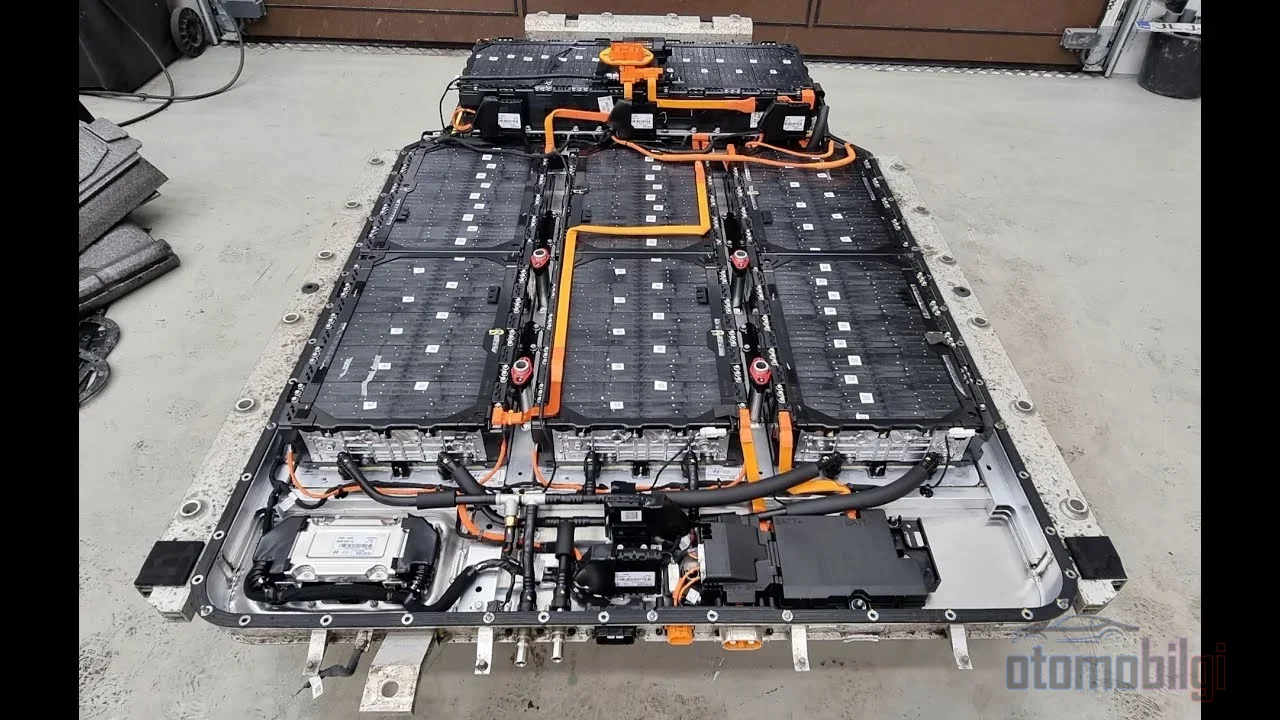
First, let's distinguish two concepts, because when they are confused, the whole discussion becomes pointless. SOC (State of Charge) is the vehicle's current charge percentage; when you see 60%, you are looking at a battery with an SOC of 60%. SoH (State of Health), on the other hand, is the ratio of the battery's current usable capacity to its factory capacity, and over the years it moves in only one direction: downward. It never rises back. Even a battery showing 100% full has physically shrunk in volume if its SoH has dropped to 90%.
Part of this shrinkage occurs through use, and part of it occurs with no connection to use at all. The latter is called calendar aging: The battery ages over time even if you don't use your vehicle or charge it. In lithium-ion cells, the main mechanism of this process is the growth of the SEI layer on the negative electrode, which thickens over time. The growth rate of this layer depends on two variables: temperature and the charge level at which the battery is kept. So the worst scenario for the battery is leaving a fully charged battery in a hot environment for hours - even without use.
Its reflection on range is linear and simple math: if a vehicle with a SoH of 90% delivered 400 km of range from the factory, it now travels roughly 360 km under the same conditions. What makes the loss painful is not its speed, but its permanence.
How Much Loss Per Year? What Large-Scale Data Tells Us
The most frequently referenced figure in the industry comes from a large-scale fleet analysis covering 22,700 vehicles and 21 models: the average annual capacity loss is 2.3%, and an average battery retains 81.6% protects it. An interesting detail: previous analyses using the same methodology found a rate of 1.8% in 2023 and 2.3% in 2020. The average rising again does not mean batteries are deteriorating; the spread of high-power charging and the weighting of the mix shifting heavier (MPV-type vehicles lose 2.7% per year while cars stay at 2.0%) pulls the average up.
Outliers are also instructive. The best-performing models lose only 1% per year - at this rate, after 8 years the battery still holds more than 80% of its capacity. The older, well-established models in the 2023 data set, with losses declining to 1.4% per year, showed exceptional long-term health preservation. At the other end, for modern vehicles, capacity loss of 5-15% over five years is discussed; most vehicles are still above 85% of their capacity at the end of five years.
On the range side, the picture is softer than you might expect: 3-year-old electric vehicles retain 97% of their original range, and 5-year-olds 95%. The average lifespan of batteries is estimated at 13 years or more; at the average loss rate, a battery is calculated to potentially withstand about 450,000 km - more than twice the lifespan of a typical internal combustion engine. A two-year academic study showed that degradation could be even slower in real-world use outside the laboratory, in stop-and-go traffic and through rest periods, with lifespan potentially up to 40% longer than expected. Another reassuring trend: Battery sizes grew by an average of 167% between 2015 and 2024; despite a certain capacity loss, new vehicles can maintain their usable range.
Does Fast Charging Really Degrade the Battery?
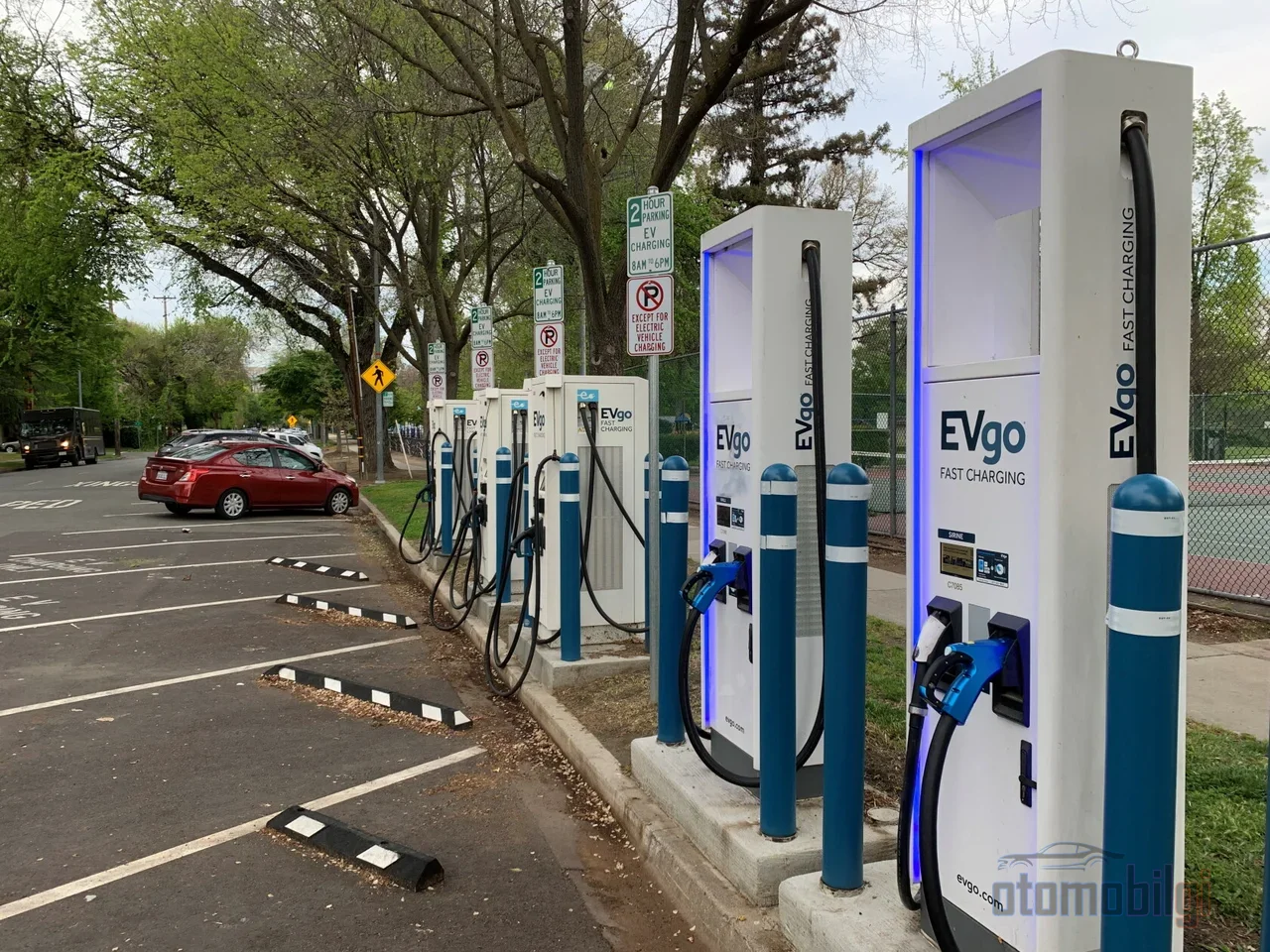
The short answer: if you use it often enough and at high enough power, yes - but the difference is not as dramatic as you think, and the picture on this issue is far from clear-cut. The large fleet analysis examined fast charging habits in three groups and the result shows a clear threshold: the real stress factor is not fast charging itself, but charging power above 100 kW..
- Vehicles that rarely use fast charging (less than 12% of sessions): 1.5% per year loss → ~88% SoH after 8 years
- Frequent fast charging but low power (less than 40% of sessions above 100 kW): 2.2% per year
- Frequent fast charging and high power (more than 40% of sessions above 100 kW): 3.0% per year → ~76% SoH after 8 years
So the worst group's degradation rate is exactly double the best's - but the absolute difference is about a point and a half per year. A study on Nissan Leafs found that vehicles using only DC fast charging degraded 16% more than those using AC charging. On the other side, there is a study reporting no significant difference between vehicles spending more than 90% of their time fast charging and those never using it, and an analysis limiting the difference to just 3-4% at 100,000 miles in real-world fleet data. There is clearly a measurable difference; but the narrative that this difference dooms the battery is harsher than the data supports. Context matters too: the share of DCFC sessions rose from 10% to about 25% over the last five years, while average DCFC power went from ~70 kW to above 90 kW. As habits become more aggressive, this gap may continue to grow.
Temperature, Usage Intensity, and the Truth of the 20-80 Rule
Hot climates and intensive use
The two accelerators of calendar aging show up measurably in fleet data. The first is temperature: vehicles in regions where the air temperature exceeds 25°C for more than 35% of the days of the year degrade 0.4% faster per year than those in temperate climates. The effect of cold climates has not been isolated due to insufficient data - the range drop you see in winter is mostly temporary and does not permanently affect SoH.
The second is usage intensity: vehicles consuming more than 35% of total battery capacity per day experience 0.8% additional loss per year compared to lightly used vehicles (2.3% versus 1.5%). At the end of eight years, this difference means 81.6% versus 88% SoH. In other words, a hard-working taxi or fleet vehicle will not have the same battery life as a weekend car.
Is the 20-80 rule mandatory?
This is where the classic advice gets revised. Strictly sticking to the 20-80 range in daily use is an unnecessary worry according to the large fleet analysis. The scenario where degradation accelerates significantly is much more specific: when the vehicle spends more than 80% of its time at full or nearly empty levels. In that group, loss rises to 2.0% per year, while the low and medium exposure groups stay at 1.4-1.5%. Modern EV batteries also have software buffers - when the gauge shows 100%, you are not chemically full; the manufacturer's BMS already operates within a certain upper and lower band, regulating charge/discharge to extend life. An EV battery is not the car version of a phone or laptop battery: it is designed to last much longer and is under active protection.
Practical Measures to Preserve Battery Health
The data itself draws up the priority order. The single most impactful decision is to use fast charging above 100 kW only when it is truly operationally necessary; to prefer slow AC charging for overnight charging. This is a habit change that could reduce the loss rate from the 3.0% range to the 1.5% range per year. The others come later in the ranking but collectively make a difference:
- Leaving the vehicle at 80% for overnight charging; charging to 100% before a long trip and departing immediately
- Not leaving the vehicle parked below 5% for days
- Parking in the shade or in an enclosed area in hot weather
- Planning charging according to your schedule, reducing the AC charging current if necessary; keeping battery maintenance functions of some manufacturers (e.g. Battery Care) active
- Following software updates and complying with the manufacturer's battery instructions
Note carefully: There is no "never charge to 100%" in the list. The rule concerns long-term parking - parking with a fully charged battery is harmful, not setting off with a fully charged battery.
What Do Warranties Cover? Togg, Tesla, Hyundai and Others
Manufacturers also acknowledge that battery aging can have a cost, and this acknowledgment is concretized in warranty terms that have become an industry standard. In Europe, the standard is 8 years or 160,000 km(whichever comes first), and the warranty kicks in when capacity drops below 70% of the original value . So if your battery falls below the 70% threshold before 8 years, the manufacturer takes responsibility. In the US, federal law mandates at least 8 years/100,000 miles for traction batteries; in 2025 the industry standard was also at this level. The picture by manufacturer is as follows:
| Manufacturer | Battery Warranty | Capacity Threshold |
|---|---|---|
| Togg | 8 years / 160,000 km | 70% |
| Tesla | 8 years, up to 240,000 km depending on model | 70% |
| Hyundai | 8 years / 160,000 km | 70% |
| Kia | 8 years / 160,000 km (5 years/150,000 km in one marketing region) | 70% |
| Volkswagen | 8 years or 100,000 miles | - |
| Renault | 8 years / 160,000 km | 70% |
| BYD | 8 years / 250,000 km | - |
Some manufacturers are seen extending the period to 10 years/200,000 km. The logic of the eight-year standard is also simple: it was calibrated on the assumption that the battery is expected to reach the end of its first life within this period, roughly an 80% SoH level. Renault Zoe As in the example, checking before purchase that the warranty terms are tied to a capacity threshold is equally important when buying second-hand.
How Do You Assess Range Loss When Buying a Used Electric Vehicle?
In the second-hand market, battery health should be compared with the expected rate of loss based on the vehicle's age and mileage. Practical methods include:
- Compare the vehicle's range estimate with real-world use; the gap between the indicated range and the distance you travel is the first signal of capacity loss.
- Take a SoH measurement with an OBD scanner and a suitable app; also check cell voltage differences in the same session - imbalance between cells is a sign of a problematic pack.
- Check the vehicle's warranty status: where does it stand within the 8-year/160,000 km window, and is it above the 70% capacity threshold?
Two warnings: SoH declines over the years and does not rise back - do not trust the "it increased with charge calibration" narrative. And since a battery pack consists of many cells, in case of a fault it is often possible to replace only the dead cells rather than the entire pack; repair costs are not symmetrical.
The conclusion, as the data clearly shows, is optimistic: range loss in an electric vehicle is a calm process of a few points per year, not a sudden collapse. Using fast charging above 100 kW only when needed, not leaving the vehicle parked at full charge for long periods, and protecting it from heat - these three habits ensure you end up on the side of 88% SoH rather than 76% at the end of year 8. The BMS already does the rest.
Sources
- EV Battery Health: Key Findings from 22,700 Vehicle Data Analysis | Geotab
- How Long Does an Electric Car Battery Last? | EV Connect
- New Data: How Long Do Electric Car Batteries Last? | Recurrent
- What is Calendar Aging for Batteries? | Recurrent
- EV Range Doesn't Degrade Much Over Time Now | MotorTrend
- How much do electric car batteries degrade? | Hannah Ritchie
- Does fast charging affect EV battery life? | Pod Energy
- Does DC Fast Charging Damage EV Batteries? | Power-Sonic
- Fast Charging & EV Battery Degradation Myth | Energy-Solutions
- How to Prevent Aging in Battery Energy Storage | Accure
- Temperature Effects on Calendar Aging of Lithium-Ion | IOP Science
- What Warranty Does An EV Battery Cover | Midtronics
- Electric Vehicle Battery Lifespan and Replacement | EkoEnergetyka
- Electric Car Battery Cover & EV Warranty Protection | Kia UK
- Electric Battery Maintenance and Warranty | Volkswagen UK
- Electric Vehicle Battery Health | eCarsTrade
- How to Check Battery Health When Buying a Used Electric Vehicle | elektrikliarac.com
- Battery Health in a Used Electric Vehicle | e-garaj
- Electric Vehicle Battery Health (SoH) Test | Otoideal
- Electric Vehicle Battery Life Tips | ChargeMate
- Battery Life in Electric Vehicles | Wat Mobilite
- How to Maintain EV Battery Life | CUPRA
- How to keep your EV battery in good shape | Škoda Storyboard
- 5 Ways to Look After Your EV Battery | Octopus EV
- How Much Range Will You Lose After 5 Years? | Jinyu Autos