How Many TL Does Your Car Burn Per Kilometer? Calculating the Real Fuel Cost
Share This Page
To understand how many TL per kilometer your car burns, you need to look not at the factory figures or the trip computer, but at your own fuel tank: Fill the tank, note the mileage, and at the next fill-up divide the liters spent by the kilometers traveled. When you multiply the resulting liters by the current fuel price, you have the real per-kilometer cost of your vehicle. I have been in this business for over thirty years; the budget of a reader who sets up this calculation correctly will differ noticeably from that of one who does not.
Highlights
- The full-tank method provides more realistic consumption data than the trip computer.
- In stop-and-go traffic, consumption 25%-40% can increase; air conditioning adds 5%-10%. adds.
- With LPG, consumption is 20%-25% higher than gasoline, while the total cost is 35%-45% lower.
- Hybrid vehicles gain their advantage especially in city traffic; on the highway, the difference shrinks.
- Per-kilometer cost is the main input of the annual fuel budget.
How Is Fuel Cost Per Kilometer Calculated?
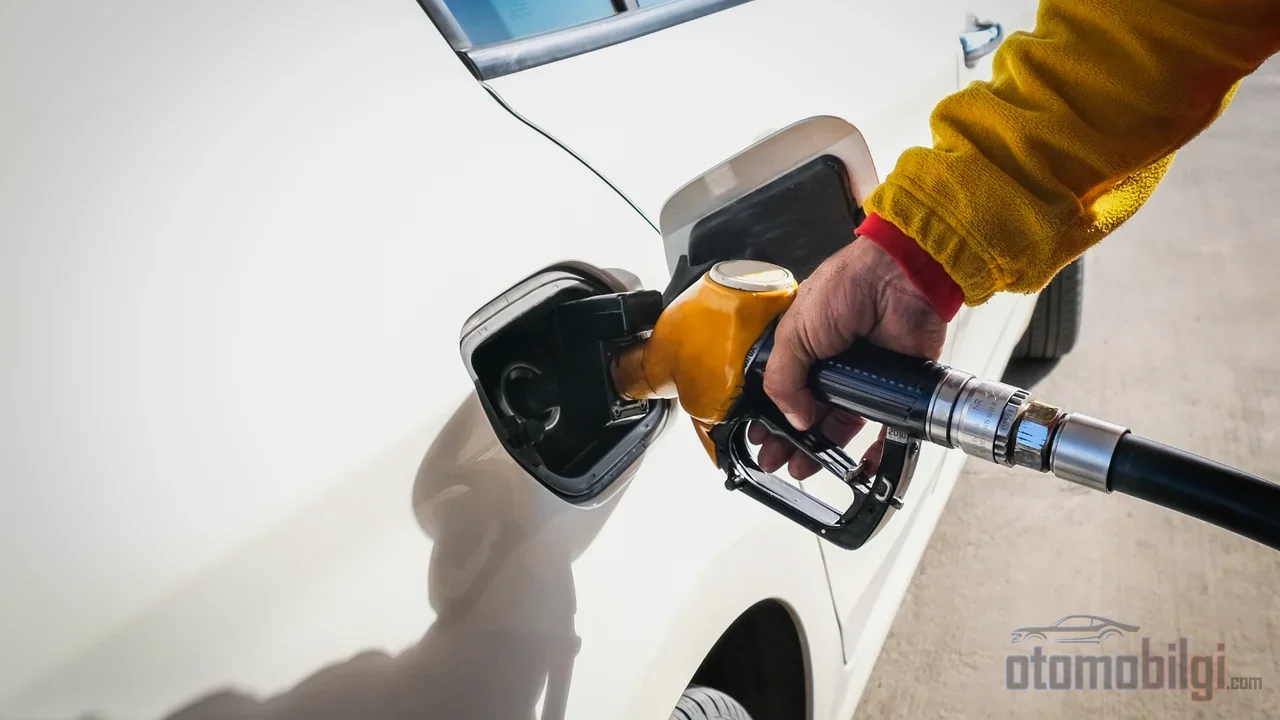
You need two numbers: how many kilometers you traveled and how many liters (or how many liras' worth) of fuel you spent on it. The rest is simple arithmetic. The two most common formulas are as follows:
- L/100 km calculation: Fuel consumed ÷ kilometers traveled × 100. Example: A vehicle traveling 700 km on 50 liters of fuel burns an average of 7.1 liters per 100 kilometers.
- TL/km calculation: Amount paid ÷ distance traveled. Example: A vehicle traveling 450 km on 150 TL of fuel burns about 0.33 TL per kilometer, meaning 33 kuruş.
These two values feed each other. When you know the liter price, all you need to do to find the cost per 100 kilometers is multiply the consumption by the liter price: Assuming a liter price of 47.5 TL, the 100-kilometer cost of a gasoline vehicle consuming 7 L/100 km comes to 332.50 TL . The per-kilometer cost is one tenth of the same operation: divide the consumption by 100 - a vehicle doing 6 L/100 km uses 0.06 liters per kilometer; multiply that by the liter price and you're done.
Two useful intermediate figures: distance per liter and trip cost
Although the habit in Türkiye is to think in kuruş, the question "How many kilometers do I get per liter?" keeps you grounded at the fuel pump. The formula is simple: 100 ÷ consumption. A vehicle consuming 4.5 L/100 km travels 22.2 km per liter. If you want to estimate the cost of a long journey in advance, the formula is: distance to travel × average consumption ÷ 100 × liter price. This calculation is also the most honest way to compare how much the same route costs in different vehicles.
Measuring Real Consumption: The Full-Tank Method Step by Step
Catalog figures are measured under ideal conditions; yours are not ideal conditions. Trip computers, meanwhile, usually show an optimistic picture close to factory settings. If you want to see your vehicle's true face, there is only one method whose accuracy has been proven over the years: the full-tank method.
- Fill the tank completely. Let the pump stop at the first automatic shut-off; filling it "to the brim" will cover the tank's expansion space with fuel and distort the measurement.
- Reset the trip meter. Reset the trip counter or note the total mileage.
- Drive as you normally would. Do not change your driving style; the purpose of the measurement is to reflect your normal conditions. Measuring on the same route (for example, in your weekly commute traffic) gives even more reliable results.
- Fill the tank full again. With the same pump behavior, fill the tank to the same level. The number of liters you paid for at that fill-up is the fuel you consumed over the distance covered.
- Calculate. Liters ÷ kilometers × 100 gives you your real average consumption.
Repeating this measurement at every fill-up or once a month has two benefits: you track changes in consumption, and an abnormal increase gives early warning of a fault. In a vehicle whose consumption rises on its own, the most common culprits are tire pressure, a dirty air filter, and overdue oil maintenance; all are cheap to fix.
A note: Some people prefer filling to ¾ of the tank rather than always driving around with a full tank, because every excess is weight you carry. When measuring, however, you must always fill the tank to the same level; the accuracy of the method depends on this consistency.
Why Are City and Long-Distance Consumption So Different?
The same vehicle has two different consumption profiles, and what really determines your budget is which one you use more. A typical 1.6 gasoline vehicle burns 8–8.5 liters per 100 kilometers in city traffic, while out of town this drops to around 6 liters. Diesels are less sensitive: a 1.5-liter diesel consumes about 4.4 L in the city and about 3.7 L on the highway. One of the extreme examples is the same vehicle burning 8 liters in city traffic while dropping to 5 liters on the motorway.
| Condition | Effect on consumption |
|---|---|
| Stop-and-go traffic | 25%–40% increase |
| Air conditioning use | 5%–10% increase |
| Motorway driving | 15%–20% decrease compared to city driving |
| 12 km/h increase in speed | Approximately 23% increase |
| Every 45 kg of extra load | 1%–2% efficiency loss |
| Aggressive driving | Up to 30% increase |
The practical conclusion is this: If you take your measurement only on a weekend long trip, you will miscalculate the cost of your city month. That is why you should measure consumption in the profile in which you drive for most of the year.
How Does the Calculation Change with LPG?
LPG plays the equation from both ends. Consumption on a per-liter basis is 20%–25% higher than gasoline: a vehicle burning 7 liters of gasoline consumes 8.5–9.5 liters on LPG. The distance covered per liter of LPG is also shorter; it is reasonable to think in terms of a value of about 11.4 km per liter. In return, LPG is roughly half the price of gasoline per liter, and this difference more than makes up for the consumption disadvantage: a 35%–45% decrease in total fuel cost is a typical result.
This picture has a cost, and it is a measurable item: the LPG system's maintenance must not be neglected, and the installation must have been done correctly. When you add this maintenance item to the calculation, the net savings rate drops somewhat, but in most usage scenarios it does not turn against LPG. The way to maintain accuracy is the same: measure LPG, just like gasoline, in your own vehicle using the full-tank method.
Kilometer Cost in Hybrid and Electric Vehicles
The trick with hybrids is that they reverse the classic calculation. In a conventional vehicle, the city is the most expensive environment; in a hybrid, it is the cheapest. Toyota Corolla 1.8 Hybrid type models can be measured at 4-4.5 L/100 km in city traffic, because in stop-and-go traffic the electric motor and battery take the load off the internal combustion engine. On the highway, the advantage shrinks; at constant speed, the share of electric assistance decreases. In independent real-world tests, the Toyota Corolla 1.8 Hybrid was measured at 60.6 mpg, the Toyota Prius 1.8 at 50.4 mpg, and the Kia Niro Hybrid at 50.2 mpg - these are not catalog figures but results under realistic conditions.
Let us clarify with a sample calculation: a hybrid consuming 4.7 L/100 km, for a driver covering 12,000 km per year with a fuel price of 52.22 TL per liter, amounts to roughly 29,255 TL/year in fuel. The difference paid by a driver covering the same distance in a gasoline vehicle can reach 73,000 TL over five years. You need to read this figure carefully: the price gap of a new hybrid over a gasoline car closing within 3-5 years is a typical scenario, and vehicle prices and usage intensity will change this period in every case. The decision is a matter of budgetary balance; do not let the liter speak for itself.
With electric vehicles the logic is the same, only the unit changes: kWh replaces the liter. Home AC charging is usually the lowest-cost option, but you must also factor charging efficiency losses into the calculation: with AC charging, 8-12% and with DC charging, 3-5% loss is normal. On intercity journeys, DC/HPC tariffs at stations can noticeably change the per-kilometer cost; do not assume the value measured with home charging is the cost for the whole year.
How to Calculate an Annual Fuel Budget?
The real benefit of knowing your per-kilometer cost emerges here. The formula: (actual consumption x annual kilometers / 100) x liter price. For a vehicle covering 15,000 km per year and consuming 7.2 L/100 km, assuming a liter price of 48 TL, the annual fuel bill comes to 51,840 TL . When you divide this figure by month and place it next to your existing installments, you see the vehicle's real weight on your budget honestly for the first time.
Now let us turn to the savings side; each of the items below directly reflects on the formula above:
- Keeping your speed at a reasonable level; an increase of 12 km/h can raise consumption by up to 23%.
- Using cruise control if possible; constant speed improves efficiency.
- Using gentle acceleration and braking; the cost of aggressive driving can reach 30%.
- Keeping the revs in the maximum torque zone, usually 2000-2500 rpm for passenger cars, and progressing in high gears.
- Staying on top of tire pressure, the air filter and engine oil; all of these reflect on the liter you measure within minutes.
Fuel Is Only One Part of the Ownership Budget
The fuel cost per kilometer is the most visible line item in a vehicle's total expenses, but it is not the only one. You can roughly structure your monthly vehicle costs as follows: fuel, plus the monthly share of annual items like insurance, maintenance, periodic inspection, motor vehicle tax, and parking, plus loan installments if you have any. In a sample scenario, the fuel for 15,000 km of usage amounts to 51,840 TL per year, while insurance can be estimated at ~30,000 TL and motor vehicle tax at ~8,000 TL; when depreciation is added to these, the picture is complete.
There is a side benefit to this perspective: Fuel remains the item you have the most control over. You renew your motor vehicle tax and insurance premium once a year, but the amount you burn per kilometer is something you set anew every morning, behind the wheel. You are the one who measures it accurately and manages it.
Sources
- Fuel Calculation: How Much Does My Car Consume? | Per KM Fuel Calculation
- KM Fuel Calculation - Distance-Based Fuel and Cost
- Fuel Calculation - Gasoline, Diesel, LPG
- Fuel Consumption Calculation
- Fuel Consumption Calculator
- Fuel Cost Calculation - Gasoline, Diesel and Electric
- How to Calculate Fuel Consumption? Guide by Vehicle Type
- How Is Fuel Consumption Calculated?
- How to Measure Real Fuel Consumption? The Full Tank Method
- LPG vs Gasoline Cost Comparison
- When Does a Hybrid Vehicle Make Sense?
- Fuel and Financial Efficiency of Hybrid Vehicles
- Car Expense Calculation - Monthly and Annual TCO
- Total Cost of Ownership (TCO) Calculator