Risks You Should Know Before Putting Down a Deposit When Buying a Car
Share This Page
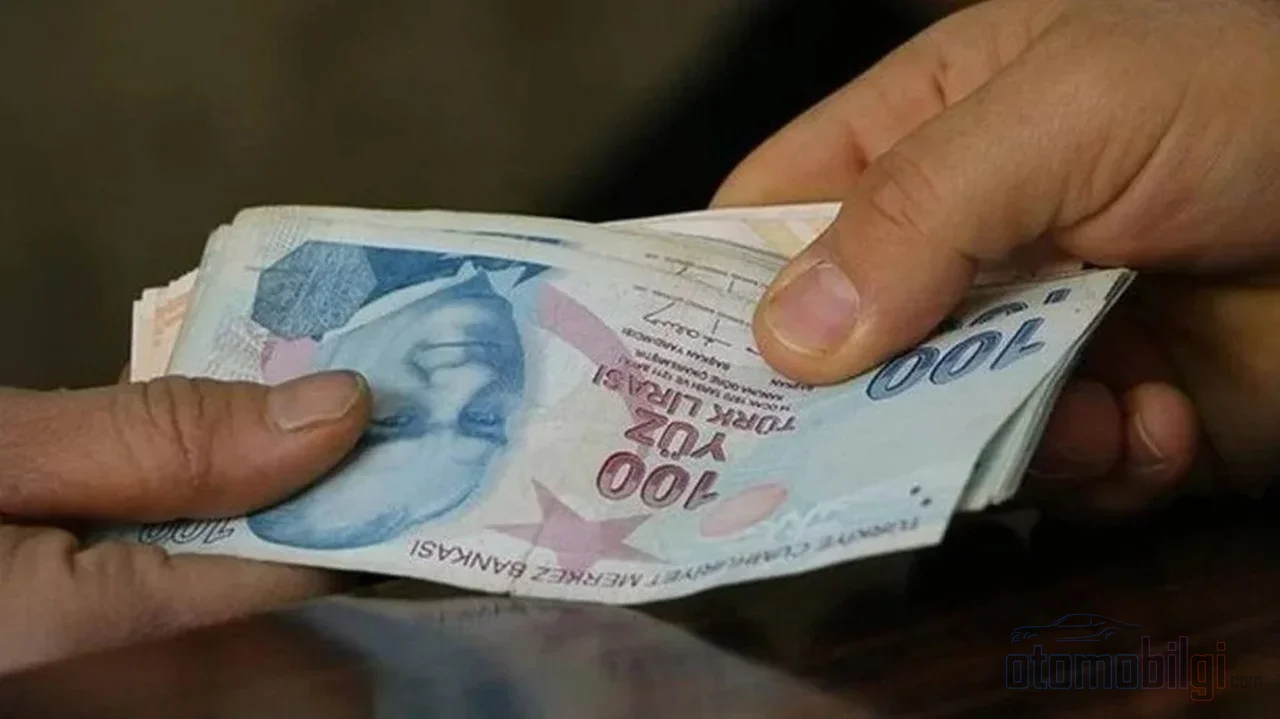
When buying a car, a down payment (kapora) is an advance payment given to the seller before the main payment, listed in the TDK dictionary as "güvenmelik". The real risk emerges at this point: According to the Highway Traffic Law, the sale of a motor vehicle can only be done at a notary, and a sale not made at a notary is invalid. For this reason, a down payment given for a vehicle in cash or with a simple written contract is not a binding commitment as most people think; it can be reclaimed even if the buyer backs out. Knowing this legal framework, the limit on the amount, and fraud scenarios before giving a down payment directly determines the fate of your money.
Highlights
- The vehicle sale contract and pre-contracts attached to it must be done before a notary; without the formality requirement, the sale is invalid.
- In sales not made at a notary, any advance payment made under any name must be refunded under the principle of unjust enrichment.
- For second-hand sales, the upper limit of the advance payment sellers can take before the sale is completed is set at 10% of the sale price.
- In practice, the down payment is usually kept between 2-5% of the vehicle price.
- In an invalid contract, a withdrawal penalty cannot be demanded either; the seller can only deduct the reasonable expenses they prove.
When Is a Down Payment Given, and At What Stage Does It Become Safe?

Let me say something about this thirty years of experience: The down payment belongs at the end of the buying process, not the beginning. The vehicle should have been inspected, passed the expert check, its insurance and damage records queried, and the price negotiation concluded before a down payment comes up. A down payment promise made by phone or over the internet without even seeing the vehicle is the most dangerous form of this business. A down payment is only safe for a buyer who has seen the vehicle in person, closed the sale agreement, and put the process into a framework that will transfer the transaction through a notary.
After the down payment is given, you must have a written document in hand under all circumstances, and that document must be kept until the vehicle transfer is completed at the notary. Sending the down payment through a bank, by wire transfer or account transfer, is critical in terms of proof; writing "down payment" in the transfer description will be your strongest evidence later on. Proving a cash down payment given in person, however, has been the hardest task in courts for many years. Bank receipts, WhatsApp or SMS correspondence, witnesses, and audio recordings are among the other accepted pieces of evidence; but none of them is as clean as a payment sent through a bank channel with a correctly written description.
The Legal Framework That Makes a Down Payment Safe: Is It a Binding Payment or a Withdrawal Penalty?
The word "kapora" does not appear in the Turkish Code of Obligations; the concept corresponds to two separate institutions. The first is a binding payment, that is, earnest money: Unless otherwise agreed, the money given counts as proof that the contract has been established, but it is refunded even if one of the parties withdraws from the contract. The second is a withdrawal penalty, known among the public as regret money: If the buyer withdraws, they lose the down payment; if the seller withdraws, they must return twice what they received. The burden of proving that it is a withdrawal penalty lies with the seller; in other words, for "the deposit is burned" to apply, the seller must show that this money is a withdrawal penalty.
Everything up to this point may sound familiar; but the real turning point is this: Since a vehicle sale is a transaction that must be carried out at a notary, preliminary contracts connected to it are likewise subject to the formal-requirement condition. Money paid for a vehicle sale or preliminary contract not made before a notary, regardless of the name under which it is paid, lacks a legal basis and constitutes unjust enrichment. The Court of Cassation's ruling points in this direction as well: If the contract is invalid, no withdrawal penalty can be demanded, and the money paid is refunded. Even if the contract contains a "non-refundable" clause, that clause is invalid.
Contrary to popular belief, a payment of the nature of a binding deposit is returned even in the event of withdrawal. The perception that "the deposit is burned" rests only on a valid withdrawal-penalty clause in a valid contract made at a notary. In practice, I know that ordinary written contracts are generally used in the second-hand market; that's an old habit. On the legal front, it is clear that an ordinary written preliminary contract is not valid for a vehicle and a notary requirement is sought. In short, a written contract and a bank channel provide practical protection against bad scenarios; but the legal outcome is shaped according to the transaction at the notary.
There is one more detail: While the deposit must be refunded under an invalid contract, the seller does not come out empty-handed either. The seller can deduct reasonable expenses that were incurred in reliance on the contract and can be proven from the amount paid. In other words, if the seller can document concrete losses such as removing a listing to avoid selling the vehicle to someone else, the seller has a right of offset.
How Much Should the Deposit Be, and Is There an Upper Limit?
In practice, the deposit in the second-hand market is generally kept between 2–5% of the vehicle's price. Accordingly, for a vehicle worth 200,000 TL, a sum between 4,000 and 10,000 TL is considered normal; it is known that on a 100,000 TL vehicle a deposit of up to 5,000 TL can be set, and these amounts are mostly paid in cash. The evolution should be viewed like this: The money you used to pull from your pocket in front of a dealer has now turned into a transfer sent over the internet; and the risk has moved to the screen along with the money.
There is no across-the-board legal percentage for the amount; however, with the new regulation on second-hand vehicle sales, the advance payment a seller can receive before the sale is completed is limited to at most 10% of the sale price. On this point, I recommend confirming the regulation's effective date and its reference number before proceeding; the regulation counts as new, so verification is essential. Meanwhile, keep this in mind: In a transaction not made at a notary, whatever amount you pay, your money is refunded if you withdraw. In other words, a large deposit is not as binding on the seller as you might think.
Deposit Risks at Dealerships, Car Lots, and Private Sellers Compared
Deposit risk should be read according to the type of seller; the risks of the three channels are not the same in nature. When buying a new vehicle from a dealership, the process proceeds with model selection, a test drive, and a proforma invoice; the payment is tied to a corporate document and a down payment dispute almost never comes up. At a dealership, the process starts with checking the authorization certificate; a dealership purchase that proceeds with proper authorization and the right steps is considered safer than a private sale. The dealership bears at least six months of liability for defects in the vehicle sold; this is a guarantee that a private seller does not offer. In a private sale, however, the protection depends entirely on your diligence: inspection, record checks, and properly structuring the transaction at the notary.
| Seller Type | Documentation | Main Risk | Down Payment Requirement |
|---|---|---|---|
| Authorized dealer (new) | Payment with a proforma invoice, registration process | Low; the process is corporate | Usually not required |
| Dealership | Authorization certificate check, sales contract | Medium; risk of unauthorized dealership | After negotiation, with a written document |
| Private seller | Simple written contract is common but of limited validity | High; risk of proof and fraud | Only after the vehicle has been seen and inspected in person |
In lists comparing down payment amounts, the risks of these three channels are generally not addressed separately; yet the difference table is as clear as shown above. When giving a down payment to a private seller, keeping the amount low and using a bank channel, which is a mere formality in corporate channels, is of vital importance here.
How Does a Down Payment Scam Happen? Current Scenarios and Ways to Protect Yourself
In recent years, the down payment has become a favorite of scammers. The most common flow is this: A scammer posting attractive listings with photos of vehicles that do not belong to them rushes the buyer with the scenario that there is high demand at this price, so send a down payment. The goal is to get the money transferred without the buyer seeing the vehicle; after the money is sent, the listing owner becomes unreachable. In one such case, the sentence given in favor of a buyer who sent a down payment to a fake listing and could not reach the seller was 4 years in prison and a judicial fine for qualified fraud committed through information systems; the legal range for this crime is 3-10 years in prison, while simple fraud carries 1-5 years.
A second scenario is the "secure down payment system" trap. Scammers are demanding a down payment from second-hand buyers as a prerequisite of a secure payment system; yet there is no such down payment system in the legislation. The same method also targets sellers: People who appear to have bought your vehicle say they will send you a down payment, and then ask you for money under the name of a secure down payment and notary fees. It was reported that a citizen was nearly scammed out of about 40 thousand liras using this method. The third flow is the phone trap targeting sellers: The person who says they will send a down payment, saying a message will come, drags the victim into a fake transaction flow. Traps such as "payment request in online purchase or rental" operate on similar logic.
- Do not give a down payment without seeing the vehicle or meeting the seller face to face.
- Do not trust any upfront payment demanded under names like "secure down payment system" or similar; there is no such system in the legislation.
- Send the deposit only through the bank and write "deposit" in the description field.
- At dealerships, ask to see the authorization certificate; in private sales, an expert inspection and registration check are prerequisites for the deposit.
- Keep the written contract until the sale is completed at the notary.
What to Do If the Deposit Is Not Refunded?
Not refunding a deposit is not a crime by itself; but if the seller listed the vehicle from the start with no intention of handing it over and took the money, it constitutes fraud. When the refund is not paid, the course followed is to first send a written notice of default and then initiate enforcement proceedings. Filing a civil lawsuit is also possible; in an invalid transaction, the legal basis is the provisions on unjust enrichment. In cases qualifying as consumer transactions, the consumer arbitration board is one route: with 2025 figures, disputes up to 66,000 TL in districts and between 66,000–104,000 TL in provincial centers fall under the consumer arbitration board, while amounts above that go to the Consumer Court. Applications are made via e-Devlet, TUBIS, or the district governor's office; the decision can take 3–8 months, and an appeal against the decision can be made within 15 days.
In the second-hand market, there is also a perception that sees the deposit as a down payment with no consequence against the seller; it is assumed that if the buyer backs out, the money is burned, but if the seller backs out, there is no loss. The legal framework I described above refutes this asymmetry: In a transaction not done at the notary, the deposit is refunded in any case, while the withdrawal fee only has meaning in a valid contract.
Steps to Check Before Giving a Deposit
As someone who has been following this business for years, I am leaving a final checklist; every item must be checked off before the deposit conversation begins.
- The vehicle was seen in person and test-driven.
- The expert inspection report, insurance claim record, and damage check were completed; the mileage consistency was verified.
- The seller's identity and the vehicle's owner were confirmed; the dealership's authorization certificate was seen.
- The price and delivery conditions were clarified in writing; the ideal route is to make the preliminary contract at the notary.
- The deposit amount does not exceed 10% of the price at most; if possible, it is kept in the 2–5% range.
- The payment will be made through the bank channel and "deposit" will be written in its description.
- The delivery and transfer of the vehicle will be completed in the presence of a notary; until that moment, the contract and receipt will be kept.
When given at the right stage and with proper documentation, the deposit is a reasonable safeguard that binds both buyer and seller. A deposit given without seeing the vehicle, without a contract, and handed over in person, however, is money that is often demanded back and sometimes never returned. The difference lies in how seriously you prepare and take the matter to the notary.
Sources
- Deposit Refund: What Happens If the Buyer Backs Out? 2026
- Motor Vehicles: Down Payments (Deposits) Must Be Refunded
- Experts warned: Make a contract when giving a deposit on a second-hand vehicle
- How Much Should a Vehicle Deposit Be?
- What Are the New Regulations in Second-Hand Vehicle Sales?
- A big trap in second-hand vehicle sales! 'There is no such deposit system in the legislation'
- Saved at the last moment from being scammed while trying to sell his car
- Deposit Fraud When Buying a Car Online
- The Legal Liability of Car Dealerships
- Guide to Things to Consider When Buying a Car from a Dealership (2026)
- How to Buy a New Car from a Dealer
- Refund of the Deposit Paid for the Sale of Real Estate and Vehicles