Why Are Gearboxes Disappearing in Electric Cars
Share This Page
The reason the gearbox disappears in electric cars is that the electric motor's characteristic curve works in exactly the opposite way to an internal combustion engine: the motor produces its full torque from a standstill, that is, from 0 RPM, and rotates across a very wide rev range without losing its efficiency. These two characteristics make a multi-speed transmission designed to stage torque unnecessary; that is why most electric vehicles connect to the wheels through a single-speed reduction gear.
Highlights
- Electric motor produces full torque at 0 RPM ; there is no such thing as idling
- An EV motor can rev up to approximately 20,000 RPM, and most reach 10,000 RPM very quickly
- An internal combustion engine normally operates in the 1,200-4,500 RPM range during regular driving
- The Tesla Model S has only 20 moving parts in its entire drivetrain
- The Porsche Taycan, using a 2-speed gearbox on the rear axle, is the best-known exception
What Is the Gearbox's Actual Function, and Why Does It Become Unnecessary in Electric Cars?
To understand the gearbox, we first need to look at what it does. An internal combustion engine does not have the force to turn the wheels directly; it delivers the torque it produces within a specific rev band and with limited power. The transmission transfers this force to the wheels through different ratios, keeping the engine in a usable operating range at every speed. In a classic 5-speed gearbox, the ratios progress roughly as follows: 1st gear 3.35:1, 2nd gear 1.93:1, 3rd gear 1.29:1, 4th gear direct at 1.00:1 and 5th gear as overdrive at 0.68:1. Each step is a device designed to multiply torque for takeoff and stretch it at high speed.
The electric motor needs none of these devices. Because it produces its turning force - that is, its torque - at full value from the very first rotation. In an electric vehicle, the motor does not idle; when the car is stationary, the motor is not turning either, and the moment you touch the accelerator, the same torque reaches the wheels at both 1 RPM and 1,000 RPM. There is no machine that needs a short torque multiplier for takeoff and a long ratio for the highway; the motor does its job at both extremes.
The Motor's Characteristic Curve: The Engineering Rationale Behind a Single Gear
Behind this behavior lies the same curve found in every electric motor. At low and mid revs, the motor operates in the constant torque region: even as revs rise, the turning force produced does not change. Once a threshold we call base speed is exceeded, torque begins to fall, but this time the motor transitions to the constant power region; in the industry, this range is also called the field weakening region. In other words, the curve has a profile in which performance spreads across a wide range without, so to speak, taking a stair step.
Compare this with the internal combustion engine's curve: in normal driving it climbs roughly from 1,200 RPM to 4,000-4,500 RPM, the redline is around 5,000-6,000 RPM , and it cannot sustain this output for long. The band where torque is usable is narrow; that is why a gear step suited to each driving speed is needed. The electric motor, on the other hand, reaches 10,000 RPM within seconds and 20,000 RPM can reach up to their levels. Moreover, efficiency does not change significantly across this wide range: in the majority of motors, an 85-95% efficiency band spans a wide rpm range with only a few percentage points of difference.
The Sufficiency of a Single Ratio in Numbers
A single calculation illustrates the sufficiency of a single-ratio reduction gear. It is linked to engine rpm, gear ratio, speed, and tire diameter; if you apply this formula Hyundai Ioniq 5 to a vehicle like the 4.706 final ratio, around 20-inch tires, and a 186 mph theoretical top speed, you get a motor spinning at 14,000+ RPM . With the same single ratio, an internal combustion engine with a 6,000 rpm redline could only reach 76 mph (about 122 km/h) - well below highway speeds. The electric motor's rpm capacity eliminates the speed range that a single ratio cannot cover.
One point needs clarifying: electric vehicles are not entirely gearless. There is a natural difference between the motor's rpm and that of the wheels, and every EV has a single-ratio reduction gear (gear reduction) that closes this gap. What disappears is the multi-speed gearbox and, along with it, the act of shifting gears.
Simplicity, Maintenance, and Efficiency: The Price of the Parts Removed
Removing a multi-speed gearbox from the design is not merely an aesthetic simplicity but a measurable engineering gain. A conventional automatic transmission contains 7 main components and approximately 800 parts ; in case of failure, replacement can cost $1,800-3,400 including labor. In contrast, the entire drivetrain of the Tesla Model S has a total of 20 moving parts , and Chevrolet emphasizes that the Bolt carries 80% fewer moving parts than its comparable internal combustion counterpart.
Fewer moving parts means three things: reduced friction-related energy loss, the elimination of maintenance items such as gear oil changes, and a lower risk of mechanical failure. Since the motor itself already operates efficiently across a wide range, an additional gear stage usually produces loss rather than gain - each added gear pair adds its own friction efficiency to the chain. On the driver's side, the result is very clear: uninterrupted, smooth acceleration without gear changes. The moment you touch the accelerator pedal, the motor turns, and as speed increases, the wheels accelerate directly without any stage transitions.
Exceptions: Why Do Multi-Speed Electric Vehicles Exist?
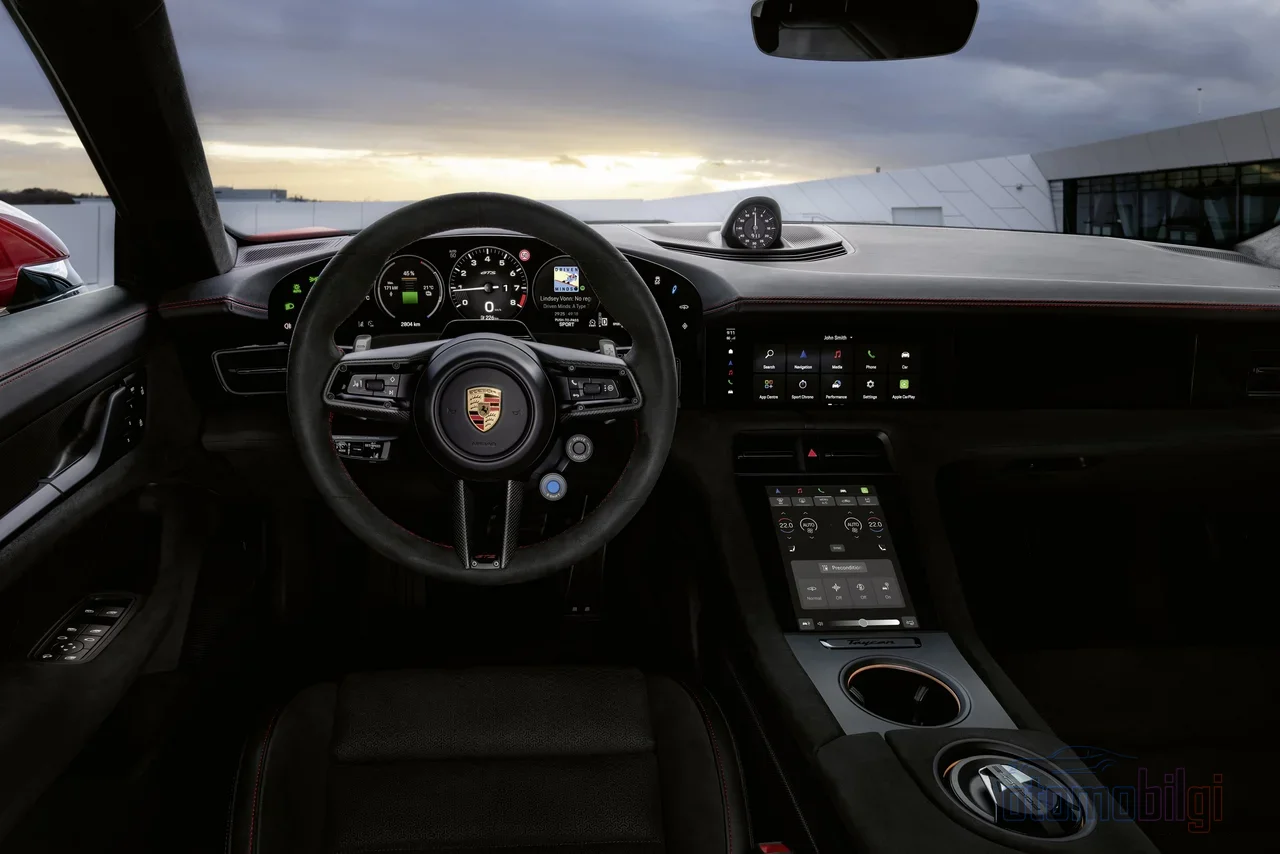
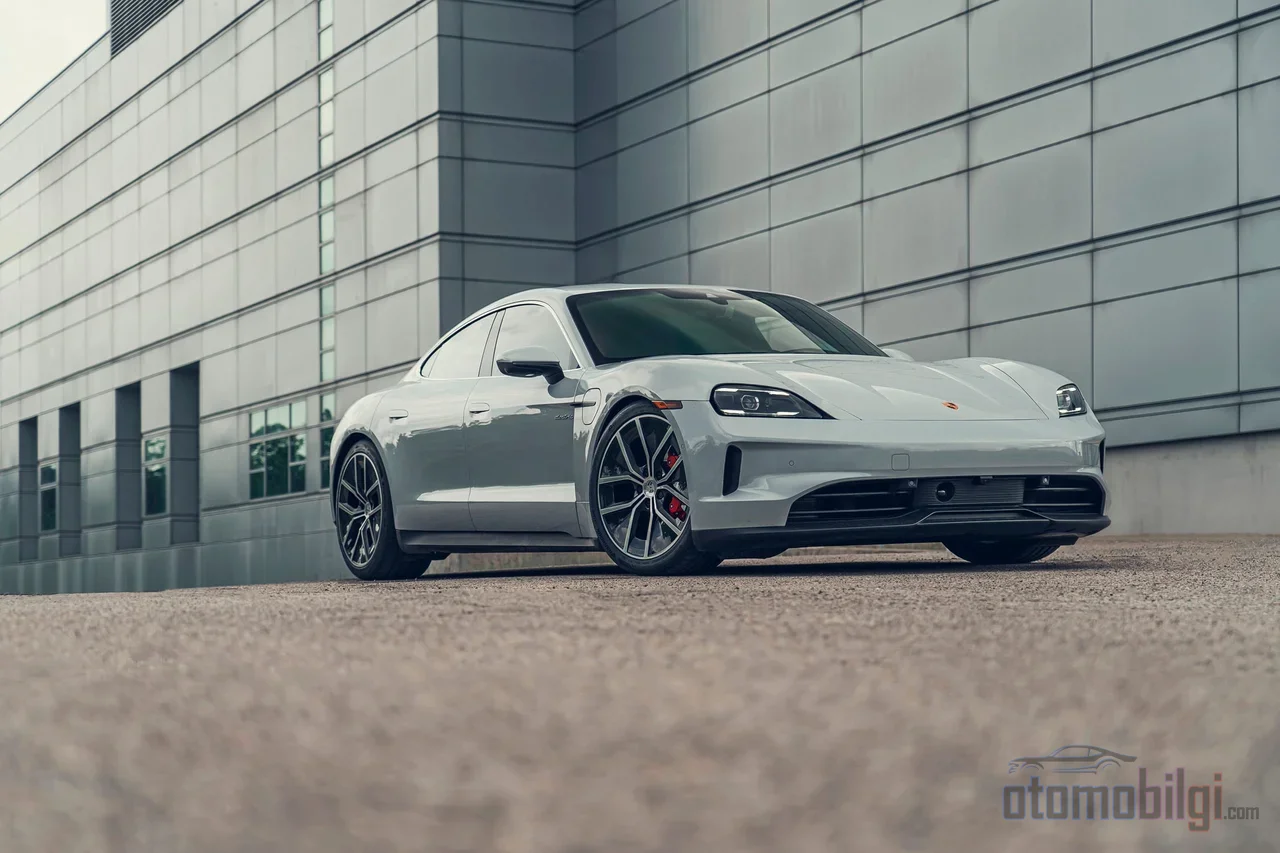
The sufficiency of a single gear is not a physical necessity but an optimal choice in production vehicles with large motors. The best-known exception is the Porsche Taycan: it uses a 2-speed gearbox on the rear axle. According to the manufacturer, the short 1st gear provides more acceleration from a standstill, while the long 2nd gear ensures high efficiency and power reserve even at very high speeds. The gearbox is built on a wet clutch pack that shifts automatically.
Logic is a narrowed version of the reasoning used in the internal combustion world. In high-performance vehicles like the Taycan, top speed and highway economy push the operating point of a single ratio to its limits; two gears bring the motor closer to its optimal point both at launch and at high speeds. Analyses show that this gearbox can deliver roughly a 5% efficiency improvement on the highway and raises the vehicle's top speed; assessments also include the claim that the two-speed gearbox makes the Taycan faster than its single-speed rivals. The fact that the vehicle's front axle can be fully decoupled and operated independently is also part of the dynamic design of this drivetrain.
Multi-Speed Solutions in Commercial Vehicles
The second set of exceptions relates not to performance but to usage profile. Some commercial vehicles must demand launch torque under heavy load and long-distance economy at the same time; an additional gear can be useful in small, efficiently designed motors. However, the overall picture is clear: the Taycan example highlighted in 2019-2020 has not, even as of 2024, turned into widespread replication. Most electric vehicles are still single-speed, and it is understood that this is not a technical necessity but a rational choice.
Is Adding More Gears Really Worth It? The Balance of Gains and Losses
From a design perspective, the pros and cons of the multi-speed solution are closely intertwined:
- On the gains side: Improved efficiency by bringing the motor closer to its optimal operating point at high speeds; enhanced acceleration and higher top speed; potentially smaller battery and motor selection; flexibility in heavy off-road usage.
- On the losses side: Added weight and manufacturing cost; the gearbox's own internal gear efficiency losses; returns remaining limited compared to the price you pay.
For the large, powerful motors in production EVs, the gains side is generally debatable: multiple gears may not provide a large efficiency leap compared to a single gear, and may even negatively affect the balance due to the gearbox's internal losses. As a counter claim, a supplier has proposed a multi-speed system offering a reduction in energy consumption of up to 15% compared to single-speed drivetrains; however, the realistic gain from such claims is closely tied to the motor's characteristics and the vehicle's usage profile. The summary balance is this: an extra gear that lowers motor rpm at highway speeds can reduce consumption, but the general consensus is that the gain is too limited on most vehicles to justify the added complexity.
| Feature | Single-Speed EV | Multi-Speed EV (e.g. Taycan) |
|---|---|---|
| Number of gears | 1 (reduction gear) | 2 (rear axle) |
| Number of moving parts | Very few (Model S: 20, entire drivetrain) | More (including wet clutch pack) |
| Launch acceleration | Sufficient with full torque at 0 RPM | Extra acceleration in short 1st gear |
| High-speed efficiency | Relies on the motor's efficiency band | ~5% improvement on the highway |
| Efficiency loss | No additional gear losses | The gearbox's internal losses |
| Maintenance | No gear oil interval | Additional mechanical complexity |
Frequently Asked Questions
Do electric cars have a transmission?
Yes, but not in the classic sense. Most electric vehicles use a single-ratio reduction gear or direct drive; there is no gear shifting action taking place. The gear lever on the steering column or console is a selector that chooses the P, R, N, D positions, not the control of a multi-speed gearbox.
Are electric vehicles automatic?
Yes. There is no clutch and no multi-speed gearbox; a single-speed motor with instant torque is used. For the driver, this means a fully automatic and seamless driving experience.
Does adding gears increase range?
At highway speeds, it can reduce energy consumption by lowering the motor's rpm, but the general consensus is that the gain remains limited. Since the motor already operates at 85-95% efficiency across a wide rpm range, the internal losses and costs arising from an extra gear cannot tip the range calculation in a positive direction in most vehicles.
Conclusion: The Reduction Gear That Replaced the Vanishing Gearbox
The gearbox was a solution devised for the problem of a motor that could not spread torque across a wide speed range. Since the electric motor solves this problem on its own with its constant torque and constant power regions, the solution was removed from the vehicle and replaced with a single fixed-ratio reduction gear. Vehicles like the Taycan show that adding gears can still be possible and meaningful when maximum performance or special usage profiles are sought - but that is an exception. In a drivetrain where the rules are being rewritten, the best transmission is often no transmission at all.
Sources
- What Does it Mean that Electric Cars are Single Speed
- The powertrain: Pure performance
- Why the Porsche Taycan EV's Two-Speed Transmission Is ...
- Porsche Taycan electric car: 2-speed could be first of many ...
- Porsche Taycan Turbo S Two-Speed Transmission Explained
- EV vs. ICE: Transmission Technology Explained
- Electric Vehicle Motor Torque and Power Curves
- Technical guide No. 7: Dimensioning of a drive system
- What are the performance features of the 2020 Porsche Taycan
- Single-speed vs. multi-speed gearboxes in EVs
- Do Electric Cars Have Transmissions?
- Are All Electric Cars Automatic?