Why Has BYD Grown So Fast in Türkiye?
Share This Page
BYD entered the Türkiye market in September 2023 and in just two years climbed to the top of the sales charts: In December 2024 it ranked 8th in the overall passenger car market with a 4.6% share, while seizing the lead in the electric and hybrid (NEV) market with a 23.9% share. On this page we examine one by one the brand's models sold in Türkiye, its Blade battery technology, and its position against Togg and Tesla.
Highlights
- BYD entered Türkiye in September 2023; in 2024 it sold 8,331 vehicles, with a 2025 target of 50,000 units.
- The Seal U DM-i became Türkiye's first high-volume PHEV model with an urban 1,115 km WLTP range.
- The Atto 3 is the affordable option in the C-SUV segment, with a 60 kWh battery and a 420 km combined range.
- The $1 billion plant in Manisa is expected to produce 150,000 vehicles per year; the first model will be the Seal U PHEV.
- The dealer network grew from 4 to 22; the end-of-2025 target was 45-50.
Why has BYD grown so fast in Türkiye?
The answer can be summarized in three variables: the right timing, the price window opened by the tax structure, and the cost advantage brought by its origins as a battery manufacturer. BYD entered the market in September 2023, at a time when fully electric vehicles were rapidly gaining visibility in Türkiye. The first model, the Atto 3, was introduced in November 2023; then, with the comprehensive relaunch in November 2024, the product lineup was expanded to six models.
The numbers show just how steep the ascent has been. In the first 32 days after the relaunch, 6,600 vehicles were sold and more than 38,000 potential customer records were created. Sales of 839 units in 2023 rose to 8,331 in 2024. İsmail Ergun, representative of distributor ALJ Türkiye, announced that they aim to become one of the top three best-selling brands in the passenger car market within three years.
The tax structure is the quiet architect of this growth. In Türkiye, the VAT (ÖTV) on electric vehicles starts at 10%, while for internal combustion vehicles the rate rises to as much as 80%; the PHEV tax was also reduced from 80% to 30%. The result: BYD's D-segment models can be listed at prices lower than some C-segment gasoline vehicles. The brand combines this with its "accessible premium" positioning.
BYD models sold in Türkiye: what does each model offer?
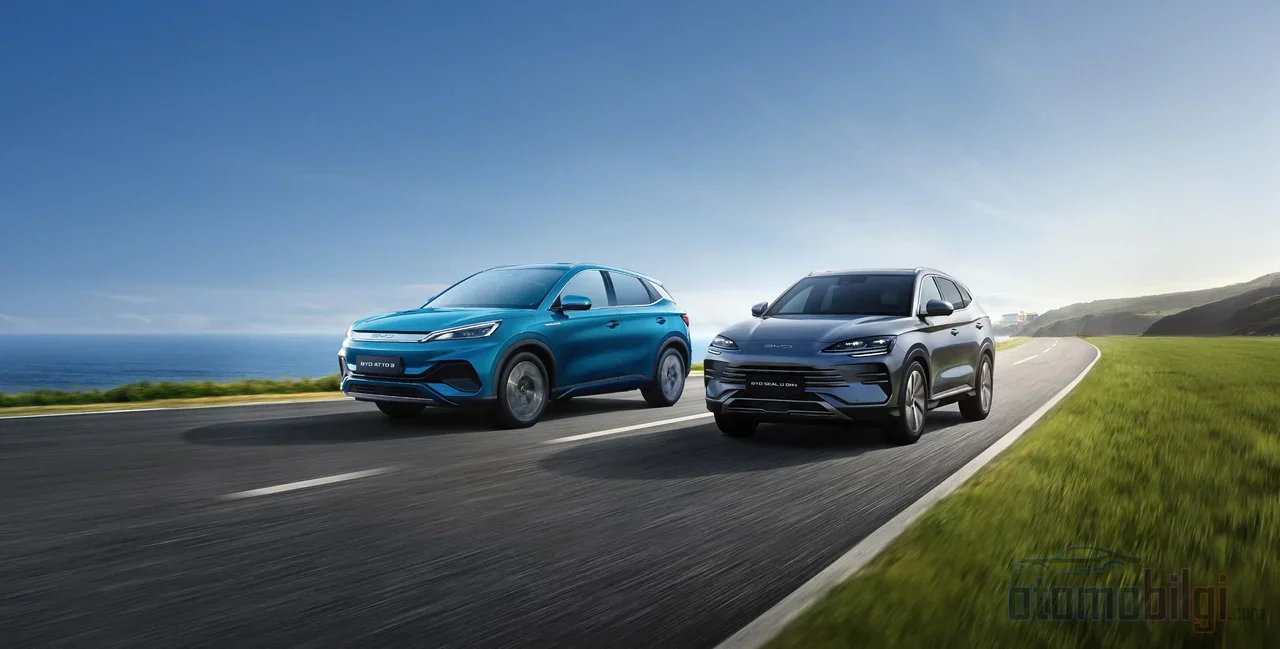
With the November 2024 relaunch, the lineup grew to six models: the C-SUV Atto 3, the D-SUV PHEV Seal U DM-i, the hatchback Dolphin, the fully electric D-SUV Seal U EV, the E-segment sedan HAN, and the D-segment sedan Seal. Later the Atto 2 also joined the list and in January 2026 entered the ranks of Türkiye's 10 best-selling models.
Atto 3: the segment's affordable C-SUV
All Atto 3 trims share the same powertrain: a 60 kWh battery, 204 HP and 310 Nm of torque, and a 420 km combined range ( 565 km WLTP urban). The differences lie in interior equipment, screen size, driver assistance, and the heating package. AC charging at 11 kW takes 6 hours 30 minutes from 0-100%; On the DC side, 0-80% in 29 minutes at 100 kW. The heat pump operates between -30 and 60°C and can increase range by up to 20% - in winter conditions, this is the most practical way to manage the gap between theoretical and real-world range.
Seal U DM-i: The cornerstone of the PHEV market
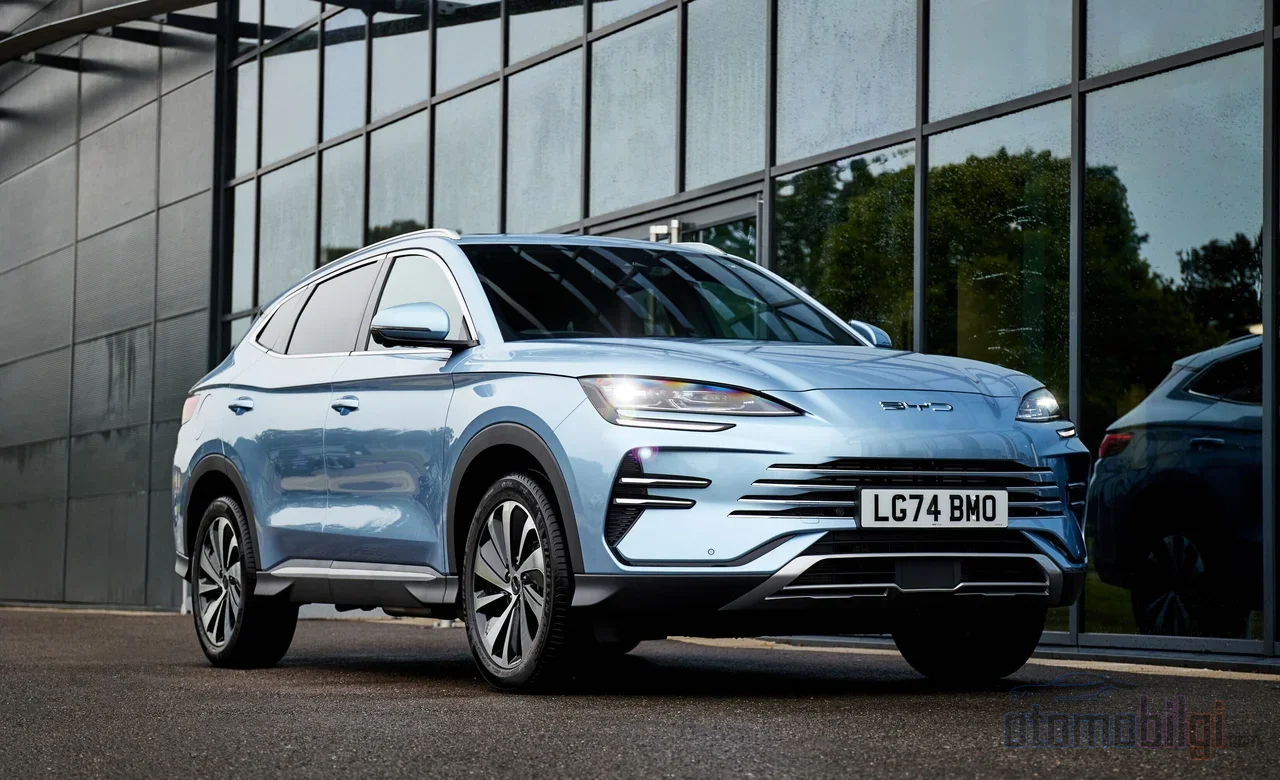
The Seal U DM-i was the first volume PHEV model to enter Türkiye in April 2024 and took the lead in the D-SUV segment; In January 2025 it was the leader of the entire SUV segment. The data explains it: 18.3 kWh battery, WLTP city 1,115 km, combined range of 1,080 km, 30-80% fast charge in 35 minutes. Electric range varies by equipment level; In Europe, the Boost version offers around 80 km and the Comfort version 125 km of electric range. For buyers who don't have charging habits but want to stay close to the electric transition, this formula fits Türkiye's conditions surprisingly well.
Seal U EV, Seal and HAN: moving up
The Seal U EV fills the fully electric D-SUV side with a 87 kWh battery and approximately 500 km of range. The Seal sedan makes a performance claim with its 390 kW AWD Excellence version; In the February 2026 price list it started from 2,369,000 TL. At the top, the HAN sits at 4,873,000 TL on the March 2026 list, positioned as the brand's technical showcase. The little brother Atto 2 is the entry gate with a 45 kWh battery, 177 PS and 463 km of city range: The Boost version was listed at 1,575,000 TL and the Comfort at 1,680,000 TL.
| Model | Segment | Key technical value |
|---|---|---|
| Atto 3 | C-SUV, fully electric | 60 kWh, 420 km combined, 204 HP |
| Atto 2 | Compact SUV, fully electric | 45 kWh, 463 km city range, 177 PS |
| Seal U DM-i | D-SUV, PHEV | 1,115 km WLTP city range |
| Seal U EV | D-SUV, fully electric | 87 kWh, ~500 km |
| Seal | D-segment sedan | 390 kW AWD Excellence version |
| HAN | E-segment sedan | 4,873,000 TL, the brand's peak |
Blade battery: BYD's real competitive advantage?
BYD was born not as a car manufacturer but as a battery manufacturer - and this origin is the most significant difference in the brand's cost and technology equation. The Blade Battery is based on LFP (lithium iron phosphate) chemistry and was developed by BYD's battery subsidiary. According to the manufacturer's introduction, its structural design targets maximum safety, stable range, and a lifespan exceeding 5,000 charge cycles.
Technically, we can speak of two separate advantages. First is safety: the cells' thin and long body structure is designed to reduce the risk of thermal runaway; in independent technical literature this is also regarded as increased energy density thanks to high safety and efficient use of space. Second is lifespan and chemistry: Compared to NCM, LFP is more conservative in terms of cycle life and heat tolerance, and therefore more predictable in high-mileage use.
To keep the balance in perspective: The Blade Battery does not mean "fireproof, immortal." The manufacturer's safety demonstrations are impressive but not absolute; the energy density ceiling of LFP chemistry is also lower than NCM. Moreover, battery technology is not BYD's card alone - many major manufacturers, including rivals like Toyota, are using BYD battery technology. In other words, the advantage comes as much from the ability to produce it at scale and cheaply as from the technology itself.
Where does BYD stand against Togg and Tesla?
Türkiye's electric market hierarchy has settled into a three-way race. In December 2024, Togg led the fully electric segment with 26.5%; BYD was second with 11.7%, and Tesla was third with 10.7%. The picture is similar in 2026: in the first quarter, Togg is the market leader with 9,419 units, while BYD leads the imported brands with 3,638 + units. Togg's dominance in the EV market continues; in the first six months, the T10X and T10F ranked at the top among the best-selling EVs, while the BYD Sealion 7 came in 6th place.
The differentiators between models are becoming clear. The Seal U EV is 16 km ahead of the Kia EV6 in range (500 km versus 484 km); the EV6, on the other hand, leads on performance with 5.2-second acceleration. Against the Tesla Model Y, the Seal is competitive on range - but in these comparisons, it is necessary to check which market and test cycle the range figures belong to; WLTP values differ by region.
On the European scale, the picture has begun to turn in BYD's favor: in the first five months of 2026, BYD reached a 2.3% and Tesla a 2.0% market share, and BYD grew by 136.6% year-on-year as of May. In Türkiye, the strategy is different: BYD is filling the market's mid-segment with PHEVs alongside pure EVs; Togg, meanwhile, maintains its leadership in the fully electric segment with its domestic identity. For now, the two brands are mostly digging their own wells, with little direct collision.
Pricing strategy and dealer network: how does accessible premium work?
BYD's price line, combined with tax advantages, pushes the boundaries of its segments. On the February 2026 price list, the Atto 3 was at 2,209,000-2,249,000 TL, the Seal U EV at 2,489,000 TL, and the Seal at 2,369,000 TL. It should be noted that prices changed noticeably on a monthly basis during this period, and there were even times when models were removed from the list; it is essential to confirm the current list from the brand's official price list page.
This is where the controversial part begins. While BYD cut prices by about 5% in China, it made an 18% price increase in Türkiye during the same period; this situation raised the question of whether the Turkish market is being seen as a "cash cow." On the other hand, the investment on the distribution side is undeniable: the number of dealerships was 4 in November 2023 and 22 in December 2024; the end-of-2025 target was 45-50. The plan to increase the number of dealers across Europe to 2,000 by 2026 shows the brand's scale ambitions.
Manisa plant: when will production begin?
The backbone of BYD's Türkiye investment is the Manisa plant, established with a $1 billion investment and an annual capacity of 150,000 vehicles; production is expected to begin at the end of 2026. The first vehicle off the line is planned to be the Seal U PHEV - a logical choice, since the Seal U became BYD's best-selling model in Europe with 55,504 registrations in the first nine months.
There are also question marks about the pace of the investment. It is being debated how quickly BYD has delivered on its Türkiye investment pledge by mid-2026; analysts are discussing whether there is a shift in priority between Manisa and the 300,000-capacity facility in Hungary within the company's European investments. What is certain is this: once the plant comes online, the import tax component in BYD's Türkiye pricing equation will disappear, and the boundary of its "affordable premium" positioning will be redrawn.
Conclusion: the sustainability test of a fast start
BYD's rise in Türkiye is no coincidence: a product range refreshed at six-month intervals, the price window opened by the VAT structure, the cost advantage from batteries, and a rapidly expanding dealer network are all pointing in the same direction. The numbers confirm it - climbing into the top 7 in the overall market, NEV leadership, and the top spot among import brands.
Sustainability, however, depends on three questions: whether Manisa production will start on time, how much BYD can increase its share in pure electric while Togg maintains its EV leadership, and whether the pricing policy in Türkiye will be perceived as "value" by buyers. The risk of a brand that is cheap in China but gets price hikes here losing trust in the long run will be as decisive as its technical advantages.
Sources
- BYD Türkiye | The World's No. 1 Electric Vehicle Manufacturer
- Leading Türkiye EV Market: Ismail Ergun Q&A
- BYD Türkiye marks an era of evolution
- BYD picks Seal U PHEV as first car from new plant in Türkiye
- BYD ATTO 3 Features
- BYD SEAL U DM-i Features
- BYD Blade Battery | BYD Europe
- Review BYD blade battery for sustainable mobility
- Turkiye January 2026: BYD up to record #7, Atto 2 in Top 10
- Best-selling electric cars in the first quarter of 2026
- Togg won't let go of the top spot - Yeni Safak
- BYD Seal U EV vs Kia EV6 Comparison
- February 2026 BYD Price List - Webtekno
- BYD Price List 2026 - otokampanya
- From Manisa to Szeged - Middle East Monitor
- BYD to Double European Dealers - EVXL