Zorlu Energy Exits Electrip: A New Era in the Charging Network
Share This Page
Zorlu Enerji has signed an agreement with Wren House Infrastructure LP and the Kuwait Investment Authority to sell its entire stake in the electric vehicle charging network Electrip Global Limited for 147.6 million dollars. The transaction will be completed on October 22, 2026, and the company's stake in Electrip will be reduced to zero; charging operations carried out under the ZES brand are reported to continue uninterrupted. On this page you will find the details and rationale of the sale and its place in Türkiye's rapidly growing charging infrastructure market.
Highlights
- Zorlu Enerji is selling its 41.28 percent stake for 147.6 million dollars in Electrip
- Buyers: Wren House Infrastructure LP and Kuwait Investment Authority
- The transaction is October 22, 2026 expected to be completed on
- The number of charging sockets in Türkiye reached 48,971 as of September 2026
- It was announced that ZES operations will continue uninterrupted
Why is Zorlu Enerji exiting Electrip?
According to the statement made to the Public Disclosure Platform (KAP), Zorlu Enerji Elektrik Üretim A.Ş. signed a share transfer agreement to transfer 16,128.52 shares, corresponding to 41.28 percent of its stake in the voting Class A shares of the capital of its subsidiary Electrip Global Limited, to Wren House Infrastructure LP and the Kuwait Investment Authority. The consideration, agreed on a cash and negotiated basis, is 147 million 619 thousand 178.97 dollars. The decision is based on the board of directors' decision No. 2026/51 dated October 19, 2026.
The fact that the sale price corresponds to 20.1 percent of the revenue in the last annual financial statements disclosed to the public sets the stage for valuation debates. The company will use the proceeds to finance capital expenditures and to repay certain financial obligations. The net profit or loss arising from the transaction will be disclosed in the consolidated financial reports dated December 31, 2026.
It should be noted that this exit was not an overnight decision. Zorlu Enerji had previously decided not to participate in Electrip Global's second capital increase; in 2023, it had sold its ZES Solar Enerji shares to Electrip Global for 49.4 million dollars. The reading that management has been gradually distancing itself from this company is hard to dispute with the data at hand.
The gap between the official rationale and the speculation
On social media, content circulating attributes the rationale for the sale to the financial difficulties of other companies within the group. However, the statement in the official announcement is clear: the proceeds will be used for capital expenditures and the repayment of financial obligations. For someone who has spent many years in this business, the situation is not at all unusual; companies review their portfolios periodically and use the resulting cash to finance higher-priority items. Placing speculative rationales ahead of the official announcement does little more than mislead the reader.
Is ZES shutting down, and what will happen to the charging network?
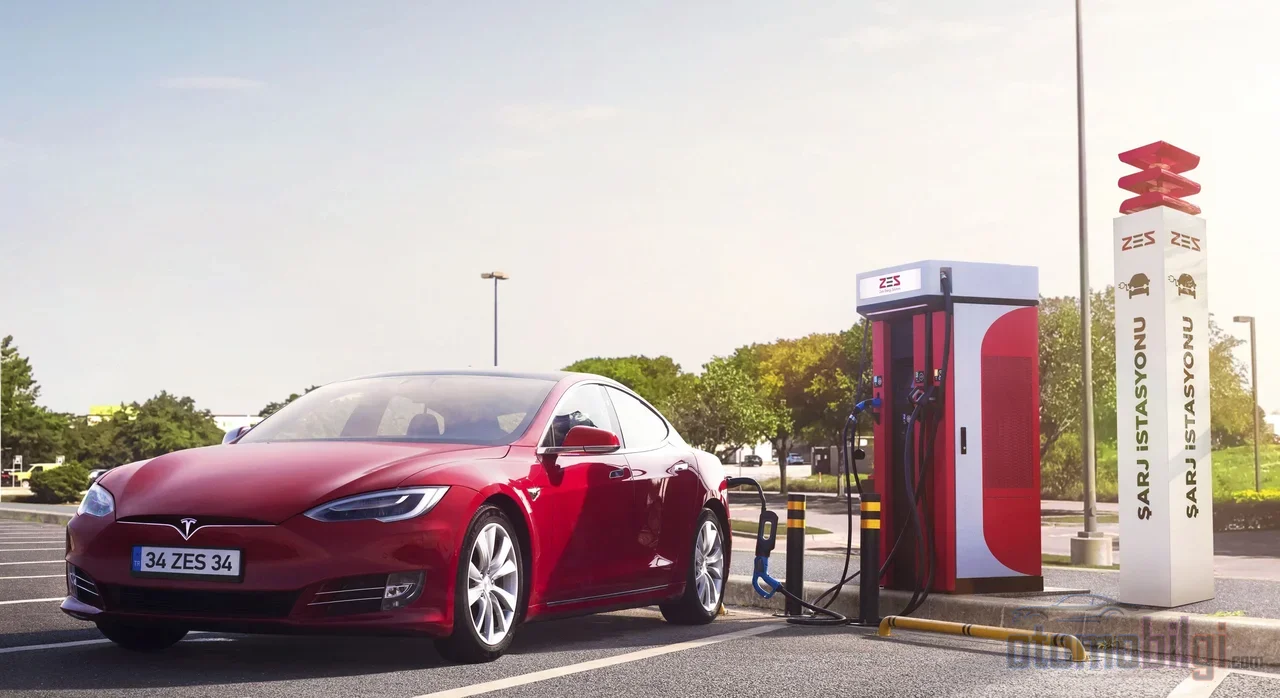
This is the first question electric vehicle users ask: Are ZES stations shutting down? The answer is no. Following the share transfer, it was announced that ZES's operations and services would continue uninterrupted. Electrip operates the charging network in Türkiye under the ZES (Zorlu Energy Solutions) brand, while the Electrip brand is used on the European side. The network serves with charging stations at more than 1,800 points and over 5,000 charging sockets across all 81 provinces of Türkiye.
Electrip Global Limited carries out activities focused on charging infrastructure, primarily the installation, sale, and maintenance-repair of charging stations; it also offers green charging service under the YEK-G system. The company's CEO is İnanç Salman, and the CEO of ZES Solar is Evren Evcit. There is no detailed statement yet on how the management structure will change after the transfer; the current official information indicates that operations will continue uninterrupted.
In the past, the ownership of charging networks was an issue that exceeded the scale of the companies that built them; today, these networks are assets that are bought and sold in their own right and attract the interest of institutional investors. Let us also add that Wren House was already Zorlu's partner in Electrip; the consortium increasing its stake can be read as a sign of an investment approach that takes a long-term view of the infrastructure.
Where the Turkish charging market stands: the current picture in figures
To grasp the meaning of the sale, it is essential to look at the market's trajectory. The number of charging sockets in Türkiye sets a fresh record almost every month. The number of sockets, which was 23,377 in November 2024, reached 39,694 in January 2026, 43,009 in April 2026 with a 2.55 percent increase, and 48,971 in September 2026. Meanwhile, the electric vehicle fleet is also growing rapidly: as of September 2026, the total number of electric vehicles is 491,492. In July 2026 data, this figure was 464,873, while at the end of 2025 there were 373,733 vehicles.
| Period | Number of Charging Sockets | Number of Electric Vehicles |
|---|---|---|
| November 2024 | 23,377 | - |
| January 2026 | 39,694 | - |
| April 2026 | 43,009 | - |
| July 2026 | 46,665 | 464,873 |
| September 2026 | 48,971 | 491,492 |
Competition on the charging infrastructure side has also intensified considerably. By the end of 2023, the number of charging station license holders had exceeded 150; the regulatory body began regularly publishing the list of the 20 largest charging companies as of May 2026. In other words, the market in which ZES is being taken over has long ceased to be a niche managed by a single hand.
A growing market, increasingly difficult profitability
In the first half of 2026, electric vehicles' market share rose to 18.5 percent, but EV sales declined by 5.3 percent; the market leader is Togg. This picture summarizes well the tension facing the infrastructure investor: the fleet is growing, but the pace of sales and charging costs and profitability discussions push the investor to think. The global picture looks brighter; the electric vehicle charging station market is projected to rise from 36.13 billion dollars in 2025 to 43.66 billion dollars in 2026, and to reach 112.55 billion dollars by 2031.
There are also tangible figures on the investment cost side: in 2026, a charging station investment costs anywhere from 800,000 TL to over 6 million TL depending on the power level. Given that the return period on such an investment depends heavily on vehicle density and utilization rates, it is not hard to defend the claim that a $147.6 million exit from a growing but not-yet-profitable market is a reasonable valuation. The same claim is also open to debate in light of the fact that the sale price represents 20.1 percent of revenue; both readings can be defended with the data we have.
What does this sale mean in terms of market competition?
ZES is one of Türkiye's leading charging networks, with a spread across 81 provinces and more than 5,000 sockets. The transfer of control of such a network from founder capital to institutional infrastructure investors could change the nature of competition. The commitment of infrastructure-focused funds like Wren House and sovereign wealth funds like the Kuwait Investment Authority to the network could create a new dynamic in financing expansion investments. As for Zorlu Energy, its stated priorities are its own capital expenditures and debt obligations; the company is expected to focus on its portfolio on the generation side rather than charging infrastructure.
In more than 30 years in the industry, I have grown accustomed to companies making decisions like this: if an asset is not on the founder's agenda and someone else is ready to put growth capital into it, divesting may not always be the most rational move, but it is the most predictable one. It should come as no surprise that charging networks in Türkiye will change hands more frequently in the period ahead; while the number of sockets has doubled in two years, serious money is now being discussed in the valuation of these networks.
For the user, the critical question is the operability of the stations. The transfer is not expected to directly affect ZES operations; no information has yet been announced regarding any change to the app, subscription, or payment infrastructure affecting users. Once the transaction is completed on October 22, the picture will become clear if the new owners announce their investment plans for the network.
Conclusion: a measured exit from a growing market
Zorlu Energy's sale of Electrip for $147.6 million is a concrete indication that Türkiye's electric vehicle charging market is maturing. On one side, nearly 49,000 sockets and a vehicle fleet approaching half a million; on the other, profitability questions and intensifying competition: in this picture, the company's decision to sell at a point where it saw value rather than putting up the capital needed to grow the network is a commercially consistent one. The ZES network brings no change for users at first; what is really curious is where the new owners will take this network.
Sources
- Zorlu Energy signs agreement to sell its entire stake in Electrip Global Limited for $147.6 million
- A $147.6 million sale from Zorlu Energy: transferring its stake in Electrip
- The number of electric vehicle charging sockets in Türkiye approaches 49,000
- Number of EV charging sockets in Türkiye exceeds 43,000
- Electric Vehicle Market 2026 First Half
- Current profitability challenges in Türkiye's electric vehicle charging market
- Zorlu Enerji sells its ZES Solar Enerji shares to Electrip Global
- Zorlu Enerji decides not to participate in Electrip Global's capital increase
- Electric Vehicle Charging Station Market
- Charging Station Investment Guide (2026)
- Number of electric vehicle charging sockets (EPDK November 2024 data)