Number of Vehicles First Registered in September Fell 18 Percent Year-on-Year

Share This Page
According to TÜİK's motorized land vehicle statistics, the number of vehicles registered to traffic in September fell 18 percent year-on-year to 161,027. The decline was measured at 6.3 percent compared to August. In the same period, the total fleet of registered vehicles surpassed 35 million; in other words, while the new registration side of the market is shrinking, the number of vehicles on the road continues to grow.
Highlights
- The number of vehicles registered to traffic in September was 161,027; the annual decline was 18.0%.
- Car registrations fell to 64,361 units; an annual decrease of 19.9%.
- In the brand ranking, Renault led with a 16.1% share; TOGG ranked second.
- The total vehicle fleet reached 35,065,235 units as of the end of September.
- In the January-September period, total registrations were 1,503,161 units, a year-on-year decrease of 14.5%.
Which Vehicle Types Saw the Sharpest Decline?
Looking at the distribution within September's registrations, the picture becomes clear. Motorcycles made up 45.1% of new registrations, cars 40.0%, and light trucks 10.1%. In other words, nearly one out of every two vehicles registered to traffic in September was a motorcycle; cars now account for less than half of registrations. Those who have been in this business for many years know a simple truth: motorcycle registrations stay relatively resilient during economic downturns, because they are the first choice of people who meet their transportation needs with a small budget.
The year-on-year decline varied by vehicle type. Car registrations fell 19.9%, while motorcycle registrations dropped 18.4%. The sharpest decline was seen in minibuses: the 38.2% drop shows how much investment in commercial passenger transport has been put on hold. On the car side, there was also a 7.9% contraction in September compared to the previous month; the decline is felt on both a yearly and a monthly scale.
The nine-month picture of the year paints a similar image. Total registrations in the January-September period fell to 1,503,161 units; this means a year-on-year contraction of 14.5%. It is not just a single month's figure; the combined result of nine months also points in the same direction: the market is not progressing at a pace far above last year.
Who Leads the Brand Ranking: Renault's Leadership and TOGG's Rise
In the brand distribution of the 64,361 cars registered to traffic in September, Renault took first place by a clear margin with a 16.1% share. TOGG, Hyundai, Volkswagen, and Toyota followed. Renault's position at the top is no surprise; in the first eight months of the year's sales table, Renault was also at the head of the brand ranking with 91,388 units, followed by Volkswagen with 59,972 and Fiat with 59,667. On the model side, the leader of the January-August period was the Renault Clio with 31,643 units.
The most notable point is second place. TOGG settling just behind Renault in the monthly registration data for cars shows how variable the ranking has become. Last August, the Togg T10X sat at the top of the sales list; the domestic car's play for the monthly top five, even the top two, was a picture no one could have dreamed of fifteen years ago. Renault's lead in the cumulative ranking is undisputed for now, but it is worth noting that there is movement at the top of the list on a monthly basis.
Why Is the Registration Figure Different from the Sales Figure?
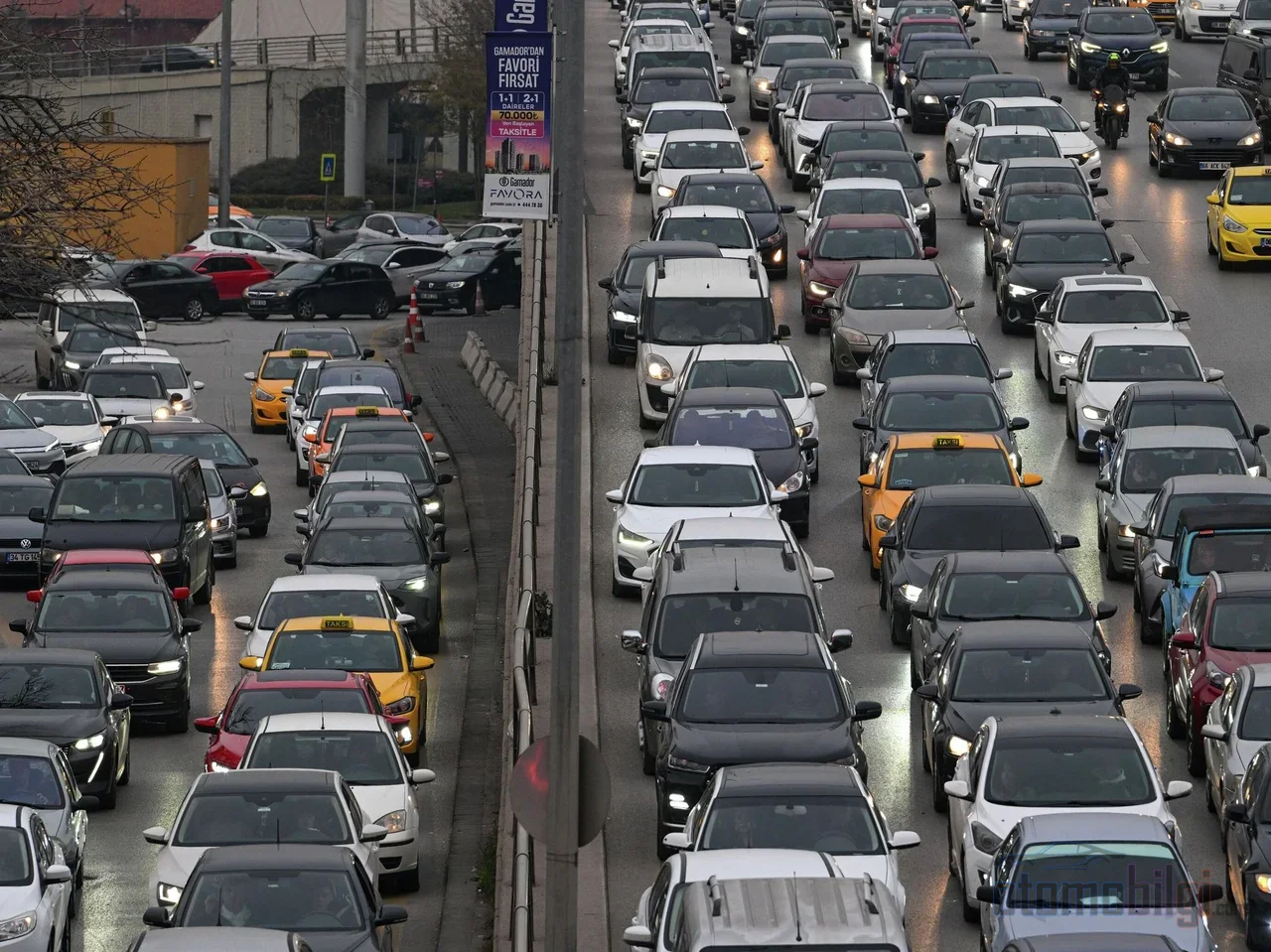
One of the questions readers ask most frequently is this: While the TÜİK data speaks of 161,027 registrations in September, why are new vehicle sales through dealers much lower? The answer lies in the fact that the two statistics measure different things.
- TÜİK counts all vehicles that receive a traffic registration certificate; cars, motorcycles, light trucks, minibuses, trucks, and buses are all in this statistic.
- Motorcycles make up 45.1% of September registrations; the dealer sales bulletin, by contrast, does not cover motorcycles.
- Some transactions related to used vehicle transfers also fall within the scope of the registration statistic; the sales data, on the other hand, concerns only new vehicles.
Viewed in this framework, the two figures do not confirm each other; they measure separate doors. According to the report tracking new car and light commercial vehicle sales, total sales fell back to 83,469 units in September; the annual decline was 24.33%, and on the car side 27.80%. In the first nine months of the year, car sales shrank by 15.45% to 627,977 units, and the total market contracted by 13.39%. Both data sets point in the same direction; only their scopes, and therefore their magnitudes, differ.
Why Is the Fleet Exceeding 35 Million While New Registrations Fell?
As of the end of September 2026, the total number of registered vehicles reached 35,065,235. In the same month last year, this figure was 33,020,263; an annual increase of 6.2%. 51.7% of the fleet consists of cars. Those who have followed the progress through the year will remember: at the end of April the fleet had reached 34.2 million, and 34.4 million by the end of May; the 35 million threshold was passed gradually over the course of the year.
So how is the fleet growing while new registrations are falling by 18 percent? Two mechanisms are at work simultaneously. First, the declining but non-zero new registrations continue to add to the fleet every month. Second, the movement of the used car market: in September, 957,197 vehicles changed hands. A transfer does not create a new vehicle, but it allows an existing vehicle, still counted as a registered one, to change owners. Roughly close to one million transfers taking place over a period shows just how active the used car market is. In the past, we would look at the registration statistic and read a one-dimensional snapshot of the market; now it is essential to read new registration, sales, and transfer data together.
| Indicator | September 2026 | Change |
|---|---|---|
| New registrations (all vehicle types) | 161,027 | Annual decrease of 18.0% |
| Car registrations | 64,361 | Annual decrease of 19.9% |
| Car + light commercial vehicle sales | 83,469 | Annual decrease of 24.33% |
| Used vehicle transfers | 957,197 | Freight load |
| Total fleet (end of month) | 35,065,235 | Annual increase of 6.2% |
| January-September total registrations | 1,503,161 | Annual decrease of 14.5% |
Electric and Hybrid Share: Structural Change Continues in the Background
In the shadow of falling registration figures, a lasting shift continues in the technical structure of the market. 50.4% of the automobiles registered to traffic in the January-September period were hybrid and electric models. In other words, of every two cars put on the road in the first nine months of the year, one is no longer a vehicle carried solely by an internal combustion engine. This is exactly where those who read the market with old habits often go wrong: while volumes are contracting, the distribution by type, that is, the technology consumers prefer, continues to change rapidly.
TOGG's rise to second place in the monthly brand ranking is also part of this structural change. Seeing electric models this high on the registration list would not have been an ordinary monthly figure a few years ago.
What Lies Behind the Contraction?
Industry commentators do not converge on a single common cause for the decline. Some analyses read the picture with the emphasis that weakening external demand and the competitive pressure between China and Europe are squeezing Turkish automotive from two sides. The figures on the production front support this concern: in the first quarter of the year, total production fell 7% to 321,856 units, while exports declined 15% in volume to 215,323 units; the drop in automobile exports was even steeper. The September reports of industry organizations also confirm that production and sales declined in the first eight months. While the impact of geopolitical developments on the domestic market is debated, it is difficult to assert a definitive causality; what is clear is that the contraction is seen simultaneously on both the domestic and external demand side.
On the dealer side, expectations are not exuberant, but not flat either. Industry representatives have set the market target at 1.2 million units toward the end of the year; total sales in the first nine months have already exceeded 800 thousand. To reach the target, the fourth quarter needs to recover compared with the same period last year; the current course of registration and sales data suggests this will not be easy.
Conclusion: Shrinking Market, Growing Fleet
The summary of the September data is briefly as follows: new registrations contracted 18 percent, sales declined more sharply, but the fleet surpassed 35 million and second-hand transfers remained around one million. This combination shows that the market is not freezing as it shrinks; buyers are shifting from new to second-hand, from cars to motorcycles, and their technology preference is moving toward the electric-hybrid side. In a picture where Renault maintains its brand leadership and TOGG has settled into the top ranks of the monthly lists, the momentum created by the fourth quarter will determine where the 2026 market closes.
Sources
- TÜİK Data Portal - Motorized Land Vehicles, September 2026
- ODMD Press Release, October 2, 2026
- Ekonomi Gazetesi – Number of vehicles registered in traffic in September exceeded 161 thousand
- Ekonomi Ankara – Notable drop in vehicle sales in September
- DonanımHaber – Türkiye favored these car brands the most in September
- CNN Türk – Number of registered vehicles exceeds 35 million
- DW Türkçe – Squeeze between China and Europe: Danger growing in Turkish automotive industry