Is the Situation of Tax-Exempt Vehicles in the Second-Hand Market Strengthening?
Share This Page
The second-hand situation of vehicles with SCT exemption has strengthened noticeably as we enter 2026: as of January 1, 2026, the upper price including taxes for vehicles that can be purchased with exemption was set at 2,873,900 TL the number of models covered has reached 64 across five brands, and prices without SCT range from 820,500 TL to 2,089,240 TL . The difference of hundreds of thousands of liras compared to similarly priced standard-taxed models is turning these vehicles into a market segment with its own category in the second-hand market.
Highlights
- 2,873,900 TL: the upper limit including taxes for a vehicle that can be purchased with SCT exemption as of January 1, 2026.
- 40% localization requirement: vehicles with at least this rate on a model and version basis are not excluded from the scope.
- As of October, 64 models without SCT across 5 brands appear in the lists .
- For the Toyota Corolla Dream X-Pack Multidrive S, the regular price is 1,950,000 TL, while without SCT it is 1,083,333 TL.
- A vehicle purchased with exemption cannot be sold without SCT for 10 years ; the new vehicle right is also tied to the same period.
Which vehicles can be purchased with SCT exemption in 2026?
The logic of the system has not changed for many years: individuals with a disability rate of 90% or above can use the exemption without the requirement for special equipment and without the driver's license condition being considered. For disability rates between 40% and 89%, the requirements of special equipment, personal use, and a Class H driver's license come into play. With the regulation that entered into force in April 2026, individuals with an orthopedic disability above 40% who cannot obtain a driver's license due to their disability can also benefit from the exemption; for this group, personal use and special equipment requirements are not sought.
When SCT is removed, the tax burden does not disappear entirely; on the remaining base, 20% VAT is paid. On the motor vehicle tax side, individuals with 90% or above disability are exempt without the special equipment requirement, while at lower rates exemption is possible for vehicles with special equipment. Since a vehicle purchased with exemption cannot be sold without SCT for ten years, if it is sold to a non-disabled person before five years have passed from the initial purchase, the exempted SCT must be declared and paid. If the vehicle is totaled as a result of an accident or disaster, the exemption can be used again for a new vehicle before the ten years are up.
The localization requirement determines the list
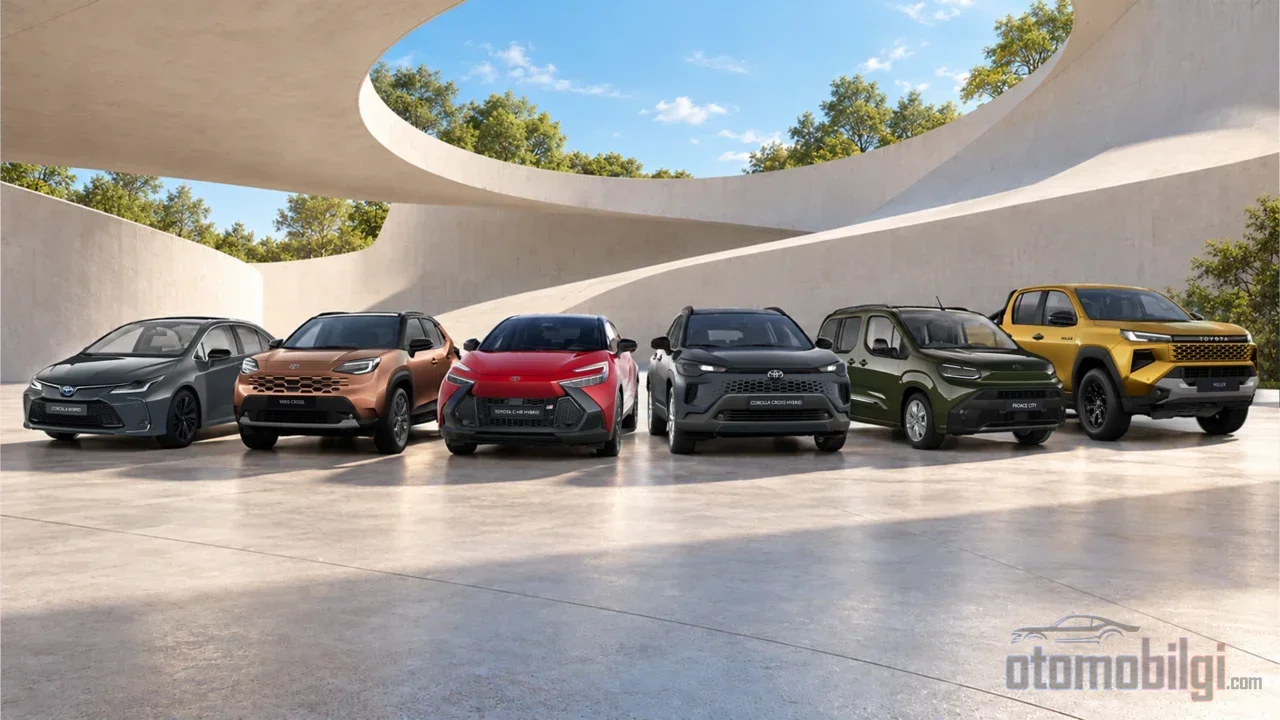
The criterion that effectively determines the models in scope is localization. The vehicle must have at least a 40% local contribution rate on a model and version basis, and this rate can vary depending on the engine, transmission, and equipment. Togg T10X and T10F as well as the Fiat Egea Sedan and Egea Cross fully benefit from this requirement, while suitable versions of the Hyundai i20 and Bayon, Toyota Corolla and C-HR Hybrid, and Renault Clio, Duster, and Megane Sedan also make the list. Renault's new model Boreal also has suitable versions; however, it should be remembered that not every version is automatically eligible.
The total amount basis applies when calculating the upper limit: if the sales price limit, including taxes and options, is exceeded by even a single lira, the vehicle loses its exemption and the entire sale becomes subject to normal tax rules. In other words, for a buyer planning to use the exemption, equipment selection is not merely a comfort preference but a tax calculation.
October snapshot: Where are the prices without the Special Consumption Tax?
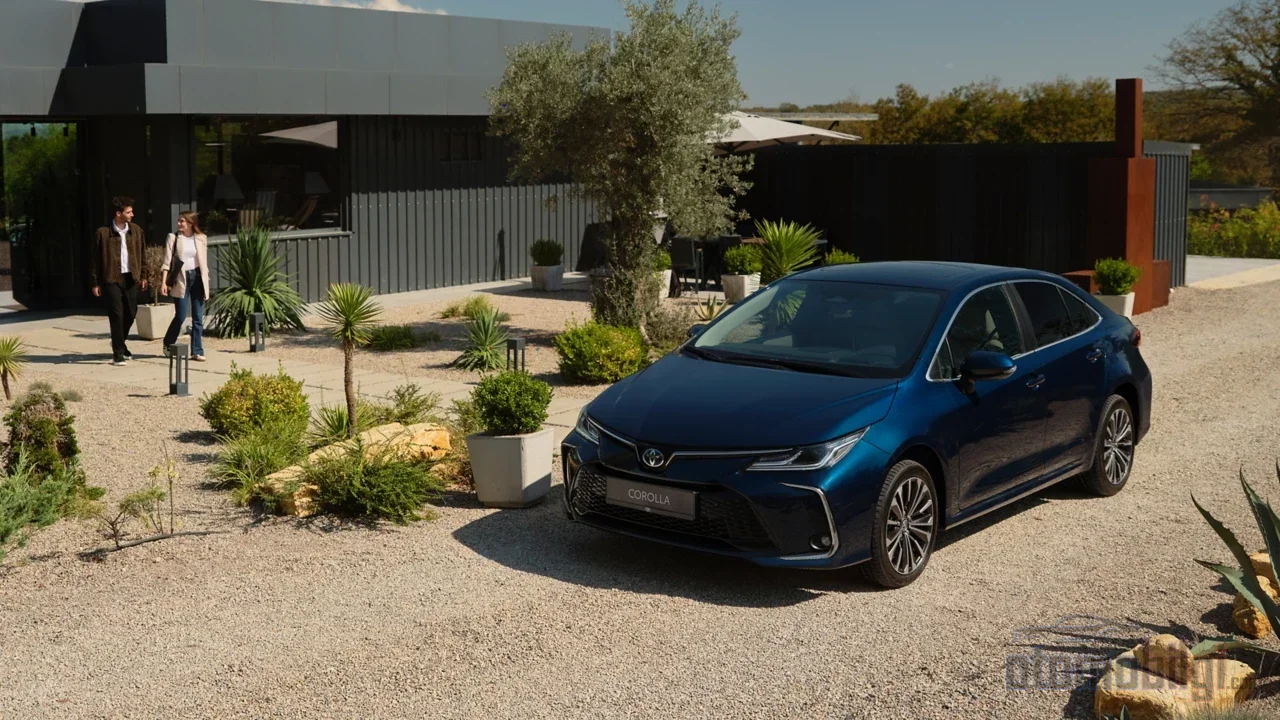
Looking at the current price lists, the exemption's power to create a price difference is clearly visible. The prices without the Special Consumption Tax range from 820,500 TL to 2,089,240 TL ; the difference from normal prices varies from model to model between 376,996 TL and 4,874,600 TL . The figures at the upper end, of course, come from comparing the normal prices of equipment that remains above the limit; the exemption's real impact is the hundreds of thousands of liras in reductions felt in versions below the limit.
| Model | Normal Starting Price | Approximate Price without SCT |
|---|---|---|
| Fiat Egea Sedan | 1,384,900 TL | ~791,000 TL |
| Hyundai i20 | 1,470,000 TL | ~840,000 TL |
| Hyundai Bayon | 1,560,000 TL | ~891,000 TL |
| Renault Clio | 1,830,000 TL | ~1,046,000 TL |
| Renault Duster | 1,865,000 TL | ~1,066,000 TL |
| Renault Megane Sedan | 2,199,000 TL | ~1,257,000 TL |
| Toyota Corolla | 1,850,000 TL | 1,083,333 TL |
| Toyota C-HR Hybrid | 2,250,000 TL | 1,161,111 TL |
It should be noted that the approximate prices without the Special Consumption Tax shown in the table are based on an assumed tax rate, that the exact figure varies according to engine and taxable base, and that the buyer can only see the exact amount on the proforma invoice. For the same reason, small differences for the same model across different price lists are natural.
Togg's versions below the limit
With its price list dated June 15, 2026, Togg has positioned three RWD versions each of the T10X and T10F below the limit; the T10F V1 Standard at 1,884,980 TL, and the T10X V2 Long at 2,411,000 TL. In contrast, the 4More versions (T10X: 3,218,137 TL, T10F: 3,217,937 TL) are above the threshold. Togg's statement that it bases its prices on the delivery date means that the price may change between order and delivery; what matters for tax purposes, however, is the invoice, that is, the date of first acquisition.
For models waiting just above the threshold, campaign prices can be decisive. For example, the Boreal Techno TCe EDC 145 hp can drop from its normal price of 2,899,000 TL in the September lists to the 2,760,000 TL range under campaign conditions; if the invoice amount falls below the limit, the exemption door can open. Such practices must be clarified with invoice amount verification, but that is the interesting part of the picture.
What kind of market do second-hand vehicles with disabled plates create?
Vehicles purchased with an exemption on second-hand platforms form a market layer of their own; the majority of exempted vehicles are listed separately under the category of vehicles with disabled-person plates. This distinction has a practical reason: whether the vehicle can be transferred while preserving its exemption conditions depends on the rules tied to the remaining period. Since the SCT must be declared and paid for a transfer made before five years are up, the vehicle can only be sold to a disabled buyer under the exemption conditions, which narrows the buyer pool but creates a regular second-hand flow. Disabled-to-disabled sales have therefore long become a separate area of expertise within the system.
The ten-year unsold limit affects the second-hand value in two ways. On the one hand, the sale of the vehicle has been delayed; on the other hand, models with proven long-term durability stand out at the end of this period as candidates that can be sold while retaining their value. The Corolla, i20, Clio and Megane Sedan are frequently mentioned names in this respect; the Megane Sedan is already one of the fastest-changing-hands cars in our country. The truth is that an exempted vehicle whose mileage and maintenance records have been kept for ten years presents itself, when the period expires, as a much better documented and more predictable product than a standard second-hand vehicle.
That said, to be honest, there is not yet any systematic numerical data on the second-hand depreciation rates of exempted vehicles. The intensity of demand can be read from market observation, but it is still too early to speak with figures. Trying to fit this market onto the same yardstick as the standard second-hand market, out of old habit, would give wrong results; here both sales restrictions and the buyer base work differently.
The supply side of the market: what is changing in the production base?
A significant portion of the models covered by the exemption are produced in Türkiye: the C-HR and Corolla in Adapazarı, the i20 and Bayon at the İzmit facilities in Kocaeli, the Clio and Duster in Bursa, and the Megane Sedan at the Karsan facilities. This picture shows that the supply of exempted models rests on a serious production base for the domestic market.
Meanwhile, a critical development hangs in the air: production of the Egea is expected to end in June 2026, and the new model that will replace it in Bursa has not yet been announced. As the most widespread model family on the exemption list, the Egea carries the potential to create a supply gap especially in this segment. In terms of the breadth of the list, the T10F, as Togg's second model to enter series production, enriching the electric options in the lineup with its aerodynamic structure and range values can be read as a stabilizing element before the loss is filled.
What do financing campaigns add to this picture?
The price advantage of the exemption turns into actual sales when it meets the buyer's purchasing power. Togg is the aggressive player here: special credit campaigns for both individuals and companies are boosting T10X sales, while the T10F can be purchased with favorable-term campaigns. On the Egea side, the September 2026 price list also shows discounts, current campaigns, and credit opportunities. When financing support is added on top of the price difference of hundreds of thousands of liras brought by the exemption, the total cost of ownership for sub-limit versions clearly comes out ahead compared to similarly equipped vehicles under standard taxation.
So is the situation in the second-hand market really strengthening?
The picture before us warrants a cautious yes. The increase in the number of models to 64 shows that supply is expanding, and the entry of five brands into the list shows that buyers are not locked into a single model. The ten-year sales restriction keeps second-hand supply limited, while disabled-to-disabled transfers operate an insider-buyer mechanism that preserves demand. Egea's approach to the end of its production can be read as a supply signal that increases the likelihood of existing vehicles becoming even more valuable in the short term.
On the other hand, there are two uncertainties inherent in the system. First, the lack of numerical data on second-hand prices; we will only begin to see how much value the market retains through the sales of vehicles whose exemption period has expired. Second, the annual updates of the limit amount and whether model versions stay just above the threshold; in a system where a single option difference changes the tax regime, second-hand pricing also has to carry this sensitivity. Let me say it with the eyes of a thirty-year observer: this market used to be a marginal category, now it has serious purchasing power and an institutional model range. Its direction, for now, is the right one.
Sources
- Disabled Vehicle Prices 2026: Which Vehicles Can Be Purchased?
- No Barriers, There's Toyota! Tax-Exempt Disabled Vehicles 2026
- Our Tax-Exempt Vehicle Models
- Tax-Exempt Vehicles and Disabled Vehicle Prices (2026)
- What is SCT exemption: Conditions for purchasing a vehicle with a disability report
- Guide to Disabled-to-Disabled Vehicle Sales 2026
- Current October: 2026 Tax-Exempt Vehicle Price List
- Tax-Exempt Vehicles 2026 | Disabled Vehicle Price List
- September 2026 Tax-Exempt Vehicles: Current List, Prices and Campaigns
- Vehicles > Vehicles with Disabled License Plates