How Do EGR and DPF Engines Stay Clean?
Share This Page
EGR and DPF/GPF systems are two complementary emission technologies that help keep the engine clean: EGR returns a portion of the exhaust gas to the cylinder, lowering combustion temperature and preventing the formation of nitrogen oxides (NOx) from the start; DPF, and GPF in gasoline engines, captures the resulting soot particles in the exhaust and burns them off through periodic regeneration. Both systems are designed for cleanliness, but they gradually clog up because they cannot complete their self-cleaning cycles, especially during frequent short city trips.
Highlights
- In gasoline engines, EGR typically recirculates exhaust gas at a rate of 5-15% ; in diesels, under certain conditions this rate 50% can rise to
- NOx forms when nitrogen and oxygen combine at high temperatures; EGR reduces this temperature and prevents its formation from the start.
- Burning the soot in a DPF requires a temperature of approximately 600 °C in the exhaust.
- 15-20 km On trips shorter than, the engine rarely reaches the temperature required for passive regeneration.
- In gasoline engines, the GPF has a wall-flow ceramic honeycomb structure and is mounted close to or integrated with the catalytic converter.
Why Does EGR Return Exhaust Gas to the Cylinder?
At first glance it seems like a contradictory idea: Why put gas that has already burned back into the engine instead of fresh air? The answer lies in chemistry. NOx forms when nitrogen and oxygen combine at the high temperature inside the combustion chamber. The higher the temperature, the greater the formation. By mixing a portion of the exhaust gas into the intake side, the EGR system dilutes the amount of oxygen in the cylinder; as oxygen decreases, the amount of fuel burned also decreases and peak cylinder temperature drops. When the temperature drops, NOx formation is prevented from the start.
In addition, the water vapor and CO2 in the exhaust gas have a different heat capacity than air, which pulls the adiabatic flame temperature down even further. In modern diesel engines, the recirculated gas usually passes through an EGR cooler, i.e. a heat exchanger. Thanks to cooling, a higher EGR rate can be used and the charge temperature entering the cylinder remains low.
In gasoline engines, the balance is critical: the typical EGR rate is in the 5-15% band. If you raise the rate more than necessary, the continuity of the flame front is disrupted; misfires and incomplete combustion begin. For this reason, EGR is not active under all conditions: it is shut off at high load because it reduces peak power, and at idle because it makes combustion unstable. In diesels, however, in situations like idle where excess air is abundant, the rate can rise to much higher levels. EGR also has side benefits in gasoline engines: the throttle operating more open reduces throttle losses; heat loss and chemical dissociation decrease.
Why Does the EGR Valve Clog Up Over Time?
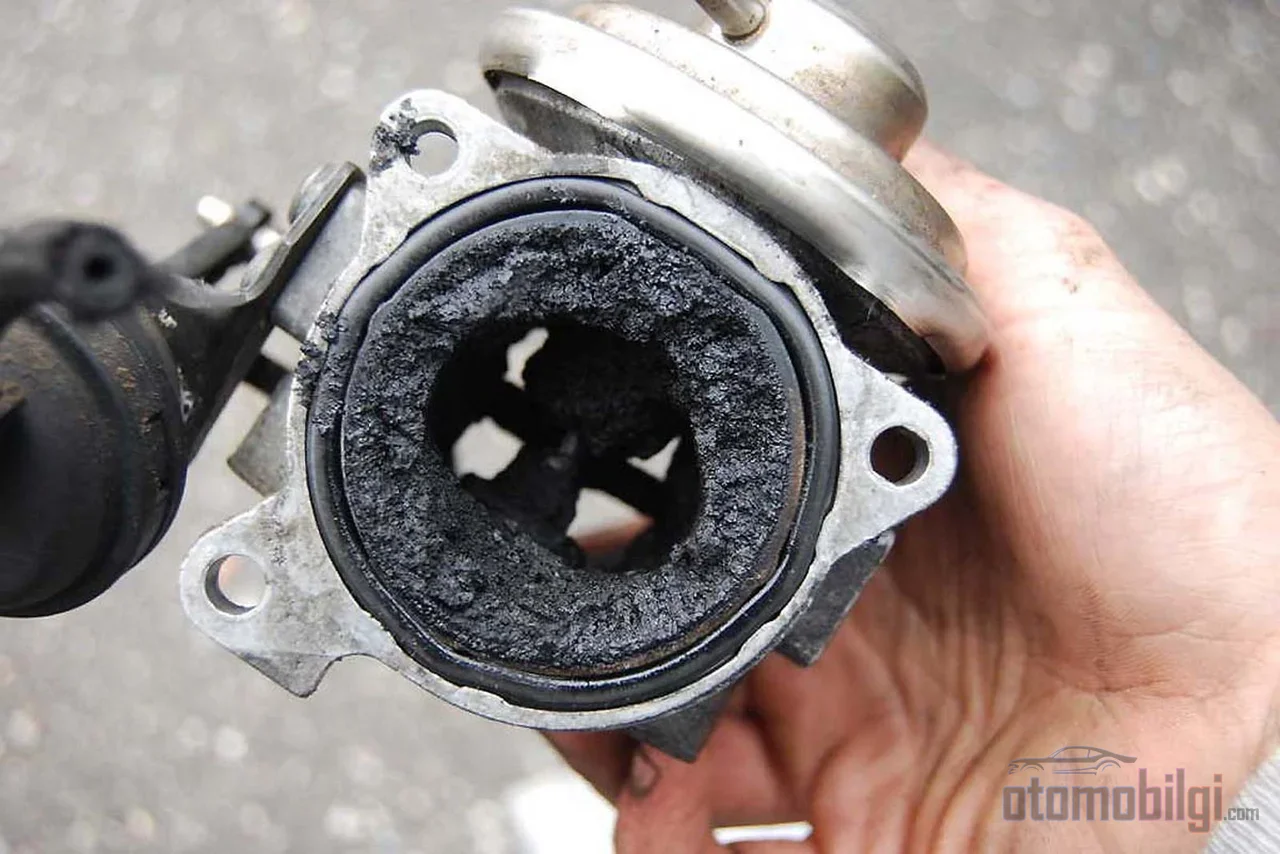
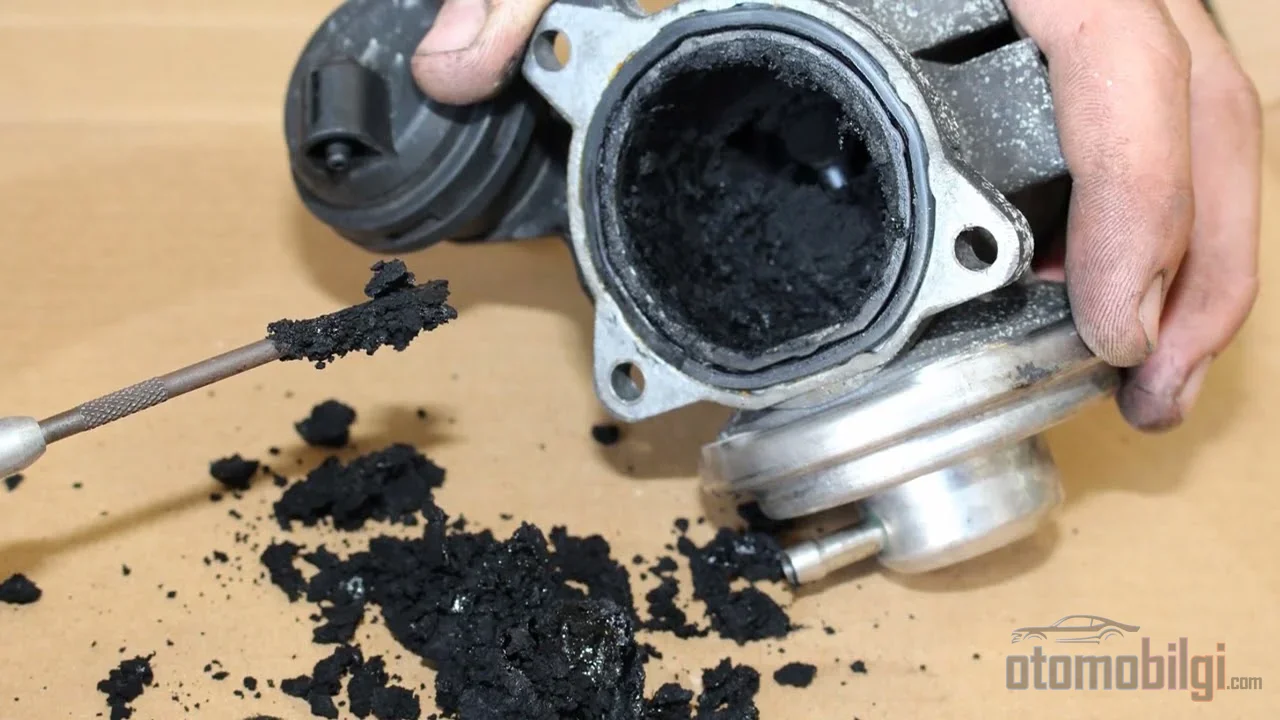
EGR returns exhaust gas without filtering it. The abrasive carbon particles in the gas accumulate on the valve; over time the valve becomes dirty, restricts flow, and can become completely stuck. A blocked valve prevents NOx reduction and can cause the vehicle to fail its emissions test. Carbon buildup does not come only from exhaust soot: the mixing of hot exhaust gas with oil vapor from the crankcase also feeds the deposits. In diesel and gasoline engines, when EGR combines with crankcase ventilation (PCV), the mixture of exhaust gas, fresh air, and oil vapor can turn into sticky tar-like deposits in the intake manifold.
The practical takeaway is clear: avoiding factors that increase deposit formation, especially using quality fuel, extends the valve's life. Thermal issues also play a role in EGR failures; the system is exposed to constant high-temperature cycles.
How DPF Catches Soot: How Does Regeneration Work?
EGR has a price: returning exhaust gas to the cylinder increases particulate, i.e. soot, emissions in diesels. This is exactly why the DPF is placed in the exhaust line of diesel engines, downstream of the engine. The filter catches soot; however, accumulated soot creates back pressure in the exhaust, and this pressure reduces fuel efficiency over time. For the filter to protect itself, it must burn the soot it captures - this process is called regeneration. The system operates on a dynamic balance between captured soot and oxidized soot.
The difference between passive and active regeneration
Passive regeneration occurs without any additional intervention: at sufficiently high temperatures, the NO2 component of NOx oxidizes the soot in the filter at normal operating temperatures. However, this process is only partially effective and weakens further at high EGR rates. Active regeneration, on the other hand, is a burning process initiated by the ECU: extra fuel is injected into the oxidation catalyst (triggered by additional injection after fuel injection, i.e. post injection), the exhaust temperature is raised, and the particulates are burned with the remaining oxygen in the exhaust. The soot turns into ash and CO2.
Non-combustible metallic and mineral impurities in the fuel and engine oil, however, cannot be burned during regeneration; they remain in the filter as ash. After repeated regenerations, the DPF must be removed and cleaned with a special external process or replaced. Regeneration manages the soot, but not the ash.
GPF in Gasoline Engines: How Is It Different from Diesel?
The particulate filter is not exclusive to diesels. GPF - also known as OPF or PPF - captures fine soot and particulates emitted by gasoline engines, ensuring compliance with emission standards. Structurally, it is a ceramic honeycomb filter and typically works with a wall-flow design: as exhaust gas passes through the filter, particulates are trapped in the cell walls. The mounting position is significant: the GPF is placed close to the catalytic converter or integrated with it as a single unit. Thanks to this position, the exhaust line heats up quickly, which is favorable in terms of filter cleanliness.
Why Do Frequent City Driving Conditions Strain These Systems?
The prerequisite for regeneration is temperature. For the DPF to burn its accumulated soot, a temperature of approximately 600 °C is required in the exhaust. City driving below 40 mph prevents reaching this temperature; passive regeneration stops, and soot accumulation in the filter accelerates. On trips below 15-20 km, the engine rarely reaches the operating temperature required for passive regeneration. On short trips, regeneration either never begins or is canceled before the trip ends. Repeated short trips feed DPF problems, as the vehicle fails to reach full exhaust temperature or to complete regeneration.
This is a reality frequently voiced by diesel vehicle owners: The engine may be sound under the hood, but the exhaust chain needs regular heating. A diesel used only for short distances may become unable to ever clean its filter on its own. The question that naturally arises in the reader's mind is to disable the system entirely: In EGR delete debates, despite claims of increased power, deleting the system raises combustion temperatures and can increase engine wear and turbo stress, while significantly increasing NOx emissions. Moreover, if the EGR is not deleted together with the DPF, the soot load and regeneration temperatures in the DPF increase even further - the two systems cannot be considered independent of each other.
How Do the Catalytic Converter and the Entire Exhaust Chain Work?
To complete the picture, we need to look at the first link in the chain. The catalytic converter is an emissions control device that converts toxic gases and pollutants coming from the engine into less toxic ones: it reduces carbon monoxide, hydrocarbons, and nitrogen oxides. Both gasoline and diesel engines rely on these devices to remove the main pollutants. In most modern diesel vehicles, the DPF and the catalytic converter work together to comply with strict emissions regulations.
When the entire chain is examined, the division of labor is clear:
- EGR - reduces NOx formation inside the cylinder from the outset.
- Catalytic converter / DOC - converts carbon monoxide, hydrocarbons, and NOx components in the exhaust.
- DPF - traps soot and cleans itself through regeneration.
- SCR - injected urea solution converts the NOx going to the exhaust into harmless nitrogen and water.
When one link fails to work, it burdens the other. If the EGR is not working properly, NOx control is left outside the cylinder; if regeneration cannot be completed, backpressure suffocates the engine. What keeps the engine clean is this chain working as a whole.
Does EGR Shorten or Extend Engine Life?
The answer to this question is not one-sided. On one hand, unfiltered exhaust gas recirculation in diesels can allow soot into the cylinder, causing ring wear and oil contamination; from this perspective, EGR shortens engine life. On the other hand, because EGR lowers cylinder temperatures, it can protect the engine - particularly in terms of exhaust valve life. The two effects work in opposite directions; which one prevails depends on usage conditions and how clean the system is kept. The picture on the efficiency front is also mixed: In diesels, EGR can reduce thermodynamic efficiency and increase particulate emissions; in some gasoline engines, it can improve efficiency. Cooled EGR configurations have been associated with an efficiency drop of around 3% With all these reasons in mind, some modern engines prefer to reach emissions targets without using EGR at all - the technology is not the only mandatory path, but a balancing tool.
Conclusion: A Clean-Staying Engine, a Regularly Warming Engine
EGR and DPF/GPF are complements, not alternatives to each other: One suppresses NOx formation inside the cylinder, while the other captures the resulting soot in the exhaust. Their biggest enemy is the same: short and slow usage that never reaches exhaust temperature. Regularly driving sufficient distances with a diesel vehicle, using quality fuel, and avoiding conditions that feed carbon deposits are among the necessary and sufficient conditions for these systems to work as designed. When the system clogs, the solution is usually not a one-time cleaning, but a review of usage habits.
Sources
- Exhaust gas recirculation - Wikipedia
- EGR & NOx - Cambustion
- The benefits of exhaust gas recirculation (EGR) - Perkins
- How does Exhaust Gas Recirculation work? - MTU Solutions
- Diesel Particulate Filters: A Beginner's Guide - UTI
- Diesel Filter Regeneration - DieselNet
- A Technician's Guide to DPF Regens - Noregon
- DPF Regeneration: A Comprehensive Guide - Snap-on
- Gasoline particulate filter - Wikipedia
- What is a Gasoline Particulate Filter (GPF)? - Corning
- Gasoline Particulate Filters - Tomorrow's Technician
- All you need to know about the GPF - Krosfou
- Catalytic converter - Wikipedia
- How an Aftertreatment System Works - Cummins
- How EGR, DOC, DPF and SCR Work Together - Voltgent
- Why Does My Land Rover Keep Blocking Its DPF? - 4x4 Specialists
- 5 Driving Habits That Damage Your DPF - DPF Ultrasonic
- The Effect of Short Trips on Diesel Engine Wear - Goldfarb
- Why short trips cause DPF problems - Spelab Autoparts
- Identifying Bad EGR Valve Symptoms - Hot Shot's Secret
- Why EGR Valve Issues Are More Than Just an Emissions Problem - Key Diesel
- Tips to prevent carbon build-up in the EGR valve - OxyhTech
- The Pros and Cons of an EGR System Delete - Highway & Heavy Parts
- EGR Delete Pros and Cons - EngineGo