How Do High-Voltage Contactors Cut the Circuit in Case of a Fault?
Share This Page
What disconnects the battery during a fault, short circuit, or collision in an electric vehicle is not a single switch, but a layered safety architecture: The main contactors open the circuit within milliseconds, arc suppression systems quench the electrical discharge at the moment of opening, insulation and interlock monitoring circuits catch faults early, and if the contacts are stressed to the point of welding, the pyrotechnic disconnect physically severs the connection. This article explains, component by component, how this architecture that most drivers have never heard of actually works.
Key Takeaways
- A modern EV contains 3-6 contactors; they share the duties of the main circuit, pre-charge, charging system, and battery disconnect.
- The high-voltage system typically operates in the 400-800 V range; some systems approach the 1000 VDC limit.
- A collision or insulation fault signal opens the contactors within milliseconds; the triggering is done with redundant sensors.
- The opening time of a conventional HV fuse can reach 50 ms; which is why faster layers are needed.
- In VW ID models, when the airbag deploys, the 12 V battery is pyrotechnically severed; in the Tesla Model S service manual, the pyrotechnic battery disconnect is a separate component.
What Is a Contactor and Why Is It So Critical in an EV?
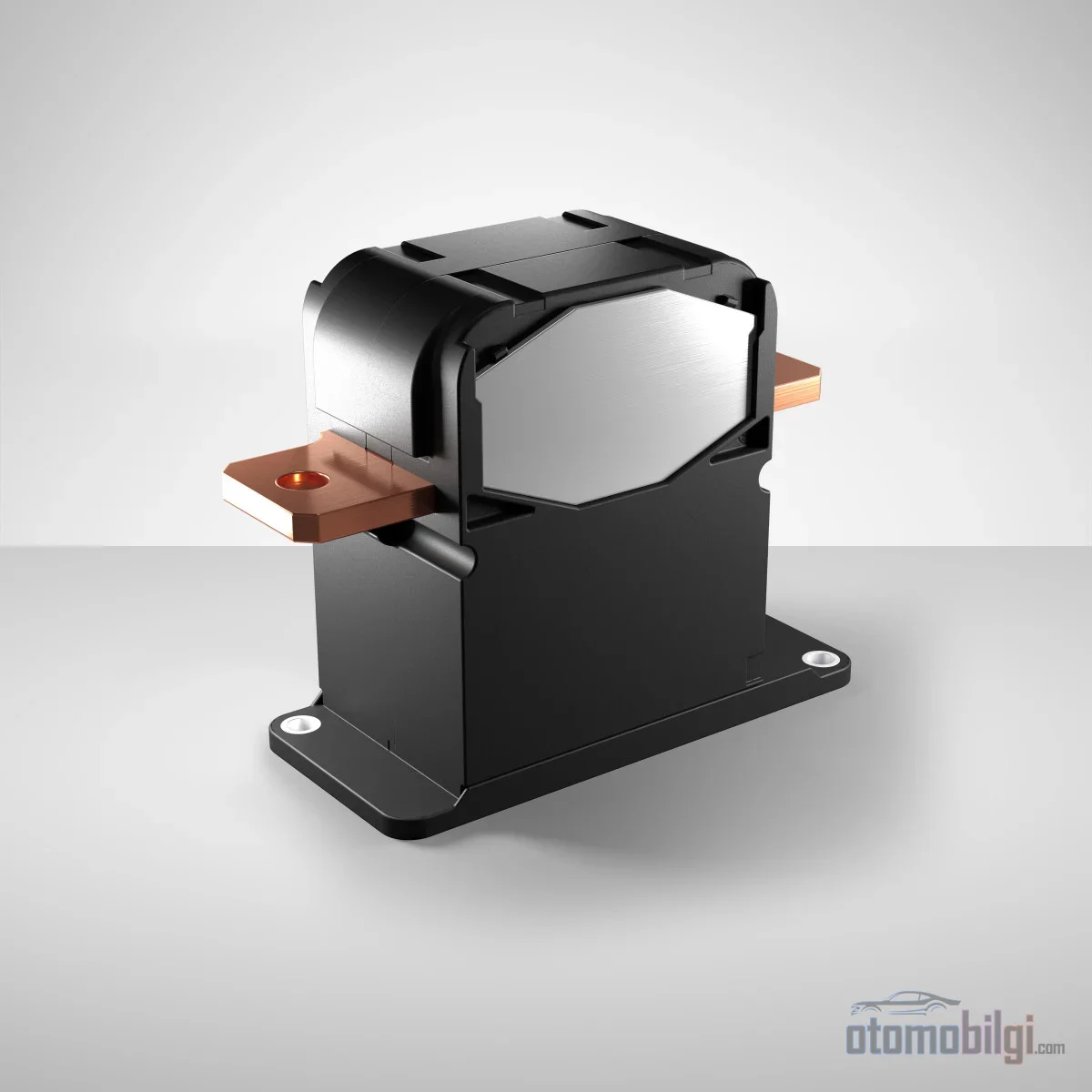
A DC contactor is an electrically controlled high-voltage switch. In an EV, it must safely open and close 400-1000 VDC voltage and hundreds of amperes of current under conditions of vibration, dust, and large temperature swings. Its structure consists of three parts: a coil energized by the control voltage, contacts that carry the main current, and a system that extinguishes the electrical arc formed at the moment of opening. When the coil is energized, the contacts close and a path is opened between the battery and the drive system; when the coil is de-energized, a spring pulls the contacts back and the circuit is physically broken.
The elegant engineering detail here is this: the contactor requires continuous energy to stay in its normally closed state. This is designed as a safety feature. If the vehicle crashes, if the 12-volt control system loses power, or if the controller fails, the contactor coil becomes de-energized and the spring automatically disconnects the battery from the circuit. In other words, the system's default state is the safe state; current flows only with the system's deliberate and continuous permission. The same logic is why the high voltage is also taken out of the circuit when emergency response teams cut the 12 V battery.
A modern EV does not have a single contactor; it contains 3-6 contactors divided by task. The main circuit contactors carry the 400-1000 VDC drive line, the pre-charge contactor limits the inverter's input current, the contactors in the charging circuit manage the 450-800 VDC charging line, and the battery disconnect contactors take on the task of cutting off in the event of a fault or collision.
Pre-Charge Circuit: Protection That Works Without Anyone Noticing
The inverter's input side contains large capacitors. The moment the main contactors close, these empty capacitors draw a very large inrush current from the battery; this sudden inrush current both creates an arc over the contacts, wearing them out, and can also damage the battery. The solution is the pre-charge circuit: first, the capacitors are gently charged through a low-capacity resistor, and once the voltage approaches the battery voltage, the main contactors close and the pre-charge contactor drops out of the circuit. This sequence happens within seconds every time you enter any vehicle, through a closing order the driver never notices.
A significant portion of contact failures stems precisely from this: if the contacts bounce slightly as they close, an arc forms at that moment of bounce and the contact surface melts and hardens. Pre-charging prevents this bouncing and is one of the most effective factors in extending contactor life.
The DC Arc Problem: Why Is Opening the Switch So Hard?
A household switch cuts 230 volt AC without any trouble, but an EV's contactor has to do the same job with a DC voltage of nearly 800 volts and hundreds of amperes. The difference lies in the fact that AC passes through the zero-crossing point a hundred times per second, and the arc naturally extinguishes with each cycle. DC has no zero crossing; the high-energy arc formed when the contacts separate heats the intervening air to plasma temperatures, making it conductive, and it does not extinguish on its own. The current keeps flowing until the contacts are separated.
The solution is the magnetic blowout design: the magnetic field of the current passing through the contacts magnetically pushes the arc, stretching it and directing it into a sealed quenching chamber. The elongated arc is split, cooled, and extinguished inside the chamber. These chambers are also filled with sealed gas; meaning the arc burns not in free air, but in a controlled environment designed to suppress it. This is exactly why an ordinary AC contactor cannot be used in an HV DC system: without magnetic blowout and a gas chamber, the DC arc completely prevents opening and welds the contacts together.
Welding failure
In a high-voltage short circuit, the arc caused by the fault heats the contact to the temperature that creates plasma; when the current is cut and the contacts cool, the molten metal pieces solidify while joined together. The result is a permanent connection through the contactor: even if the controller de-energizes the coil, the circuit remains closed. Some manufacturers use a dual-contactor system against this risk - the current is split across two contacts, and if one welds, the other can still open. This idea of redundancy also forms the logic of the next layer.
What Happens in a Failure: Isolation Within Milliseconds
When a collision is detected or a fault is found in the high-voltage system, the vehicle control unit de-energizes the contactor coils and the contacts open by spring force. The triggering comes from redundant sensors; meaning a single sensor's incorrect or missing signal does not disconnect the battery - cross-verification is performed. The total duration of this chain is on the order of milliseconds - you can think of it as an extension of the same detection logic as the airbag.
Isolation fault and HVIL
The insulation monitoring system continuously measures the resistance of high-voltage conductors relative to the vehicle body. If worn cable insulation, moisture, or a foreign substance causes this resistance to drop below the safe threshold - that is, if there is a risk of HV potential leaking into the body - the system immediately triggers a fault and the contactors open. The driver usually notices this first through a warning on the instrument panel; what has actually happened is that the battery was isolated before any risk of contact with the body could arise.
A second monitoring layer is a low-voltage continuous circuit called HVIL (high-voltage interlock loop). This loop passes through every HV connector and service plug, monitoring the physical integrity of the high-voltage connections. If someone improperly disconnects a connector while the HV line is live, the interlock circuit breaks, the controller is alerted, and the battery contactors are shut off. The goal is for the system to isolate itself before a potential hazard occurs.
Pyrotechnic Disconnect: The Last Resort That Kicks In When the Contactors Fail to Open
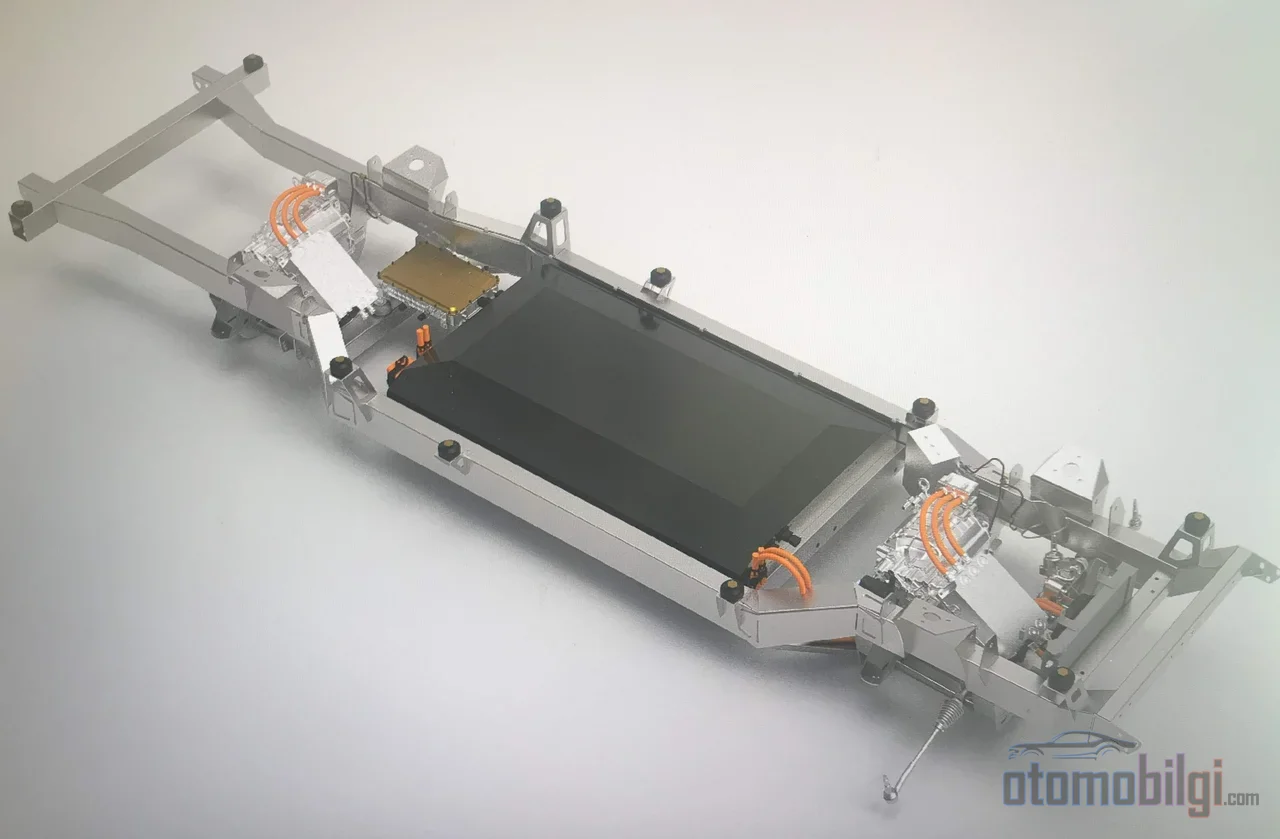
A contactor is a mechanical device and has a failure mode known as welding. If the contactor cannot open, what can break the circuit? The answer is pyrotechnics. The component known as a pyrofuse is a device that physically severs the conductor busbar by firing a small explosive charge. Even if the contacts have welded together at the moment of a crash or a serious fault, the pyrotechnic cut permanently terminates the battery connection within milliseconds.
This solution is now in mainstream use. In VW ID models, when the airbag fires, the 12 V battery is also cut pyrotechnically; this cut is performed by the high-voltage battery disconnect fuse in the high-voltage switch unit, and this component must be replaced before the vehicle can be returned to service. In the Tesla Model S service manual, the pyrotechnic battery disconnect is described as a separate, removable component. The common logic is this: the last line of defense is not mechanical, but pyrotechnic and single-use.
Why aren't fuses enough?
High-voltage fuses provide basic protection by interrupting short-circuit currents of thousands of amperes, and in EVs they typically have a voltage class of 500 VDC or 1000 VDC. However, the opening time of a conventional HV fuse can reach up to 50 ms, and its breaking capacity is below 30 kA. With the transition to 800 V architectures, this response time becomes too slow for some types of faults. That is why the protection architecture is evolving: silicon carbide-based eFuse solutions react on the order of microseconds in the 30 A class, while active switching architectures capable of breaking 20 kA at 900 V (the breaktor approach) combine the roles of fuse and contactor in a single unit. The layered structure is preserved; only each layer is getting faster.
| Protection Layer | Function | Key Feature |
|---|---|---|
| Main contactors | Opening and closing the circuit in normal use, isolation during a fault | 400–1000 VDC, opens within milliseconds |
| Pre-charge circuit | Limiting the inrush current | Prevents contact welding and arc damage |
| HV fuse | Overcurrent protection | Interruption below 30 kA, opening time of up to 50 ms |
| SiC eFuse | Active, fast protection | Response on the order of microseconds |
| Pyrotechnic disconnect | Last-resort cutoff | Jumps even welded contacts, single-use |
Manual Service Disconnect and Service Safety
Alongside the automatic layers, there is also a manually operated component: the manual service disconnect (MSD). It is recognized by its brightly colored handle or cover and high-voltage warning symbols; it may have a quarter-turn mechanism or a straight pull plug. When the battery circuit is to be opened manually for service, this disconnect is pulled and the HV line is physically split.
A critical detail is emphasized in most owner's manuals: after the disconnect is pulled, the capacitors in the inverter and onboard charger can remain at lethal voltage for minutes. Manufacturers recommend waiting at least 5 minutes, some for 15 minutes. In addition, architectural choices vary from manufacturer to manufacturer: some EVs integrate the disconnect function directly into the BMS instead of a physical plug; this variety makes it mandatory that service procedures be carried out strictly according to the relevant manufacturer's documentation.
The post-crash picture also shows the limits of this architecture: even if the battery enclosure has suffered relatively minor damage, the battery may be recommended for replacement due to the risk of invisible damage inside the cells, which significantly raises repair costs. The safety of battery transport and disposal processes is also the subject of calls for reform in the industry. The contactor and pyrotechnic layers protect the vehicle and its passengers; post-crash logistics, however, is a separate discipline.
Summary of the Architecture: Why Is a Single Switch Not Enough?
This layered structure is designed so that each component covers another's weak point. Contactors switch the circuit thousands of times every day, the pre-charge circuit protects the contacts, interlock and isolation monitoring catch faults before they form, fuses act on high-current failures, while eFuses and pyrotechnic components step in for the fastest and heaviest failures. In normal driving you do not feel any of them working; that is precisely their job. When a failure day comes, an 800-volt battery silently disconnecting within milliseconds is proof that this invisible architecture works.
Sources
- Do You Really Know the "Contactor" Inside an Electric Vehicle? – ESTAR
- CN104890518A - High voltage cutoff for electrified vehicles
- How to Disconnect High-Voltage EV Batteries – Midtronics
- Pyrotechnic Battery Disconnect (Remove and Replace) – Tesla Service Manual
- What is Pyrofuse? – HIITIO
- EV Circuit Protection: Fuses, eFuses, Breaktors for 800V – eMobility Engineering
- Design tips for high-voltage protection in EVs and hybrids – Power Electronics Tips
- HVDC Contactors and Failure Modes – Durakool
- A closer look at contactors - Charged EVs
- High-Voltage Battery Architecture - EVolve Library
- HVIL Interlock - ElectronsX
- Safety Systems and Crash Repair Considerations for Modern EVs - Serenity EV Repair
- 12V Battery Pyrotechnically Disconnected with Airbag Deployment - VW ID Talk
- Post-accident EV battery handling needs radical reform, AX report says - Fleet World