What Does 800-Volt Architecture Change in Electric Cars?
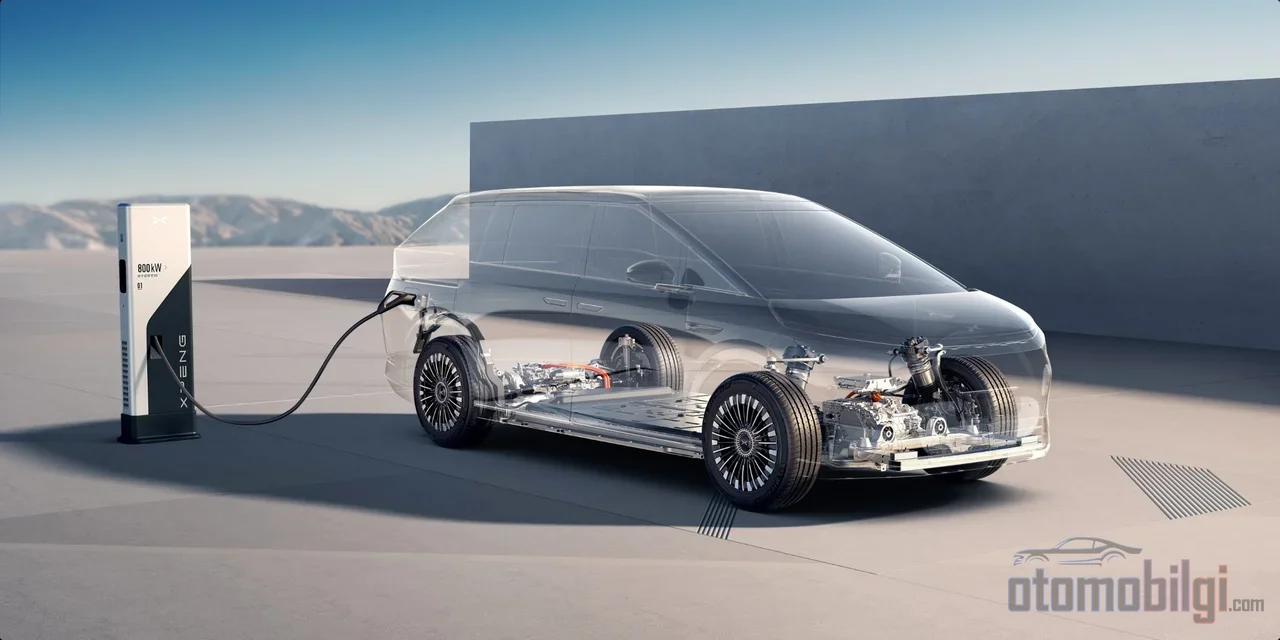
Share This Page
An 800-volt architecture doubles the electric vehicle's battery system above the 400-volt level, allowing the same power to be carried at roughly half the current. The result is faster charging, thinner wiring, lower heat build-up and reduced vehicle weight; in return, it requires more expensive power electronics and charging infrastructure compatibility that is still limited. This page explains the differences between the two architectures in a technical yet understandable way.
Highlights
- In 800V systems of equivalent power, the current drops to roughly half; cable cross-sections and heat build-up are reduced.
- At the same current, doubling the voltage roughly doubles the energy transferred to the battery.
- Only about 3% of DC fast chargers in the EU can deliver an 800V output.
- Silicon carbide (SiC) inverters can extend the range by more than 7%.
- The Porsche Taycan is cited as the first series-production 800V electric car.
Power, Current and Voltage: What Is the Physics Behind 800V Based On?
Electrical power is defined by a simple formula: P = V × I. This equation is the source of all the advantages of the 800V architecture. If the power to be transferred to the battery is constant, raising the voltage means lowering the current; in the industry, the implication of this is clear. In 800V systems, the current drops to roughly half for equivalent power.
On the charging side, the equation works in the opposite direction: if the current stays constant, doubling the voltage roughly doubles the energy transferred to the battery. This is why 800V platforms are the natural ground for ultra-fast charging; it is not a current ceiling but the charger's voltage and power limit that becomes the determining factor for the power limit.
A note: The 400V and 800V labels are not fixed values. The 400V architecture actually covers the 300-500 V range, while the 800V architecture covers the 600-900 V range. The actual voltage changes constantly depending on the state of charge, cell temperature, the battery's age and instantaneous operating conditions. The Lucid Air's 924-volt system is a good example of the upper end of this wide range.
Thinner Cables, Lighter Vehicle: The Consequences of Reduced Current
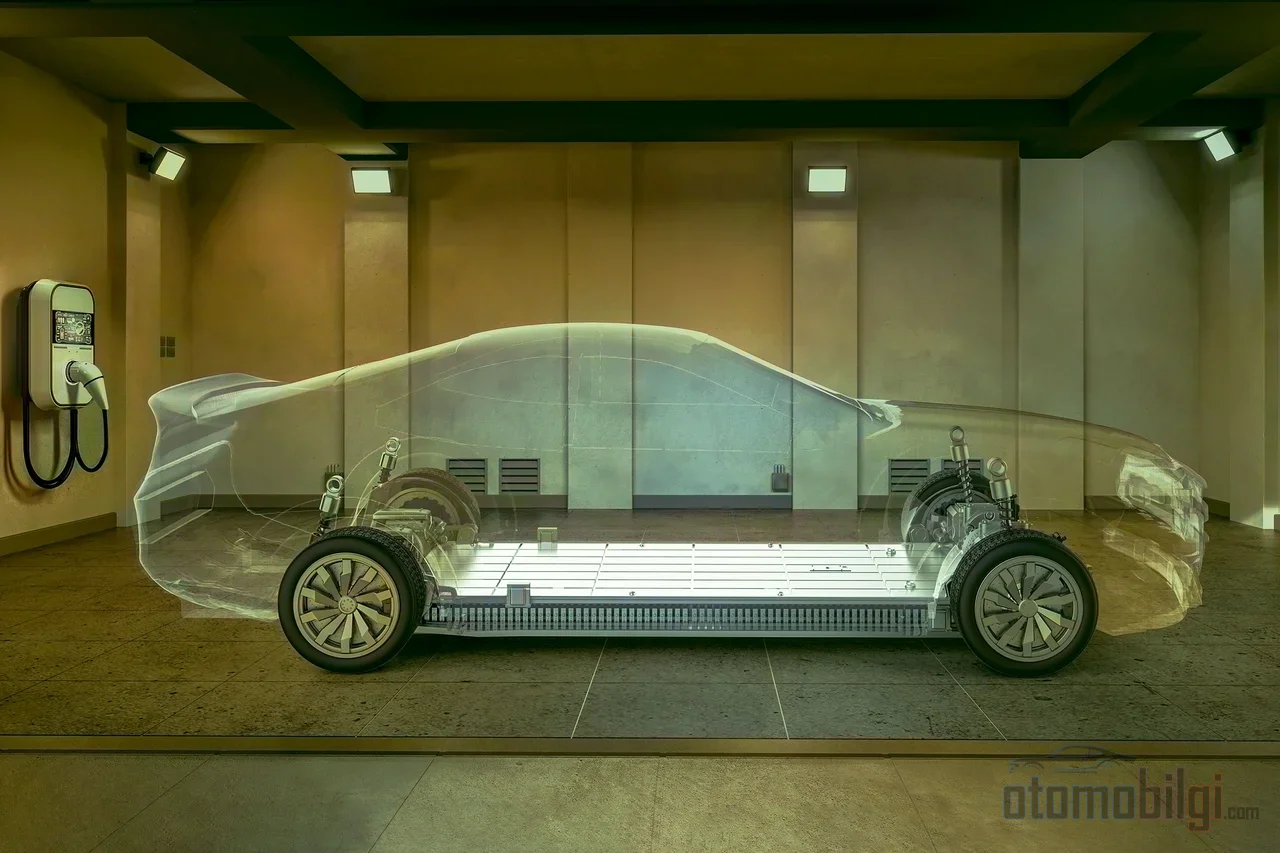
When the current is halved, the electrical charge to be carried decreases and the cross-section of the copper cables can be narrowed. This is not merely an aesthetic engineering detail: thinner conductors mean smaller busbars and more compact power electronics components. The wiring harness becomes lighter, and resistive heating in connectors and cables decreases. Resistive loss is proportional to the square of the current; when the current is halved, heat loss is significantly reduced.
The cascading effect of weight reduction extends all the way to range. The reduction in wiring and component sizes lowers the total vehicle weight; a lighter vehicle travels farther with the same energy. A technical assessment published in 2026 emphasizes that the impact of the 800V architecture on vehicle weight and packaging is not sufficiently appreciated by the public - while most discussions focus solely on charging time, the wiring and mass advantage is overlooked.
High voltage also has its counterpart on the driving side: higher-voltage batteries can deliver more power to electric motors, enable faster acceleration, and recover more energy from regenerative braking. In other words, 800V boosts the efficiency not only of the charging pump but also of the recovery cycle.
Do 800V Vehicles Really Charge Faster?
The difference in charging time is the most frequently debated topic in discussions, and practical observations indicate that 800V effectively halves fast-charging times. The reason is not magic, but arithmetic: at the same current, twice the voltage means twice the power. Additionally, since a lower current is drawn for the same power target, there is less overheating in the charging cable and station hardware; this makes it possible to sustain high power for longer periods.
A concrete calculation example clarifies the situation: let's consider a fast charger with an output range of 300–1000 V, a maximum current of 300 A, and a ceiling power of 180 kW. A vehicle with a 400V architecture hits the device's current limit and receives 400 V × 300 A = 120 kW; it cannot reach the device's full capacity. An 800V vehicle, on the other hand, can operate at the voltage ceiling on the same device, so it is limited by the ceiling power of 180 kW. Same hardware, two different outcomes.
The charging curve depends not only on voltage but also on heat. 800V systems make fast charging possible up to the 350 kW level; however, this level of power creates a simultaneous heat load in the battery and the inverter. When introducing the Cayenne Electric's high-voltage system, Porsche stated that the optimum fast-charging curve can be achieved starting from a battery temperature of 15 °C - meaning thermal preconditioning is an inevitable part of achieving maximum charging speed.
Components Required for 800V: DC-DC Converter and SiC Power Electronics
Doubling the voltage is not merely rearranging the battery cells; the entire power electronics must be designed to suit this range. The most critical additional part is the DC-DC converter: an 800V vehicle's ability to charge even at today's widespread 400V charging stations is made possible by this converter, which steps the voltage down. The same hardware also steps down the high voltage to supply the vehicle's 12-volt systems.
The second key component is silicon carbide (SiC) based power electronics. This semiconductor material is used especially in three places: in the inverter, the DC-DC converter, and the on-board charger. Compared to classic silicon MOSFET and IGBT chips, SiC offers higher performance; since it can withstand higher voltage and switching frequencies, the components can be made smaller. The equivalent on the range side is measurable: it has been reported that a SiC inverter extends an electric vehicle's range by more than 7% and delivers 400 kW peak and 250 kW continuous power. In short, the 800V architecture is not efficient at a practical scale without SiC; the two make sense together.
The cost of these components is also not negligible. The DC-DC converter is additional hardware, and SiC has a younger and more expensive production ecosystem compared to silicon. Much of the 800V's price tag comes from here.
Which Vehicles Use the 800V Architecture?
The pioneer of the field, the Porsche Taycan: it is known as the first mass-production 800V electric car, and today the list is much more crowded. Korean manufacturers are among the brands that carried this architecture into the mainstream; Chinese manufacturers, meanwhile, are rapidly spreading high-voltage platforms. Ford, Mercedes-Benz, Polestar, Volvo and Lotus are known to have committed to switching to 800V in the coming period.
| Vehicle | Manufacturer | Note |
|---|---|---|
| Taycan | Porsche | First mass-production 800V electric car |
| EV6, EV9 | Kia | Mainstream models with an 800V platform |
| IONIQ 5, IONIQ 6 | Hyundai | Compact segment with an 800V architecture |
| ATTO 3, Dolphin, Seal, Song | BYD | High voltage in the mass-market price segment |
| G9 | XPeng | SUV focused on ultra-fast charging |
| Hummer EV | GMC | Pickup and SUV body types |
| GV60, GV70, G80 Electric | Genesis | 800V in the premium segment |
| Air | Lucid | 924-volt system |
| 001 | Zeekr | 800V platform |
| Cybertruck | Tesla | The brand's model with an 800V architecture |
For comparison: most current electric vehicles still use a 400V platform; the Tesla Model 3 and VW ID.3 are well-known examples of this group. So 800V is a growing but still minority standard.
Can an 800V Vehicle Charge at a 400V Charging Station?
Yes, but with two conditions: the vehicle must have DC-DC hardware that lowers the voltage, and the charging speed drops. This is exactly where the compatibility issue becomes apparent - for an 800V vehicle to charge fast at full performance, compatible stations offering 800V output are required. The number of such stations is still low: Approximately 1.5% of DC fast chargers located in the US and approximately 3% of the chargers in Europe can deliver 800V output. While the rate is rising in Europe, growth in the US is proceeding more slowly.
The industry is working on interim solutions to close this gap; some suppliers are developing hardware aimed at solving 400V and 800V charging compatibility through voltage conversion. The practical outcome for drivers today can be summarized as follows: an 800V vehicle can charge anywhere, but it cannot charge at full speed everywhere.
Is 400V Still Sensible? Cost, Maturity and Realistic Use
While the technical superiority of 800V seems undeniable, the counterarguments are serious. First is cost: The 400V architecture is an older and proven technology, its components are produced in high volumes, and the supply chain is mature. Second is the infrastructure reality: The main benefit of 800V is ultra-fast charging; yet for drivers who can charge at home or at work, this speed makes no difference on most days. The view that ultra-fast charging is primarily necessary for those who drive very long distances is widespread.
The third point is coverage: While 400V systems are compatible with almost every station, the advantage of 800V is limited to ultra-fast charging and lower weight. On the manufacturer side too, compatibility issues complicate system design, and there is a shortage of workforce requiring high-voltage experience. In summary, 800V is not a superior solution in every scenario; in regions where fast-charging infrastructure is spreading, its advantage grows exponentially, while where infrastructure is weak, the pragmatism of 400V prevails.
Summary: What 800V Gains and the Price Paid
The 800-volt architecture shows that reducing current in electric vehicle design means savings in every area: thinner wiring, reduced heating, a lighter vehicle, shorter charging stops, and more efficient regeneration. The engineering price of this is SiC-based power electronics, a DC-DC converter, and redesigned cooling systems. Market forecasts say the direction is clear: the global 800V EV architecture market is projected to rise from its 2026 level of $7.12 billion to $52.80 billion by 2034. Technically, the question is not whether 800V works; it is how quickly the infrastructure will catch up with this architecture.
Sources
- What is an 800 V vehicle architecture? - Bosch semiconductors
- At the heart of electric vehicles: silicon carbide - Bosch
- 400V vs 800V Charging: What You Need to Know - Power-Sonic
- Doubling the voltage: What 800 V architecture really changes in EVs - Ars Technica
- Innovative high-voltage system in the Cayenne Electric - Porsche Newsroom
- 800V Electric Vehicle Architecture Market - Fortune Business Insights
- Pump the brakes when it comes to EV fast-charging stations - Vicor
- Solving The 400 V/800 V Charging Compatibility Challenge - Sensata
- Silicon carbide (SiC) inverter extends EV range by over 7% - Power Electronics News
- 800V SiC Thermal Management Explained - Automotive IQ
- 400V vs 800V EV Architecture Explained - DriveElectric
- 800V vs 400V Charging - XPeng