What Is the Relationship Between Cruise Control and Fuel Consumption
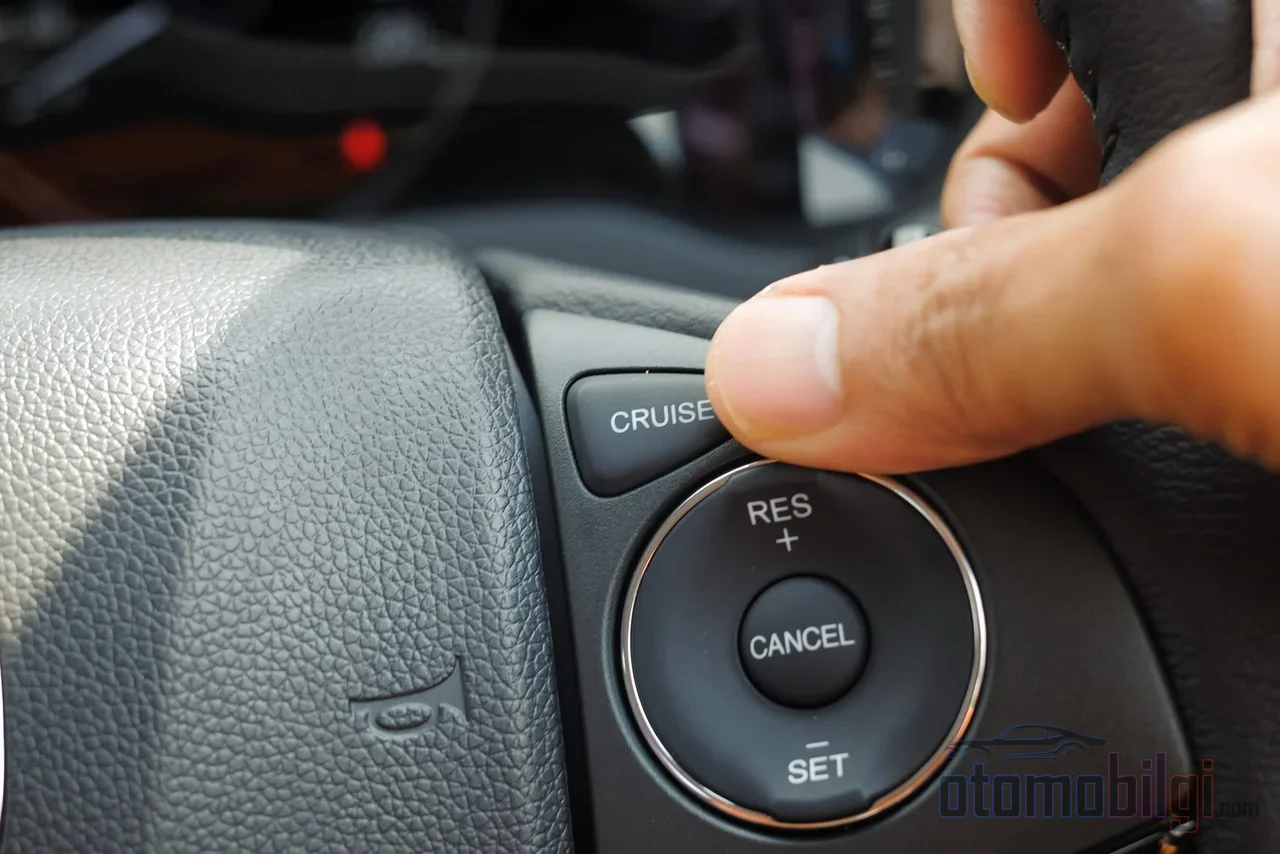
That little lever to the left of the steering wheel means pure gain in the eyes of most drivers: It rests your feet, holds your speed steady, and promises fuel savings. On the highway, that is true. But when the road starts to climb, the same system flips around and starts straining the engine to hold exactly the speed it was supposed to save. Cruise Control's relationship with consumption does not fit into a single sentence; depending on the road profile, it can work against you just as much as it works for you.
Does Cruise Control increase fuel consumption? The short answer depends on the shape of the road
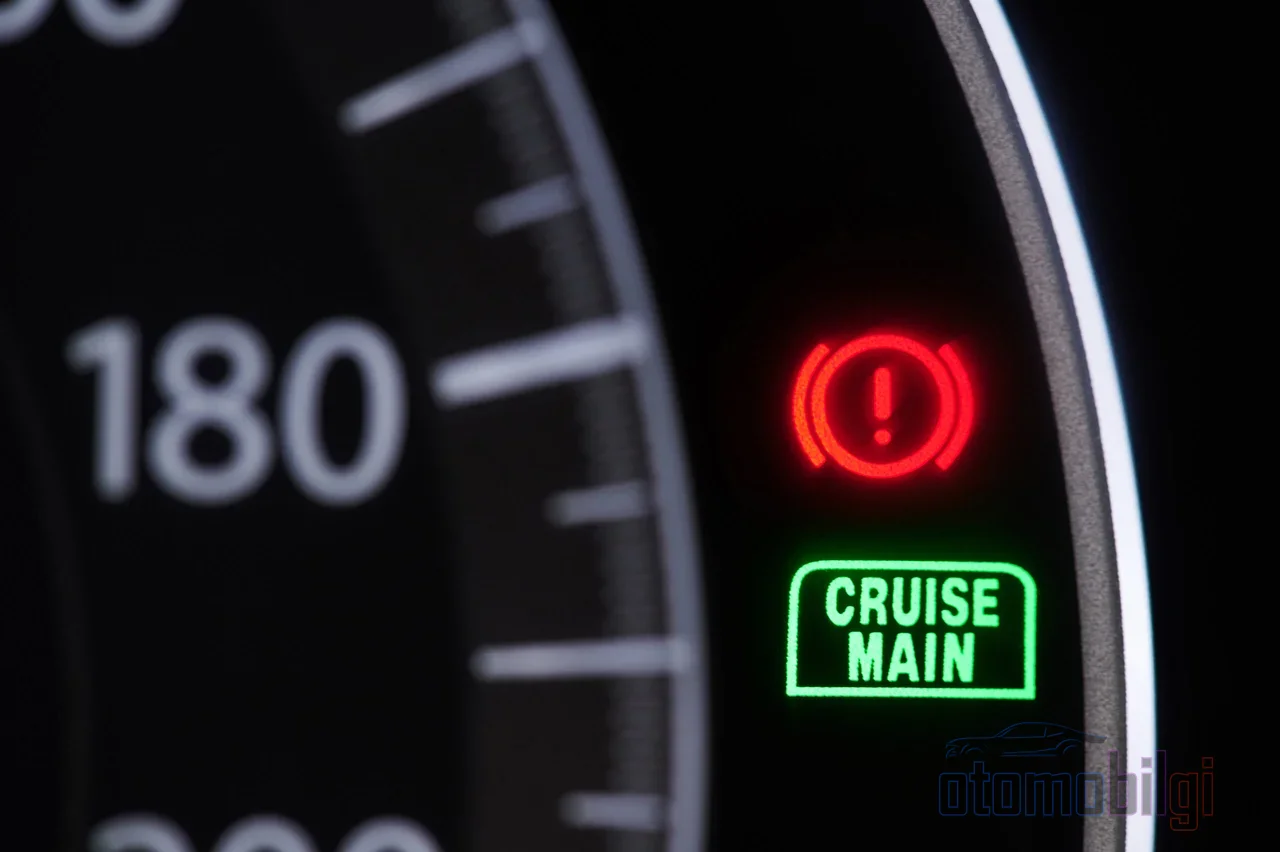
The question, on its own, is framed incorrectly: Cruise Control by itself neither saves nor adds to fuel use. The variable that determines its effect is not the system, but the terrain. On a flat, open highway, Cruise Control eliminates the micro-accelerations the driver does not notice. While your foot rests on the accelerator, the speed usually fluctuates within a band of a few km/h, and every small acceleration means slightly more fuel each time. When Cruise Control smooths out this fluctuation, a net gain emerges.
Scientific measurement confirms this picture. A driving study comparing manual driving, conventional Cruise Control, and adaptive Cruise Control showed that conventional Cruise Control delivered 3.3% better fuel economy on average - but it was clearly stated that this difference is not found under every condition. Community-scale observations speak of improvements reaching up to the range of 7% to 14%; the conservative and repeatable figure is around 3.3%.
Key Takeaways
- Conventional Cruise Control can deliver 3.3% better fuel economy on average compared to manual driving - on flat roads.
- On a hill, Cruise Control draws more power than necessary to hold the target speed; algorithms that do not account for the gradient remain inefficient.
- The energy effect of adaptive Cruise Control varies by scenario: mixed results.
- Efficient hill crossing: accelerate slightly before the hill, let your speed drop gently on the way up, and carry the speed you gained on the descent.
- In electric vehicles, range loss increases with the square of speed; even holding high speed is no longer always efficient.
How does the micro-acceleration trap on a hill work?
The job description of a Cruise Control is simple: To maintain the speed you set. On a flat road, this definition works without a hitch. On a hill, however, the definition becomes a decision - and the system makes that decision in your place, on your behalf. As the gradient increases, the throttle opening is progressively increased to prevent the car from slowing down; as the crest approaches, the engine is already carrying a load even though the speed still appears at the set value. The critical point is this: From the passenger's perspective, nothing has changed - the gauge shows the same speed. But fuel injection and torque demand have quietly risen.
On a more technical level, the root of the problem is that conventional Cruise Control cannot use gradient information. A control strategy that approaches the target with pure feedback, without taking the gradient into account, cannot reduce consumption on a hill; for this reason, gradient-aware adaptive algorithms have been developed in academia. In other words, the inefficiency of Cruise Control on a hill is not a civil engineering issue but a control engineering one: The system cannot see beyond the crest of the hill; it only corrects the momentary speed deviation. The driver, on the other hand, can see beyond the hill - and that is precisely why manual driving once again comes to the fore on hilly terrain.
Using momentum in manual driving: The hill itself is an energy source
The crest-crossing technique of experienced drivers can be summarized in three steps. First, accelerate slightly just before the climb - on flat ground this acceleration is far more efficient than it would be on the slope. Then, keep the throttle position constant throughout the climb and let the speed gradually drop; the loss of speed here is not a harm but a planned energy exchange. Finally, use the speed gained on the descent to crest the hill and enter the next flat stretch. This trio manages the vehicle's kinetic and potential energy through physics rather than the accelerator pedal.
Efficient driving guides also endorse this approach as an official technique: Slowing down with momentum and reading traffic ahead are counted among basic fuel-saving behaviors. It is also communicated at the manufacturer level that the engine uses less fuel at low revs, while a coasting approach can be efficient at junctions and on climbs. Cruise Control cannot establish this three-part rhythm because it would need to know the road to do so - it only sees the moment.
Adaptive Cruise Control: A smarter version of the same idea, but with no guarantee
Adaptive Cruise Control (ACC) is the version that follows the vehicle ahead and automatically maintains a distance. Logically, being smarter, it is expected to be more efficient - the results are mixed. A featured publication by a national laboratory in the USA and follow-up studies under real-world driving conditions show that ACC's effect on energy consumption varies from scenario to scenario: Positive in free-flowing highway traffic, but neutral or even negative in dense and stop-and-go traffic. On the other hand, an improved Cruise Control algorithm has been measured to achieve higher fuel economy than standard Cruise Control in all tested vehicles - meaning the problem lies not in the concept, but in whether the algorithm is equipped with slope and traffic foresight.
The debate among EV users is also evolving toward a similar point: Cruise Control increases range if the driver has a more aggressive throttle usage than it does. Smooth acceleration and gradual deceleration give the best result in every condition; Cruise Control sometimes does this better than you, but on a hill it cannot.
Cruise Control and range in an electric vehicle: Different physics, similar result
In electric vehicles, the equation gains one more axis: Range drops noticeably at high speeds due to aerodynamic drag, which increases with the square of speed; there are measured figures for this at highway speeds. That is why in an EV, merely fixing the speed is not enough - the fixed value itself must also be low. In real user experiences, consumption of ~7 km/kWh is seen in the 105-110 km/s band on the highway, and ~6 km/kWh in the city; thanks to urban regenerative braking and low average speeds, efficiency is actually better in the city in most EVs.
Cruise Control's role here is complicated: On a flat highway, it prevents micro-accelerations and provides a km/kWh advantage, but the same hill logic applies to electric vehicles too - Cruise Control draws extra current from the battery on an incline to maintain the target speed and only partially recovers the gain through regenerative braking on the descent. It never zeroes out in the round-trip energy accounting.
| Scenario | Cruise Control | Manual driving |
|---|---|---|
| Flat highway, open traffic | Efficient - eliminates micro-accelerations | Depends on driver discipline |
| Steep and long hill | Expensive - draws extra power for the target speed | Efficient - with the momentum technique |
| Rolling, undulating road | Inefficient - cannot use gradient information | Efficient - carries descent speed into the next climb |
| Heavy traffic | ACC varies by scenario | Smooth throttle control is advantageous |
| EV at high highway speed | Constant speed = quadratically growing air resistance | Deliberately reducing speed is most efficient |
In which scenario is Cruise Control range-friendly, and when is it expensive?
To close this page with a single takeaway: Use Cruise Control on flat, long and open stretches of road; take back control wherever gradient comes into play. Holding a constant speed on a flat highway prevents unnecessary acceleration and delivers measurable savings - around 3.3% on average, more under good conditions. On long and steep hills, however, Cruise Control maintains speed only in appearance while actually burning fuel or battery; here, the technique of gently accelerating before the hill, letting speed drop with steady throttle on the climb, and harvesting momentum on the descent is always cheaper. Adaptive Cruise Control can take over this advantage from the driver quite well on flat roads, but since its behavior varies by scenario, it cannot be counted as a guarantee. The moment you see a hill, turn off Cruise Control - the only system that sees beyond the crest is the driver behind the wheel.
Sources
- Fuel Economy Impacts of Manual, Conventional Cruise Control (Park et al., 2013)
- Adaptive Cruise Control – a Mixed Bag for Fuel Efficiency (Argonne National Laboratory)
- Effect of adaptive cruise control on fuel consumption in real-world driving conditions (Moawad et al., 2024)
- Research on adaptive cruise control algorithm considering terrain (Yang, 2021)
- Fuel-efficient driving techniques (Natural Resources Canada)
- Driving electric vehicles at highway speeds (Wager, 2016)
- How to maximise range by the way you drive (Gridserve)
- Edmunds Tested: Electric Car Range and Consumption
- How to exit a motorway in a fuel-efficient way (Volvo Trucks)