What Was the Controversy at the 1966 Le Mans Finish Really About?
Share This Page
The debated finish of the 1966 24 Hours of Le Mans actually comes down to this: Ford told Ken Miles to slow down for a photo finish of its three GT40s side by side, but under the ACO's rule, distance determined the winner, and Bruce McLaren and Chris Amon were declared first. So Miles crossed the line ahead, yet the trophy still went to McLaren. So whose idea was this decision, what was the actual margin, and where does the gap between the story told afterward and the truth begin? Here it is, chronologically, with the myth stripped away.
Highlights
- The race was run on June 18-19, 1966; Ford won Le Mans for the first time with a 1-2-3 finish.
- The official winner was #2 McLaren/Amon, with Miles/Hulme second in the same lap at +5.0.
- The finishing gap is told with figures ranging from 1 meter to 20 meters depending on the measurement; official records list it as the closest finish in Le Mans history.
- Ford's victory cost roughly 3 million dollars in the money of the time.
- The winning car is today in the Henry Ford Museum collection.
What really happened at the 1966 Le Mans?
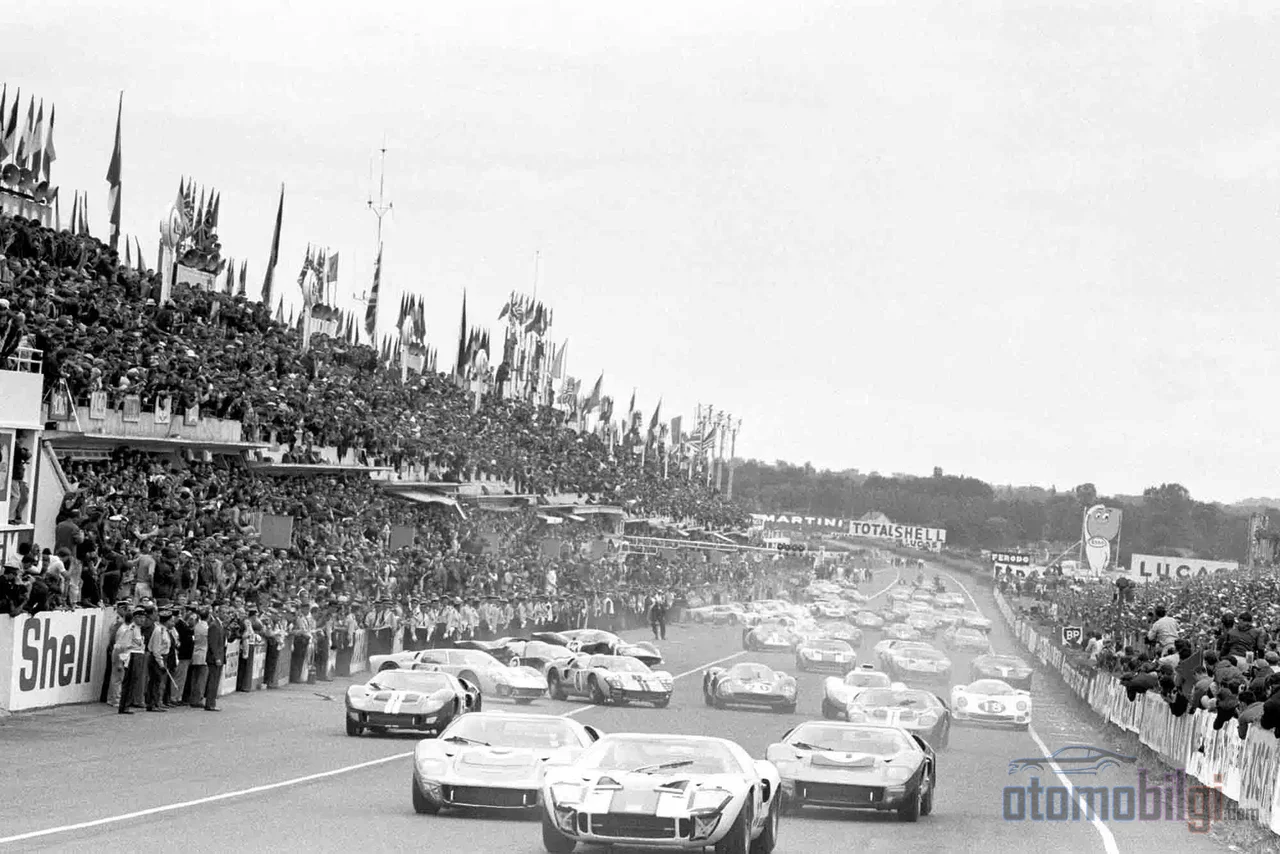
First, let's set the scene. The 34th Grand Prix of Endurance, the seventh round of the 1966 World Sportscar Championship, was run on June 18-19. Ford arrived with eight Mk IIs; Ferrari could only field three 330 P3s, and none of them finished. The 7-liter, NASCAR-derived V8 in Ford's Mk IIs was recorded as "485 hp" due to a rev limiter, but in reality it produced roughly 550 hp. With that figure, Ferrari's chances were slim from the start.
Even before the race, drama was ready: Ferrari's number one driver, John Surtees, left the team after the team boss favored Agnelli's nephew, Scarfiotti. On the Ford side, Dan Gurney took pole position (3:30.6). Chris Amon qualified fourth and lined up behind Miles on the starting grid. Remember, at Le Mans the starting position is not just for show; in this race, it would be exactly that order which determined the winner. Miles, meanwhile, had to pit immediately in the first lap because of a door slamming against his helmet - like the first sign of the day.
The last six hours: What changed while Miles was in the lead?
Four Mk IIs entered the 18th hour in front, but the leading Gurney/Grant car retired due to a radiator hose problem. By the time the last six hours began, the order had become clear: Miles/Hulme first, McLaren/Amon second, and Holman-Moody's Bucknum/Hutcherson car a distant third. Ford seemed to have victory in its embrace; the only question was who would get to embrace it.
And this is where team strategy came into play. Ford gave all its drivers a 4-minute lap target - meaning about 20 seconds slower than race pace. The aim was to take a photo of the three cars finishing side by side. Ken Miles couldn't swallow it: he is said to have set a 3:38 lap and stormed into the pits. A common thread in post-race accounts is that Carroll Shelby said he would pull him from the race if he set another lap like that, and that Shelby very much wanted Miles to win. When it was said that harsh things had been spoken about Miles during the race, his response was to suggest they go look at Gurney's car.
There is one more fact that makes the story far sadder: Miles had won Daytona and Sebring that year; if he had also taken Le Mans, the goal of winning the three great endurance races in the same season - the Triple Crown - was on the table. With the slow-down order, that goal was set aside as well. Who gave the order, and why - we will come to that shortly.
Did the finish line or distance determine the winner?
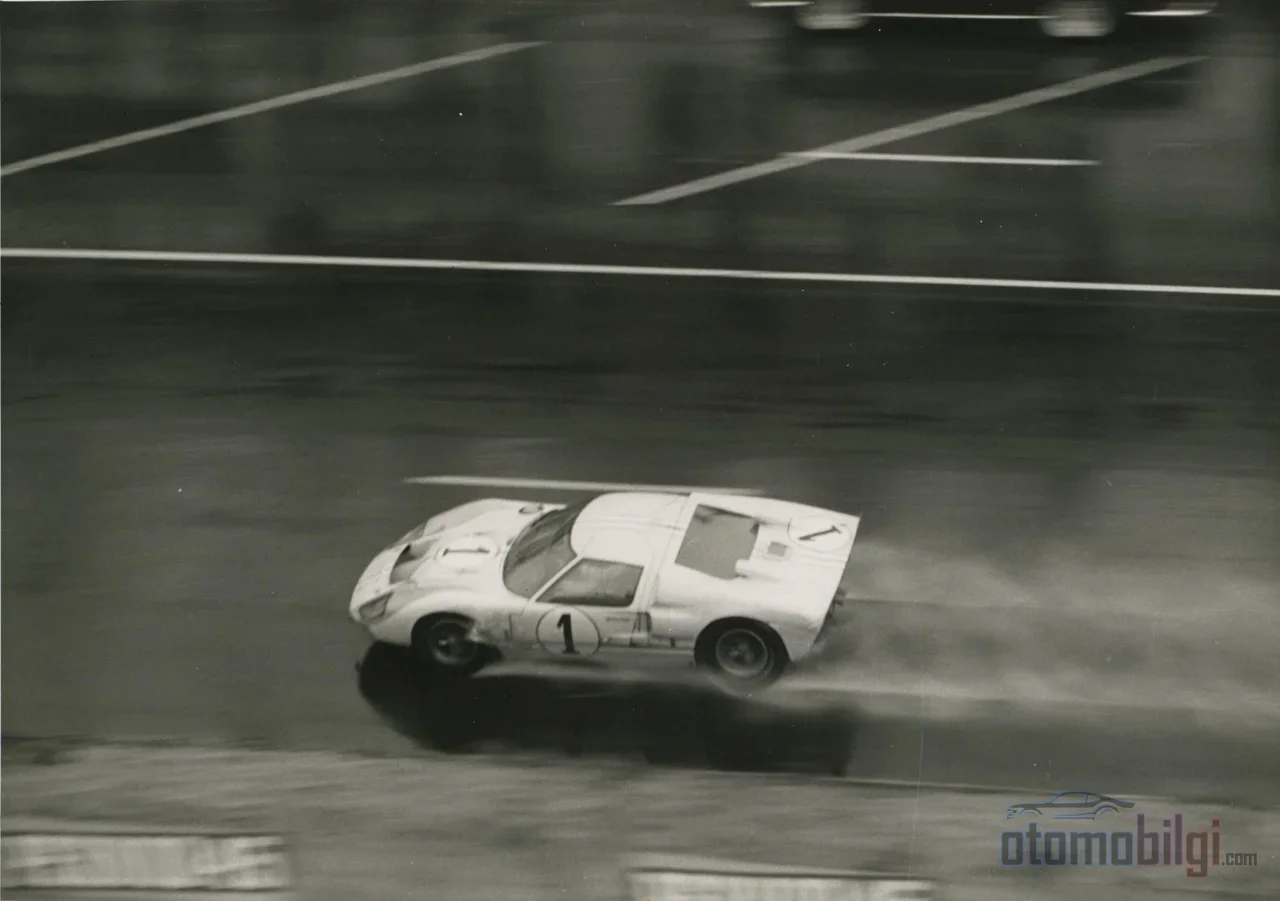
On the final lap, Miles approached the last corner at about 50 mph, deliberately slowed down, and let McLaren pass. It is claimed that McLaren blipped the throttle at the last moment and crossed about 1 meter ahead. The three GT40s crossed the line side by side, the photo was taken, and everyone laughed. Then the official result was announced and the smiles froze: the winner was McLaren/Amon.
The reason was the ACO's rule based not on the finish line but on distance covered. At the Le Mans start, McLaren/Amon were behind Miles; although the two cars were on the same lap, McLaren's car had covered more ground throughout the race. The official results table showed it like this: McLaren/Amon first, Miles/Hulme second on the same lap at +5.0. So this was not even a classic photo-finish victory - the photo was merely a dramatic backdrop. The validity, and even the very existence, of that rule at the time was disputed afterwards; years later, Shelby would describe the rule as fabricated, say that the real winner was Miles, and add that he felt guilt over what had happened. That was in 1997, thirty years later.
So how many meters was the finish gap, really?
The fun (and confusing) part is this: three different figures circulate for the gap. In some accounts it is 8 meters, on the official race website's page about 20 meters, and in accounts of the finish photo around 1 meter. There is actually no contradiction; the three figures measure three different things. The 20 meters is the outcome of the rule that pointed to the advantage in weight measurement after the difference in distance the two cars covered during the race. The 1 meter is the physical gap at the moment they crossed the line. And the 8 meters lies between the two, a product of different calculation methods. Let us gather the comparison in a single table:
| What is measured? | Figure | Meaning |
|---|---|---|
| Order of crossing the line | McLaren ahead, ~1 meter | Reflection of the slow-down plan in the photo |
| Determinant of the official winner | ~20 meters distance advantage | Outcome of the ACO's distance rule |
| Alternative measurement | 8 meters | Different calculation method |
| Official classification | 1. McLaren/Amon, 2. Miles/Hulme (+5.0) | Same lap, two separate results |
And the photos themselves sparked debate: the black McLaren car appearing ahead paved the way for years of stories like "the official one passed from behind." Yet it was not the photo but the rule that declared the winner.
Who gave the slow-down order: Beebe, Shelby, or Ford?
In the final hour of the race, Ford management, led by Leo Beebe, had discussed "dead heat" scenarios with the French officials; so the question of who would win was on the table before the finish, and because of the distance rule it was known that McLaren/Amon would be credited ahead. For this reason, the "Beebe the villain" caricature drawn in the film oversimplifies the real dynamics of the event quite a bit. Beebe's job was already to deliver a Ford win, and guaranteeing a 1-2-3 was part of his job description; against the story of evil attributed to him, in some accounts the finger points at Shelby or at the level of Henry Ford II himself. In short, there is no single villain behind the decision; it was the outcome of a corporate strategy.
There is one more possibility, and it is the most tragic one: perhaps Miles never slowed down at all. Shelby later saying he believed Miles had not eased off, and Denny Hulme's account that McLaren accelerated in the very last corner, stand against the "deliberate braking" thesis. The photographs and the reporters of the era, however, support the reading of a deliberate slowdown. Indeed, three prominent reporters of the race - David Phipps, Brock Yates and Henry Manney - all agreed that Miles was robbed because of Ford's staged finish. That Miles was both upset and confused after the race is confirmed in nearly every account; the man could never quite work out why he had lost a race he had won. As you can imagine, the question "did he slow down, or was he slowed down" has not found a definitive answer in 60 years.
How was the legend built?
The really interesting part is what came after the race. What was written in the press that night layered over time into the legend we know today:
- The "McLaren won a stolen victory" narrative: Partly true as far as the facts go, but the winner was decided not by the line but by the rule; the distance gap was real.
- The "Beebe cheated" narrative: It was bolstered by the film's dramaturgy; yet Beebe's job was to deliver a Ford win, and there is no firm proof that a 1-2-3 order was ever given.
- The "Miles never actually slowed down" narrative: It rests on what Shelby and Hulme said afterward; the written records and photographs of the era point the other way.
Once the 2019 film piled on top of these layers, for most people the "true story" became what the film told. Yet what the reporters of the era wrote that night is simpler than even the harshest version of the story told today: Ford staged a photo finish, its own rule made the wrong man win, and no one rose up at midnight to fix it.
For Miles, fate turned bitterly clear two months later, in the testing crash at Riverside. He never won the Triple Crown; his name, however, was engraved into Le Mans' greatest "what if" story. Ford's victory, on the other hand, proved lasting: the brand signed off on a 1-2-3 as the first American manufacturer to win Le Mans, and this was an American manufacturer's first victory in a major European race since Jimmy Murphy's 1921 French GP. A budget of roughly 3 million dollars - around 25 million in today's money - at least deserved the weight of the trophy. In 2026, the 60th anniversary year of the victory, budget documents and trophies were brought to light from the Ford archives; so the story is still being talked about.
Summary: Who was the real winner?
Here is the book, closed: The official winners were McLaren and Amon; unquestionably, and decisively, according to the rulebook. Speaking the language of the track, Miles crossed the line first and was the fastest man in the race; both he and the journalists of the era considered the result an injustice. Ford's strategy worked - but its side effect was a controversy that has not died down for 60 years. As with every photo finish, here too the best story beat the truest story. If it had been you, would you have slowed down?
Sources
- The REAL Story of the Twisted "Ford v. Ferrari" Finish at Le Mans in 1966 - Autoweek
- Le Mans '66: what really happened? - 24h-lemans.com
- 1966 24 Hours of Le Mans - Wikipedia
- The vilification of Leo Beebe - Hemmings
- Ford v Ferrari, Defending Leo Beebe! - DailySportscar
- Glory Stolen? Ken Miles and the 1966 Le Mans Race Finish Controversy - Racing Vintage Cars
- Bruce McLaren at Le Mans - McLaren Racing
- Bruce McLaren's and Chris Amon's Ford GT40 Mark II - The Henry Ford
- The Real Story of Ken Miles at Le Mans - Petrolicious
- Ford at Le Mans, 60 Years Later - Ford From the Road
- Le Mans, 1966 "Dead Heat" - GT40s Forum
- How Ford Made History with a 1-2-3 Sweep at Le Mans - Automotive History