Why Do Electric Cars Still Have a 12 Volt System?
Share This Page
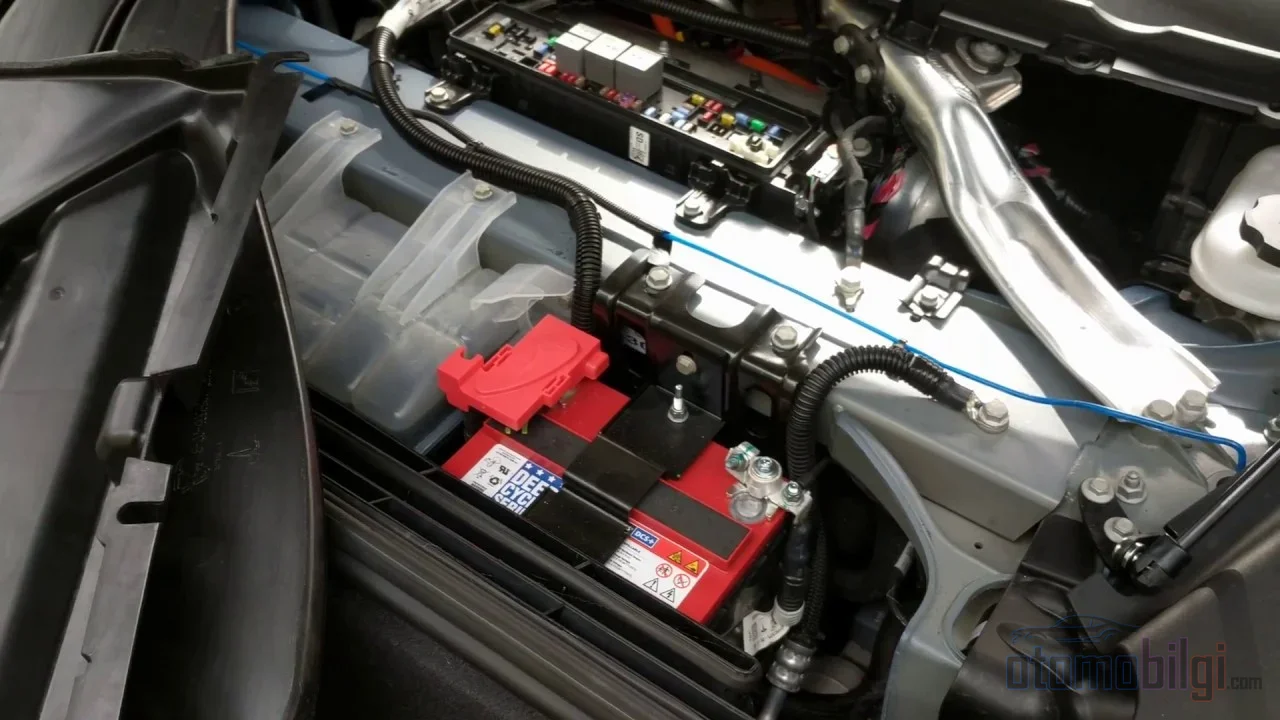
In electric cars, the 12-volt system is fed by a DC-DC converter that steps down the high voltage of the main traction battery to the low voltage needed by auxiliary systems; without this layer, the airbag, ABS, electric power steering, and control electronics do not work, and the vehicle will not start. In other words, in the 400-800 volt power overture, the truly critical layer is the unseen 12V (and increasingly 48V) line that carries the vehicle's vital functions.
Highlights
- Electric vehicles have no alternator; the only charging source for the 12V battery is the DC-DC converter.
- Modern converters operate at 85-98% efficiency and, under normal conditions, have a lifespan of 10-15 years.
- If the 12V battery is depleted, the high-voltage contactors cannot close and the vehicle cannot be activated.
- While a 48V system can carry about 4800W of power, a 12V system practically remains at around 1200W.
- The automotive 48V systems market is expected to grow from 6.4 billion USD to 26.2 billion USD. is expected to grow.
Why Do Electric Cars Have Two Separate Electrical Systems?
The answer lies at the intersection of efficiency and safety. If the traction motor were fed with low voltage, carrying the same power would require very large currents; this increases in-circuit losses, heat, and cable cross-sections. That is why the main battery operates in the 200-800V range, typically at 400V or 800V in next-generation platforms. High voltage keeps the current small and boosts efficiency.
However, the rest of the vehicle is not designed to run at that voltage. Headlights, wipers, locks, windows, the infotainment screen, control modules, climate control, ADAS cameras, and most critically the safety systems - airbag, ABS, stability control, and electric power steering - are all components developed to operate at low voltage. This is why the modern electric vehicle actually comes with a two-layer electrical architecture: high voltage on the power side, 12-48V on the control and comfort side.
The origin of the 12V standard is entirely historical. In passenger cars, a six-cell lead-acid battery (about 2.1V per cell) has been the standard since the starter system era; in trucks, 24V was preferred due to larger starter motors. Electric vehicles inherited this legacy: auxiliary systems were already being produced for the 12V ecosystem, and the industry preserved this compatibility.
How Does a DC-DC Converter Work?
A DC-DC converter is an electronic circuit that converts one DC voltage level to another DC level without changing the type of current. It is roughly the DC-world equivalent of an electrical transformer; it does in an electric vehicle what the alternator does in an internal combustion vehicle. It takes the high voltage coming from the main battery, steps it down to the 12V (or 48V) needed by auxiliary systems, and keeps the 12V battery constantly charged.
The conversion happens in four stages:
- Input filter: Noise and disturbances on the high-voltage side are cleaned up.
- Switched conversion: Semiconductor switches open and close thousands of times per second, "chopping" the voltage into high-frequency pulses.
- Smoothing: Inductors and capacitors convert these pulses into clean DC voltage.
- Control and communication: Temperature, load and voltage are monitored; the converter communicates with the vehicle's ECU.
Inside a typical automotive converter there are input and output voltage sensing circuits, noise filters, a voltage conversion stage with an isolation transformer, a control circuit and a communication interface over CAN or Ethernet. Chip varistors provide ESD protection. This set of components is designed to operate stably across the −40°C to +85°C range - this is a practical requirement of automotive electronics.
Converter Types and Efficiencies
There are three basic types, and each is used for a different job. The buck (step-down) converter lowers the voltage and is the most common topology in auxiliary power supplies; it operates at an efficiency above 90%. The boost (step-up) converter raises the voltage, is used for the 12V to 48V transition in mild-hybrid architectures, and falls in the 85-93% band. A bidirectional converter allows energy flow in both directions; it is needed for storing the energy recovered through regenerative braking and for vehicle-to-grid scenarios, with an efficiency in the 85-92% range.
| Converter type | Direction | Efficiency range | Typical use |
|---|---|---|---|
| Buck | Step-down | 90%+ | Auxiliary power supply |
| Boost | Step-up | 85-93% | Mild-hybrid 12V→48V |
| Bidirectional | Bidirectional | 85-92% | Regenerative braking, V2G |
This should not be confused with the onboard charger: the onboard charger converts the AC power coming from an external charging station into DC and charges the main battery. The DC-DC converter, on the other hand, manages the voltage between the DC systems inside the vehicle. They do different jobs and are found side by side in a modern vehicle.
Why and When Does the 12V Battery Drain?
In an electric vehicle there is a single primary mechanical reason for the 12V battery draining: there is no alternator to charge it. The battery depends entirely on the DC-DC converter to stay charged. Whenever the converter kicks in, in the intervals in between the battery stands and consumes on its own.
The main scenarios that accelerate the drain are:
- Parasitic consumption: Even when the vehicle is off, control modules, alarm and communication units draw from the battery; within weeks the charge can drop to a critical level.
- Short trips: Frequent short-distance use does not allow the battery to charge sufficiently; similar to the classic situation in internal combustion vehicles, it shortens its life.
- Fixed 12V charging solutions: They require additional hardware, reduce system efficiency and increase "vampire" consumption on the traction battery.
- Software bugs: In some models, it has been observed that the control software mismanaging sleep states can lead to 12V drain, but such cases are based on individual and unverified user reports.
What Happens When the 12V Battery Dies and What Can Be Done?
The mechanism here is the point that surprises many owners. The high-voltage contactors draw the energy needed to close from the 12V system. If the battery becomes weak enough, the contactors cannot be engaged, the main battery cannot supply the motor, and the vehicle will not start. A dead 12V battery can render the vehicle completely unusable even with a full 400V battery. The screens do not light up, the doors may not lock electronically, and you may encounter loss of steering assist warnings.
The solution is familiar: the 12V battery can be boosted with jumper cables just like in a gasoline-powered vehicle. What should never be done is to interfere with the high-voltage Li-ion traction battery - official safety organizations clearly state that this must not be done. Also, boosting cannot be done through the standard charging port; the port is not designed for this purpose. The boosting process itself carries risks: a newly installed or boosted 12V battery can trigger fault codes (DTCs) related to voltage drop and startup sequence errors. These codes can usually be cleared, but it is a good approach for the driver to be prepared.
Is High-Voltage Safety the Same Thing as Low-Voltage Resilience?
No, and this distinction is the key to understanding the system. The "high-voltage" classification exists primarily to manage the risk of electric shock: 400V and 800V systems require special insulation, contactless operation, and highly qualified intervention; they are mostly treated as CAT III level electrical systems. The design scope covers maintenance safety, functional safety, crash safety, and electrical safety together.
The problem with the 12V layer, however, is not electric shock but resilience and continuity. This layer supplies life-saving systems and is limited by its budget, weight, and historical ecosystem compatibility. High-voltage design is rarely blamed because safety measures are strict; yet it is usually the small battery in its shadow that leaves the driver stranded on the road. The trade-off is also clear: higher voltage enables smaller cable cross-sections and faster charging, but the price is safety cost and complexity.
Why Is the 48V Architecture Becoming Widespread?
The fundamental limitation of 12V is physical: at constant power, as voltage drops, current increases; increased current causes resistive losses and heat generation, and managing these losses requires thicker copper and heavier wiring harnesses. The 48V architecture carries the same power with four times lower current. The result: thinner, shorter, lighter wiring with less copper; a significant reduction in resistive losses and heat generation; a direct positive impact on range. The difference on the power side is concrete - while a 48V system provides approximately 4800W, a 12V system practically stays around 1200W.
This is not just cable savings. 48V opens up room for adding high-consumption new hardware such as artificial intelligence compute units and mobile cooling. There is also a critical advantage on the safety side: it enables redundant power supply with two or more independent, isolated voltage sources for the ACTUAL ASIL-D level safety-critical functions such as braking and steering. In the mild-hybrid world, on the other hand, 48V was the key to a 10-15% fuel economy gain with minimal battery mass, and it prepared the technology's first large-scale territories.
The market direction also seems one-way: the automotive 48V systems market is expected to expand from a volume of 6.4 billion USD to 26.2 billion USD by 2033, with an annual compound growth rate of 22.4%. Sources place different emphases on the driving force of the transition: some highlight mild-hybrid efficiency, while others emphasize the rewriting of cable and power distribution architecture in fully electric vehicles. Both may be right; the technology is advancing on two fronts at the same time.
The Cost of the Transition: Counter Arguments
The picture is not entirely rosy. There are objections from owners on forums that the 48V battery contains four times more parts than 12V, requires more cells and more infrastructure (such as cell partition walls), and therefore offers no savings on the battery side. Comparisons made in the context of campers and mobile living also show that 48V is not absolutely "better" than 12V, and the total system cost can be higher. The realistic assessment is this: 48V wins in terms of power density and cable weight; it pays in terms of part count, cell management, and transition cost. The industry's growth forecasts make it clear which side carries more weight.
The Low-Voltage Layer Is Still the Vehicle's Backbone
The task of the 400-800V system in an electric vehicle is to deliver range; the task of the 12V/48V layer is to keep the vehicle conscious and safe. The DC-DC converter is the only bridge between these two worlds: it operates with 85-98% efficiency, thousands of switching operations per second, and a target lifespan of 10-15 years. The fact that a depleted 12V battery can be rescued with jumper cables is reassuring; however, the real lesson of the system is this - every layer in power electronics, regardless of how many volts it carries, must be governed by its own safety and continuity logic.
Sources
- What Is a DC/DC converter in an Electric Vehicle (EV)? - Panasonic Industry
- How a DC DC Converter Works in Electric Vehicles
- What Does a DC-DC Converter Do in a Vehicle and How Does It Operate?
- DC-to-DC converter
- Electric and Hybrid Vehicles: Battery, Charging & Safety - NHTSA
- EV 12V Battery Drain: Why Electric Vehicles Can Fail Even When Turned Off
- Factors that Affect 12V Battery Life in EVs
- Electric Vehicle (EV) 12 Volt Accessory Battery Maintenance
- How To Jump-Start an Electric Car Battery
- Can I Jump-Start a Dead Electric Car Battery?
- The Evolution of 48-Volt Architecture in Electric Vehicles
- 48V Systems – goodbye 12V
- 48V Automotive Systems: Why Now?
- Automotive 48V System Market Size & Future Growth, 2033
- How 48 V architectures are revolutionizing automotive design
- Advantages of High Voltage in Electric Vehicle Designs
- Auxiliary Power Supply System for Electric Power Steering
- 48V VS 12V Battery Systems: What's the Difference