Women Drivers at Le Mans: The Road to the Podium
Share This Page
More than 60 women drivers have taken the start at the 24 Hours of Le Mans since 1923; no overall victory yet, but 10 class wins and two all-female team victories have been written into history. So why is the story of women in this legendary endurance race told so rarely? Here is that winding road from the starting line to the podium, stretching from Michèle Mouton to Jamie Chadwick.
Highlights
- In 1930, Marguerite Mareuse and Odette Siko became the first female duo to race at Le Mans and finished 7th overall
- Best overall result: Odette Siko's 4th place in 1932
- Michèle Mouton returned from her only Le Mans start with a class win in 1975
- Most starts by a woman: Anny-Charlotte Verney, 10 races
- Jamie Chadwick became the first woman to drive a Hypercar in the 2026 test day
Did Women Race at Le Mans? Short Answer: Yes, Since 1923
Let's make this clear right away: Women drivers were never "guests" in the history of the 24 Hours of Le Mans. When the race began in 1923 as the "Grand Prix of Endurance and Efficiency" on the ACO's (Automobile Club de l'Ouest) Circuit de la Sarthe, the rules allowed women's participation from day one. What's more, women were evaluated entirely on equal terms with men in performance criteria. For that era, this was a serious step - a whole century ago, no less.
As for how many women have raced, the answer doesn't carry complete clarity; the number varies depending on recognition criteria and updates. Official channels once said 59, while current publications mention 64 women drivers and 27 all-female crews. If we look at the numbers without getting bogged down, the summary is this: in a century-old race, this figure tells both history's proud beginning and how much the doors narrowed later on, all at once.
The First Women: The Story That Began with Bugatti
The first female names took the stage in 1930: Marguerite Mareuse and Odette Siko took the start in a Bugatti Type 40, completed 132 laps and finished 7th overall. Just imagine: a female duo that not only raced but finished in the top ten on their first attempt. This still stands on the record as the best overall result ever achieved by an all-female team in the race's history.
Odette Siko later set a record of her own: in 1932 she finished 4th, achieving the highest overall placing by a woman driver to this day. And one more interesting detail - participation peaked precisely in this early period: in the 1935 race, 10 women drivers were on the grid at the same time, and in the same year 4 all-female teams raced. So women's relationship with Le Mans was never "a later development"; the real narrowing came later.
The Ban Era: Even Being on the Grid Was Forbidden
Here comes the frustrating part of the story. The 1955 Le Mans disaster, followed by Annie Bousquet's fatal crash at the 1956 Reims 12 Hours and the spectator deaths at the 1957 Mille Miglia, led the ACO to bar women from racing. The official reason given was safety, but it is known that the ACO also cited Bousquet's driving style - and historians still find this second reason questionable. Excluding an entire gender from the grid because they "didn't like" a driver's style is even harder to swallow when viewed today.
The ban claimed victims even before the start: Gilberte Thirion was removed from the Equipe Gordini roster for the 1954 race because of her gender, and her father Max Thirion took her place. The doors only reopened two months before the 1971 race; it is noted that this may have been connected to the women's rights movement in Europe finally reaching French motorsport. So when women returned to Le Mans, they had missed the first half of the race's history entirely. This Broken Generation, in my view, is the biggest explanation for today's numerical inequality.
Michèle Mouton and the Pioneers: The Golden Age of Class Victories
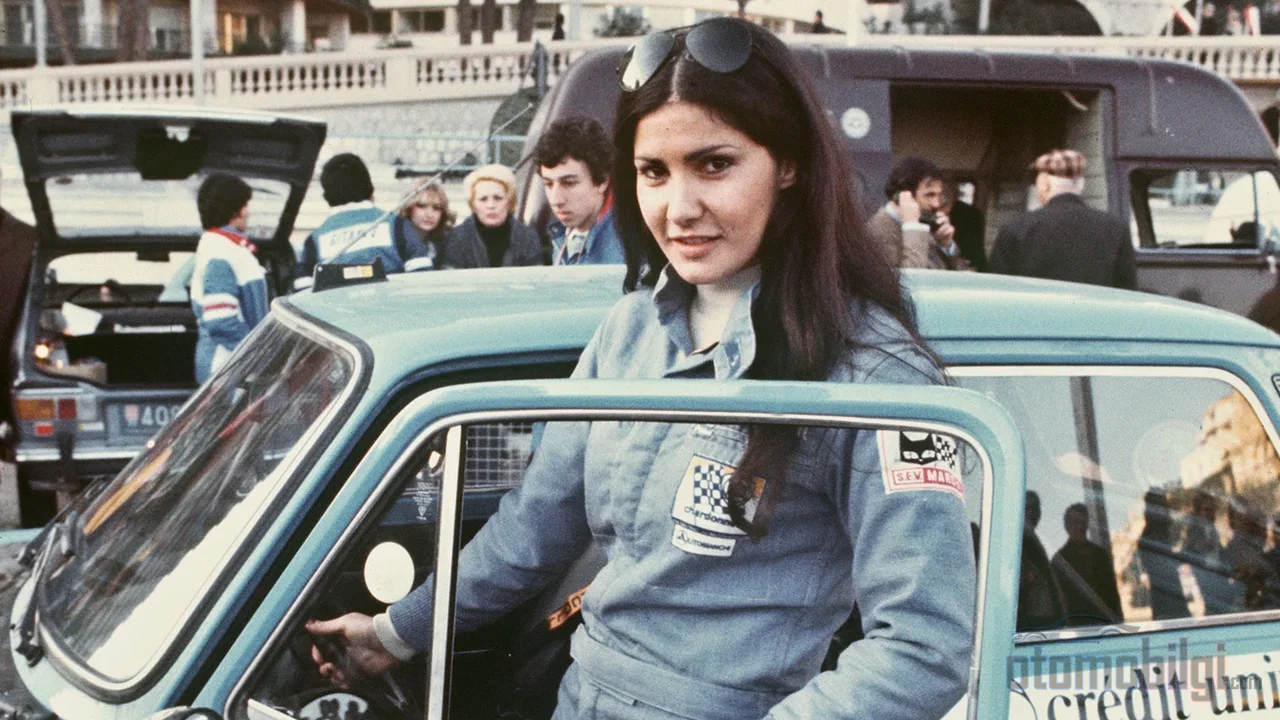
After the ban was lifted, a short but brilliant era began. The first all-female class-winning team appeared in 1974: "Christine" - Christine Beckers, Yvette Fontaine and Marie Laurent with the Ecurie Seido team - won the Sport 2.0 class. A year later, in 1975, the Société Esso trio - Christine Dacremont, Marianne Hoepfner and Michèle Mouton - delivered the second example of this success. Two years in a row, two all-female class victories.
Michèle Mouton, however, deserves a section of her own. Anyone who knows rally history already considers her a legend, but her Le Mans record is just as striking as her rally career: in her only start, in 1975, at the wheel of a Moynet LM75, she finished 21st overall and won the 2.0-liter prototype class with an all-female crew. One race, one class victory - efficiency embodied. Today, the total number of women who have won a class victory is 10: Odette Siko, Anne-Charlotte Verney, Michèle Mouton, Christine Beckers and Christine Dacremont are just a few of the names mentioned on this list.
Desiré Wilson and Other Trailblazers
You hear the name of South African Desiré Wilson in a much broader context: she is the only woman to have won a Formula 1 race, at Brands Hatch in 1980. At Le Mans she also reached 7th place overall twice (with Alain de Cadenet in 1980, and again in 1983), and made her last appearance in 1991 - no class victory, admittedly, but more than a few races in which she was a decisive presence on the grid. The names that followed her also pointed the way: Margie Smith-Haas became the first American woman to race at Le Mans; Lella Lombardi, meanwhile, took the podium as 2nd in a class.
Women's Le Mans Records in Numbers
For those who love statistics, the table paints a very clear picture - both geographic distribution and career lengths:
| Record / Indicator | Name or Value |
|---|---|
| Most starts (10) | Anny-Charlotte Verney (France) |
| Most starts (8) | Rahel Frey (Switzerland) |
| Most starts (7) | Vanina Ickx (Belgium) |
| Best overall result | Odette Siko, 4th, 1932 |
| Number of women who have won class victories | 10 drivers |
| Country that has produced the most women drivers | France, 24 drivers |
| Highest female participation in a single race | 10 drivers, 1935 |
French women also lead the class victory rankings: 10 class wins are credited to them. The United Kingdom ranks second with 17 drivers; Belgium's contribution is small but effective - producing class winners like four or five female drivers, including Christine Beckers and Christine Dacremont.
Women in the Hypercar Era: Where Are We, Where Are We Going?
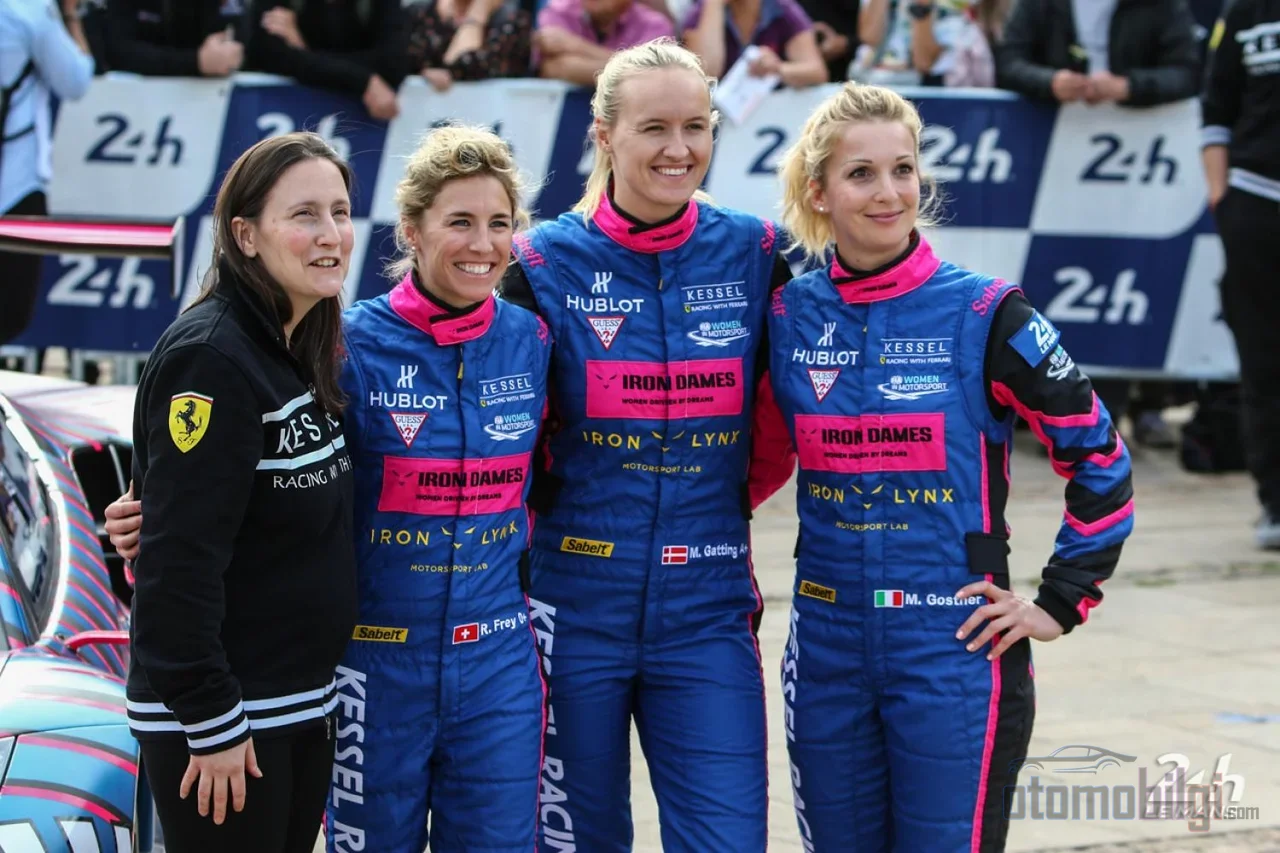
Today, the picture is once again alarmingly narrow. In the 2026 race there were only two women on the grid - both French - compared to five the previous year. The gap shows just how critical squads like the Iron Dames are: While the team made up of Sarah Bovy, Michelle Gatting and Rahel Frey was preparing for the races with the #85 Ferrari and getting ready for its 7th start at Le Mans, it announced on November 27, 2025 that it would not return to the 2026 WEC. The "no program for 2026" chatter still continues among fans, and the lack of women in the WEC has become a serious topic of debate.
Still, there are some promising moments. Jamie Chadwick was one of the last female debutants of the race, together with Célia Martin, in 2025; and on the 2026 test day she became the first woman to drive a Hypercar at Le Mans, driving a Genesis GMR-001 Hypercar. Speaking to Reuters, Chadwick expressed hope for a future in this class:
I hope to have a future in Hypercar.
Among the standout women of 2026 are Doriane Pin and Lilou Wadoux (France), as well as Swiss drivers Léna Bühler and Antonella Bassani, who achieved a historic result last year. It is especially gratifying to see F1 Academy champion Pin on this stage - watching a young generation aiming for the top is, in my view, the best advertisement for girls in the garage. There was also Kozyra's first Le Mans appearance, which shows that the roster continues to renew itself.
The Place of This Story Within the Overall History of the Race
There are countless articles describing the 24 Hours of Le Mans as a laboratory of technology, from disc brakes to hybrids and direct injection; but the social history of this race is just as interesting as its technical history. Equal rules in the early days, followed by a fifteen-year ban, then a slow but determined return and doors narrowing again in the hypercar era - Le Mans is like a museum telling the story of women's journey in motorsport in miniature. When you remember that all-female team class victories number 2 and that overall victory has not yet come, it is clear that the most exciting chapter of the story has yet to be written.
The Road Continues
Looking at the line stretching from Siko's 4th-place finish in 1932 to Chadwick's 2026 test laps, I see this: whenever the doors opened, women have always kept up. Mareuse and Siko's Bugatti, Mouton's Moynet dancing in the rain, Wilson's overall top-ten finishes, Pin and Wadoux's races today - they are all proof of the same sentence. The name of the next chapter is unclear, but even a single overall victory would change this century-old story forever. I can't wait for that day; can't you?
Sources
- List of female 24 Hours of Le Mans drivers
- 2026 24 Hours of Le Mans: Jamie Chadwick makes history in the Hypercar class
- Chadwick hoping for Hypercar future after laps of Le Mans
- How many women have raced in Le Mans before and have they won?
- 1975 24 Hours of Le Mans: when Michèle Mouton had fun in the rain
- Michèle Mouton Took on the World and Won
- Desiré Wilson
- The historic editions of the 24 Hours of Le Mans
- The women of the 2026 24 Hours of Le Mans
- Every Woman Who Raced at the 2026 24 Hours of Le Mans
- Iron Dames Out Of 2026 WEC
- Margie Smith Haas: Trailblazing Through Le Mans