Hyundai STARIA Cargo Electric Makes Its Showcase Debut in Paris
Share This Page
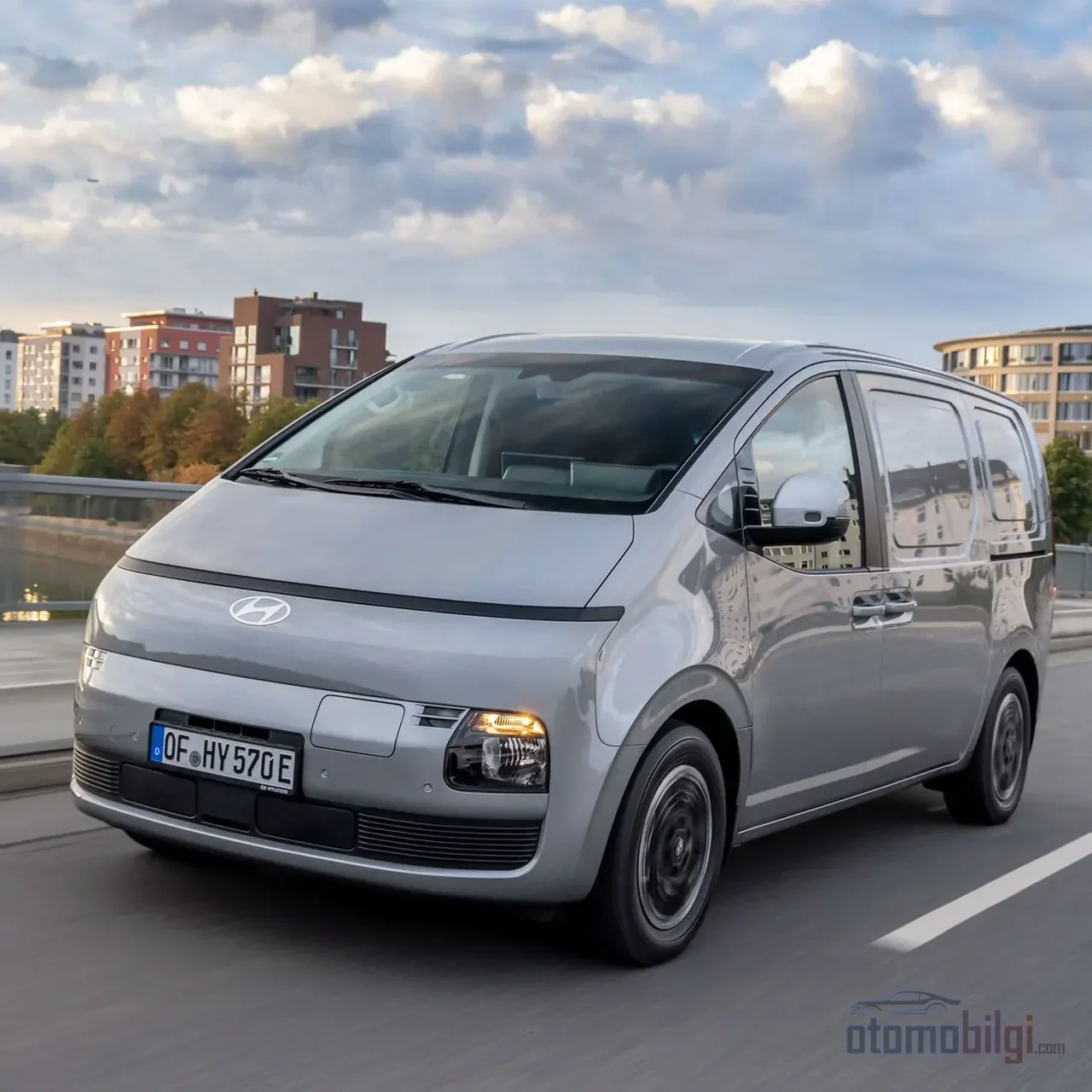
Hyundai's electric light commercial vehicle STARIA Cargo Electric is taking the stage at the Paris Motor Show on October 12. With an 84 kWh battery, an 800-volt architecture, and a WLTP range of up to 450 km, it stands out as one of the most comprehensive examples of electrification in the mid-size panel van segment so far. A load volume of three Euro pallets and a payload capacity of 1,040 kg are enough to show that this is not a showpiece, but a genuinely work-focused offering.
Highlights
- 84 kWh battery, 800-volt architecture, up to 450 km WLTP range
- Under ideal DC conditions 10% to 80% in 20 minutes charging
- 1,040 kg payload capacity, three-Euro-pallet load area, 5.46 m³ volume
- 3.5 kW V2L supplying energy in the load area and outside the vehicle
- European sales begin depending on the market in the second half of 2026 starting
What the STARIA Cargo Electric offers: the full technical package
Reading the technical specification sheet provided by Hyundai, the master of this business, it becomes clear that the vehicle was designed as electric from the ground up. The 84 kWh lithium-ion (NMC) battery is combined with an 800-volt electrical architecture. This architecture brings the high-power charging approach we have long seen on the passenger car side to the light commercial segment. The front-wheel-drive electric motor produces 160 kW (218 PS) of power and 350 Nm of torque; top speed is stated as 184 km/h under suitable conditions. Considering highway performance for a commercial vehicle, this figure is quite reasonable.
The technology that keeps the math under the hood honest is also complete. The 12.3-inch ccNC infotainment system and digital instrument cluster come as standard. The SmartSense package is also part of the standard equipment: forward collision avoidance, lane assistance, a smart cruise control with stop-and-go functionality, blind-spot assistance, a rearview camera, and parking sensors. A three-year warranty package is also included in the announcement.
| Feature | Value |
|---|---|
| Battery | 84 kWh lithium-ion (NMC) |
| Range | Up to 450 km WLTP |
| Motor | Front-wheel drive, 160 kW (218 PS), 350 Nm |
| Top speed | 184 km/h |
| Charging | 10%→80% in 20 minutes under ideal DC conditions; AC 11 kW |
| Payload capacity | 1,040 kg |
| Towing capacity | 2,000 kg (braked) |
| Load volume | 5.46 m³, three Euro pallets |
| Dimensions | 5,253 mm length, 3,273 mm wheelbase |
800-volt architecture and 20-minute charging: what do the numbers mean?
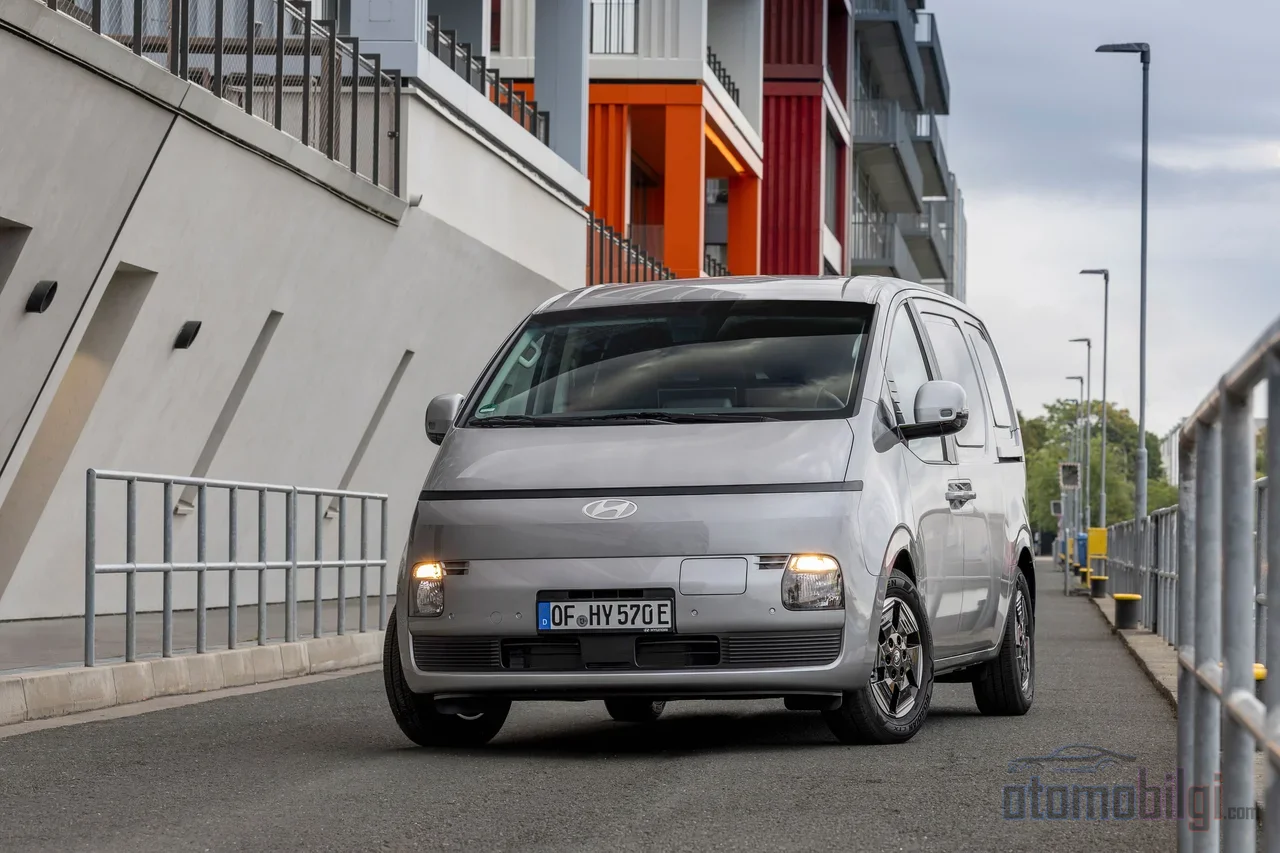
The vehicle charges from 10% to 80% in 20 minutes under ideal DC ultra-fast charging conditions. It is necessary not to skip the "under ideal conditions" note in this sentence; it is not modest, but an honest statement. The promise holds if you are plugged into an ultra-fast charging tower, the battery temperature is suitable, and you are sitting within the right state-of-charge window. In the past, speed figures like these were brochure decorations; now, as DC networks become widespread, they are becoming part of everyday planning.
The 11 kW onboard AC unit, on the other hand, is the real backbone of commercial use. Considering that the fleet sleeps overnight at the depot or in the facility's parking lot, nothing replaces the cost-effectiveness and practicality of setting off in the morning at 100%. This is also where the real value of the 800-volt architecture lies: by shortening waiting time, it allows the vehicle to head out for its fourth or fifth run during the day.
Load capacity and V2L: working even after hours
There are three things that make a panel van a real panel van: how many pallets it takes, how many kilos it carries, and how easy it is to load the cargo. STARIA Cargo Electric offers a three-Euro-pallet cargo area with a volume of 5.46 m³ and has a payload capacity of 1,040 kg. A 2,000 kg towing capacity for braked trailers is also surprisingly generous; electric commercials usually skimp on the towing unit. The 5,253 mm length and 3,273 mm wheelbase are typical for the class; in its N1 type-approved, three-seater panel van configuration, dual sliding doors, a low loading height, and a steel bulkhead are standard.
The real differentiating detail is the 3.5 kW V2L capability. Besides being able to feed power to devices outside the vehicle, it also supplies energy via an internal outlet inside the cargo area. A vehicle that can partially replace a generator on a construction site, in mobile service, catering, and events makes a difference in the field just as much as on paper. Those who have done this job for years know: this is the real hidden benefit of an electric vehicle - not so much the distance it travels, but the extra work it gets done while on the job.
From Paris to Europe: sales plan and price signal
The vehicle will be unveiled on October 12, on the press day of the Paris Motor Show. It will be displayed at Hyundai's 1,115 m² stand at Hall 5.2, Stand A12, open from October 12-18. Sales will begin in the second half of 2026, depending on the market. Considering that the passenger version, the STARIA Electric, went on sale in Korea and Europe in the first half of the year, the commercial version's schedule is the second step of a consistent phasing.
There is no official statement on pricing. A figure of 57,495 euros for the European market is circulating in communication channels, but this is not an officially confirmed number and should not be perceived as such. The Stellantis Group's e-Expert with a 75 kWh battery is cited as a reference point in the segment; with its 84 kWh battery, Hyundai is positioned a notch above.
The Türkiye context: İzmit's electric turn and the domestic possibility
The Türkiye leg of this story is the most interesting part. Hyundai Assan produces at its İzmit facility, which began operations in 1997, and 80% of production is exported to more than 40 countries. Series production of the IONIQ 3 has officially started at the plant; with this, Hyundai has become the second brand to produce electric cars in Türkiye after Togg. Even more significant, İzmit is reported to be the first plant in Europe producing on the E-GMP platform. The existing lines are being prepared not through capacity increases, but through conversion to electric production; alongside this, there is news of a 250 million euro investment.
Ford Otosan is already producing the E-Transit at its factories in Kocaeli. That Kocaeli, together with its two major manufacturers, has become a region for Türkiye's electric light commercial vehicle production is no coincidence; it is the natural result of export mathematics. As for whether the STARIA Cargo Electric will come to Türkiye: the official statement says "in the second half of 2026, depending on the market," with no country-specific date. It is reasonable to expect the 10% VAT bracket to apply regardless of base amount in the light commercial segment; but it is still too early for TL pricing. Given the passenger version's presence in the Turkish market, there seems to be no reason to say the Cargo will not come.
What do range and charging infrastructure mean for the commercial buyer in Türkiye?
The owner of a commercial vehicle does not dream of range anxiety, but of end-of-route calculations. A 450 km WLTP range is more than enough for an urban delivery fleet; for intercity work, the charging infrastructure comes into play. In Türkiye, the share of DC fast-charging sockets has approached 30% of the total, while the European average is in the 10-15% band. In other words, the country's charging network was built with a fast-charging emphasis; this is exactly the scenario where an 800-volt architecture and a 20-minute charging time are rewarded. On the other hand, it must be added that rural and intercity coverage is still not homogeneous.
The corporate side of the market is also active: the number of charging station license holders has exceeded 150, fuel stations are playing a key role in the charging transition, and access rules are being updated on the regulatory side. What truly determines the commercial buyer's decision is not so much the public network as the opportunity for overnight AC charging. For a business that can install an 11 kW unit per depot, this vehicle is one of the segments closest to the economic logic of going electric. For those who cannot, the calculation is still clearer on the fuel side.
Brief Assessment
For many years, we have seen electric options in the light commercial segment being either small or sub-small vans, or products whose range remained only on paper. With its 84 kWh battery, 800-volt architecture, three-pallet body, and V2L capability, the STARIA Cargo Electric looks like the first vehicle to seriously break this trade-off. However bright the showcase in Paris may be, the real test will begin when it enters the price lists in the second half of 2026. Until the day we see a charging tower at every gas station in Türkiye, the fleet buyer's access to overnight charging remains the most critical technical detail determining this vehicle's fate here.
Sources
- Hyundai Sets a New Standard in the Electric Light Commercial Vehicle Segment with STARIA Cargo
- Paris Motor Show 2026 (Hyundai Europe)
- Production of the IONIQ 3 Has Begun | Hyundai Motor Türkiye
- Hyundai STARIA Electric press release
- Europe's electric heart will beat in İzmit
- Electric commercial move from Hyundai: New STARIA Cargo unveiled
- STARIA Cargo is ready for the 2026 Paris Motor Show
- Hyundai Motor Europe to present Staria Cargo electric LCV
- Electric Hyundai Staria Cargo is coming to Europe (and Türkiye?)
- Hyundai Staria Electric technical specifications
- Türkiye's Electric Transformation Report Card
- Analysis of Türkiye's electric vehicle charging market
- Electric medium-sized panel vans
- All-Electric New Ford E-Transit