2026 Honda e:HEV or Toyota HSD? Why the Gear Feel Differs in the City
Share This Page
Honda e:HEV and Toyota HSD are two full hybrid architectures that both feel electric in the city but work very differently inside. In the Honda, the electric motor handles most of the drive, with the petrol engine working mainly as a generator; in the Toyota, the planetary gearset connects the petrol engine to the wheels at continuously variable ratios. This difference directly determines that famous "gear shift" feeling you notice when you press the accelerator, as well as the character of the engine sound.
Highlights
- In the Honda e:HEV, approximately 78% of driving is done entirely by the electric motor; there is no belt-driven CVT or planetary gearset.
- Toyota hybrids provide electric-only driving at rates of up to 70% in city use.
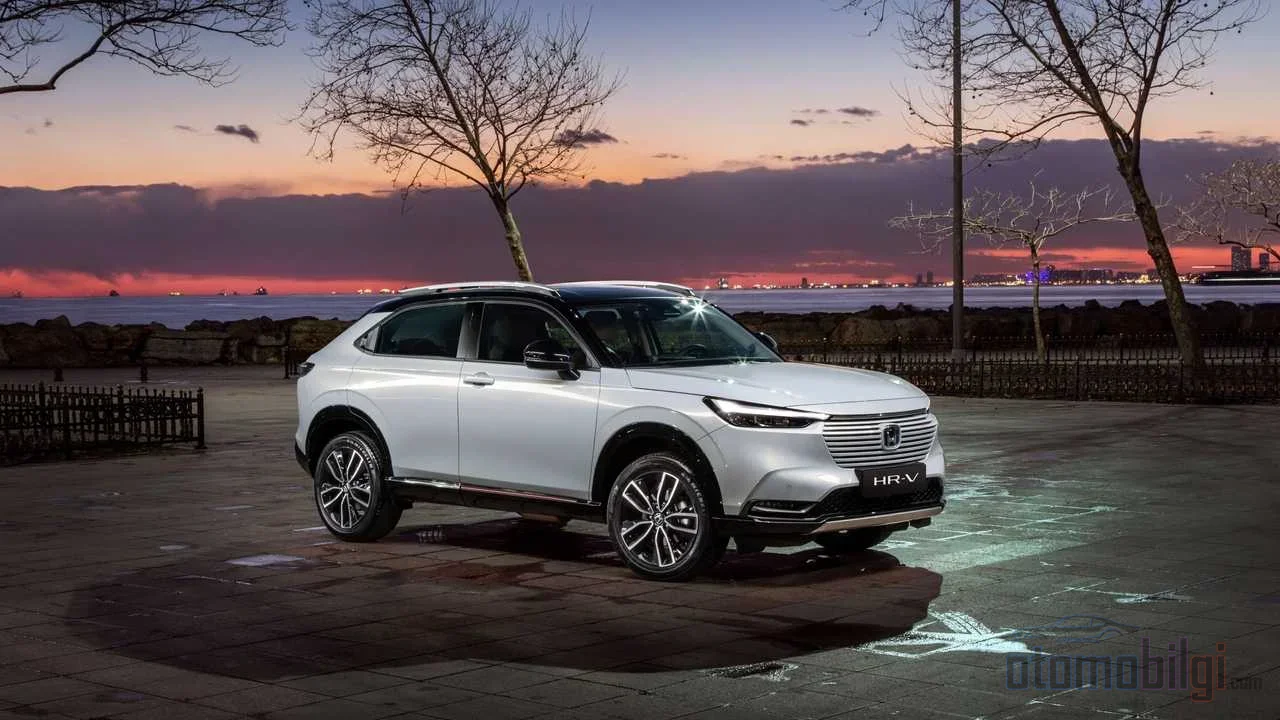
- Toyota Corolla 1.8 hybrid WLTP combined consumption is 4.5-4.7 L/100 km; for the Honda HR-V e:HEV, 5.4 L/100 km and a CO2 value of 122 g/km have been announced.
- In real-world city comparisons, both systems stay within the 4.2-5.0 L/100 km range; the difference lies not in consumption but in character.
Two Architectures, One Goal: Keeping the Petrol Engine in Its Efficient Zone
The basic logic of both systems is the same: the internal combustion engine should operate in the narrow rev band where it is most efficient, and the electric motor should handle the rest. The difference emerges in how they achieve this goal. In the Honda e:HEV, series hybrid logic dominates: the petrol engine generates electricity through the generator in most cases, and drive and acceleration come from the electric motor. In the Toyota HSD, the planetary gearset does two jobs at once; the engine both generates electricity with the generator and mechanically transmits part of its torque to the wheels through the same gears.
In short, in the Honda, electricity is at the center of the chain; in the Toyota, the mechanical connection is part of the chain. Both are full hybrids and need no plug, but the stories they tell to the driver's ear and foot are very different.
Honda e:HEV: An Electric Vehicle with a Range Extender?
The three modes Honda uses to describe its e:HEV system summarize the system's character: at startup and low-to-mid speeds, electric driving, when demand increases, hybrid driving where the petrol engine engages as a generator hybrid driving, and at high speeds, petrol driving. The lithium-ion battery and power control unit manage these transitions without the driver noticing; regenerative braking recovers energy.
Technically, the interesting aspect of the system is the narrow window in which the petrol engine connects to the wheels. The engine's direct connection occurs mostly in the 80-120 km/h range, that is, at speeds where the petrol engine operates efficiently, and it uses a single fixed ratio. Outside this band, drive comes almost entirely from electricity. That is why it is no exaggeration to compare the system to an electric vehicle with a range extender that has a limited direct-connection add-on: one user review makes exactly this comparison - electric vehicle logic, topped with an 80-120 km/h mechanical bridge.
So is there a gearbox, or is it a CVT?
This is one of the most frequently asked questions in the field, and the answer is clear: the Honda e:HEV has no classic belt-and-pulley CVT, no torque converter, and no planetary gear. Honda uses the term "e-CVT" in its official terminology, but what we physically have is an electronically controlled drivetrain with a single fixed gear ratio. Honda's own definition clearly states the purpose of this architecture: smooth and reassuring torque delivery with a linear feel throughout acceleration. In the driving experience, this means that "rev jumps between gears" never occur - because it is software, not a pulley, that manages the revs.
Toyota HSD: Why Does the Planetary Gear Change the Gear Feel?
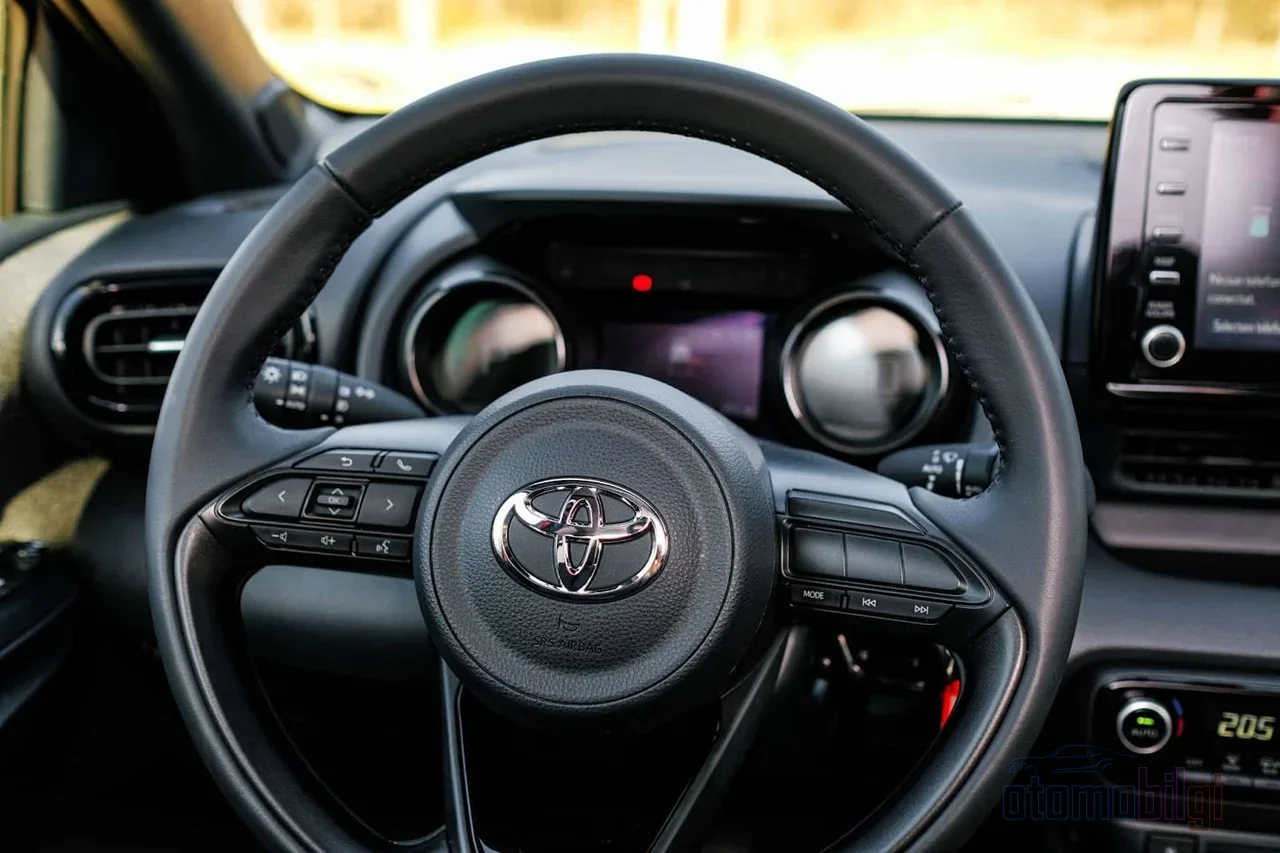
The keyword in Toyota's approach is the planetary gear system. This mechanism brings the gasoline engine, generator, and traction motor together in a single gear set and splits the power flow at continuously variable ratios. It is a solution completely different from classic CVTs; there is no belt, pulley, or clutch. For this reason, Toyota's e-CVT is frequently described as "the simplest and most trouble-free transmission" in terms of mechanical simplicity and failure resistance.
However, this architecture has a cost in driver perception. The planetary gear manages the gasoline engine's revs independently of speed, for efficiency. The result: under some conditions, the revs suddenly rise while speed remains constant - the engine sound comes first, the acceleration later. The "car is shouting" feeling described in user language is exactly this - the connection between revs and speed oscillating between continuity and variability. In Honda this separation hardly exists, because the revs are already almost completely detached from speed; in Toyota the detachment is partial and is therefore more noticeable.
Fuel Consumption in Stop-Start Traffic: Both Are in Their Element
Red lights, heavy traffic, driving in the 30-50 km/h band: this is where full hybrids truly shine, and both systems excel here. Toyota's official data says that in urban use it offers of up to 70% ; at start-offs and low speeds the gasoline engine is supported by the electric motor. The WLTP combined value announced for the Corolla 1.8 hybrid is 4.5-4.7 lt/100 km, while the same model's pure 1.5 gasoline version falls in the 6.1-6.3 lt/100 km range. The gap widens even further in city use, because consumption drops noticeably at low speeds thanks to the electric motor.
On the Honda side, for the HR-V e:HEV the 5.4 lt/100 km WLTP and 122 g/km CO2 value are among the official technical figures. Real-world comparisons, however, paint a picture even closer than the official figures suggest: in fully urban driving, the HR-V e:HEV and the Corolla Cross Hybrid give almost identical results in the 4.2-5.0 lt/100 km range; evaluations note that the HR-V delivers a "more electric feel". One Corolla Hybrid owner's real-world average over roughly 10,000 km was 4.7 lt/100 km - one of the rare examples that matches the WLTP value exactly.
A practical driving tip shared by both brands: in stop-start traffic, leaving the system to hybrid management rather than shifting the gear lever to N is better for fuel economy. The system manages the stop-go cycle on your behalf with its own efficiency logic. In Honda hybrids, B mode strengthens regenerative braking; it is used to return kinetic energy to the battery during descents and frequent decelerations.
Representatives in Türkiye: Civic e:HEV and Corolla Hybrid
The most direct comparison surface for these two philosophies in Türkiye is the compact class: Honda Civic e:HEV and Toyota Corolla Hybrid. On the Corolla side, the 1.8 hybrid version's system power is 103 kW (140 HP), with the 0-100 km/h figure stated as 9.3-11.5 s depending on the version. The Civic e:HEV's stated 3P-WLTP consumption is 5.1 l/100 km; it is a well-known fact that this value is neither easily exceeded nor easily beaten in everyday use.
| Feature | Honda e:HEV (HR-V) | Toyota HSD (Corolla 1.8) |
|---|---|---|
| Electric motor | 131 PS (96 kW), 253 Nm | 140 HP system power |
| Role of the petrol engine | Mostly a generator; directly coupled with a single fixed ratio at 80-120 km/h | Generator + mechanical torque transfer, continuously variable |
| Drivetrain architecture | No belt-driven CVT or planetary gear; a fixed-ratio transaxle called e-CVT | Planetary-geared e-CVT |
| WLTP consumption | 5.4 l/100 km | 4.5-4.7 l/100 km |
| City character | A more electric feel, linear torque | Up to 70% electric driving, occasional rev-speed separation |
Honda's e:HEV technology is offered in Türkiye on the Jazz, HR-V, ZR-V and CR-V; the HR-V e:HEV's electric motor produces 131 PS and 253 Nm of torque, while the petrol unit is a 1.5-litre, 1498 cc block with a 13.5 compression ratio and a maximum torque of 131 Nm @ 4500 rpm. The ZR-V, meanwhile, comes with a 2.0-litre hybrid setup. On the Toyota side, hybrid technology is the product of the company's 29 years of accumulated know-how, and the brand's strategy is to place hybrids in widespread and accessible models - the Corolla being the clearest example of this. A driver's summary of the HR-V e:HEV captures the character difference between the two systems in a single sentence: at 0-40 km/h the car works on Toyota logic, while at intercity speeds it operates on series-hybrid logic similar to e-Power.
What Should the Buyer Consider? Decision Criteria in Brief
- For those seeking a gear-shift feel: Neither system has a classic stepped gear change. In the Honda, torque is linear and predictable; in the Toyota, revs can change while speed stays constant, and the engine note may be heard before the acceleration.
- City-focused use: Both systems can achieve real-world city consumption of around 4-4.5 l/100 km; at this point the difference falls below measurable levels.
- Character preference: The Honda e:HEV gives more of an "electric vehicle feel"; the Toyota HSD keeps the petrol engine in a constant mechanical cycle, so it feels a bit closer to conventional driving.
- Long distance: In the Toyota, the petrol engine is directly engaged at constant speed, so the gap between city and intercity consumption narrows; in the Honda, direct connection in the 80-120 km/h band establishes a similar balance.
To summarize: no one wins the consumption battle by a clear margin, because both systems operate at the physical limit of full hybrid logic. The real difference lies in driver perception. Honda, which severs the link between engine speed and speed, offers a quiet, electric experience; Toyota, which flexes that link through software, delivers a very mature system, with its mechanical simplicity and 29 years of accumulated know-how, to those who accept occasionally hearing the sound of a rev rise. Which one is right depends not on how you drive, but on how you want to feel.
Sources
- Honda Technologies | e:HEV Hybrid - Honda Türkiye
- Honda HR-V e:HEV | Technical Specifications - Honda Türkiye
- What Is a Hybrid? How Does a Hybrid Car Work? - Toyota Türkiye
- Corolla - Technical and Equipment Specifications 01-2026 (Toyota Türkiye brochure)
- How to Reduce Fuel Consumption in City Driving? - Toyota Blog
- What Is a CVT Transmission? - Toyota Blog
- Honda HR-V e:HEV or Toyota Corolla Cross Hybrid - highmotor.com/tr
- New Honda HR-V e:HEV - DonanımHaber Forum
- Toyota Corolla vs Honda Civic - Second-Hand Comparison 2026 - otomerkezi.net
- When Does a Hybrid Car Make Sense? - 2026 Decision Guide - otomerkezi.net
- Toyota Corolla 1.5 or 1.8 Hybrid? 2026 - araclo.com
- 2025 Honda Civic Hybrid vs Toyota Corolla Hybrid (translated) - Edmunds
- Honda Civic SR e:HEV review (translated) - drivencarguide.co.nz
- Toyota hybrid driving tips (translated) - Toyota UK mag