2026 Toyota RAV4 Hybrid: The Full Hybrid Balance in a Family SUV
Share This Page
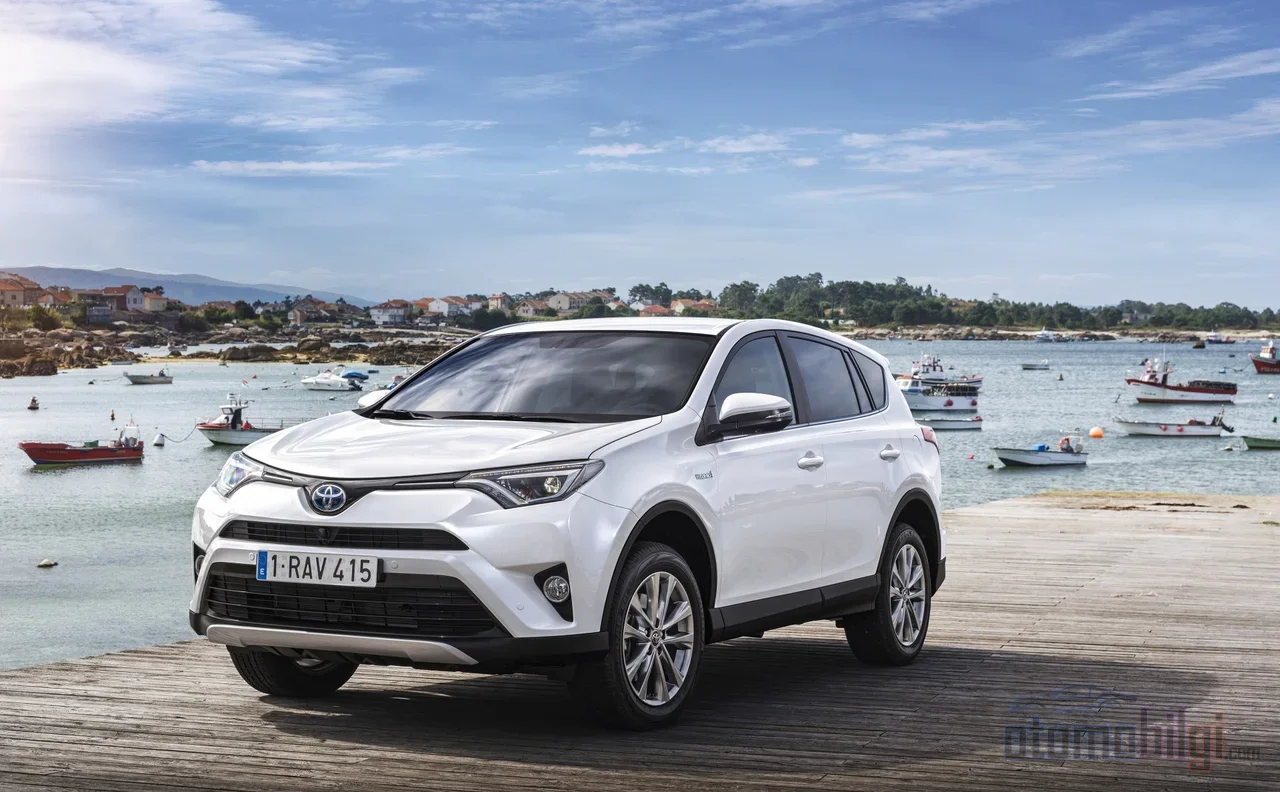
The Toyota RAV4 Hybrid is a full hybrid model that runs its 2.5-liter Atkinson-cycle gasoline engine and electric motor in harmony through an e-CVT, offering family-scale practicality in the D-SUV segment. This guide examines, with measurable data, how the system works, its fuel consumption character in city and long-distance driving, luggage and interior practicality, and its place within Toyota's own hybrid family.
Highlights
- 2,494 cc gasoline engine + 105 kW / 270 Nm electric motor; total system output 145 kW / 197 HP
- 0-100 km/h in 8.3 seconds, combined fuel consumption 4.9 l/100 km (European homologation)
- In Türkiye, sold only with the 2.5 hybrid, 4x4 and e-CVT ; equipment levels are Advance and Premium
- Luggage capacity in the current generation is 580 lt, in the new generation it is 514-749 lt
- depending on the version The new generation is expected to go on sale in Türkiye in the second half of 2026
How does the Toyota hybrid system work in the RAV4?
Toyota's full hybrid architecture consists of six core components: gasoline engine, electric motor, generator, power control unit, power split device, and battery. In the RAV4, the heart of this chain is a 2,494 cc 4-cylinder inline, 16-valve DOHC gasoline engine with VVT-iE and VVT-i variable valve timing. D4S dual injection technology combines direct and port injection according to driving conditions; this is a practical way to control cylinder filling at high load while maintaining mixture precision at low load.
The gasoline engine produces its 112 kW / 152 HP of power at 5,700 rpm and its 206 Nm of torque in the 4,400-4,800 rpm band . The electric motor, meanwhile, comes in with 105 kW of power and 270 Nm of torque ; the combination of the two raises the total system output to 145 kW / 197 HP . The power split device (planetary gear set) distributes the power of these two sources to the wheels continuously and without any sense of stepped shifting - this is precisely where the e-CVT differs from a conventional gearbox: it adjusts the transmission ratio not with gear pairs but by varying the motor-generator speeds.
The 204-cell nickel-metal hydride battery is located under the rear seat; this position lowers the center of gravity, which also contributes to road holding. The system offers four driving modes on demand: EV (electric only), Eco, Sport, and Sequential Shiftmatic. In slow city driving, the gasoline engine stays disengaged as much as possible, and during deceleration and braking, regenerative braking recovers kinetic energy back into the battery.
E-Four: shaft-less all-wheel drive
The logic of the E-Four system in the 4x4 versions that come to Türkiye is simple and elegant: there is a separate electric motor on the rear axle with 50 kW of power , and no mechanical shaft. The power going to the rear wheels is transmitted entirely electrically; this eliminates the weight, bulk, and friction losses of the central shaft. In low-grip conditions such as tracking on loose surfaces, the rear motor engages and balances traction. The system's towing capacity is 1,650 kg - the highest value in Toyota's hybrid lineup in Europe.
City or long distance: what is the real consumption character?
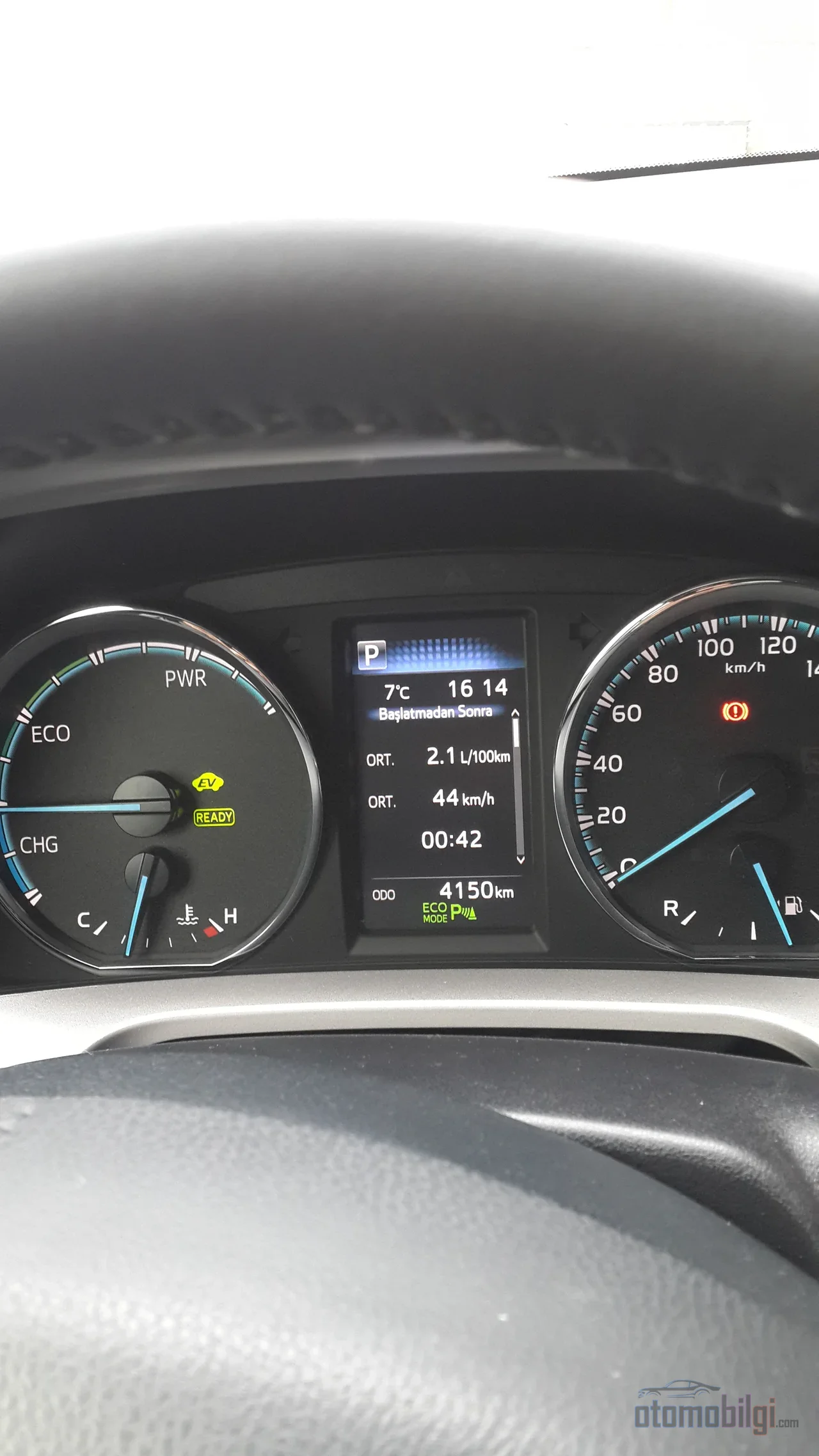
The official homologation data for the 2.5 hybrid shows 4.9 l/100 km combined consumption and 115 g/km CO2 ; acceleration from 0-100 km/h is 8.3 seconds. The gap between factory figures and real-world use varies depending on the season and usage profile. In long-term user reports, city figures around 5.0 l/100 km and overall averages around 6.0 l/100 km stand out; there are also measurements reaching 5.3 liters in city driving with the air conditioning on. Higher consumption in winter is normal for hybrid vehicles: battery warming, cabin heating, and more frequent cold engine starts reduce electric-assisted efficiency. Extreme cases reaching up to 9.9 liters can usually be explained by combinations of short distances, cold weather, and high speeds.
The key distinction is this: the advantage of a full hybrid becomes especially evident in stop-and-go city traffic, because the share of electric driving with the engine off reaches its highest level there. On long journeys, the gain remains limited at constant speed; in return, positive feedback on comfort and road holding stands out. Factors such as tire pressure also play a non-negligible role in long-distance consumption.
Practicality report: interior space, luggage, and everyday use
According to the official e-brochure of the current generation RAV4 Hybrid, the luggage capacity is 580 liters and the fuel tank is 55 liters. The discrepancy in figures around luggage capacity is explained by differences in generation and measurement method: in the new generation, the luggage space measures 514 liters up to the seat covers, but when measured up to the ceiling it reaches up to 749 liters, and this value varies by version; with the rear seats folded, the measurement reaches much higher values. So the question of which number is correct is meaningless on its own - the question of which generation and which measurement is what matters.
The current generation's safety and technology package has been progressively enriched since the 2016 European version: Toyota Safety Sense including a pre-collision system with pedestrian detection, lane departure alert, adaptive cruise control, traffic sign recognition, and automatic high beam; Blind Spot Monitor and Rear Cross Traffic Alert were offered in combination, which was unique in the segment at launch. The 4-camera Panoramic View Monitor could also be activated when parked - a first for Toyota in Europe. The instrument panel features a 4.2-inch TFT display, and on the multimedia side a 7-inch Toyota Touch 2 completes the picture.
Work was also done on the structure: rear body rigidity was increased, shock absorbers and springs were revised; the underfloor silencer surface for NVH was enlarged by approximately 55% and approximately 3 kg of extra sound insulation material was added - with a particular focus on rear seat comfort. In user experiences, comfort, road holding, and power adequacy are received positively; front engine mount wear associated with sudden torque changes and, in some versions, tailgate shock absorber failure stand out as points second-hand buyers should know.
| Feature | Value |
|---|---|
| Engine displacement | 2,487-2,494 cc, 4 cylinders, DOHC, VVT-iE/VVT-i |
| Petrol engine power | 112 kW / 152 HP @ 5,700 rpm |
| Electric motor | 105 kW / 270 Nm |
| Total system power | 145 kW / 197 HP |
| 0-100 km/h | 8.3 seconds |
| Combined consumption | 4.9 l/100 km (current generation homologation) |
| CO2 | 115 g/km |
| Battery | 204-cell nickel-metal hydride, under the rear seat |
| Trunk / fuel tank | 580 lt / 55 lt |
| Towing capacity (E-Four) | 1,650 kg |
In which equipment levels is the RAV4 Hybrid sold in Türkiye?
In the Turkish market, the RAV4 is sold only in the 2.5 hybrid, 4x4 and e-CVT combination; the equipment tiers Advance and Premium consist of levels like these. So making a powertrain comparison box here is meaningless: the choice proceeds through equipment content and option packages. This simplicity is an advantage for the buyer - there is no risk of a wrong combination in power and drivetrain selection.
The new generation will expand this picture: in the official announcement, 5th generation hybrid technology, with 5.4-5.8 l/100 km combined consumption in the WLTP cycle and 123-130 g/km CO2, the Intelligent all-wheel drive AWD-i system and Toyota Safety Sense 4 stand out. For the 2.5 hybrid 4x4 version, the 0-100 km/h time is 7.7 seconds as announced. The new generation is offered with a more assertive premium positioning in the D-SUV segment and is expected to go on sale in Türkiye in the second half of 2026 . Power figures will vary by version; the different horsepower values seen in different sources should not be reduced to a single number until the distinction between standard and performance versions becomes clear.
RAV4's distinguishing edge against the CR-V, Tucson and Sportage
In this trio's segment, comparison usually revolves around trunk space and rear legroom: the Tucson offers slightly more cargo volume than the RAV4 with all seats up, while the RAV4 pulls ahead in some configurations in horsepower and fuel efficiency. The Tucson's interior feel is often received positively in user reviews. However, from a Türkiye perspective, the RAV4 has two trump cards in the table that most of its rivals lack: E-Four electric all-wheel drive and 1,650 kg hybrid towing capacity - few vehicles in the segment reach this towing value with full hybrid power.
The RAV4's position on the used car market is also solid: the 2019 RAV4 Hybrid was chosen Car of the Year in 2020; the fact that 90% of RAV4s sold in Europe are still on the road is an indirect but meaningful indicator of the model's durability. This picture explains why a buyer seeking a high seating position, a large trunk and reliability for family use keeps the RAV4 on the shortlist.
RAV4 instead of the C-HR and Corolla Cross?
Within Toyota's hybrid lineup, the RAV4's position is clear: the C-HR carries 5th generation hybrid technology in a more compact, style-focused body, while the Corolla Cross is praised for its interior and cargo space. In user reviews, the C-HR stands out in terms of equipment and insulation, while the high annual motor vehicle tax impact of the 1.8 engine is attempted to be balanced by its low CO2 advantage. The RAV4, however, offers three things that go beyond these two models: family-scale D-SUV interior volume, the E-Four 4x4 option, and the highest towing capacity in the hybrid lineup.
The decision logic is measurable: if city use dominates in your usage and volume is secondary, the C-HR is sufficient; if interior and cargo are priorities but 4x4 is not needed, the Corolla Cross is rational; if family, cargo, caravan or trailer towing needs and all-wheel drive are on the same list, the RAV4 is the only logical answer. The target audience is also defined by Toyota as a "premium, family-oriented, high seating position, and style/technology expectation" customer profile.
Conclusion: for whom does the full hybrid balance work?
The RAV4 Hybrid's engineering identity can be summarized in one sentence: a system that compensates for the efficiency of the Atkinson-cycle gasoline engine with the torque richness of the electric motor, delivers the highest gains in the city, and settles at the segment's practical ceiling with 1,650 kg towing capacity. Factory figures (4.9-5.4 l/100 km band) spreading to the 5-8 lt range in real use according to season and usage style is not a shortcoming, but a matter of expectation management. When the new generation arrives in Türkiye in 2026, figures will improve on almost every axis of this balance with the 5th generation hybrid, AWD-i and Safety Sense 4 - for the current buyer, the key question will be whether it is worth the second-hand price difference.
Sources
- What Is Hybrid? How Does a Hybrid Car Work? | Toyota Türkiye
- 2026 Toyota RAV4 Hybrid Coming Soon! | Toyota Türkiye
- RAV4 HYBRID Technical and Equipment Specifications (e-brochure) | Toyota Türkiye
- New Toyota RAV4 Hybrid | Toyota Europe Newsroom
- How does the Toyota hybrid system work? | Toyota UK Magazine
- How to Reduce Fuel Consumption on Long Trips? | Toyota Türkiye Blog
- Toyota RAV4 hybrid 2.5 4x4 SUV fuel consumption | DonanımHaber Forum
- RAV4 Hybrid 2.5 L Advance 4x4 Reviews | Otoclub Türkiye
- Toyota RAV4 Hybrid Complaints | Şikayetvar
- 2019 Toyota RAV4 Hybrid Used Car Review | Drive
- Hyundai Tucson vs Honda CR-V vs Toyota RAV4 | Family Hyundai
- Kia Sportage Hybrid vs Tucson vs RAV4 | Walser Kia
- Toyota RAV4 (fuel consumption comments) | ekşi sözlük