Does Fuel Evaporation Really Increase Consumption?
Share This Page
In a modern vehicle, fuel does not measurably disappear by evaporating in the tank: the sealed tank system and the EVAP system, which captures the vapors and sends them to the engine, reduce this loss to practically zero under normal conditions. Measurable loss only appears when there is a fault in the system - a loose fuel cap, a cracked hose, or a faulty carbon canister. So the idea of gasoline 'disappearing' in the tank during summer heat is a myth in a sound system.
Highlights
- No significant evaporative fuel loss is expected in a sealed tank system
- According to the EPA standard, the vapor pressure of summer gasoline cannot exceed the 9.0 psi limit; in winter blends this value rises to 15.0 psi
- The upper-limit saving from keeping the tank constantly full remains merely symbolic on an annual basis
- 1-2%: the impact of every 45 kg of extra load on fuel economy
- Overfilling the tank after the pump clicks can damage the EVAP system
The Physics of Evaporation: Why Does Gasoline Evaporate, and How Quickly?
Gasoline is a volatile mixture of hydrocarbons. Even at normal ambient temperatures it can pass from liquid to vapor; this is not combustion, it is an entirely physical change. The critical point is this: the evaporation rate is not constant. Depending on factors such as temperature, air flow, liquid surface area, sun exposure, and whether the container is closed, this process takes anywhere from minutes to days.
The effect of temperature is clearly layered in open-air conditions. Below 10 °C evaporation is slow, in the 10-25 °C range it is moderate, in the 25-35 °C band the loss accelerates, and above 35 °C the release of vapor becomes very fast. Most of gasoline's vapor pressure comes from light components such as butane; these components begin to evaporate even at very low temperatures.
This picture may look alarming at first glance, but behavior in open air and behavior in a closed tank are completely different. In an open or wide-mouthed container, gasoline evaporates quickly; in a closed, sealed system, however, the vapor has nowhere to go, a liquid-vapor equilibrium is established inside the tank, and the loss remains limited. Fuel left standing in the open for a long time evaporates far faster than fuel in the tank - which is why storing fuel in unapproved containers, next to heat sources, is one of the most common mistakes.
Summer and Winter Gasoline: Why Does Vapor Pressure Change with the Season?
Gasoline's volatility, that is, how easily it evaporates, is determined by a standard measure: Reid Vapor Pressure (RVP). According to emissions regulations, the RVP of gasoline sold in the summer months cannot exceed 9.0 psi. The aim is to limit evaporative emissions, which increase with hot weather. In winter the picture reverses: easier cold starts require higher volatility, and winter blends come with RVP values reaching 15.0 psi.
This has a practical consequence for consumers: high-RVP fuel evaporates faster, low-RVP fuel evaporates more slowly. Also, winter blends typically offer 5–7% lower fuel economy due to reduced energy content; summer gasoline carries somewhat more energy than winter gasoline. So hot weather physically accelerates evaporation, but regulations make fuel sold in summer months less volatile for exactly this reason. The system balances itself at both ends.
What Is the EVAP System and Where Does It Take the Vapor?
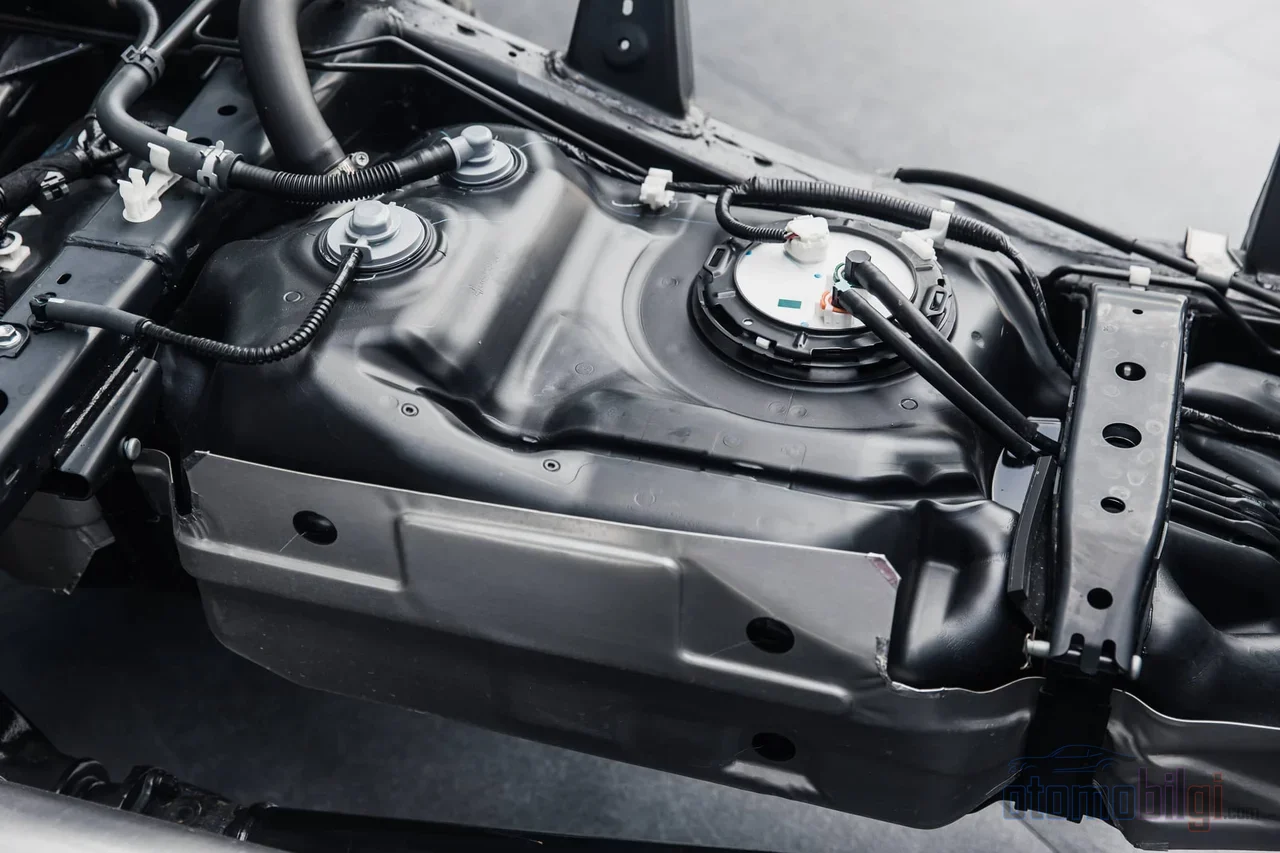
The vapor recovery system (EVAP) is an emission control component designed to prevent fuel vapors from escaping into the atmosphere. Its working principle is simple and elegant: gasoline evaporating in the tank is trapped in a canister filled with activated carbon. When the engine runs, the canister is purged through the intake manifold, and the accumulated vapors are sent to the engine to be burned. The system also controls tank pressure through venting and pressure management. Even the vapors generated during refueling are directed to the canister through a recovery arrangement called ORVR; meaning even the moment of taking fuel at the pump has not been left open to vapor loss. How much vapor manufacturers are allowed to leak from the system is also limited by regulations.
This system has its limits too. If the carbon canister is damaged or the fuel cap does not close properly, evaporation loss does genuinely occur. A fuel smell together with the EVAP warning light coming on is a sign not of normal evaporation but of a mechanical problem and should be checked.
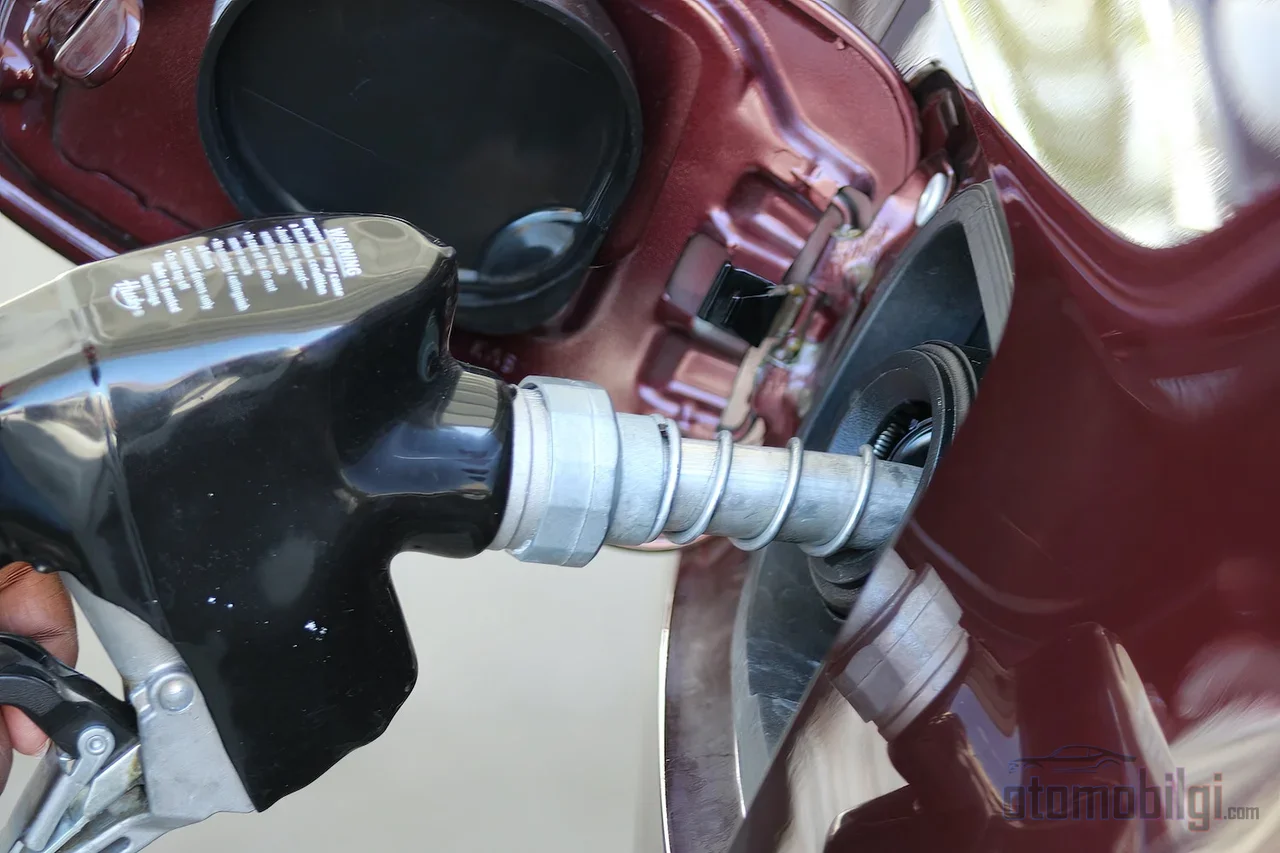
There is also a fault the driver can cause with their own hands: topping off the tank after the pump clicks. This habit can cause liquid fuel to enter the canister and damage the vapor recovery system. The correct approach is to leave the tank reasonably full and not to continue pumping after the click.
Is the Belief That "Keeping the Tank Always Full Saves Money" Correct?
The claim goes like this: as the tank empties, the air volume above grows, gasoline evaporates more, while a full tank prevents this loss. The chain of logic sounds appealing, but physics and system architecture do not support it. The overwhelming majority of the gasoline in the tank remains in liquid form; some of it is suspended as vapor in the air in the tank, but the liquid-vapor ratio is in equilibrium even in a nearly empty tank. Gasoline does not get lost this way. Moreover, even if vapor escapes, the EVAP system captures it and sends it to the engine. The scenario requiring a full tank only comes into play in old or faulty systems with compromised seals.
A numerical test also confirms this conclusion. Vapor recovery systems in fuel storage tanks are marketed with the assumption that a 2% loss may occur during storage. Suppose a car tank loses 2% per year and that keeping the tank always full completely eliminates this loss: the average driver's annual savings would remain only a symbolic amount at most; in return, about 7 hours per year are lost to buying gasoline more frequently. In engineering terms: the cost-benefit balance is clearly unfavorable. Keeping the tank constantly full is not a meaningful saving strategy for preventing evaporative loss.
Moreover, there is an effect in the opposite direction of the claim: the extra weight of a full tank slightly reduces fuel economy. It is estimated that every 45 kg of extra load changes fuel economy by 1-2%; a full fuel tank does not even make up 5% of the vehicle's total weight. The effect is small, but its direction is exactly the opposite of what the belief promises.
Is Buying Gas Early in the Morning Really More Efficient?
The theory behind this myth is familiar: gasoline is denser in cooler hours, so the liter you buy in the morning contains more fuel and you come out ahead overall. The problem is that the physical difference the theory relies on is too small to be meaningful in practice. The tank body and the underground tank connections slow down temperature changes; the density difference during the day does not create a measurable amount per liter.
So why is it so often said that buying gas in the early morning hours is advantageous? The explanation lies not in physics but in pricing behavior: at some stations, prices applied in the early hours of the day are traditionally lower. So if there is any gain, it comes not from the fuel's density but from the figure you see at the pump. Buying gas on your morning trip will not make you rich, but the pricing rationale behind the myth is not entirely empty either.
When Loss Is Real: Fault Symptoms and Long-Term Parking
In a modern vehicle, a fuel smell, a rapid level drop, or an EVAP warning light signals a problem, not the natural course of evaporation. The conditions that increase loss are clear: a loose or damaged fuel cap, cracked old hoses and seals, and a system unable to manage tank pressure that rises with temperature. When the cap does not close properly, vapor escapes and the warning light comes on; the two symptoms stem from the same root. The seriousness of the situation is better understood at an industrial scale: in crude oil storage tanks, evaporation is a major source of product loss, as the vapor space expands and vents vapor during the daily heating cycle, and gasoline goes through at least 5 loading-unloading cycles from the refinery until it reaches the vehicle. The sealed vehicle fuel tank is the most closely monitored link in this chain.
A vehicle that will not be used for weeks is a different balance. The common recommendation for long-term parking is to leave the tank at half level rather than filling it completely, and to add fresh fuel before starting. In vented, older-design vehicles, losses of up to several liters can be observed over months; evaporative loss is a realistic issue in these vehicles. In a modern, sealed, and fault-free vehicle, however, evaporation remains practically negligible even during months of parking.
Instead of Chasing Evaporative Loss: Saving Measures That Actually Work
The items that genuinely affect fuel economy are, alongside the evaporation myths, ordinary but measurable things:
- Keeping tire pressure at the upper end of the manufacturer's recommendation
- Not skipping wheel alignment and engine maintenance, replacing filters on time
- Removing accessories that create weight and wind resistance, such as a roof rack, if unused
- Smooth starts and stops, avoiding unnecessary air conditioning use
- Planning routes that reduce stop-and-go traffic
Each line on this list has a greater and more verifiable impact than the myths about tank fullness or the time of purchase. Evaporation loss should only be taken seriously as a sign of a malfunction: if there is a fuel smell or a rapid drop in level, the system should be inspected; otherwise, it is not even an item worth including in consumption calculations. The same priority ranking applies to seasonal transitions - the switch to summer gasoline improves consumption, but that is the result of the fuel's formula; there is nothing for the driver to do.
Conclusion: Does Hot Weather Take Away Fuel?
The clear answer to the question depends on the vehicle's age and system health. In a modern vehicle with a sealed tank and a healthy EVAP system, hot weather does not measurably take away fuel from the tank; the vapor is captured and burned in the engine. Loss only becomes a reality if there is a malfunction such as a loose cap, cracked hose, or faulty canister - and in that case, a fuel smell or the warning light will alert you. Popular tips like always keeping the tank full or buying gasoline in the morning offer no measurable savings. Spending your time not on these myths but on tire pressure, maintenance intervals, and driving style is the investment with the highest return per liter.
Sources
- Does Gasoline Evaporate? (Process, Safety Risk & Residue)
- Does Keeping Your Fuel Tank Half Full Actually Prevent the Gas From Evaporating?
- Gasoline Reid Vapor Pressure - US EPA
- Seasonal gasoline 101: What is "summer" gasoline?
- Date of switch to summer-grade gasoline approaches - US EIA
- Seasonal Fuel Blends Explained: Summer and Winter
- Winter vs. Summer Gas: Impact of Seasonal Fuel Blends
- How EVAP Systems Control Fuel Vapors
- Onboard refueling vapor recovery system (ORVR)
- EVAP System Operation and Testing
- Is Your Fuel Tank Evaporating in the Heat?!
- Don't Fall for These 7 Fuel Efficiency Myths
- Debunking Fuel Myths
- Buy gas in the morning, other fuel myths debunked
- Myth-Busting: Should you fill your tank in the morning?
- What time of day is best for buying fuel?
- Evaporation Loss Measurement from Storage Tanks
- Evaporative Loss from Storage Tanks - EPA
- Experimental analysis of the evaporation process for storage tanks
- Leaking tank or evaporation?
- Fuel evaporation rate and vented tanks?