Ferrari 296 Challenge Stradale Ditches the Hybrid V8
Share This Page
Ferrari's track-focused road model, known as the 296 Challenge Stradale, is completely ditching the electric motor: spy photos confirm that the first non-hybrid 296 suitable for street use is being tested in Germany. With this move, Maranello is returning to the old formula where weight, not hybrid power, is the deciding factor. In this article, we examine the strategy behind the decision, the model's place in the 296 family, and what this move means in contrast to its rivals.
Highlights
- The 296 Challenge Stradale will be Ferrari's first non-hybrid 296 model for the street .
- The track version 296 Challenge, with the hybrid system removed, gains roughly 300 kg and drops to 1,460 kg; power rises to 700 cv.
- The standard 296 GTB is hybrid: total 819 hp, roughly 1,670 kg in weight.
- The 296 Speciale , on the other hand, chose to keep the hybrid: 868-880 hp, 60 kg lighter than the standard GTB.
- For the debut, November 2026 is being pointed to; no official date has been announced yet.
What is the 296 Challenge Stradale and why is it non-hybrid?
"Stradale" means road in Italian and holds a special place in Ferrari's naming tradition. This name was first used on the 2003 model year 360 Challenge Stradale; it was followed by the 430 Scuderia, 458 Speciale and 488 Pista. They were all variations of the same formula: a road-going but uncompromising interpretation of a track-focused customer race car or the top model of the series.
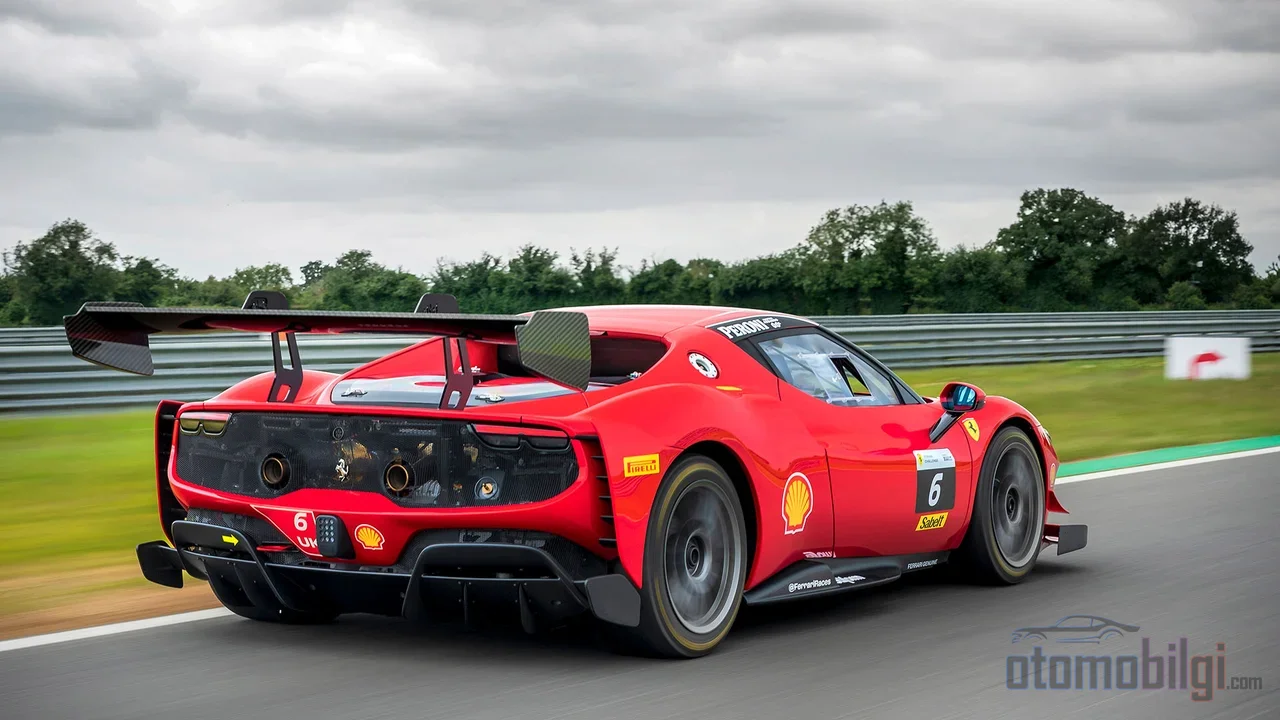
The new 296 Challenge Stradale is also a product of the same logic. Its basis is the 296 Challenge , which has been racing in the Ferrari Challenge one-make series since 2024. Somewhat softened compared to the GT3 car and aimed at amateur customer racers, this vehicle's development saw Ferrari officially state that the decision to remove the hybrid elements was made from the very beginning. The result: a pure twin-turbo V6, savings of roughly 300 kilograms, and a weight down to 1,460 kilograms. Power was also raised to 700 cv.
It appears the same route will be followed for the road version. Details seen on the test cars include flow-vis paint, familiar from the F1 world, under the diffuser, a significantly larger and reshaped diffuser compared to the standard 296, twin large round exhaust tips reminiscent of the Challenge race car, wide side skirts, and canards. A swan-neck wing, specific to race cars, was also seen on earlier prototypes; it is highly likely to be an optional solution. There is no necessity at play here, but a choice: Ferrari is prioritizing lightness over electricity.
Current state of the 296 family: what does each model offer?
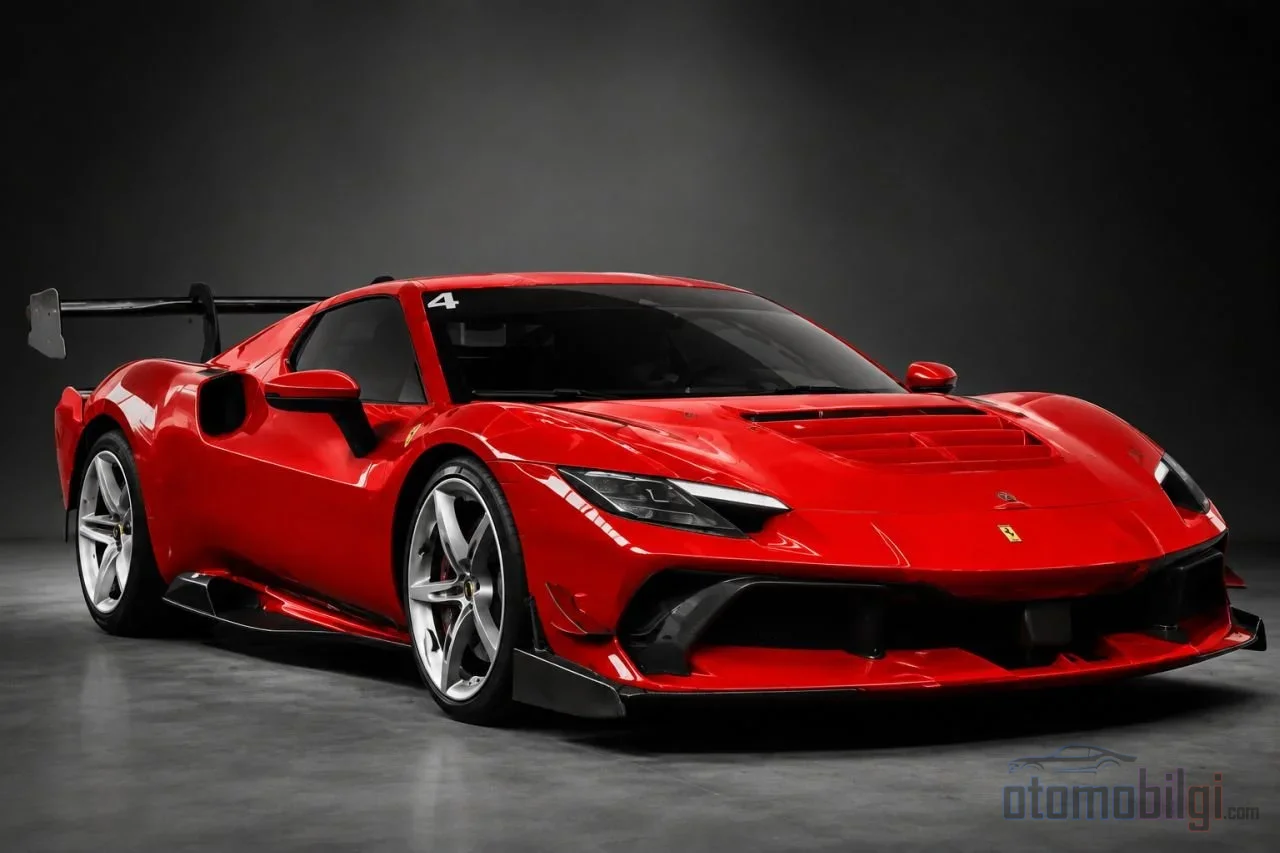
To understand the story of the 296, the whole family needs to be looked at. The road car 296 GTB combines the 120-degree twin-turbo 2.9-liter V6 with an axial-flux electric motor; total power is 819 hp (830 cv), weight is roughly 1,670 kilograms, and the fully electric range is sufficient for short daily use. Arriving in 2026, 296 Speciale while preserving this hybrid architecture, it has been pushed to 868-880 hp, is 60 kilograms lighter than the standard GTB, and produces 20 percent more downforce than the standard hybrid route. It also holds the title of being the first road-legal Ferrari special series powered by a V6 engine.
On the track side, however, the picture is completely different. 296 GT3, despite being based on the 296 GTB, has no electric motor; the reason is that racing regulations do not permit hybrid systems. The 2.9-liter V6 produces 600 hp here. The 296 Challenge is also hybrid-free, and here the reason is not regulation but weight. In other words, Ferrari's practice of leaving hybridization out of its track cars is not new; what is new is that this approach has been carried over to a road car for the first time.
| Model | Power source | Power | Weight |
|---|---|---|---|
| 296 GTB | V6 + hybrid motor | 819 hp | ~1,670 kg |
| 296 Speciale | V6 + hybrid motor | 868-880 hp | 60 kg lighter than the GTB |
| 296 Challenge (track) | Pure twin-turbo V6 | 700 cv | 1,460 kg |
| 296 GT3 (track) | Pure twin-turbo V6 | 600 hp | According to racing regulations |
Power and weight: where do the official figures end, and where do the estimates begin?
Let's clarify this from the start: the exact technical specifications of the Challenge Stradale are not yet an official Ferrari announcement. All the circulating figures are estimates and should be read within this context. There are claims that the hybrid-free and retuned V6 could produce around 720 hp, and that the dry weight could remain around 1,300 kilograms. A more cautious expectation is that the weight would drop below 1,590 kilograms and the V6 would exceed 700 hp based on the 690 hp of internal combustion power in the Speciale. The 690 hp / 1,330 kg pair attributed to a single Italian source falls behind in terms of reliability with its isolated and contextless data.
There is only one explanation for the difference between the figures: dry weight and standard (on-board) weight are different definitions. While the estimates in the 1,300-kilogram band refer to dry weight, the expectation of 1,590 kilograms reflects a more inclusive measurement. The two are two different photographs of the same car. Still, the common ground is clear: this car is heading toward a region of lightness that none of its hybrid siblings can reach.
There is similar uncertainty regarding the launch schedule. November 2026 has been indicated, but this is not an official date. The information that there will be no production limit (cap) and that it will be sold open-ended like the Speciale is equally unconfirmed. Given that Ferrari has approved five new models for 2026, an official announcement can be expected soon in a year with such a packed calendar.
Is this a turning point in Ferrari's performance philosophy?
Everything described so far is actually part of a bigger picture. Ferrari has been following a path it has watched for years: since LaFerrari it has championed hybrids in halo cars, the F80 arrived with hybrid power above 1,200 hp, and the road-going 296 Speciale did not give up its electric motor. In contrast, it has always kept its distance from hybrids in track cars, whether due to regulations or in the name of weight. What is new is that the line separating these two worlds is blurring.
In the past, the recipe for a Challenge Stradale was simple: it added little weight, little comfort and plenty of aerodynamics on top of the naturally aspirated engine. The 458 Speciale, as Ferrari's last naturally aspirated mid-engine model, was the peak of this formula. Now a similar calculation is being made, but the picture is complicated, because the electric motor is now both a power source and a mass burden. It could be said that Ferrari has taken notes from Porsche's playbook: while the Speciale remains at the road-oriented, comfortable and hybrid end, the Challenge Stradale is doing what the GT3 does to the GT3 RS - stiffer, lighter, more ambitious.
The commercial grounding of this decision cannot be denied either. There are assessments that Ferrari's sales have declined due to economic stagnation and disinterest in the hybrid driving experience; a light, non-hybrid "hardcore" model could serve as a signal that refreshes the brand's traditional identity. Frankly speaking, at 0-60 acceleration, competing with any electric car adds little to a vehicle like the 296. What Ferrari is selling here is emotion rather than speed - and emotion, as those who have been in this business for thirty years know, often comes out of kilograms.
Where does the rest of the segment stand: what picture do McLaren and Lamborghini paint?
Looking at the rivals makes Ferrari's move even more meaningful. Its direct rival, the McLaren Artura, combines the 3.0-liter twin-turbo V6 with a PHEV system: 671 hp, 0-60 mph in 2.6 seconds, 205 mph top speed. There is a cultural difference between the two cars - the 296 emphasizes maximum power and drama, while the Artura highlights lightness, precision and everyday usability. McLaren's non-hybrid 750S, meanwhile, represents a similar philosophy with its emphasis on a light chassis and a low power-to-weight ratio.
Hybrid also dominates the top category: the McLaren W1 offers 911 PS per ton with 1,258 hp and a dry weight of 1,399 kilograms, while the Lamborghini Revuelto continues on the road with a PHEV powertrain. In a segment where hybrids dominate, Ferrari disabling the electric motor in its road car is a clear move of differentiation. The question is: is this a one-time exception, or the first sign that lightness is returning to Ferrari's road cars as well? For now, there is no official data to support the second option.
Unusual details: what do the spy photos tell us?
A notable detail spotted on the test cars caught in Germany gives a clue about the vehicle's development stage: fluorescent flow-vis paint under the diffuser. This paint is a method used in F1 to leave a trace of airflow over aerodynamic surfaces, and it usually appears during the calibration phase of the aero package. In other words, Ferrari is still actively tuning this car's air management - which makes the November unveiling expectation reasonable.
Looking at the rear, a diffuser noticeably larger and reshaped compared to the standard 296, twin large round exhaust tips resembling the Challenge race car, wide side skirts, and side skirts with square air intakes in front of the rear wheel are visible. The presence of canards also indicates that the downforce target is not limited to the rear. The large swan-neck wing seen on previous prototypes is likely to remain an option on the road version; coming as fully standard would also be a significant distinction in terms of this car's usability on the street.
Conclusion: is lightness really a strategy?
The 296 Challenge Stradale represents a return to the old formula in the middle of the hybrid era. The part officially confirmed by Ferrari is this: on the track side, leaving out the hybrid is an established practice, the Challenge's development process was designed hybrid-free from the start, and power rose to 700 cv. The rest - dry weight estimates in the 1,300-kilogram band, the power expectation above 700 hp, the November unveiling - are still unconfirmed claims. But the fact that, for the first time, a 296 will roam the streets without electricity is the most tangible evidence of the brand's effort to restore balance in its performance philosophy. The rest will become clear in November.
Sources
- Hybrid-Free Ferrari 296 Challenge Stradale Spied Wearing Funny-Looking Camouflage - Jalopnik
- Ferrari 296 Challenge | Corse Clienti - Ferrari.com
- Exclusive! Ferrari 296 Challenge Stradale may debut this November - The Supercar Blog
- Ferrari Might Yank The Hybrid Out Of Its Wildest 296 Yet - Carscoops
- Ferrari 296 GT3 Technical Insight - Racecar Engineering
- Ferrari 296 GT3 Race Car Revealed - Car and Driver
- Ferrari cuts weight, adds power to 296 hybrid supercars - Automotive News
- 2026 Ferrari 296GTB / 296GTS Review, Pricing, and Specs - Car and Driver
- 2026 Ferrari 296 GTB vs 2026 McLaren Artura - Ferrari Lake Forest
- 2026 McLaren W1 Hybrid Reveal - McLaren Houston
- 2026 McLaren 750S vs 2026 Lamborghini Revuelto - Driving.ca
- Ferrari 296 Speciale Specs - Ferrari Silicon Valley
- Ferrari 296 Speciale - Hemmings
- Ferrari Confirms Five New Models for 2026 - mph.com