Fiat Multipla Concept Showcases a Modular Future in Paris
Share This Page
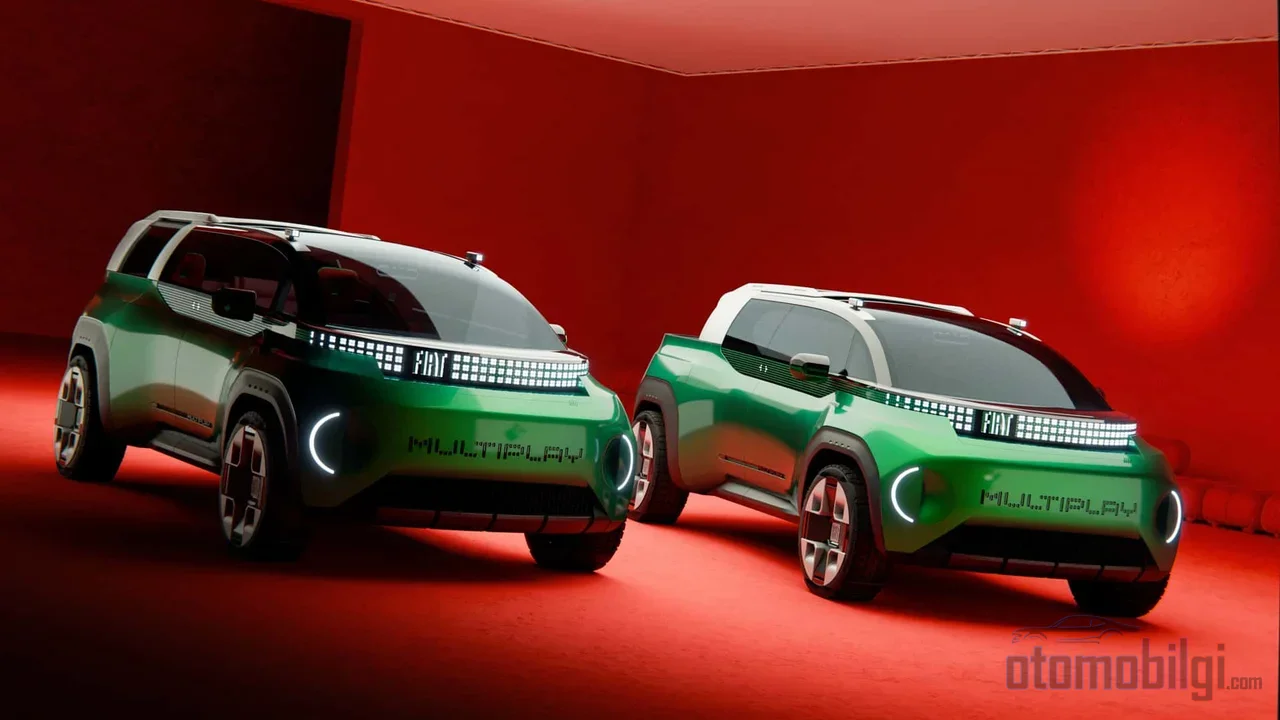
Fiat unveiled a modular concept in Paris called Multiplay, which can be both a family vehicle and a pickup from a single body. Multiplay presents a "three-in-one" vision combining MPV efficiency, SUV character, and pickup versatility within its 4.45-meter length, and beyond the existing portfolio formed by the Grande Panda and Grizzly, it represents a separate family mobility idea with a modular interior. The unveiling took place at the Stellantis "Night Before" event, held one night before the opening of the 2026 Paris Motor Show.
Highlights
- The Multiplay concept was unveiled in Paris on the evening of October 11, 2026, at the Stellantis "Night Before" event.
- Length 4.45 meters; with a sliding rear module, it can transform from a closed family vehicle into a pickup.
- In family mode, 6 seats plus a flexible seat; in pickup mode, 4 seats and an open bed.
- Fiat stated that the concept is not a preview of a specific production model, but is positioned as an idea laboratory.
What is the Fiat Multiplay, and what does it offer?
Multiplay is Fiat's answer to a question that has been talked about for years but never settled: can a family vehicle also be a pickup within the same day? Fiat's answer is not one word, but three. The concept; combines the space efficiency of an MPV, the stance of an SUV, and the carrying flexibility of a pickup in the same 4.45-meter body. The company describes it as "three-in-one" in its official announcement, and this triple definition also forms the backbone of the vehicle's design.
The unveiling took place at the Stellantis "Night Before" event ahead of the show's opening. The choreography on stage also carried its own meaning: the company's strategy advisor Olivier Francois symbolically handed over the keys to Arnaud Belloni, CEO of the Fiat, Abarth, and Lancia brands and European CMO. Such stage setups are often mere showmanship; but here, it is clear that the message being conveyed was that the concept genuinely has a place in the brand's product strategy.
Metamorfosi architecture: a body that turns into a pickup with a few movements
Multiplay's real story is not hidden under the hood, but in the C-pillar. Fiat has named this architecture "Metamorfosi": the rear section is designed as a sliding module, and with a few simple movements, the vehicle can transform from a closed family car into a pickup with an open bed. The transformation is not a button game, but a physical reconfiguration; the boundary between the bed and the cabin is redrawn.
Two basic configurations
The two configurations Fiat announced summarize the vehicle's claim:
| Feature | Family mode | Pickup mode | |
|---|---|---|---|
| Seating layout | 6 seats + flexible "Petsenger" seat | 4 seats | |
| Load area | Closed luggage compartment | Open bed | |
| Suggested use | Work, school, sports traffic | Bicycles, sports and outdoor equipment, bulky items |
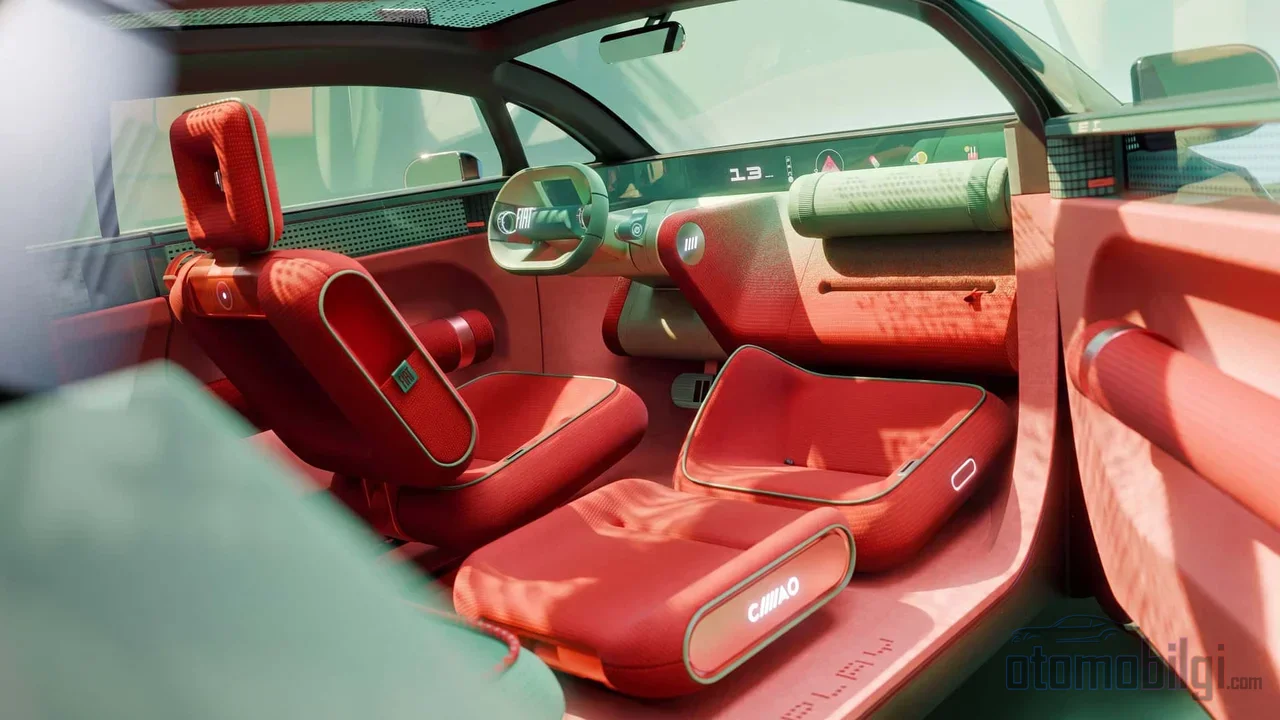
Fiat's touch can be seen in the details. The rear spoiler rotates and, in pickup mode, turns into an integrated carrier that can hold two bicycles. The front passenger seat switches to a lounge layout called "Sunseat" when parked; the dashboard serves as a backrest point, and a chaise longue-style space forms beneath the panoramic roof. These are not the typical flexibility tricks often seen at show concepts; they are actually solutions built around a specific use case - a weekend sporting event, a picnic, a bike ride.
The Petsenger seat: pet, child and table in one
The most original piece of the Multiplay is the multifunctional seat in the rear compartment. Fiat calls it "Petsenger"; the name itself reveals the intent: combining passenger and pet. A single piece serving four different functions: it can act as a child seat anchoring point, turn into a pet area, be used like a small table, or provide storage space. The outer section of the cushion can be detached and used as a leash; a foldable food bowl is integrated into the door. These may seem like small details, but few brands think of them together - this seat is the piece that most clearly tells who the concept's target audience is.
Fiat emphasizes that the rear compartment can, when needed, take two children or even one adult. One of the best-known compromises of modern family vehicles is that the third row is effectively unusable; Multiplay challenges this problem head-on. The hidden screen in the dashboard is part of the same logic: when the vehicle is off, it disappears from view, and the cabin becomes a calmer living space.
A design language drawn from a watermelon
The body color is bright green, and the cabin tones are red and pink. Fiat's source of inspiration is the watermelon: rind on the outside, flesh on the inside. The concept's sustainability side is not clichéd either; most of the soft components are made from monomaterial textile produced with a seamless 3D knitting process that reduces waste. Waterproof monomaterial coverings were preferred in the child and pet areas. The short hood, wide glass surface, panoramic roof and pixel-style LED lighting are among the elements that complete the vehicle's exterior character; secondary publications also mention the split door layout.
This idea is not all that new either: from the 600 Multipla to the 1998 Multipla
Fiat places the Multiplay not in a void, but within its own history. The 1956 Fiat 600 Multipla could carry six people in roughly 3.5 meters; compared with the four-passenger comfort of today's city cars, it is easy to appreciate what that meant. The 1998 Multipla, meanwhile, fit six seats in two rows into a body under four meters, making it one of the rare vehicles that accommodated six people on a single level. That vehicle's design was debated for years; but its use of space is still held up as an example. It is clear that Multiplay carries on this legacy, and it is no coincidence that the two are presented separately at Fiat's stand in Paris.
Will it go into series production?
The clearest answer to that comes from Fiat itself: the concept is not a preview of a specific series-production model, and the company positions it as a "solution laboratory for tomorrow's mobility." Unlike many concepts, this vehicle is not claimed to be "on sale verrrry soon." In the automotive press, assessments are circulating that the concept could turn into a production family vehicle within two to three years; but this is not the manufacturer's official position and should not be read as such.
Experience shows that concepts of this kind have two separate fates: either certain solutions are transferred drop by drop into production models, or they remain just ideas. The most realistic candidates in the Multiplay are the Petsenger seat and the modular interior solutions brought by Metamorfosi - it is more likely that these, rather than the body shape, will find their way into production. But this is merely my guess; Fiat has not made any official production commitment.
Fiat's stand in Paris and the Multiplay's place in the portfolio
Fiat's stand in Pavilion 4 at the Parc des Expositions de la Porte de Versailles is conceived like a modern Italian piazza. It is exhibiting the Multiplay together with the Multiplina concept; there is also a portfolio table presenting the Grande Panda, 500 Cabrio, 600 Sport and Topolino on the same stage, alongside the Grizzly and Grizzly Fastback making their European debut. The Multiplina and the Multiplay were seen being confused; they are two separate concepts. The Multiplina is a small concept sitting between the Topolino and the compact class, inspired by the 600 Multipla. The Multiplay, on the other hand, is a larger, fully modular family mobility idea.
In this setting, the Multiplay's position is better understood with the scale as reference: The Grizzly models are under 4.5 meters, with trunk volumes of 545 liters (Grizzly) and 608 liters (Fastback), a target entry price of around €20,000, opening for European orders on January 5, 2027. So Fiat's small vehicle lineup is already saturated and price-focused; the Multiplay, however, sits outside this lineup, appealing to a different customer - the family that needs both a car and a van on the same day. The brand's overall strength is powerful enough to carry this: Fiat has been Stellantis's volume-leading brand since 2021, and in 2026 it surpassed 1 million sales worldwide; it recorded growth of 20 percent in Europe, 19 percent in Italy and 33 percent in France, entering Europe's top five in the private buyer base.
Its position against its rivals
The Multiplay has no direct European rival concept - at least not at this show. The modular interior idea has been tried before, but no one has offered a solution as radical as Fiat's this time: a genuine body transformation with a sliding rear module, an offer with no equivalent in the current market. In some assessments, it is said that the Multiplina carries the potential to create a new category in the European market; a similar reading is possible for the Multiplay too, but only time will tell.
Conclusion: not a body, but an answer to a question
Reading the Multiplay as just another piece added to the pile of concepts would be a mistake. Here, Fiat is not solving for a body, but for a question: can one single vehicle handle both family traffic and open-air cargo duties? The Metamorfosi architecture, the Petsenger seat, and the Sunseat layout are concrete answers to that question. The lack of a production promise doesn't invalidate the idea; another link has been added to Fiat's space-efficiency lineage that runs from 1956 to today. Let me say it with thirty years of experience: most of what they call idea laboratories are forgotten, but some of them yield problems that production vehicles later solve. Multiplay looks like a job that belongs to the second group.