Mercedes 300SL: The Winged Legend Born from the Race Track
Share This Page
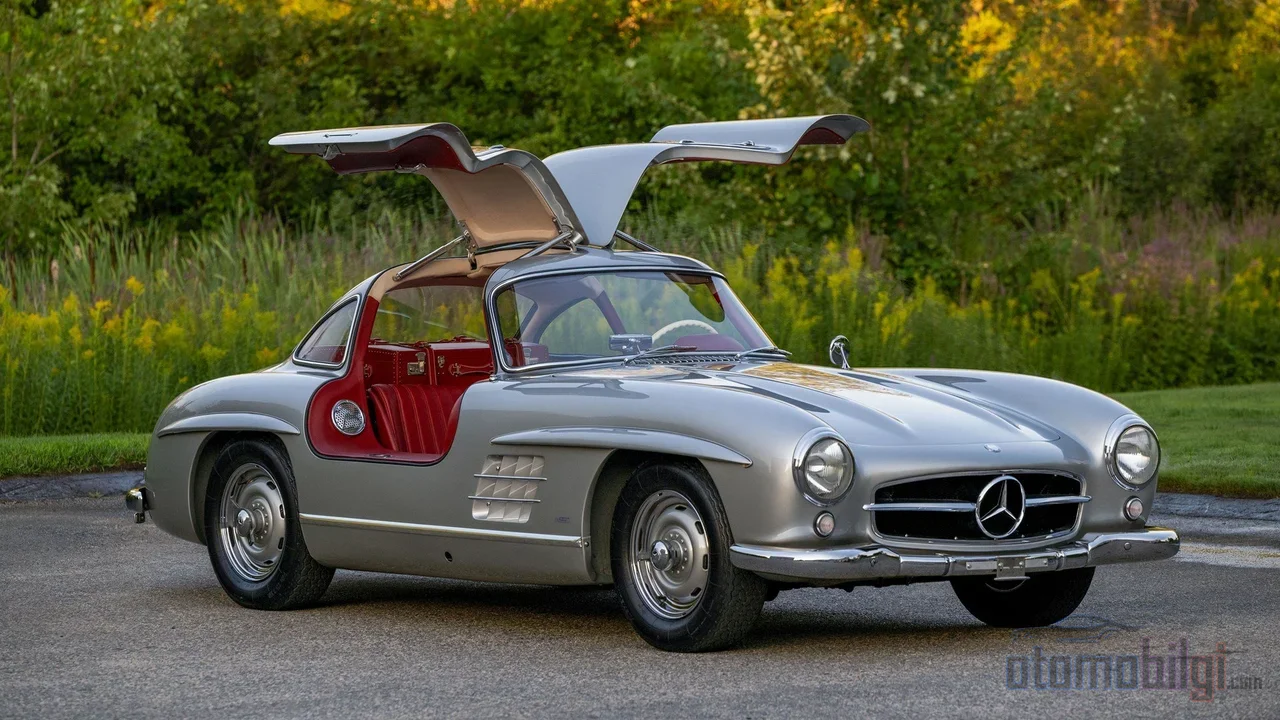
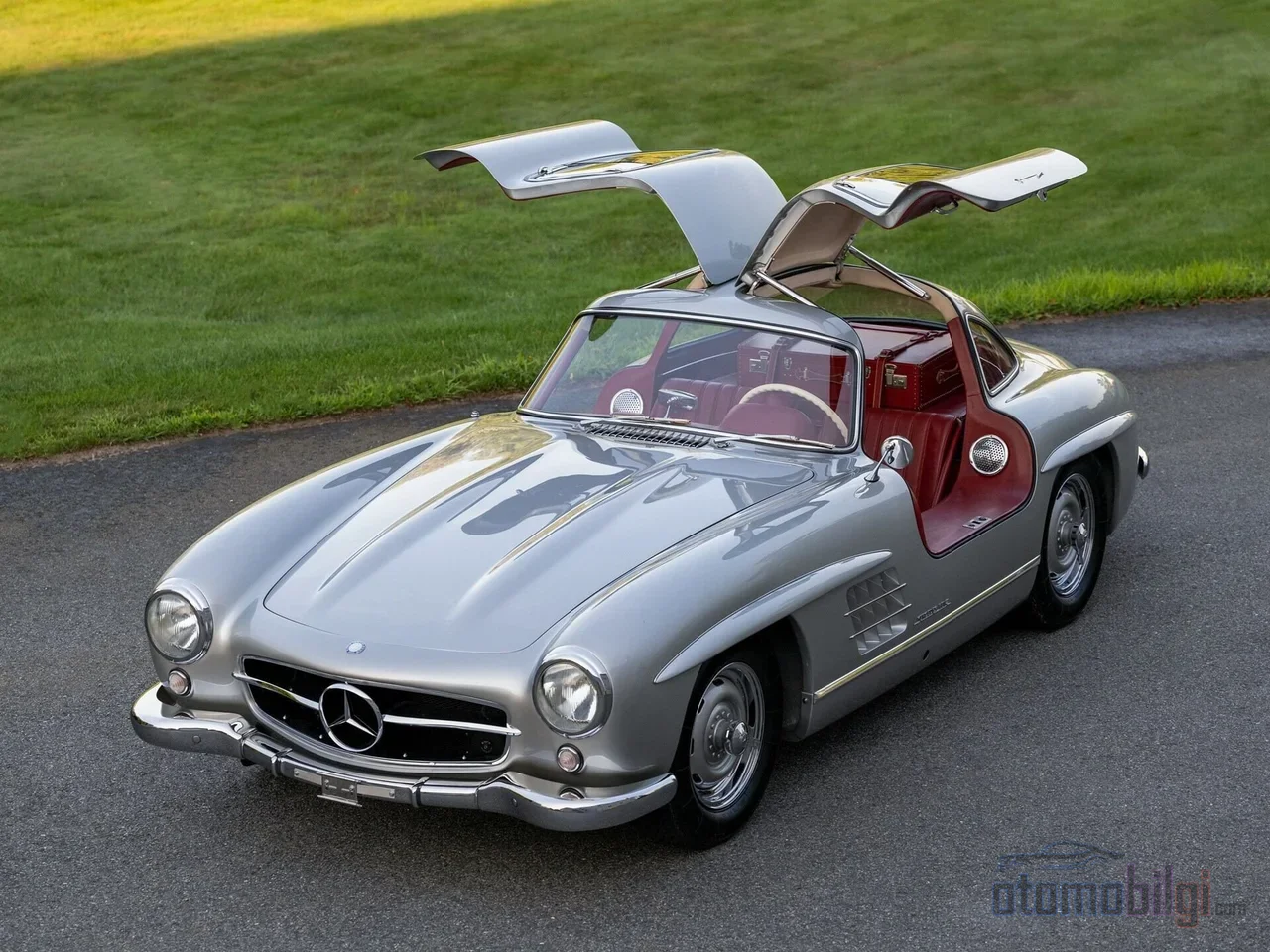
The Mercedes 300SL is the road-going adaptation of the W194 race car that won the 1952 Le Mans; with its tubular spaceframe chassis, mechanical direct-injection engine, and "gullwing" doors hinged to the roof, it is one of the most legendary sports cars in automotive history. It was the fastest production car of its era and is still a collector favorite today. So how did a race car become such a legend? Let me tell you, because this story is truly crazy!
Highlights
- The W194 race car won the 1952 Le Mans 1-2 ; this was the first Le Mans victory for a German manufacturer
- Approximately 1,400 W198 Gullwings were produced, with over 80% sold in the USA
- The first series-production car with mechanical direct injection
- 250-263 km/h top speed made it the fastest production car of its era
- The Gullwing doors were not a style choice but an engineering necessity
It All Began at the 1952 Le Mans: The W194's Racing Season
After World War II, Mercedes-Benz wanted to return to racing, and the task that fell to designer Rudolf Uhlenhaut was no easy one. The mission was clear: build a race car reminiscent of the glorious days before the war. The result was the only 10 examples of the W194 ever produced. They fitted it with a 3.0-liter SOHC inline-six M194 engine; this engine actually came from the luxury "Adenauer" sedan but, in racing tune, produced 175 hp of power. Tilted mounting, dry sump, aluminum cylinder head... The car's total weight was only 2,497 pounds (approximately 1,130 kg), and its top speed was 257 km/h or so. Quite ambitious for 1952!
So what did this car do? Are you ready for this? In the 1952 season it was on the podium almost everywhere:
- 2nd and 4th place at the Mille Miglia
- A 1-2-3 victory at
- Bern-Bremgarten A 1-2
- victory at the 24 Hours of Le Mans 1-2-3-4
- with the spyder-bodied cars at the Eifelrennen at the Nürburgring A 1-2
finish at the Carrera Panamericana The victory at Le Mans was especially spectacular, because it was both Mercedes's and any German manufacturer's first Le Mans victory
. And the first victory for a closed-body car, no less! Mercedes could not claim the next one until 1989. Hermann Lang and Fritz Riess took the winning chassis; let us add that Helfrich and Niedermayr followed in second place.
Why Do Gullwing Doors Exist? (Not Style, Necessity!) Now we come to the most curious question: those famous doors! Most people think, "Wow, what an elegant design!" But the truth is far more interesting: the doors were born entirely out of engineering necessity. The W194's chassis was a spaceframe made of welded steel tubes, in other words a tubular frame. It weighed only 63-68 kg
The Le Mans rules (Article 34, Paragraph 2) also required doors that provided direct access to the front seats. Uhlenhaut's solution? Hinge the doors to the roof! Thus were born doors that opened upward, like gull wings. It was as if the car was spreading its wings to say "welcome" to you. Ironically, this solution, which the engineers devised out of necessity, would become one of the most iconic design details in automotive history.
Here's another interesting detail: the original door windows were deemed too small by the Le Mans organizers, and new chassis with larger door openings were built for that reason. Imagine a vehicle that sparked debate even about its doors, astonishing!
Max Hoffman's Seized Opportunity: From Racing to Series Production
So how did a race car make it to the street? Here's the hero of the story: American distributor Max Hoffman. While watching the racing successes of 1952, this man noticed something: a civilian version of this car would sell like wildfire, especially in America! He conveyed this idea to Stuttgart management and placed the initial order for 1,000 vehicles, guaranteeing production. In other words, the only person who was certain this legendary car would be produced was its distributor. Honestly, one of the boldest business decisions I've ever seen!
The result: the W198 300 SL introduced in February 1954. And the sweetest part of it all was that the launch took place not in Europe, but at the New York Auto Show. Daimler-Benz unveiling the Gullwing and the 190 SL in the US before Europe was an unprecedented decision. Hoffman received the first customer car in March 1955. Around 1,400 units were produced, and more than 80% of them were sold in the US. This was the first Mercedes-Benz to achieve such widespread success outside its home market, and it transformed the brand's image in America from "solid but sluggish luxury manufacturer" to a high-performance sports car maker. Do you believe that a single car can change a brand's image?
Technical Marvels: Injection, Chassis, and the Speed Record
It wasn't just the doors that made the 300SL so special. Beneath it lay engineering that was crazy for its generation. The M198, an injected derivative of the M194 engine in the W194, was developed for the 1954 road version. The 300 SL was the first high-performance sports car with gasoline injection, thanks to the mechanical direct injection system designed by Bosch, and is regarded as the first production car with direct injection. The engine 215 PS produced. In simple terms: if a carburetor is like a shower head "sprinkling" fuel into the engine, injection is like a precision spray bottle that delivers fuel to each cylinder in exactly the right amount and at exactly the right moment. More power, less fuel!
As for the chassis, again a spaceframe, but about 82-83 kg in the production version; thin-walled steel tubes welded in a triangular lattice form provided high torsional rigidity and low weight. The body was steel, but the hood, doors, dashboard, and trunk lid were aluminum. Top speed 250 km/h climbed to as high as; sources cite 257-263 km/h figures between them are also mentioned, and with this speed the 300 SL earned the title of the fastest production car of its era. The differing figures generally stem from measurement methods and definitions; but the result is the same: there was no other series-production car in the 1950s that did this!
| Specification | W194 (1952, racing) | W198 (1954, road) |
|---|---|---|
| Production count | 10 units | Approximately 1,400 units |
| Engine | M194, 3.0 L inline-six | M198, 3.0 L inline-six, fuel-injected |
| Power | 175 hp | 215 PS |
| Top speed | Approximately 257 km/h | Up to 250 km/h (sources cite 257-263 km/h) |
| Chassis weight | Approximately 63-68 kg | Approximately 82-83 kg |
| Doors | Gullwing (due to regulations) | Gullwing (due to chassis) |
You can see the chassis weight difference in the table, right? The W194's chassis was lighter because it was a pure racing car; some weight was added for comfort and safety in the road version. It's perfectly normal for the two cars to differ.
How Much Does a Gullwing Cost in 2026?
Today the 300SL is one of the most sought-after pieces in the collecting world, and the prices truly dazzle the eyes. At Amelia Island 2026, a 1957 Gullwing sold for 2,012,500 dollars. At Scottsdale Auction, a 1961 Roadster 1.87 million dollars fetched. For a 1963 Roadster, 1,487,488-1,757,941 dollars is the asking range. So the money we're talking about is truly the price of a house!
But something interesting is happening: the market seems to be taking a bit of a breath in 2026. A 300 SL Roadster sold for 945,000 dollars, below the low estimate, and while classic car prices haven't crashed, they are leveling off. According to Hagerty's data, for the 1957 300SL there is a total 77M CAD volume and an average 2.3M CAD sale price, but a 21% drop in the number of vehicles sold is seen. So it didn't hit bottom; it's just an overheated market cooling down. At the very top stands the 135 million euro sale of the 300 SLR; this is considered the most expensive car sale ever. Let's also not forget that the W194 chassis #00002 received a 15 million dollar offer in 2012!
The Gullwing's Legacy: Its Traces in Today's Mercedes Design
The real test of an icon is being remembered even years later. The 300SL passed this test gloriously. The most striking example: the SLS AMG, which arrived in the 2010s, revived the icon with its gullwing doors and design reminiscent of the 300SL. The SLS's doors were a direct tribute to its 1954 ancestor, and of course they required engineering tricks like hinge solutions that exploded during the certification process for modern safety standards. History repeats itself, but this time with a much more powerful engine!
In my view, the real lesson of the 300SL is this: the most legendary designs sometimes never even occur to designers. A rulebook, a tube frame, and an engineer saying "How about we put the doors on the roof?"... That's how a legend is born. Which modern car do you think will be talked about this much 60 years from now? I have a guess, but I'd like to hear your opinion first!
Sources
- Wings of Change: 1952 Mercedes-Benz 300 SL (W194) - Automobilist
- Mercedes-Benz W194 - Wikipedia
- Mercedes-Benz W194 300 SL 1952 Season Review - Supercar Nostalgia
- Photo Archive Vol. 5 – Le Mans 1952 - Scott Grundfor
- Mercedes-Benz 300 SL - Wikipedia
- Mercedes-Benz 300 SL racing sports car (W198) - Mercedes-Benz.com
- History of the Bosch gasoline injection - Bosch
- Mercedes-Benz in America – Max Hoffman - Heacock Classic
- 1956 Mercedes-Benz 300SL "Gullwing" - Audrain Automobile Museum
- The Legacy Of The Mercedes-Benz 300 SL Gullwing - TopSpeed
- Mercedes-Benz 300SL: Revolutionary Tubular Frame Chassis - Original Race
- Are Classic Car Prices Dropping in 2026? - Automotive History
- Collector car market performance - Lombard Odier
- Mercedes-Benz 300 SL value 2026: Zoute test - Classictimers
- 1957 Mercedes-Benz 300SL valuation - Hagerty
- Mercedes-Benz SLS AMG Gullwing - Motorious
- How Mercedes-AMG Made Modern Gullwing Doors Safe - CarBuzz