Practical Charge: İzmir's Electric Commercial Vehicle Takes to the Road
Share This Page
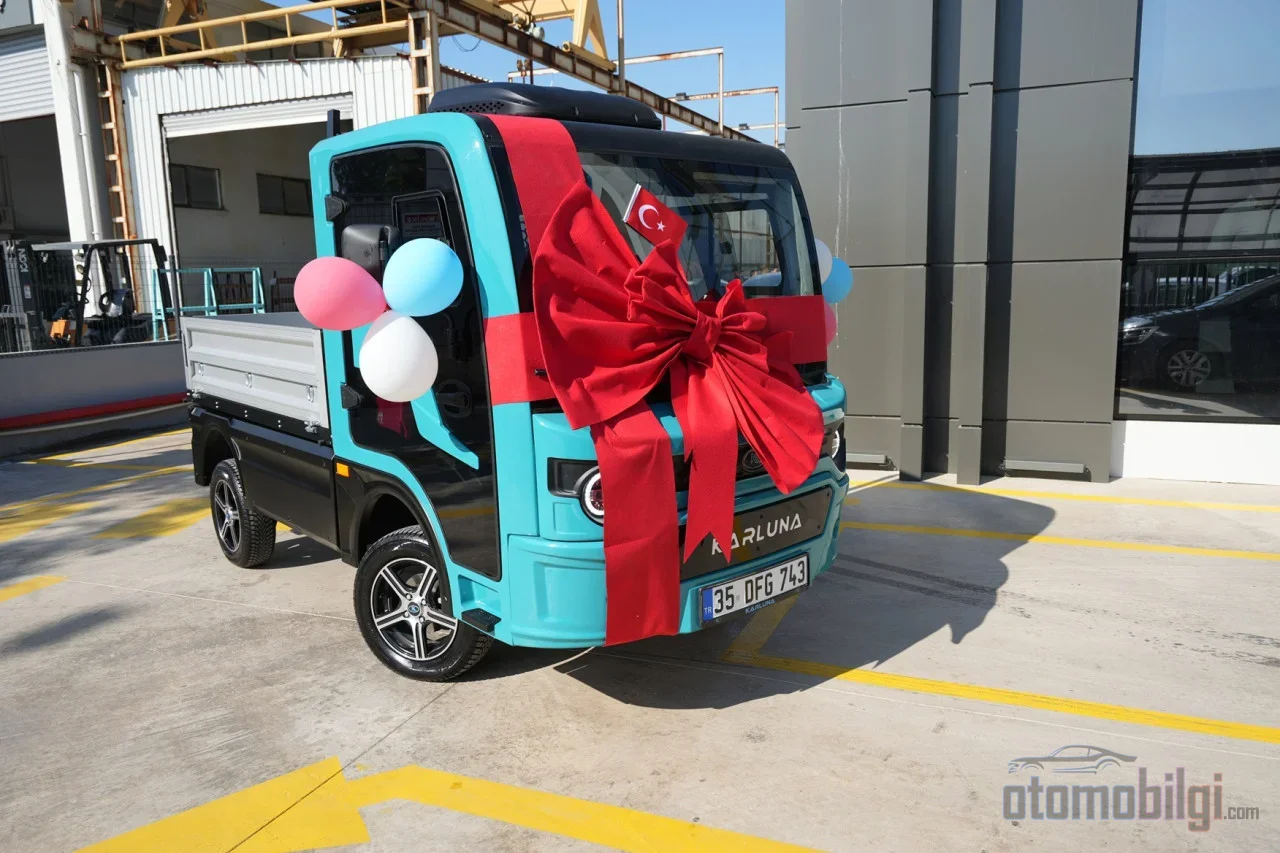
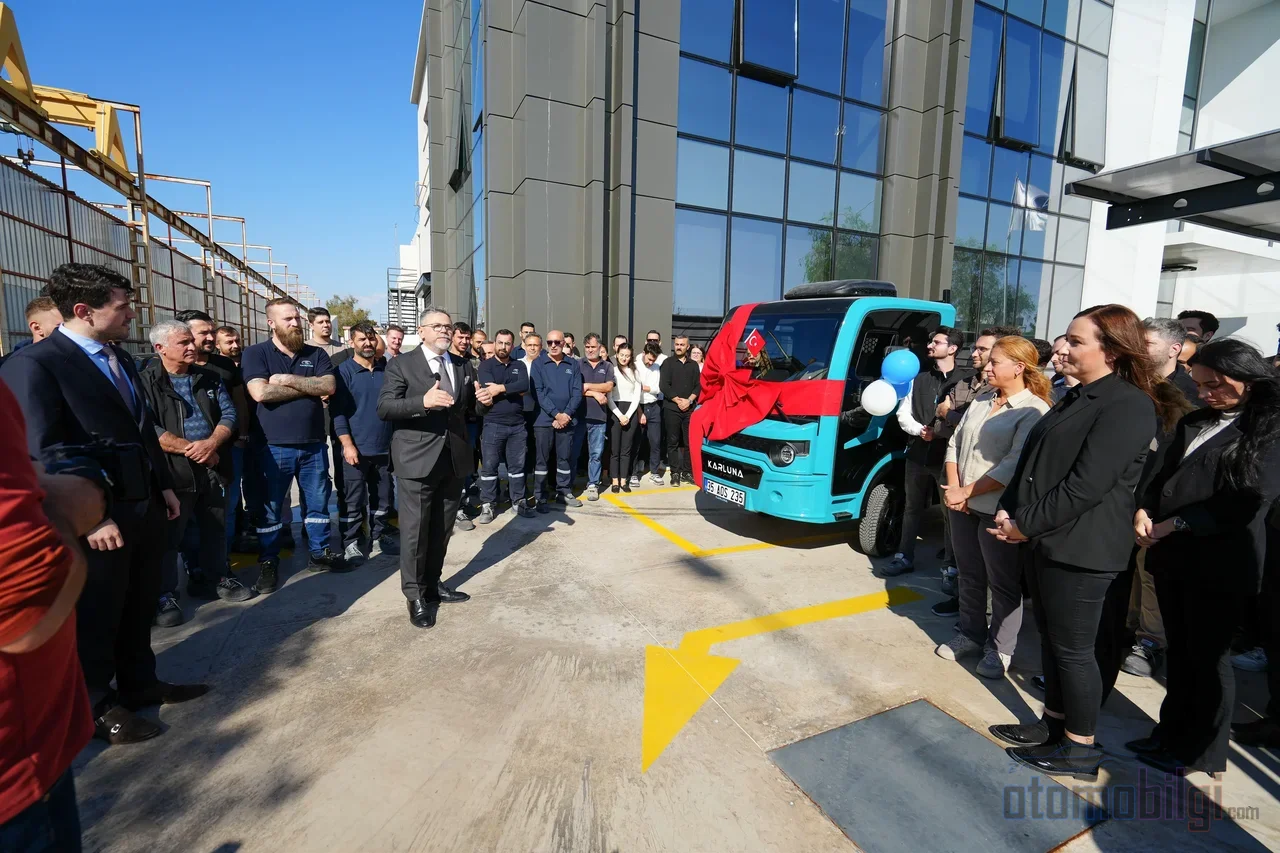
The electric light commercial vehicle Karluna Pratik, developed in Izmir, has reached its first owners after receiving type approval. At a ceremony held on October 19, 2026, the first two vehicles were delivered to the directorates of the Izmir Atatürk Organized Industrial Zone and the Izmir Tekeli Organized Industrial Zone. With three different LFP battery options, a 1-ton payload capacity, and a localization rate the company describes as close to 100 percent, a notable alternative in this small class has hit the road. After the delivery, we sat down and examined the vehicle's features, production targets, and market context.
Highlights
- The first deliveries were made on October 19, 2026 to two organized industrial zone directorates.
- Three battery options: 30, 60 and 90 kWh; range claims between 370 and 800 km.
- Payload capacity of 1 ton; the vehicle is in the L7e class and holds an EU Type Approval Certificate.
- The company is targeting nearly 200 deliveries by the end of 2026; the facility in Aliaga will come online within two months.
- Plans for the opening of a mass-production facility with an annual capacity of 45,000 vehicles continue.
What is the Karluna Pratik, and who is it aimed at?
The Pratik is an electric light commercial vehicle classified in the L7e category. In our trade's language, this class has long been an under-covered gap; it covers the small commercial vehicles squeezed between large automobiles and micro vehicles that do the real work in urban distribution. In Türkiye, domestic production in this segment is almost nonexistent. And this is exactly the gap Karluna steps into: A vehicle that has obtained the EU Type Approval Certificate, with a 1-ton payload capacity, targeting urban logistics, cargo distribution, and municipal services.
In the past, this kind of work was done with both pickup trucks and motorcycles; now electric vehicles designed for the size in between are becoming a sensible option, especially in organized industrial zones and the fleets municipalities use in the field. It is no coincidence that the first deliveries went to two OIZ directorates: the vehicles will serve the industrialists in these zones. In other words, Karluna did not settle for finishing the vehicle and putting it on display; it chose to start its work where the use case is most intense.
Battery options and range: Three tiers from 370 to 800 km
Perhaps the Pratik's most ambitious aspect is its battery structure. The company offers three different LFP packs, and the range announced for each pack is as follows:
| Battery | Announced range |
|---|---|
| 30 kWh | 370 km |
| 60 kWh | 640 km |
| 90 kWh | Close to 800 km |
At first glance, these figures look very high for its class; the 90 kWh pack approaches the capacity of most electric cars. However, one observation must be made here: It was not disclosed under which test standard, at what speed, and with what load the range figures were measured. As someone who has been following this business for 30 years, I can say this: A range stated without test conditions is a range that carries weight with caution. These figures may be achievable in low-speed urban use; but whoever makes the purchase decision must take this uncertainty into account when comparing against their own usage profile.
Charging times and warranty
According to the brochure data published by the manufacturer, the 90 kWh pack charges from 20% to 80% in 144 minutes; with home charging, this corresponds to a range of 6-8 hours. The company's website also includes a durability statement that, assuming one charge per day, the battery will retain 80% of its usable capacity after approximately 4,000 charges over ten years, along with promises of a 5-year motor warranty and a 2-year comprehensive warranty. All of these are manufacturer claims; there is no independent verification yet. I would add that this is normal for a new brand, and that real-world use will test these claims over time.
Two more details complete the vehicle's technical portrait: It is reported that the top speed is around 90 km/h and that the vehicle can be controlled via a mobile app. The company also talks about features such as remote commands via telemetry, location tracking and charge planning; for fleet users, these are elements that prove useful in daily operation rather than features that remain on paper.
Is the localization rate close to 100%?
CEO Mert Karabağlı states that the localization rate is close to 100%. The list of components developed in-house by the company also contains concrete items backing up the claim: composite parts, the battery pack, the vehicle control unit, power electronics units, the electronic parking brake and display applications. Developing the battery pack and power electronics in-house is not a trivial matter for a venture of this scale; a significant portion of an electric vehicle's cost and critical know-how lies precisely in these components.
That said, it must honestly be noted that there is no independent confirmation of the localization rate claim. It is known that Karabağlı started the company formation process in May 2023 with the goal of building a domestic electric vehicle ecosystem; reaching type approval and first deliveries in three and a half years is a fast track at this scale. It will become clear in the coming period which calculation method was used to arrive at the claim of near-100% localization.
The Aliağa facility and production targets: A roadmap from 2026 to 2029
Karluna's real test will begin on the series production side. The facility to be built in the Aliağa Organized Industrial Zone is planned to have an annual production capacity of 45,000 vehicles; according to Karabağlı, the factory will become operational within about two months and will play a decisive role in 2027 deliveries. Karabağlı also announced that approximately 500 pre-orders have already been collected for Pratik.
The target table is ambitious:
- close to 200 deliveries by the end of 2026,
- 5,000 deliveries in 2027,
- and reaching an annual level of 10,000 vehicles in 2029.
I must also point out that these figures are not realized sales but the company's future targets. A trajectory stretching from 500 pre-orders to 5,000 deliveries in 2027 can only be consistent with the Aliağa facility coming online as planned; otherwise it turns into a goal that remains on paper. In the past, the weakest link in the delivery calendar of such projects was the supply chain; it still is today - only the name of the weak point has changed.
Expansion toward Golf vehicles and the N1 class
The company's product plan is not limited to a single model. A type approval application has been made for Golf vehicles; this class covers small vehicles used in closed or semi-closed areas such as factory grounds, airports and state camps, and there is a serious supplier market for them in Türkiye. Beyond that, design work on N1 class commercial vehicles has begun; in later stages, the launch of N1 and N2 class, that is, larger commercial vehicles, is planned. This shows that Karluna does not intend to remain a niche butcher's vehicle but wants to gradually climb up toward the classic light commercial segment.
Price uncertainty and market context: a growing electric light commercial segment in a shrinking market
The sales price of Pratik was not shared in the delivery announcement. This is the most critical omission for interested industrialists and fleet buyers; because in the L7e class, the payload per price almost always determines the purchase decision. An earlier social media post had stated that the vehicle's price was announced, but the recent delivery news contains no price data.
The market picture, however, paints a contradictory scene. The total market for automobiles and light commercial vehicles shrank by 13.39% in the first nine months of 2026; in the first eight months of the year, the contraction was at the level of 11.91%, and total sales had fallen to 719,996 units. In contrast, electric light commercial sales roughly increased 2.5-fold in the first five months of the year. In other words, while the overall market is shrinking, the electric segment of the light commercial side is growing rapidly. Karluna stepping onto the stage precisely through this window, at exactly this right time, may be the most reasonable aspect of the project.
Conclusion: A small vehicle, a big test
Pratik's first delivery, beyond its symbolic value, is a concrete threshold: a domestically developed electric commercial vehicle that has received EU Type Approval, entered traffic, and been delivered to a real corporate user. The engineering on display, with three battery options, 1-ton capacity and a broad range of body types, is undeniable. The real question lies in the transparency of testing for range claims, the disclosure of the price, and the Aliağa facility coming online on the promised schedule. The delivery figures of 2027 will tell whether this project is a story or an industry. Until that day, our eyes will be on whether the 200-delivery target is achieved.
Sources
- The electric Karluna Pratik developed in İzmir hit the roads: First deliveries made
- Karluna Pratik, the work of Turkish engineers, put on its plate and hit the roads
- Karluna official website (product and warranty information)
- Karluna brochure (charging time information)
- ODMD Press Release, October 2, 2026 (market contraction)
- The light commercial vehicle market is going electric