Pre-Tesla: Hybrids and the RAV4 EV - Why Electricity Left Early?
Share This Page
In the pre-Tesla era, the electric car came to life twice and was withdrawn twice: California's zero-emission mandate gave birth to fully electric pioneers like Toyota's RAV4 EV and Honda's EV Plus , while the rise of hybrid technology and the consolidation of nickel-metal-hydride (NiMH) battery patents in a single hand ended this early electric wave in the early 2000s. The road was only reopened in 2008 with the lithium-ion Tesla Roadster. This page explains, with technical data, how that bridge period worked and why the electric car was postponed once again.
Highlights
- RAV4 EV: 1997-2003 approximately 1,900 units, of which 1,484 in California
- NiMH pack: 24 cells, ~27 kWh, EPA range 95 miles (153 km)
- Honda EV Plus: only ~300 leases (US), discontinued in 1999 in favor of the Insight
- CARB ZEV quota: 2% from 1998 onwards; most of the mandate was removed in 2003
- Tesla Roadster, 2008: 392 km of range with lithium-ion range
The Rule That Gave Birth to the Electric Car: The California ZEV Mandate
The reason fully electric cars came back to the table in the 1990s was not market demand, but regulatory pressure. The California Air Resources Board (CARB), with its Low-Emission Vehicle regulation adopted in 1990, required 10% of new vehicle sales to be zero-emission. The timeline was concrete: from 1998 onward, 2% of large manufacturers' new light vehicle sales within the state had to be emission-free.
Manufacturers had to develop real products to meet this quota. The GM EV1, Toyota RAV4 EV and Honda EV Plus are products of this era. Their common traits are striking: all three were limited to California, all three were offered primarily through leasing, and all three met their end in the early 2000s. In other words, the electric car was born not as a consumer product, but as a legislative output - and that determined everything that followed.
Toyota RAV4 EV: The Most Tangible Example of the Early Electric Car
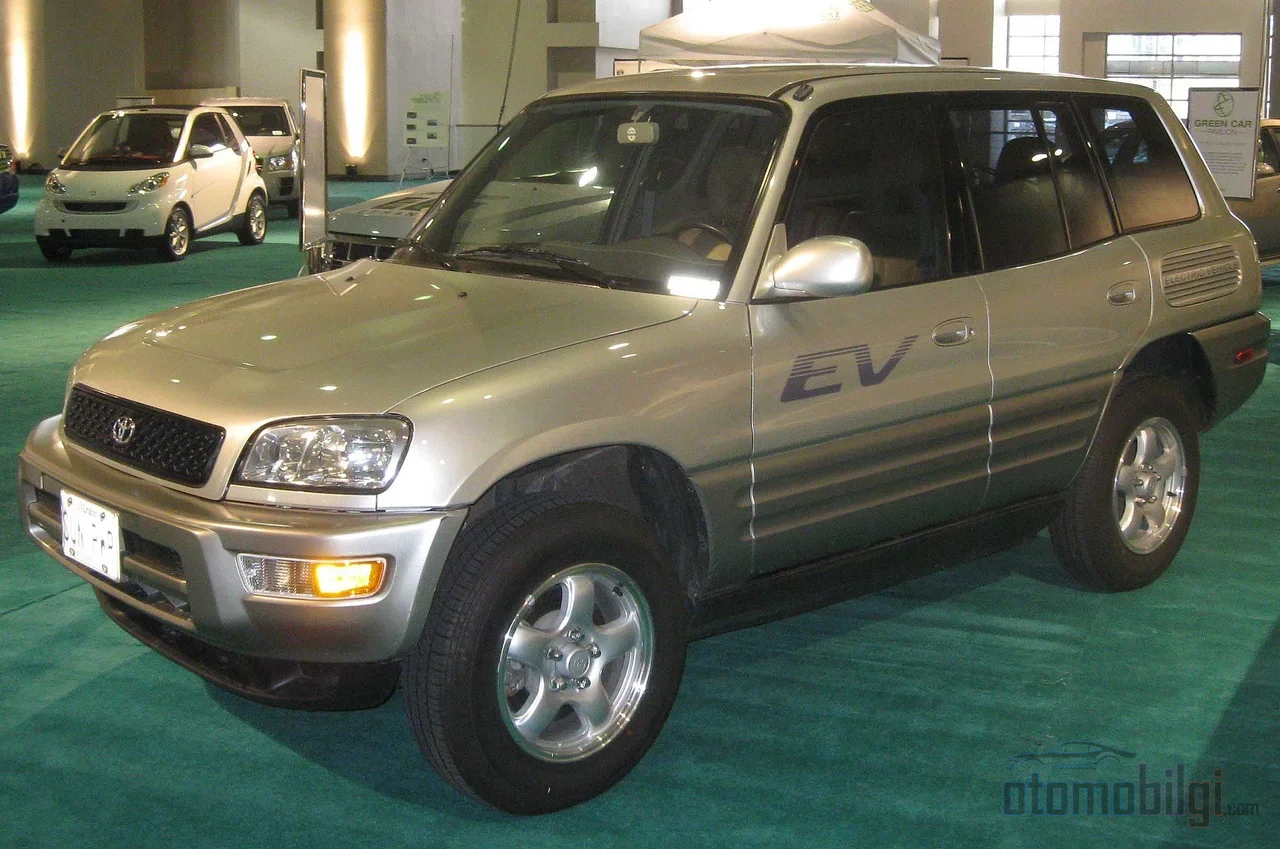
The RAV4 EV is the vehicle produced in this period that looks most meaningful from today's perspective, because it placed genuine everyday usability into a compact SUV body. The technical picture speaks clearly: the pack contained 24 Panasonic 12V 95Ah NiMH cells , with total capacity of approximately 27 kWh. EPA range was 95 miles (153 km), top speed was limited between 78-85 mph, and 0-60 mph took about 18 seconds. With the inductive Magne Charge system, the 6 kW charging unit completed a full charge in about 5 hours.
The durability side was also impressive. Some RAV4 EVs traveled over 150,000 miles (240,000 km) on their original battery packs; Toyota tested the vehicle for 300,000 miles over two years in Japan before bringing it to the US. The fact that around 500 first-generation vehicles were still in use on California roads as of mid-2012 shows that NiMH chemistry was technically sufficient for an EV - the problem was not in the engineering, but in the economics and patent structure we will see below.
Production Numbers and the Leasing Model
First fleet deliveries 1997 was offered for lease; in 2001 leasing of single-vehicle fleets to small businesses opened, and in March 2002, with a corporate policy change, public sales began. But the public offering remained symbolic: only 328 units were sold or leased to the public - there were waiting lists, yet the program was still terminated. Some of the last 328 vehicles were completed by hand from spare parts due to parts shortages; deliveries continued until September 2003. The 1997-2003 total was approximately 1,900 units: about 1,500 of them in the USA (1,484 in California), 400 in Japan.
| Year | Approximate Number |
|---|---|
| 1997 | 69 |
| 1998 | 359 |
| 1999 | 255 |
| 2000 | 106 |
| 2001 | 160 |
| 2002 | 600 |
| 2003 (first half) | 28 |
The pricing structure also explains the program's difficulty: the sticker price was USD 42,000 with the USD 9,000 California ZIP grants (reduced to 5,000 in 2003) and the USD 4,000 federal tax credit, the effective cost dropped to around USD 29,000-33,000. Toyota claimed that tens of thousands of orders were needed to sustain or restart production. When lease terms ended, the company began reclaiming and crushing the vehicles; in 2005, an agreement reached with DontCrush.com (later Plug In America) stopped the crushing. The end of the program was announced one day after CARB replaced most of its ZEV mandate in 2003 with the Partial Zero Emission Vehicle (PZEV) and SULEV categories. The timing proves beyond doubt that the reason was regulation.
Honda EV Plus: A Shorter Version of the Same Scenario
Honda tried the EV Plus on the Californian stage between 1997 and 1999, leasing approximately 300 vehicles in the USA and 330 in total. Production was stopped in 1999 - immediately after Honda announced its first hybrid car, the Insight. When lease terms ended, nearly all vehicles were reclaimed by Honda and most were recycled; a few were donated to universities. On the Honda side the story is shorter, but the template is the same: a lease-only trial, with the curtain closed by the arrival of the hybrid. Honda began leasing its FCX fuel cell vehicle in 2002; so the company's interest in electrification did not end, but the full-battery EV was once again shelved in that decade.
The NiMH Battery Barrier: Claim or Record?
The most controversial line on the list of causes of death of the early electric wave is the patent barrier on large automotive NiMH batteries. The chain of events goes as follows: the worldwide patent rights to the NiMH EV-95 battery - purchased from GM - passed into Chevron's control through Chevron's merger with Texaco. Chevron's unit won USD 30,000,000 in damages against Toyota and Panasonic; the large-scale NiMH battery production line was shut down and dismantled. The lawsuit concluded without public disclosure due to a gag order imposed on the parties at the ICC International Court of Arbitration. The patents remained in Chevron's hands until the end of 2014 and during this process it was claimed that only small NiMH batteries unsuitable for electric vehicles were allowed.
A distinction must be made at this point. The $30 million secret arbitration award and the dismantling of the production line are documented, concrete events; by contrast, the claim that Chevron pursued a deliberate suppression strategy remains an interpretation coming from advocacy circles. Dr. Stan Ovshinsky, the inventor of NiMH, opposed GM by making a 200-mile journey with an EV1 fitted with a NiMH battery, wanting to demonstrate that NiMH was practical for an EV. On the other hand, Toyota offers practical reasons for the termination: a threshold of tens of thousands of orders and the obsolescence of the 1996-bodied RAV4. The two explanations do not exclude each other - regulatory retreat dried up demand, while patent consolidation made it harder for alternative manufacturers to enter the scene.
Prius and Hybrid: A Middle Path, But In Which Direction?
Toyota's investment in hybrid was not a coincidence but a deliberate engineering choice. According to the company's own historical narrative, the project was partly delayed by an obstacle like this: at the time, there was no secondary, i.e. rechargeable, battery that could meet the hybrid vehicle's performance requirements. The development of the Prius involved serious technical challenges such as designing an efficient hybrid powertrain and battery management. The result was a product introduced in 1997 that transformed the automobile industry - but an electrification without a charging plug.
The development process of the RAV4 EV remains in the shadow of this choice. In the prototype evaluations of the 1990s, the NiMH version with higher range was preferred, while its energy efficiency was lower than the lead-acid (PbA) version. Toyota chose NiMH, saying that developing two battery types in a limited-volume program was not practical; this decision led to a higher cost and sales price. EV advocates argued exactly the opposite: the choice of NiMH blocked the way of the low-cost PbA-based electric vehicles of the 1990s. The narrative that consumers were steered toward the Prius instead of an EV at dealerships is frequently repeated as one of the supports of the thesis that the hybrid delayed the EV. The measurable fact is this: the hybrid revolution accumulated the battery management and electric powertrain experience needed for EVs at mass-production scale - but in that same decade it pulled the fully electric car off dealer shelves.
How Lithium-Ion Unlocked It: The Road to the Tesla Roadster
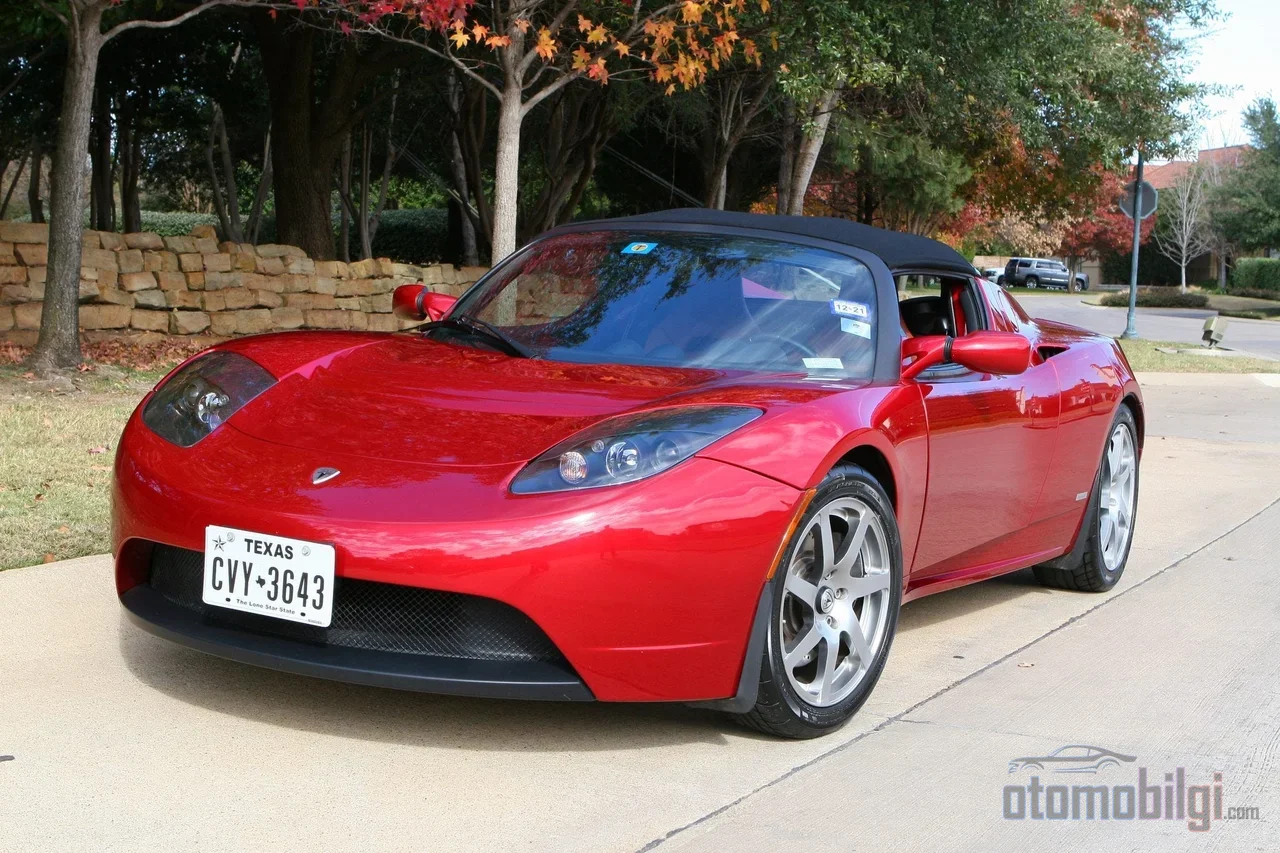
The door closed on NiMH was opened for lithium-ion from somewhere else. Tesla Roadster (2008) was the first highway-legal mass-produced fully electric car built with lithium-ion cells; its range reached 392 km- which is more than two and a half times the RAV4 EV's 153 km. Lithium-ion quickly pushed nickel and lead out of electric vehicles; while Chevron's NiMH patents expired at the end of 2014, the scene had long since changed.
The Roadster's battery choice also shows the logic of the era: instead of custom large-format cells, it used 18650 cylindrical lithium-ion cells selected; the first pack was prototyped in a garage by combining laptop batteries. So Tesla's secret was not inventing a new chemistry - it was bringing the scale economies of consumer electronics to the automobile. Toyota, on its side, made a much later and measured return: the second-generation RAV4 EV, developed between 2012 and 2014 in collaboration with Tesla and Panasonic, was sold only in California, 2,600 units and ended in September 2014 with a production cap, with 2,489 units sold by April 2015.
Conclusion: The Same Decade That Prepared and Delayed
Looking at the pre-Tesla bridge era through an engineer's eyes, two facts are true at the same time. First, the Prius and hybrid family matured battery management, regeneration, and electric drivetrain experience across millions of vehicles, laying the groundwork for the Tesla Roadster. Second, the fully electric vehicle - including the RAV4 EV, which was a solid product - had to wait another decade because of softening legislation, a leasing-based commercial model, and the consolidation of NiMH patents under a single owner. The vehicles of the early wave did not fail technically; the commercial and legal structure failed. The Roadster was proof of this: the same physics, a different battery, a different business model - and the electric car's second spring.
Sources
- Toyota RAV4 EV - Wikipedia
- Toyota RAV4 EV - Electric Vehicles News
- Patent encumbrance of large automotive NiMH batteries - Wikipedia
- Revenge of the NiMH Batteries? - Plug In America
- Honda EV Plus - Wikipedia
- Chapter III: Unique Technologies and Products - Honda
- Item 1. Development of Prius and Hybrid Strategy - Toyota Global
- Zero-emission Vehicle Regulation - CARB
- The California Zero-Emission Vehicle Mandate - eScholarship
- The Toyota Prius Transformed the Auto Industry - IEEE Spectrum
- Tesla Roadster (first generation) - Wikipedia
- Tesla Roadster - ScienceDirect Topics
- Toyota vs. electric cars - Green Car Reports