What Does the PDLC Technology in the Togg T10F's Smart Roof Promise?
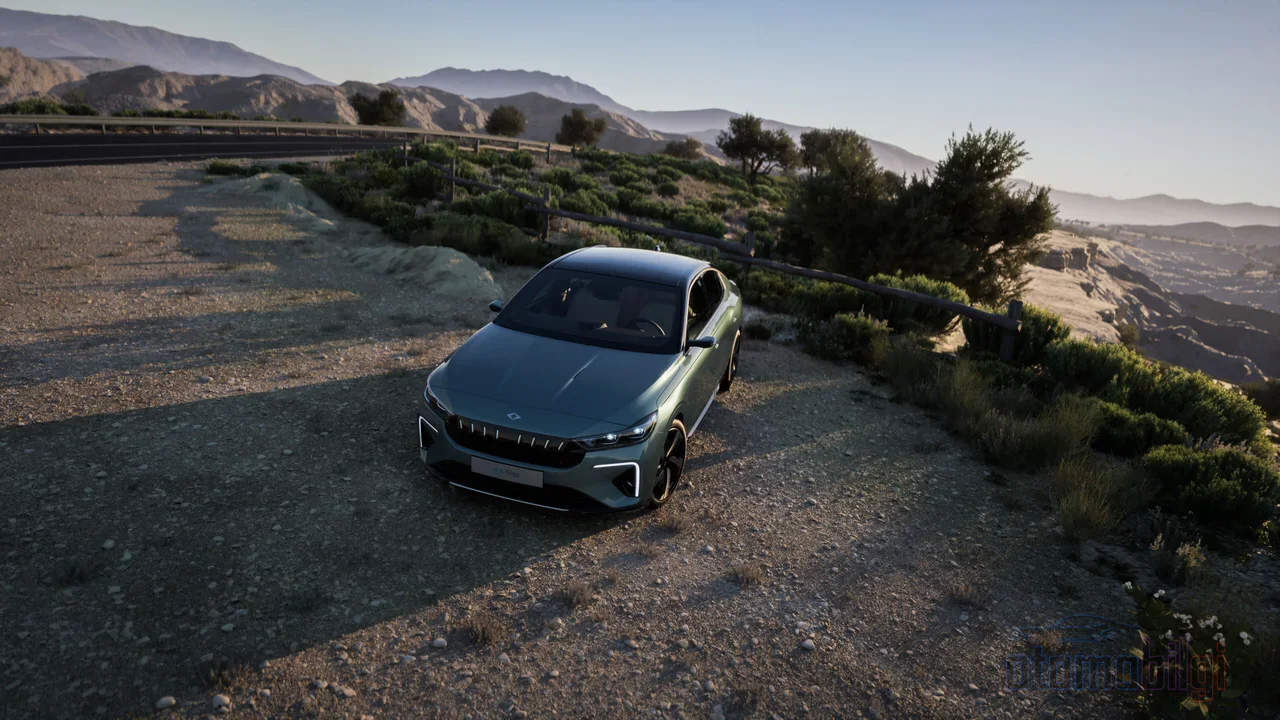
Share This Page
The PDLC panoramic glass roof of the T10F, which can be controlled via the screen and by voice and turns transparent or dark with electricity, has come to the fore as Şişecam's first OEM-level smart glass project aimed at automotive manufacturers. In this article, you will find how the technology works, what the T10F concretely offers the user, and a comparison with similar solutions in the segment.
Highlights
- With the smart glass roof it developed for the Togg T10F, Şişecam has realized its first OEM-level automotive project
- The technology's name is PDLC: Polymer Dispersed Liquid Crystal
- Different sections of the roof can be darkened independently
- Control is handled via the infotainment screen or the voice assistant
- Series production timing and hardware details have not yet been announced
How Does PDLC Glass Technology Work?
PDLC is the abbreviation of Polymer Dispersed Liquid Crystal. The basic logic has not changed in thirty years: A film laminated between two glass layers contains liquid crystal droplets. The behavior of these droplets depends on one single thing: electricity.
When voltage is applied to the glass, the crystals align and light passes through the glass with almost no loss; the roof becomes transparent. When the voltage is cut, the crystals arrange themselves irregularly, scatter the light in all directions, and the glass takes on a frosted or smoked appearance. So the transition itself is not mechanical, but electronic. No curtain, no mechanism, no part to wear out.
We have been following the use of this in architecture for years: meeting rooms, hospital wards, office partitions. It made a rather late entry into the automotive side; until now it has mostly been seen in upper-segment cars. Being offered in a model that appeals to a broader audience like the T10F shows that the technology is progressing along its cost curve.
What happens when the power is cut?
An important question in practice: When the vehicle's battery or the relevant fuse circuit goes out, in which state does the glass remain? According to PDLC's general principle, when the current is cut the crystals return to a random arrangement and the glass darkens. In other words, for the system to have a working state, the vehicle's electronics need to stay up. On the manufacturer's side, there is not yet a detailed explanation of how the glass's default state will be defined; this is one of the points that needs to be clarified in the series-production hardware.
What Does the Smart Roof Offer the User in the T10F?
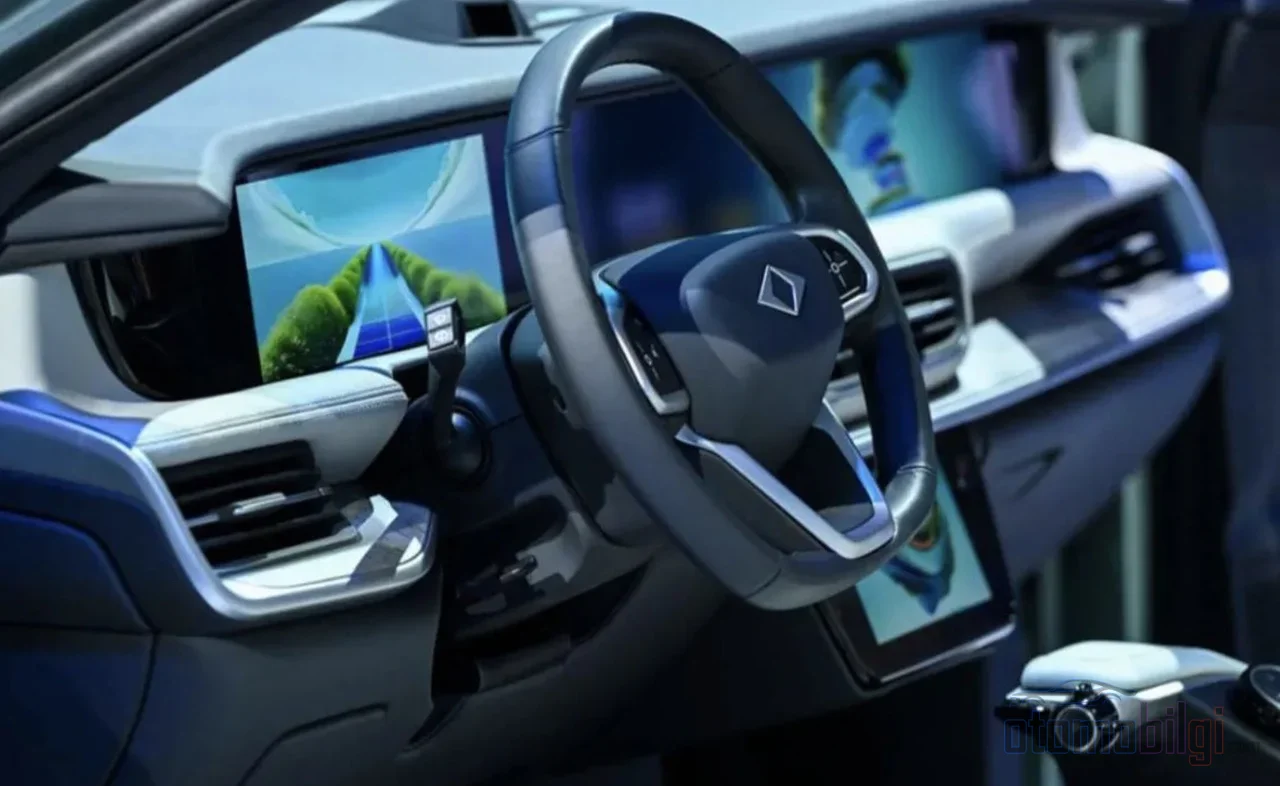
The solution announced by Şişecam goes beyond the classic single-button dimming logic. The system's standout features can be listed as follows:
- Zonal dimming: Different glass sections of the roof can be darkened independently. While the front section stays transparent, the rear section can be put into darkness; for example, the passenger in front can watch the sky while the child in the back sleeps.
- Screen and voice control: Şişecam has also developed an electronic control unit that enables the glass to communicate with the vehicle's electronics. The goal is for the system to be controlled from the infotainment screen or the voice command assistant.
- Less need for a roof curtain: Thanks to zonal dimming, the mechanical roof curtain could become largely unnecessary; this saves both weight and mounting depth in the cabin.
Şişecam notes that the project covers not only glass production but also materials science, electronics, vehicle integration, and homologation processes. This is an indication that the glass roof is no longer just a passive structural element but is turning into an active component integrated into the vehicle's electronic architecture. For those who know the old ways of this business, here's the summary: we used to fit a curtain to the roof; now the roof itself is becoming the curtain.
Is it standard or optional on the T10F?
The T10F's equipment catalog dated June 2026 lists the "seamless panoramic glass roof" as optional equipment, and this glass is expected to be offered with Şişecam's smart dimming technology. However, it has not yet been announced when and with which features the system will arrive in series production, or how the control options will find their place in production vehicles. In other words, it is still too early to try this technology on a T10F you will see at the dealership today.
Heat and Light Management: How Much Does It Affect Range?
The tendency of glass-roofed electric vehicles to heat up the cabin in summer months has long been a debated topic. A large glass surface, when there is no mechanical barrier to limit the sun's heat, increases the air conditioning load; and the air conditioning load eats directly into the range. The promise of smart glass here is to reduce this load by blocking most of the light in its opaque state.
That said, to be honest: there is no measured data yet on the PDLC roof's effect on the T10F's range. For now, we have the comfort gain brought by light control; the size of the contribution on the energy side will only become clear with independent tests. Inventing ambitious numbers to fill this gap serves no purpose other than misleading the reader.
In terms of reference values, the T10F's general framework is as follows: WLTP range of up to 623 km, an 88.5 kWh battery, charging from 20% to 80% in 26.5 minutes (180 kW DC), and 0-100 km/h in 4.1 seconds in the Dual Motor version. A drag coefficient of 0.24 is also a sign that the glass roof sits seamlessly in the aerodynamics.
Are There Similar Solutions in the Segment? The Renault Solarbay Example
The T10F's PDLC roof is not the first attempt in this field. Renault offers in the Scenic a panoramic glass roof that can turn opaque, which it calls Solarbay; this system also aims to optimize light and heat management. The two approaches solve the same problem: eliminating the comfort disadvantage of a fixed glass roof.
The difference lies in the workings and the depth of integration. While Solarbay's technical details have been shared in limited fashion, not requiring elaboration here, the T10F's solution stands out with its emphasis on zonal dimming and connecting to the vehicle's electronic ecosystem via screen and voice. Having its own ECU also means that new control scenarios could be added through software updates in the future; that is the biggest advantage active components have over passive ones.
For those who want to reduce the competitor comparison to a single line, here is the table:
| Feature | T10F (PDLC, planned) | Renault Scenic (Solarbay) |
|---|---|---|
| Technology | PDLC smart glass | Dimmable panoramic roof |
| Zonal dimming | Yes, independent sections | Not transferred |
| Control | Screen and voice assistant targeted | Not transferred |
| Roof shade | May become unnecessary | Unnecessary |
| Presentation status | Timing not announced | On the market |
Can This Feature Turn Into a Sales Argument?
The T10F opened for pre-orders in Türkiye on September 15; the official price list starts at 1,884,980 TL and goes up to 3,217,937 TL. In this price band, customers no longer look only at range and horsepower; cabin experience, material quality and technological details are at least as much a part of the decision. The panoramic glass roof remains one of the factors influencing the purchase decision, especially at higher trim levels.
Still, one should be cautious. The news does not offer a concrete assessment of whether this technology will turn into a sales argument; the highlighted expectation is that it offers a premium cabin experience and opens a new area on the automotive glass side of the domestic supply chain. Three things will determine the technology's impact on sales: which trim levels it will come as an option on, how much it will add to the price, and how smoothly the control experience announced to users will work in the series production.
On the Şişecam side, too, the message is clear: This project is the company's first OEM-level smart glass initiative implemented for automotive manufacturers. In other words, what is at stake here is not a single vehicle but the proof of a capability. The T10F is a good showcase; the real goal is to establish a supply relationship that can be extended to other manufacturers. An ecosystem that learned the glass business of Turkish industry from architecture stepping into the automobile is meaningful news on its own.
Conclusion: Too Early to See the Whole Picture - Time Will Turn to the Car
The T10F's PDLC smart roof promises three concrete gains on paper: zonal dimming, control via screen and voice, and the elimination of the need for a roof shade. The technology's working principle is solid, and it is an adaptation of a solution that has matured in architecture for years to the automobile. On the other hand, critical questions such as the series production timing, trim availability and its impact on range remain unanswered. Therefore, the right framing for today is not a sales argument but a solid statement of intent. When the T10F meets customers in Türkiye, it will become clear on which trim levels and under what conditions this roof will be offered; until that day comes, it is worth watching with caution, but with interest.
Sources
- Togg T10F Features and Performance Information
- Togg T10F Price List
- Şişecam Develops Smart Dimming Panoramic Roof for Togg T10F
- What Is Switchable PDLC Glass?
- PDLC Smart Glass Technology
- Smart Glass Roof from Şişecam for the Togg T10F
- Şişecam is developing a smart dimming panoramic glass roof for the Togg T10F