Why Does the Red Zone Engine Protect? The Story of the Rev Limiter
Share This Page
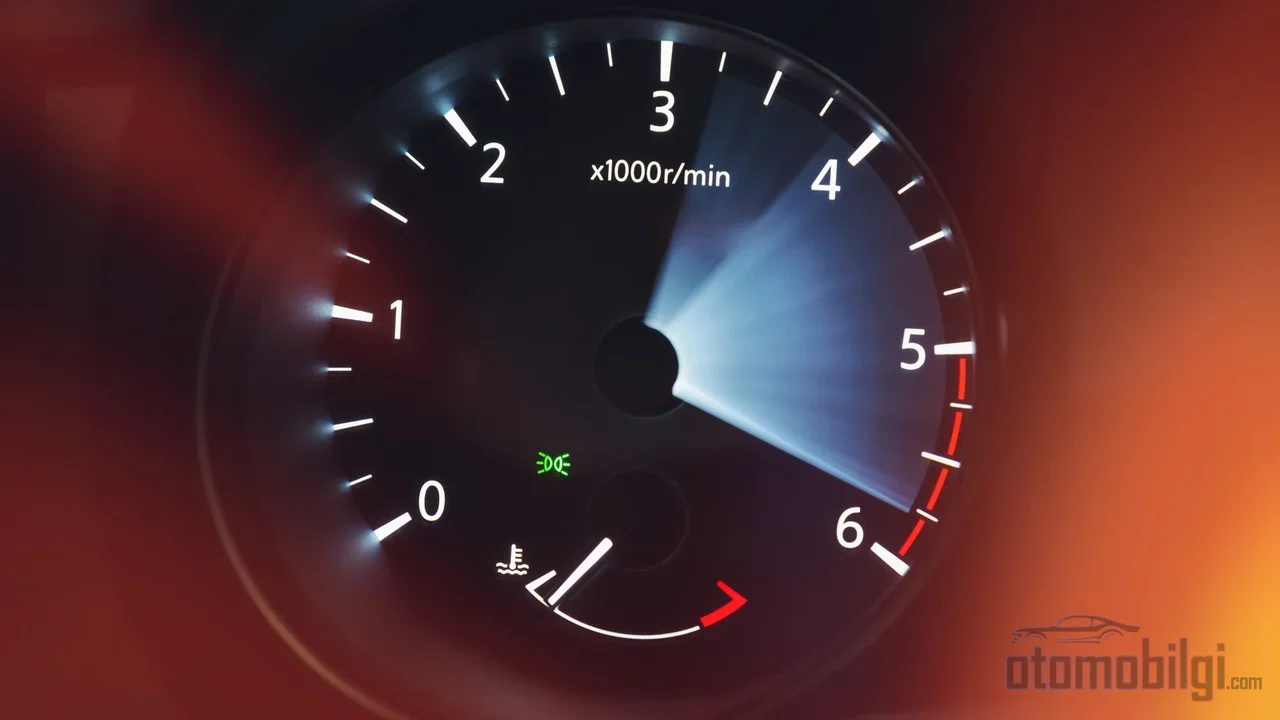
The red zone on the tachometer shows the maximum rpm the engine can reach without damaging its internal components; operating above this limit triggers a series of mechanical risks, from valves losing control to crankshaft bearing wear. Manufacturers determine this limit based on measurable physical factors such as material strength, piston speeds, and valve spring performance, and modern engines have an electronic protection called a rev limiter to keep from exceeding this limit.
Key Highlights
- In gasoline car engines, the red zone is typically in the 5,500-7,000 RPM range.
- At 6,000 RPM, the crankshaft completes a full revolution 100 times per second.
- Variable valve timing
What exactly does the red zone on the tachometer mean?
The red bar on the tachometer takes its name directly from this visual marker. The red zone indicates the maximum rpm at which the engine can operate continuously and safely without damaging its internal components. This limit is measured in revolutions per minute, or RPM, and the region marked in red on the gauge is the visual reflection of the mechanical limit calculated by engineers.
The location of the red zone varies greatly between engines, because this limit depends on the mass of engine parts, their material composition, and their balance with one another. A typical gasoline car engine usually turns red around 5,500-7,000 RPM. Very large engines, such as train locomotives and stationary generators, may reach the red zone at only a few hundred RPM. In contrast, motorcycle engines, which have much lower reciprocating masses, can rev very high; a small-displacement sportbike engine can have a red zone of around 19,000 RPM. may have a red zone.
It is also possible to see the same basic engine marked with different limits for different duties. In truck versions, the red zone is set below 4,000 RPM, while in car versions carrying the same engine this limit can be between 4,800-5,600 RPM. The reason for the difference is the usage profile: while the truck engine is limited for hours of continuous operation, the margin in the car engine is designed for short-term high loads.
What are the mechanical limits that stress the engine at high rpm?
Mean piston speed
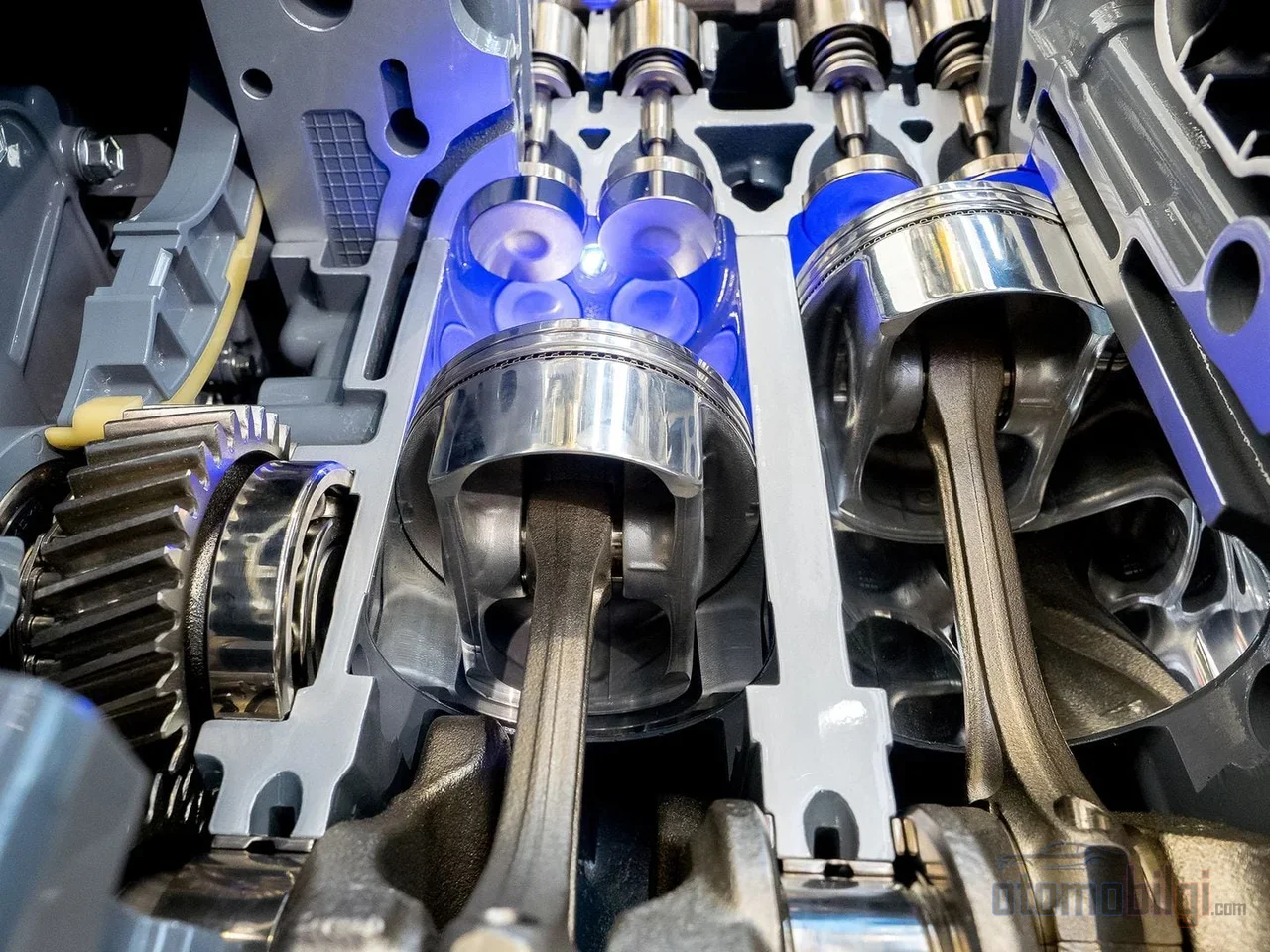
The most fundamental value limiting the red zone is the average speed the piston travels within the cylinder. At the same rpm, an engine with a longer crankshaft stroke moves its pistons at a higher speed than one with a shorter stroke. As piston speed increases, friction and therefore heat generation also increase. Short stroke and strong internal components are the reason some cars can rev noticeably higher than others.
Valve springs and valve float
The valve train in the cylinder head is one of the most critical elements in determining the redline zone. As engine speed rises, the camshaft's rate of opening and closing the valves increases, and at some point the valve springs can no longer control the valves' motion. This phenomenon is called valve float: the valves bounce off their cams, closing timing is disrupted, and a valve that has lost control can collide with the rising piston. In an engine experiencing valve float, valve sealing is compromised and power drops significantly.
Valve mass and the type of springs are among the most important factors determining the redline; stiffer springs mitigate valve float. But it does not end with exceeding a single limit value: the high-frequency fatigue constantly seen in racing engines, that is, the springs entering harmonic oscillation at their own natural frequency, can seriously damage the valve train. There are known examples of double-coil valve springs losing control and entering harmonic oscillation around 5,200 RPM in an engine.
Crankshaft balance and inertia forces
Every rotating and reciprocating part is subjected to inertia forces that, while not exponential, increase rapidly with engine speed. At 6,000 RPM the crankshaft rotates exactly 100 times per second and pulls the connecting rods back and forth at this speed. The connecting rods carry tensile, compressive, and bending stress together in every cycle; the wrist pins are stressed in the same way. The centrifugal force acting on the pistons, connecting rods, and crankshaft increases with engine speed, and the metal's tensile strength has a limit.
Loss of synchronization
If engine speed exceeds the critical threshold, it is not just a single part at risk but the engine's internal timing. Pistons can strike and bend valves, ignition coils can fire at the wrong time, and timing chains can jump or break. Moreover, the load does not fall on the engine alone: every rotating component, such as the water pump, alternator, power steering pump, air conditioning compressor, flywheel, and transmission input shaft, is exposed to the same high speed.
At sustained high RPM, friction surfaces - bearings, piston rings, lifters, and cams - wear and generate intense heat; the oil cannot maintain its viscosity, coolant and oil reach their thermal limits, and metal parts can break or be damaged by overheating. Even if some engines can mechanically withstand this speed, power already drops significantly because they cannot fill with enough air at that speed; in others, lubrication capacity, and in yet others, piston and rod inertia set the limit.
How do manufacturers determine the redline limit?
The red zone is not chosen randomly. Manufacturers run the engine in the red zone on a dynamometer for extended periods; they observe how long it holds up and which problems emerge. As a result of these tests, a measurable table is obtained showing which component of the engine hits its limit at which rpm, and the gauge is marked according to this table. Engineers also design engines so that normal use rarely reaches the red zone; in other words, the aim is for this limit to be almost never visited in an ordinary driving profile.
This approach shows that the limit is not merely a gauge mark, but a safety threshold verified through testing. Thanks to the safety margin built into engines, brief use of the red zone usually causes no harm; the limit is drawn for continuous use.
How does a rev limiter work and why is it necessary?
When the driver presses the throttle all the way down, the task of preventing the engine from exceeding the red zone falls to the engine control unit in modern vehicles. This software layer is called the rev limiter and is usually set at or a few hundred rpm above the red zone. The rev limiter works with two basic methods: fuel cut-off or disabling the ignition system.
The difference between fuel cut-off and ignition cut-off
When a fuel-cut limiter engages, the injectors close, torque collapses suddenly and the revs drop by a few hundred rpm; when the system restores fuel, the revs rise again. This type of limiter slows the engine down gradually as if it has hit a wall, rather than bouncing it. An ignition-cut limiter, on the other hand, removes the spark; fuel and air continue to be pumped. Since there is no combustion, the fuel burns in the exhaust, creating an aggressive, popping bounce sound. Although the driving experience is livelier in terms of sound, ignition cutting is more harmful to the engine compared to fuel cutting and carries a risk of damage by creating a lean transition.
The stuttering sound of the limiter is not a sign of a fault; on the contrary, it is the moment the protection system is doing its job. This is how the engine is prevented from going beyond the safe zone.
The risk the limiter cannot protect against: money shift
Electronic protection cannot cover every scenario. If the driver accidentally shifts into a much lower gear instead of the intended one - this mistake is called a money shift - the transmission can mechanically force the engine far beyond its safe limit through the drivetrain. In this case the rev limiter cannot intervene, because the problem is not caused by the throttle pedal, but by the rotational speed returning from the wheels to the engine. The electronic rev limit is only responsible for the revs it produces itself.
Why do gasoline and diesel engines have different maximum revs?
Diesel engines run at noticeably lower rpm than gasoline engines, and there is more than one reason for this. First, diesel combustion progresses more slowly than in a gasoline engine; at high rpm there is not enough time for combustion to complete, and power drops significantly. Second, in diesel engines the compression pressure inside the cylinder is much higher; this increases the load that the crankshaft-connecting rod mechanism must carry and limits the maximum rpm the rotating assembly can withstand. A gasoline engine, with lower compression ratios and faster combustion, can reach higher rpm with lighter rotating assemblies.
This difference also reflects the design priority of both engines: the diesel engine delivers its torque at low and medium rpm in an efficiency-focused band; the gasoline engine can produce power across a wider rpm range. The redline sets the upper limit of these bands according to each engine's own mechanical character.
What does running in the redline for a long time do to the engine?
A healthy engine can reach the redline without damage; engines are built with a safety margin, and a brief visit to the redline usually causes no problems. However, if the engine is run in the redline for a long time - about 10-15 minutes - parts breaking becomes possible. The most common scenario is the connecting rod giving way, the piston striking the cylinder head and locking the engine, or flying out through the oil pan.
It is appropriate to think of the redline as a gray area: the region where the engine will not break immediately, but where abnormal wear and reduced design life can begin. This limit also applies to ideal conditions; an engine with neglected oil changes or one not fully warmed up has a significantly reduced practical safety margin. Revving a cold engine high is absolutely harmful and creates accelerated wear. Revving an engine that has been idling also carries a similar risk: because the piston rings have a much smaller thermal mass than the cylinder liners, they heat up much faster, and this uneven heating leads to premature wear.
Does a high-rpm driving habit shorten engine life?
There is a big difference between occasionally raising the rpm and constantly running the engine near the redline. Repeated over-revving can damage the pistons, rings, bearings, and valves; high rpm can also cause the engine to overheat and increases wear in the bearings and bushings, even the risk of seizure. A drill analogy summarizes this situation well: a drill tolerates having its screw tightened to the limit a few times, but if used this way constantly, its life shortens noticeably.
Extended driving just below the redline but near its limit should be evaluated with the same logic: the engine works, but parts wear out faster than their design life. The practical outcome is clear - revving the engine occasionally does not harm a healthy engine, but making this zone a constant operating area inevitably increases wear and maintenance costs. The redline is a warning line showing where the engine ends; proper use means understanding why the engine is placed there.
Sources
- Redlining Your Engine | What is a car's redline?
- The Physics Of Redline: Secrets of Sky-High Engine Speeds
- Red line on the tach - Car Talk Community
- Redlining a Car: 3 Common Automotive Myths Debunked
- RPM Limiters Fuel vs Ignition
- Fuel cut vs Ignition cut | EFI Tuning Fundamentals
- Valve Springs - Engine Builder Magazine
- Why do engines have a redline?