Those Who Set the Engine's Heartbeat: Timing Chain and Timing Belt
Share This Page
There is no single correct answer to the timing chain versus timing belt question: both synchronize the camshaft to the crankshaft, ensuring the valves open and close at the right moment. The chain operates inside the engine, lubricated by engine oil, and with proper maintenance it can last as long as the engine itself; the belt is lighter and quieter, but it must be replaced at specific intervals. The real difference between them is not lifespan, but how a failure announces itself and how maintenance is planned.
Key Takeaways
- Manufacturer recommendations for belts are generally in the range of 60,000-100,000 miles or 7-10 years; whichever comes first.
- A timing chain typically lasts 100,000-150,000 miles, but if oil maintenance is neglected it can stretch early and jump teeth.
- In an interference engine, a break can bend valves, damage pistons, and render the engine unusable.
- The chain warns you with noise; the belt, in most cases, gives no warning at all before it breaks.
Timing Chain or Belt: What Are the Functional Differences?
Both solutions do the same job: they transfer the rotation of the crankshaft to the camshaft one-to-one. Through this synchronized motion, the camshaft ensures the valves open and close with correct timing relative to the piston position. If this synchronization slips slightly, performance drops; if it fails completely, serious engine damage occurs. So the debate is not about which one does its job better, but about which one sustains it under what conditions and at what maintenance cost.
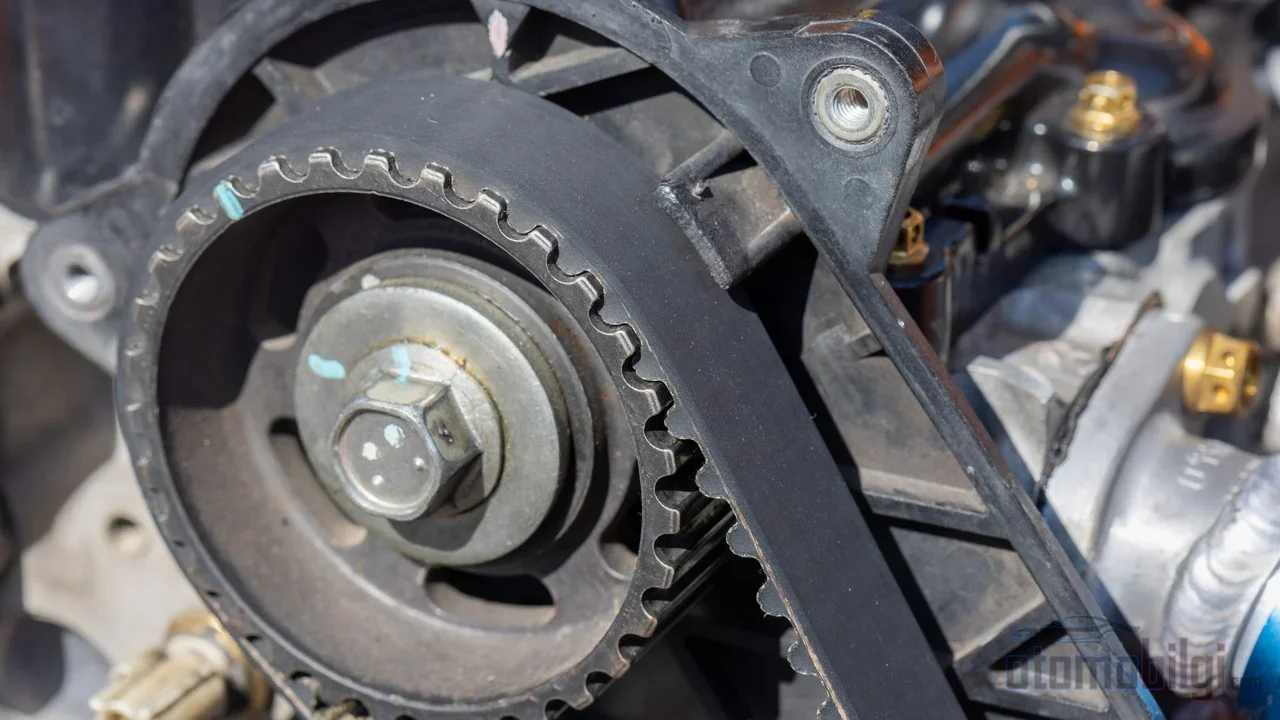
The structural difference is simple. A timing belt is made of reinforced rubber and high-strength fibers; the chain is a metal structure resembling a bicycle chain. The belt is quieter and lighter; the chain is stronger but heavier. The system also has shared components: tensioners and idler pulleys maintain the tension of the chain or belt. In some engines, the water pump is also driven by the timing belt; this detail matters when planning replacement.
| Feature | Timing Chain | Timing Belt |
|---|---|---|
| Construction | Metal, chain links | Reinforced rubber and fiber |
| Operating environment | Inside the engine, lubricated with oil | Enclosed but dry environment |
| Typical lifespan | 100,000-150,000 miles, may last as long as the engine | 60,000-100,000 miles or 7-10 years |
| Warning behavior | Warns with noise; if neglected, it jumps teeth | Usually gives no warning before breaking |
| Strengths | Long lifespan, durability | Quietness, lightness, plannable replacement |
Why Does a Timing Chain Stretch and When Should It Be Replaced?
The chain's lifespan mostly does not depend on a fixed replacement interval; with proper maintenance it can last as long as the engine. The typical figure is around 100,000-150,000 miles, but this number depends directly on the quality of oil maintenance. Since the chain operates inside the engine, the only thing lubricating it is engine oil, and dirty oil rapidly wears out the chain guides, plastic parts, and tensioner. Skipping oil changes is the most common mistake that kills a chain prematurely.
How Can You Tell If It Is Stretched?
A stretched chain due to wear or insufficient lubrication announces itself with noise. Rattling or clicking sounds from the front of the engine, especially noise heard during cold starts, are the most classic signs. This may be accompanied by irregular idling, rough running, performance loss, and engine fault codes; a stretched chain causes cam timing to deviate, and in engines with variable valve timing this deviation triggers fault codes.
The critical threshold is the chain jumping teeth. A severely stretched chain can jump several teeth, and the result can be the same as a broken belt: valve timing is completely disrupted and serious engine damage results. Chain failure repair can be more expensive than a planned belt replacement because it may require disassembling the engine's internals. With a chain, there is no replacement schedule to follow; instead, noise and fault codes are monitored, which means the responsibility falls on the driver.
When and Why Is Belt Replacement Planned?
The belt's greatest asset is its predictability. Manufacturer recommendations generally range between 60,000-100,000 miles; common practice targets an interval of approximately 70,000-90,000 miles. However, a mileage schedule alone is not sufficient: rubber degrades over time, and even if the belt looks good, its internal fibers may have deteriorated. Therefore, a time-based schedule is also necessary; usually 7-10 years, with the whichever-comes-first rule applying.
The belt's greatest risk, however, is its silent failure: a failing belt usually gives no warning before it breaks. That is why replacement is done on a schedule rather than waiting for failure. During replacement, the tensioner, pulleys, and water pump are also replaced together; these parts share the same service interval, and replacing them together saves on labor costs. In terms of cost, replacement can range from a few hundred dollars to over $1,000; removing covers and pulleys to access the belt is the main factor that increases labor.
What Is the Difference Between a Dry Belt and a Wet Belt?
The classic design that comes to mind when talking about belts is the dry belt: it operates outside the engine's lubrication system, in an enclosed but dry environment. The wet belt, on the other hand, was developed with the promise of reducing wear through lubrication with engine oil, aiming to combine the chain's compact advantage with the belt's lightness. The practical way to tell them apart is their location: in a dry belt engine, the timing assembly is at the end of the engine; a wet belt, however, sits inside the engine, like a chain.
The wet belt's real-world track record is controversial. The theory of reducing wear through lubrication is faced with problems experienced particularly in some Ford Transit examples and serious backlash from users. From an engineering perspective, the wet belt behaves like a hybrid that depends on oil like a chain but has a short lifespan like a belt; if the maintenance schedule is neglected, it carries the risks of both systems at once. The dry belt, meanwhile, has a more predictable profile with consistent, low, and plannable maintenance costs.
Which Design Suits Which Engine Philosophy?
The choice of cam drive architecture reflects the engine's design priorities. Diesel engines almost always use a chain due to their high compression requirement. Vehicles prioritizing durability share the same trait: modern SUVs and crossovers such as the Toyota Highlander and Chevrolet Traverse, as well as the Ford F-Series and Ford Maverick (2022), are examples of chain-driven designs. Older gasoline engines, especially in the compact class, frequently used belts; the industry is gradually shifting to chains in new vehicles.
Cylinder head architecture also changes the picture. The OHC (overhead cam) design places the camshaft in the cylinder head, eliminates pushrods, and allows greater airflow per liter; in return, the drive system is longer. Pushrod engines are more compact, have a lower center of gravity, and are cheaper to manufacture and repair; they use a single cam and a simpler timing system. In a pushrod design, the chain or sprocket arrangement remains constantly bathed in oil; in OHC layouts, the drive system is usually exposed externally and not lubricated. There are also user experiences suggesting the belt runs more smoothly in premium engines: The 3.5 V6 in the Honda and the V8 in the older Lexus LS400 are examples often cited in this direction.
What Happens If the Timing System Fails?
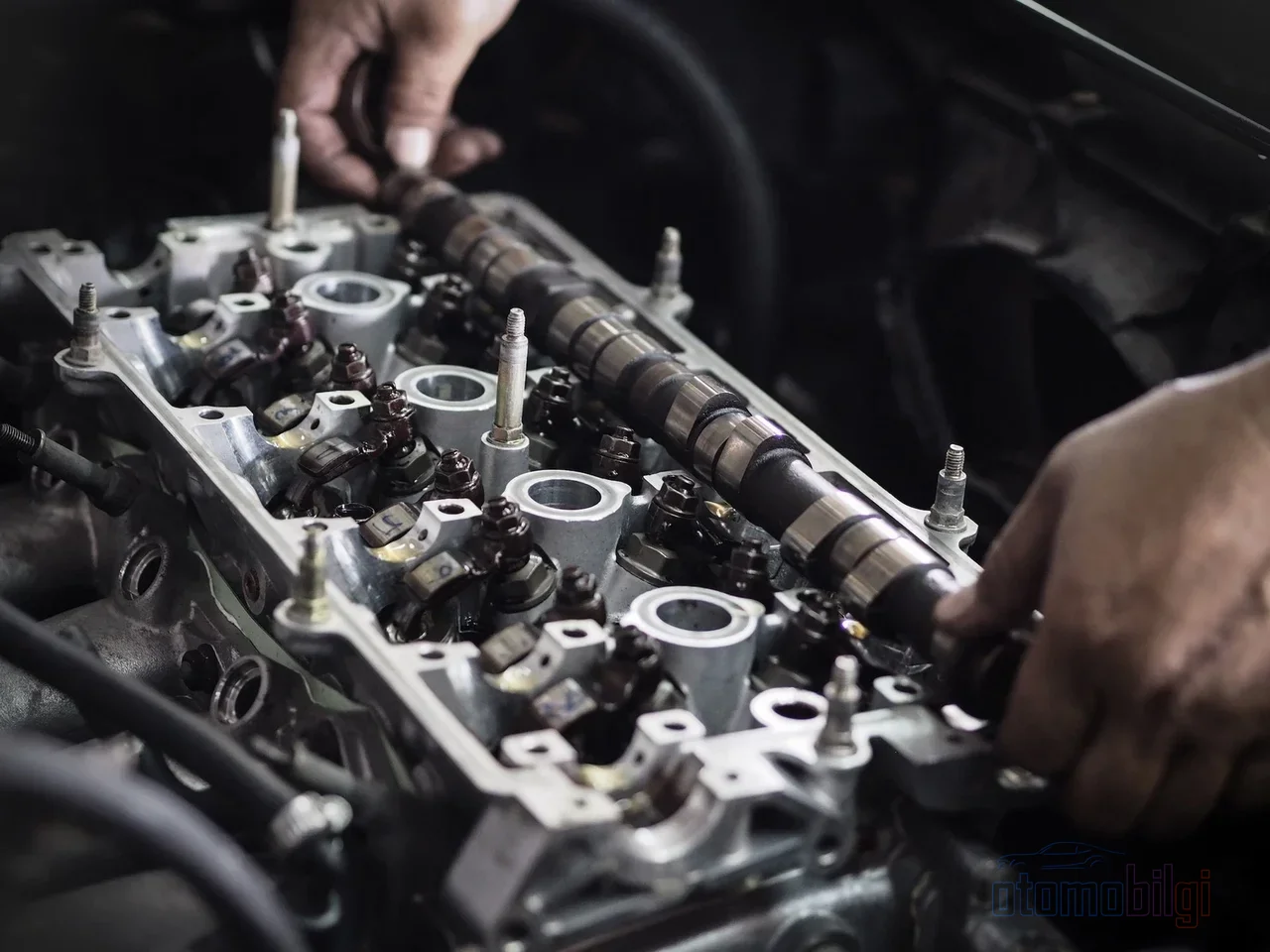
The answer depends on whether the engine is an interference type. In an interference engine, there is minimal clearance between the valves and pistons; if the belt or chain breaks, the valves strike the pistons. The result is bent or broken valves, piston damage, cylinder head and camshaft damage, and the engine may become completely unusable. The likelihood of damage in these engines is very high. In a non-interference engine, a break usually just stops the vehicle; but being stranded and the expense are still at stake.
The warning signs are similar for both systems: a rattling or clicking noise from the front of the engine, misfires, hard starting, the check engine light, rough idle, and in the case of the chain, additionally an oil leak. The chain warns with these noises; the belt usually does not. This asymmetry also determines the maintenance philosophy of the two systems: with a chain, listening for noise is essential; with a belt, following the schedule.
The Real Winner Is Maintenance
There is no definitive winner. The belt is plannable and predictable; the chain is long-lasting but has a critical dependence on oil quality. There are also counterexamples showing the chain does not always outlast the belt in every condition; a well-maintained belt can also go hundreds of thousands of kilometers. As for the legendary claim of a lifetime chain, it quickly disproves itself in an engine whose oil maintenance has been neglected. The summary formula is simple: if you have a chain, take your engine oil seriously; if you have a belt, follow the replacement schedule. It is neglect, not the system, that the engine pays for.
Sources
- Timing Belt vs Timing Chain: Pros, Costs, Lifespan Today
- The Importance of Timing Belt and Chain Maintenance
- Timing Belt Replacement Costs and When to Replace
- Timing Chain Replacement: Lifespan & Cost FAQ Guide
- What Causes a Timing Chain to Stretch or Fail?
- Timing Chain Stretch: Causes, Symptoms & Prevention Guide
- Cam Timing Drift, Chain Wear, and Engine Reliability
- What Causes Timing Chains To Stretch and Set Engine Codes
- Wet Belt vs Dry Belt vs Timing Chain
- Why So Many People Hate Wet Timing Belts
- What cars have wet belts?
- Pondering Variable Valve Timing
- Pushrod vs. Overhead Cam Engines
- Why Obsolete Pushrod Engines are Better
- What Is a Pushrod Engine?
- Why It Is Critical To Replace Your Timing Belt Kit
- What Happens If A Timing Belt Breaks On An Interference Engine
- How Did This Engine Survive a Broken Timing Belt?