How to Collect Compensation from the Other Party's Insurance?
Share This Page
If you are the faultless party in an accident, to collect compensation from the at-fault driver's mandatory traffic insurance, you must first make a written application to the insurance company, wait for the company to respond within at most 15 days, and if it refuses, apply to the Insurance Arbitration Commission or go to court. If the documents are submitted complete, the damage amount is usually paid within 8 business days. Below I explain this process step by step, from the white vehicle form to appeal routes.
Highlights
- Applying to the insurer is a condition for filing a lawsuit; the legal deadline for the company's response is 15 days.
- In 2026, the material damage coverage is 400,000 TL per vehicle, 800,000 TL per accident.
- With complete documents, payment is made within 8 business days .
- Statute of limitations: 2 years from learning of the damage, and in any case 10 years from the accident.
- Compensation collection can now only be pursued by the insured themselves or through their attorney.
How to collect compensation from the other party's insurance: the framework of the process
Let's first clarify a basic distinction. Your own car's comprehensive insurance (kasko) pays for your own damage; the other party's mandatory traffic insurance (ZMSS) secures the at-fault party's liability. If you are faultless or less at fault in an accident, you have the right to demand the amount of your loss directly from the other party's traffic insurer. This is the right of direct action granted by Article 97 of the Highway Traffic Law, and it has been reinforced by the case law of the Court of Cassation.
There is a critical detail in exercising this right: the injured party must make a written application to the insurance company before filing a lawsuit. In law this is called a "completable condition for filing a lawsuit"; the court can allow the deficiency to be completed within the deadline, but the safest path is to complete the application fully before heading to the courtroom door. After receiving your application, the company must either make payment or give a written refusal response within at most 15 days. If the deadline passes with silence or the answer is a refusal, your path to litigation or arbitration is opened.
The liability regime here is another point worth knowing. Under traffic insurance, the vehicle operator is subject to strict liability, that is, liability based on risk. The operator can only be released from liability by proving force majeure or the gross fault of the injured party or a third party. In other words, disputes over fault allocation directly affect the amount collected: with contributory fault, compensation is reduced in proportion to your fault rate; a party that is 100% at fault cannot make a claim.
How to fill out the accident report form and the white vehicle form?
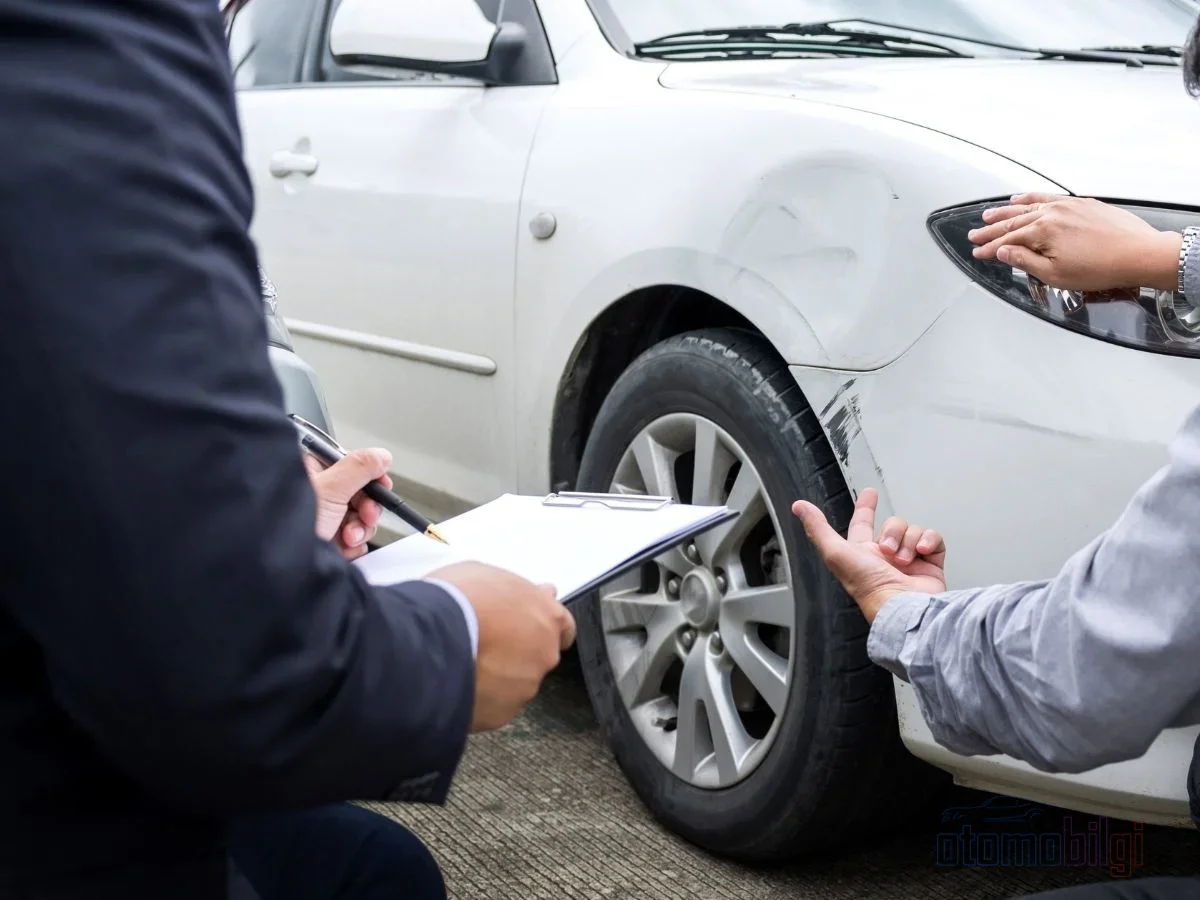
The process begins at the scene of the accident. If there is only material damage and the parties agree, you can fill out the "Accident Detection Report Between Drivers Involved in the Accident" without calling the police. Commonly known as the white vehicle form or the agreed report, this document is the foundation of the insurance file and is drawn up on SBM's official form. In the past, the victim of an accident would wait beside their car for hours, waiting for the police to arrive; now two drivers can take a few photos with their phone, fill out the report on the spot, and go on their way. This is a significant practical convenience.
What to pay attention to in the report
- The upper section records the date, time, and location of the accident; for both vehicles, the license plate, brand-model, registration owner, driver's name, license number, and policy number are entered.
- The vehicles are marked as A and B on the form; field number 10 is for the drivers' statements, and field number 11 is for statements about the accident.
- Only the persons involved in the accident fill out the report; third parties cannot be included. If there is a witness, their name and contact information are added.
- Sketches and photographs showing how the damage occurred make the subsequent inspection easier for you.
Make a habit of reading before signing. A report whose fault sharing does not reflect the truth can directly reduce your compensation. Moreover, a report drawn up contrary to the truth falls under forgery of official documents and carries legal sanctions. In the case of an accident with injuries, this route is not used; the police or gendarmerie are called and the report is drawn up officially.
Opening a damage file: which documents, which deadlines?

After the accident, you must report the damage to the other party's insurance company within 5 business days of learning about it. You can make the notification by phone, but making it in writing is a piece of advice born of years of experience: an email or a registered application completely ends any future "I said I reported it, you say you didn't" arguments.
After the notification, the file is opened with the requested documents. In traffic insurance, generally the accident detection report or official report, copies of the driver's license and vehicle registration, the driver's license, a release form, and documents related to the damage are requested. Here is an important technical detail: If there are missing documents, according to the information form of TMTB, the company's authorized body, the completion of the missing documents is requested without opening the file; the legal deadline only begins to run after the documents are completed. In other words, a file stalled by missing paperwork ties your own hands.
If the documents are complete, the company's inspection period is at most 15 days, and the damage amount is paid within 8 business days. Do not confuse this with the comprehensive insurance (kasko) side: in kasko, the legal payment period is 10 business days after complete documentation, and at most 45 days from the notification. Since this page talks about what the non-fault party will receive from the other party's insurance, the applicable figure is 8 business days. If a request for missing documents or an objection process comes into play, this period can unfortunately extend to months.
What should you do if the insurance company reduces or denies the compensation?
It should be noted that companies' first offers often come in below the actual loss; items such as depreciation and loss of use are frequently overlooked or calculated incompletely along with their components. Grounds for rejection include the fault assessment in the report, missing documents, and reasons outside the policy coverage. Not every rejection is legally valid.
The first step is to request the reason for the rejection in writing. If the reason does not align with the policy terms, submit a written objection to the company; many files are resolved at this stage. If you cannot get a result, you have two doors ahead of you:
- Insurance Arbitration Commission: It is noticeably faster than the courts; the commission usually issues a decision within 4-6 months. Decisions below certain monetary limits are final, while those above go to the appeals arbitration board. The company must be a member of the arbitration system; major traffic insurers in Türkiye are members.
- Lawsuit: The court with jurisdiction against the insurance company is the civil court of first instance for commercial matters; a lawsuit against the driver and operator is filed at the civil court of first instance. The competent court is the defendant's place of residence, the insurer's headquarters or branch location, or the place of the accident; the law allows a lawsuit to be filed against the insurer in four different places.
Do not forget to request the reason for the rejection in writing and add it to your case file; it strengthens your hand on the burden of proof. As for mediation, the process is as follows: traffic accident lawsuits based on tortious acts are, as a rule, not subject to mandatory mediation; however, if the dispute will be directed at the insurance company, mediation may become a condition for filing a lawsuit due to the monetary claim being commercial in nature.
How long does collection take and what limits apply?
In a problem-free file, the picture is as follows: notification within 5 business days, the company's response within 15 days at the latest, and payment within 8 business days after complete documentation. In other words, in the best case, your money will be in your account within a few weeks. If missing documents, expert examination, or an objection process come into play, the timeline extends; you should calculate four to six months for the arbitration route and longer horizons for the court route.
| Item | Duration / Limit (2026) |
|---|---|
| Damage notification | Within 5 business days of learning about it |
| Insurer's response period | 15 days at the latest |
| Payment (complete documentation) | 8 business days |
| Property damage coverage | 400,000 TL per vehicle, 800,000 TL per accident |
| Medical expenses, disability, and death | 3,600,000 TL per person |
| Statute of limitations | 2 years / in any case 10 years |
Coverage limits are updated every year with the revaluation rate; the total limit for medical expenses per accident varies according to the vehicle's group. For this reason, it is useful to confirm the limits in effect on the date your policy was issued. One more warning: losses exceeding the other party's insurance limit are not covered by traffic insurance; to cover the difference, you must file a separate lawsuit against the operator and the driver.
Take the statute of limitations seriously as well. In traffic insurance compensation, the period is 2 years from the date the injured party learns of the damage and the party liable for compensation, and in any case 10 years from the date of the accident. If the accident constitutes an offense carrying a longer criminal statute of limitations, such as negligent injury or killing, that period applies. Applying to the insurer, filing a lawsuit, or going to arbitration interrupts the statute of limitations; use your first right instead of letting your file sit.
The new era: who collects the compensation, and what are the complaint channels?
There is an important change in practice in recent years. With a circular from the Insurance Supervisory Board, the pursuit and collection of compensation can now only be carried out by the insured person themselves or their attorney. The history can be summarized as follows: in the past, compensation was collected on the victim's behalf through damage consultancy companies that were bypassed in, taking large cuts as commissions; now that door is closed, and the insurance sector's organization has officially announced that it does not accept such intermediaries. There is also a reporting channel for illegal damage consultancy companies through the bar association. If you are going to grant a power of attorney to someone else, it is essential that this person is truly a lawyer, both for the security of your money and your file.
Is a lawyer mandatory? No; in property damage files with relatively low amounts, you can handle the process yourself. However, in high-value files, or those involving injury or death, professional support is the real deal when it comes to objecting to fault ratios and items such as loss of value. As complaint channels, the insurance complaint application via CIMER, the sector organization's complaint form, and of course the Insurance Arbitration Commission stand out. Remember: even if a settlement is reached in negligent injury cases, your right to claim compensation from the insurance continues thanks to the Constitutional Court's annulment decision.
To summarize: fill out the white vehicle accident report form correctly, notify the damage within 5 business days, submit the documents completely, wait for the 15-day response; in case of rejection or silence, submit a written objection, then arbitration or a lawsuit. As long as you do not break this order, collecting what you are owed from the other party's traffic insurance is a far more predictable task than it appears on paper.
Sources
- Traffic Accident and Compensation Law Guide 2026
- Traffic Accident Compensation Lawsuit 2026: Material, Moral and Insurance Rights
- Getting Money from Insurance After a Traffic Accident (2026)
- KTT - SBM Accident Detection Report form
- TMTB Information Form for the Injured Party
- How to Fill Out the Accident Detection Report
- Damage Procedure
- How many days does it take for traffic insurance compensation to be paid
- TSB Important Announcement
- A new era in insurance compensation collection
- Insurance Complaint Application and Tracking
- Barobirlik Announcement 2021/38
- Settlement and Compensation After a Traffic Accident
- What to do if the insurance company does not pay
- Lawsuit Against the Insurer in a Traffic Accident