Does Insurance Protect You When Driving Someone Else's Car?
Share This Page
Traffic insurance insures the vehicle; therefore, if another licensed driver has an accident while using your car, the mandatory traffic insurance remains valid and pays for the other party's damages. Comprehensive insurance (kasko) is different: if the policy contains a condition regarding the driver and the person using the vehicle does not comply with that condition, the insurance company may make a deduction from the compensation or refuse to pay. So the short answer is this: for the other party, insurance comes into play in any case, while for the vehicle's own damage, the details of the contract are decisive.
Highlights
- Traffic insurance insures the vehicle; it covers the other party's damages even if someone else is driving.
- The material damage coverage limit per vehicle for traffic insurance in 2026 is 400,000 TL.
- With comprehensive insurance that has a single or named driver discount, a deduction is made from the compensation when someone other than the defined driver uses the vehicle.
- Comprehensive insurance is not mandatory; traffic insurance, however, is mandatory under the Highway Traffic Law No. 2918.
- In cases of drunk driving or driving without a license, the insurance can reclaim the compensation it paid from the driver and the vehicle owner.
Does Traffic Insurance Insure the Vehicle or the Driver?
Having been in this profession for over thirty years, this is one of the distinctions I have repeated the most: mandatory traffic insurance is issued in the name of the registration holder, but what it insures is the vehicle itself, not the person behind the wheel. When your son, a friend, or an employee at your workplace uses the vehicle and causes an accident, the policy is obligated to pay the other party's material damages. Who was driving does not change this fundamental duty.
However, it should also be remembered that the damage will affect the policy's no-claims status. The vehicle owner has accumulated a no-claims discount over the years; an accident caused by someone else can drag this discount table down. So even if the insurance pays, part of the bill is eventually written to your account. We used to calculate this table on paper at the desk; now it appears in the system within seconds, but the mechanics are the same.
On the comprehensive insurance side, the equation reverses. When an accident occurs in a vehicle belonging to someone else, the policy that comes into play is not the driver's own comprehensive insurance, but the vehicle owner's. The driver is using not their own car but a car entrusted to them; therefore, the coverage always starts from the registration holder's policy.
When Someone Else Is Driving, in Which Cases Does Comprehensive Insurance Pay and in Which Cases Does It Not?
For comprehensive insurance to remain valid in a vehicle driven by someone else, three basic conditions are required: the vehicle owner's consent, use in accordance with the policy terms, and the driver's valid license. Driving under the influence of alcohol or drugs disrupts this equation. When these conditions are met, comprehensive insurance covers the vehicle's own damage to the extent of the policy coverage. When they are not met, the picture changes quickly.
| Situation | Result |
|---|---|
| Use without the vehicle owner's permission | Comprehensive insurance generally does not pay |
| Unlicensed driver | Is not covered by the insurance |
| Driving under the influence of alcohol or drugs | Mostly outside coverage; if payment has been made, recourse comes into question |
| Use of the vehicle by someone else under a policy with a single-driver discount | Payment is made, but a deduction equal to the discount rate is applied to the compensation |
| Use by a third party under a policy with a two-driver discount | Again, a deduction is applied at the discount rate |
In the application of driver conditions, the most common scenario in practice is reduced payment. If a single-driver discount is declared on the policy and damage occurs while the vehicle is being used by someone other than the designated driver, the insurance company applies a deduction to the compensation at the discount rate. In other words, payment is not cut off entirely, but money still comes out of the vehicle owner's pocket. What the policy terms say at this point is, above all, decisive; even two policies for the same vehicle can produce different outcomes.
Is there a condition for adding a second driver?
Yes. In order to benefit from the two-driver discount, the second driver to be added to the policy must be over 30 years of age and hold a license for at least 3 years Families who share the use of the vehicle should definitely bring this detail to the table during the policy renewal period; knowing in advance that a child with a new license cannot be included in this discount prevents surprises on the day of a claim.
Who Bears the Legal Liability: The Driver or the Vehicle Owner?
Contrary to what most users think, the liability table is two-sided. Under Article 66 of the Turkish Code of Obligations, the vehicle owner is subject to the principle of strict liability: even if they entrust the vehicle to a relative, they are held responsible for damages arising from an accident as if it were their own fault. Article 85 of the Highway Traffic Law points in the same direction; the vehicle owner is responsible for the fault of the driver and those assisting the driver. Criminal liability, however, is different and personal: no one bears criminal responsibility for another person's act.
The responsibility of the person borrowing the vehicle is also heavy. Under gratuitous loan for use, known in law as "ariyet," the person who takes the vehicle is obliged, according to the institution, to return it undamaged just as they received it. In an accident in which they are 100% at fault, they fully assume against the vehicle owner the repair cost and loss of value of the borrowed vehicle. This is an obligation arising from the law even without a contract; closeness and friendship do not eliminate it.
Liability also becomes clear where coverage limits end. As of 2026, the material coverage limit of traffic insurance per vehicle is 400,000 TL When the damage exceeds this amount, for example if the loss is 430,000 TL, the remaining 30,000 TL is claimed from the at-fault driver. In accidents resulting in injury or death, the compensation for emotional distress lawsuit is directed directly at the vehicle owner. In cases of theft and robbery too, the matter is not considered closed: if the vehicle owner cannot prove their own lack of fault, liability continues.
There is also a criminal dimension. Lending your vehicle to a licensed acquaintance is not by itself a crime; but if you let an unlicensed or drunk person drive it, you receive a traffic fine together with the driver as the owner. This provision prevents the lender from washing their hands of the matter.
On What Grounds Can the Insurance Company Deny a Claim?
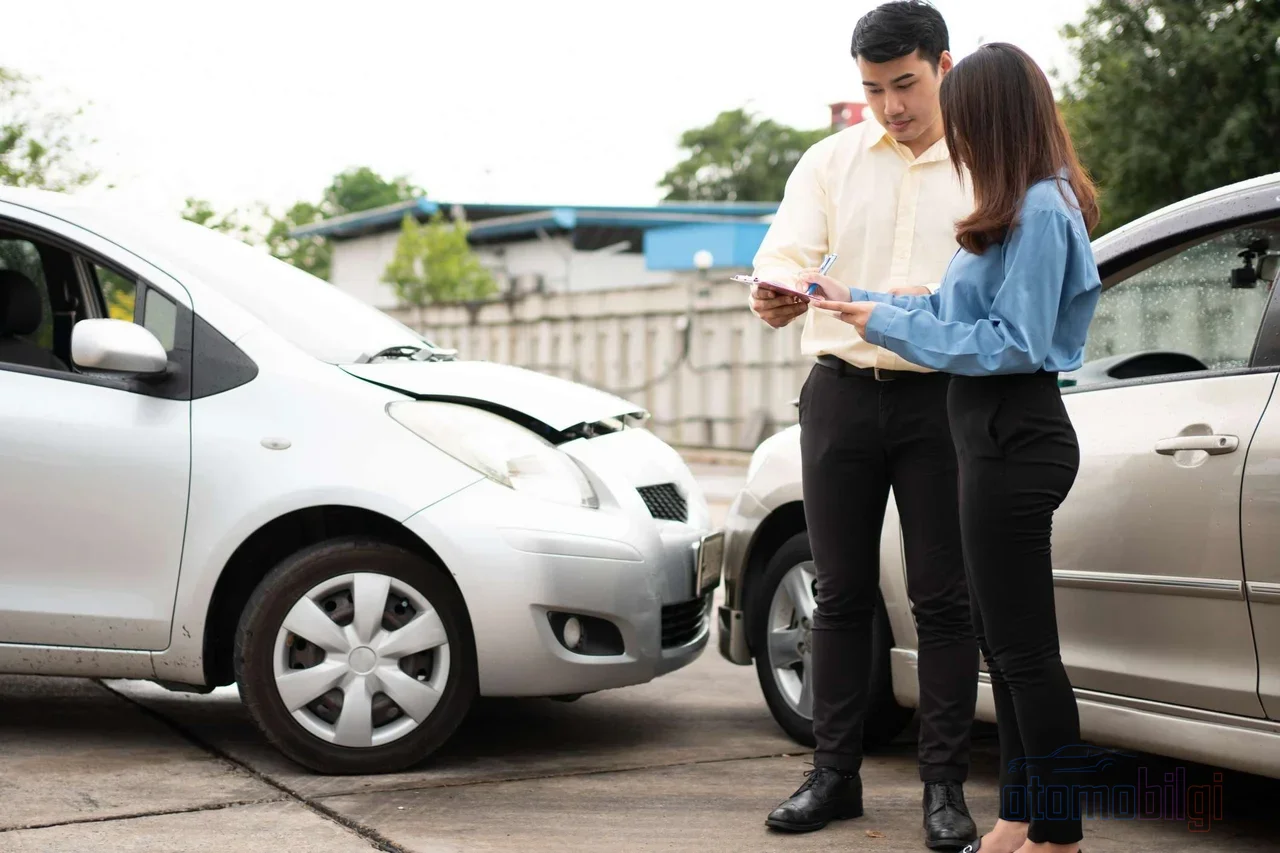
The rejection grounds most commonly seen in practice are limited: uninsured exclusion, late notification, missing documents, driving without a license, alcohol, and the expiry of the policy. Not all of these carry the same weight. For example, completely denying compensation to a driver who was license-free but in a flawless position at the moment of the accident is a legally contentious stance; the flawless driver's own damage and the other party's damage are assessed separately.
On the recourse side, the burden of proof lies with the insurance company. In order to recover the compensation it paid from the driver and the vehicle owner, the company must prove that the driver was drunk or unlicensed. If no alcohol test was administered after the accident, no right of recourse arises. This is an important protective measure in practice, and for this reason police reports must be meticulously drawn up.
How to object to a rejection?
- First, file a written objection with the insurance company; ask them to re-evaluate the rejection reason and the policy clause it is based on.
- If that yields no result, apply to the Insurance Arbitration Commission; this route is fast and low-cost.
- If arbitration produces no result or litigation is more suitable, go to court; the lawsuit is conducted based on the policy terms under which the vehicle was used and the accident determination report.
Keep the time limits in mind as well: the policyholder is obliged to notify the insurer within 5 days of learning of the incident. If you face enforcement proceedings not based on a court judgment, filing an objection within 7 days of service of the payment order halts the process. These two deadlines are among the most painful details in claims files; a late notification surfaces as the easiest rejection ground for the company.
Is Comprehensive Insurance Mandatory, and Is Adding a Driver Clause a Cost?
First, let's make a clear distinction: comprehensive insurance (kasko) is not mandatory. Only traffic insurance is mandatory. Kasko is an optional coverage purchased to protect the vehicle's own value, and its price is shaped by the vehicle, the coverages, and driver declarations. As of 2026, kasko premiums for new vehicles range roughly between 10,000 TL and 40,000 TL ; this wide range shows that many parameters, including the driver declarations in the policy, directly affect the premium.
A policy taken out with a single driver declaration is cheaper; in return, the vehicle is priced only for that person's use. The deduction made when someone else drives is the full scope of that price advantage. In other words, the driver clause is not an arbitrary obstacle by the insurance company; it is the price of a declaration that lowers the premium. If the vehicle is genuinely used by more than one person at home, adding a double driver declaration, provided the conditions are suitable, and paying the premium accordingly is often the most balanced solution. In the past, these declarations were shaped by word of mouth and bargaining with the insurance agent; now they are selected with a checkbox on quote screens, but the outcome sits at the same table: if the declaration does not match reality, on the day of the claim the difference comes out of your pocket.
Another development on the comprehensive coverage (kasko) side in 2026 is the adaptation of coverages to electric vehicles: battery damage, charging station, and cable-connection coverages are finding their place in policies. Although this development is not directly related to the driver condition, it reminds us of the importance of looking not only at the premium figure but also at the coverage content when renewing a policy.
Frequently Asked Questions
I have a license and I had an accident in my friend's car; will the insurance pay?
For the other party's damages, there is no problem with licensed driving; the traffic insurance pays. As for the car's own damage, the vehicle owner's comprehensive coverage comes into play, and depending on the driver conditions in the policy, payment may be full, partial, or denied.
Is comprehensive coverage valid when my spouse or child uses the car?
It depends on the driver declaration in the policy. If a single or dual driver discount has been declared and the person driving does not fit this definition, a deduction equal to the reduction rate is applied to the compensation.
If I am fully at fault, can I claim from the other party's insurance?
No. If you have a partial degree of fault such as 25%, you can claim in proportion to your fault ratio; however, in a single-vehicle accident the traffic insurance does not pay, and only valid comprehensive coverage can cover your damages.
As a final word, I would like to say this: ask two questions not before riding in someone else's car, but before letting someone use your vehicle. Is there a driver condition in the policy, and is this person driving with a valid license and sober? The answers to these two questions are more decisive than all the legal debates that take place after damage occurs.
Sources
- Traffic Accident and Liability with a Vehicle Belonging to Someone Else
- Does Comprehensive Insurance Cover an Accident with Someone Else's Car?
- In Traffic Insurance, Is the Vehicle or the Driver Insured?
- Most Frequently Asked Questions About Comprehensive and Traffic Insurance
- Does Comprehensive Insurance Pay if an Accident Happens While Someone Else Drives the Car?
- What Are the Accident Situations That Invalidate Comprehensive Insurance?
- What Does Traffic Insurance Cover, 2026 Limits
- Is Comprehensive Insurance Mandatory? 2026
- New Car Comprehensive Insurance Prices 2026
- New Trends in Comprehensive Insurance in 2026
- Petition for Objection to a Comprehensive Insurance Damage Rejection Decision 2026
- Objection to Comprehensive Insurance Damage Rejection: Alcohol, License, Late Notification
- Comprehensive Insurance Compensation Rejection and Objection Process
- Comprehensive Insurance Damage Rejection Objection and Lawsuit Process 2026