Daytime Running Light: A Safety Feature or a Design Element?
Share This Page
A daytime running light, or DRL, is a safety feature that burns during daylight hours not to illuminate the road for the vehicle, but to ensure the vehicle is seen by other road users, deliberately operating at low brightness. So the answer is clear: safety first, design second. But can a lamp both save lives and become a brand's signature? That is exactly what I will explain in this article.
Highlights
- DRLs produce roughly 200-800 lumens while low beams are generally in the 2,000-4,000 lumen range.
- Under European regulations, a DRL must be at least 400 cd on the reference axis and at most 1,200 cd in any direction.
- In the EU, they have been mandatory on all new passenger and light commercial vehicles since February 2011; in Canada since 1989.
- Multi-vehicle collisions involving DRL-equipped vehicles are about 7% lower.
- LED DRLs consume about 80% less power than halogen.
What exactly is a DRL and what does it do?
First, let's break down the name: DRL stands for Daytime Running Light, in other words, a daytime running lamp. Those lights that turn on automatically the moment the engine starts and shine in front of you without ever going off, even if you never press anything. Their purpose is very specific: not to light up the road, but to make the vehicle itself visible. An oncoming driver or someone waiting at a crosswalk notices a car lost in a dark shadow much earlier thanks to DRLs.
So where does this visibility come from? From three mechanisms. The first is contrast: on a bright surface or a shaded road, the line that separates the vehicle from its background is the DRL itself. The second is distance and speed perception; as the angle between two points changes, our brain decides it is an approaching vehicle, and the DRL sharpens those points. The third is peripheral vision - even when looking with the edge of our eye, we catch a glowing light much more easily. In fact, this idea is not all that new: even in transportation research dating back to 1969, it was calculated that the daytime running lamp must provide a high brightness level for adequate contrast. So the roots of the DRL are entirely based on visibility and contrast engineering.
Why are DRLs deliberately designed to be dim?
This is where things get interesting. Because the engineers who design DRLs have one biggest fear: glare. A daytime lamp bright enough to blind the eyes of an oncoming driver would be a danger rather than a benefit. That is why DRLs are low-wattage lamps that do not cast light on the road, only display themselves, and are compressed within an upper brightness limit.
This limit is no coincidence; it is legislation. In Europe, DRL type approval was governed for many years by UN Regulation No. 87 . According to it, the lamp must be at least 400 candela on the reference axis and cannot exceed 1,200 candela in any direction. The lower limit exists so the vehicle does not disappear even in bright daylight; the upper limit so it does not burn the eyes of oncoming traffic. Aftermarket products that breach this limit cannot obtain approval and genuinely cause glare. The new consolidated regulation, UN Regulation No. 148 takes the job one step further: it requires that the lamps' light intensity meets the minimum values both after 1 minute and after 10 minutes. In other words, the lamp dimming and weakening after being switched on is also prohibited. The picture is different on the US side: DRLs are not mandatory but permitted, and when used, an upper limit of 3,000 candela per lamp applies.
And then there is that subtle balance that is hard to describe: a DRL must be brighter than a parking lamp but noticeably dimmer than a low beam. It sits right in the middle of the brightness ladder, and each step has an engineering reason behind it. Does that sound boring? I think quite the opposite - a lamp being visible without competing even with the sun in the sky, yet without straining the eyes, is a small optical art.
From halogen to LED: the energy story of DRLs
In older vehicles, the daytime running light idea was often solved by running the main headlamp at low power - meaning you ran the halogen bulb at full power, which drew a lot of electricity and could also annoy oncoming drivers. The LED revolution rewrote this equation from scratch. An LED consumes about 80% less power than halogen; while a typical LED DRL can operate in the 15-20 watt range, a halogen bulb draws power that can be considered substantial for this task. Its impact on fuel consumption is already below 1% with modern LED DRLs, and in electric vehicles an efficient DRL even contributes positively to range. An LED DRL offers a lifespan of 15,000-50,000 hours; that is, you will probably never replace it during the vehicle's life. And its instant illumination and ability to take on ultra-thin shapes is a design freedom in its own right.
Of course, there is not just pretty light behind the scenes. LED driving engineering is serious business: application notes describe reliability approaches such as increasing the number of strings, feeding with two separate LED drivers, and an one-fail-all architecture that ensures the others stay alive when a single LED fails. Moreover, the same LED can operate at different brightness levels to serve as both a DRL and a position lamp - one hardware, two jobs.
| Feature | LED DRL | Halogen (daytime use) |
|---|---|---|
| Power consumption | About 80% less, 15-20 W range | About 55 W |
| Lifespan | 15,000-50,000 hours | Much shorter |
| Illumination time | Instant full brightness | Slower |
| Design flexibility | Thin strips, light bars, unique signatures | Single point, round lamp |
| Fuel/range impact | Below 1% in fuel, positive contribution in EVs | More pronounced |
Where is it mandatory? The DRL legislation map
The spread of DRLs around the world happened in an interesting order. The pioneers were the Scandinavian countries: during winters with long twilight periods, vehicles being visible was vital, so Sweden and Norway became early adopters. Canada has required DRLs on all new vehicles since 1989, taking a pioneering position in North America. The European Union, on the other hand, made DRLs mandatory on all new passenger cars and small commercial vehicles as of February 2011. In the US, there is still no federal requirement; DRLs are permitted but optional, and this situation is debated from time to time.
How the requirement is implemented is not an empty detail either. Early European studies suggested that mandatory DRL should be set up not as a switch the driver could forget, but as an automatic in-vehicle system. Today's practice - lamps that come on by themselves when the engine runs - is precisely the product of that recommendation. Also, because the engine is running, DRL generally cannot be turned off; that is not a flaw, it is the very essence of the system.
Does DRL really reduce accidents?
The safety impact is the clearest part of DRL's life story. According to NHTSA's assessment, relevant multi-vehicle collisions in DRL-equipped vehicles were about 7% lower compared to control vehicles. Seven percent may sound small, but when you consider millions of vehicles, it is a serious number. The common denominator of the research is the same: DRL's purpose is to increase the vehicle's visibility so that other road users notice it earlier. This is a classic lighting technology approach that separates the vehicle from the background by increasing contrast.
Let's be honest here: more ambitious figures of 10-15%, even 20%, are circulating on the internet. But such large numbers usually come from commercial blogs; the 7% figure in the official assessment publication stands on much firmer ground. Since we always take the numbers in this article from the most reliable layer, 7% is the solid answer to this question. A functional requirements report from 2003 supports the same logic: under low daylight and in street-lit areas, standard vehicle lighting like DRL should come into play, while additional rules are needed in cases of seriously reduced visibility.
From safety lamp to light signature: the design dimension
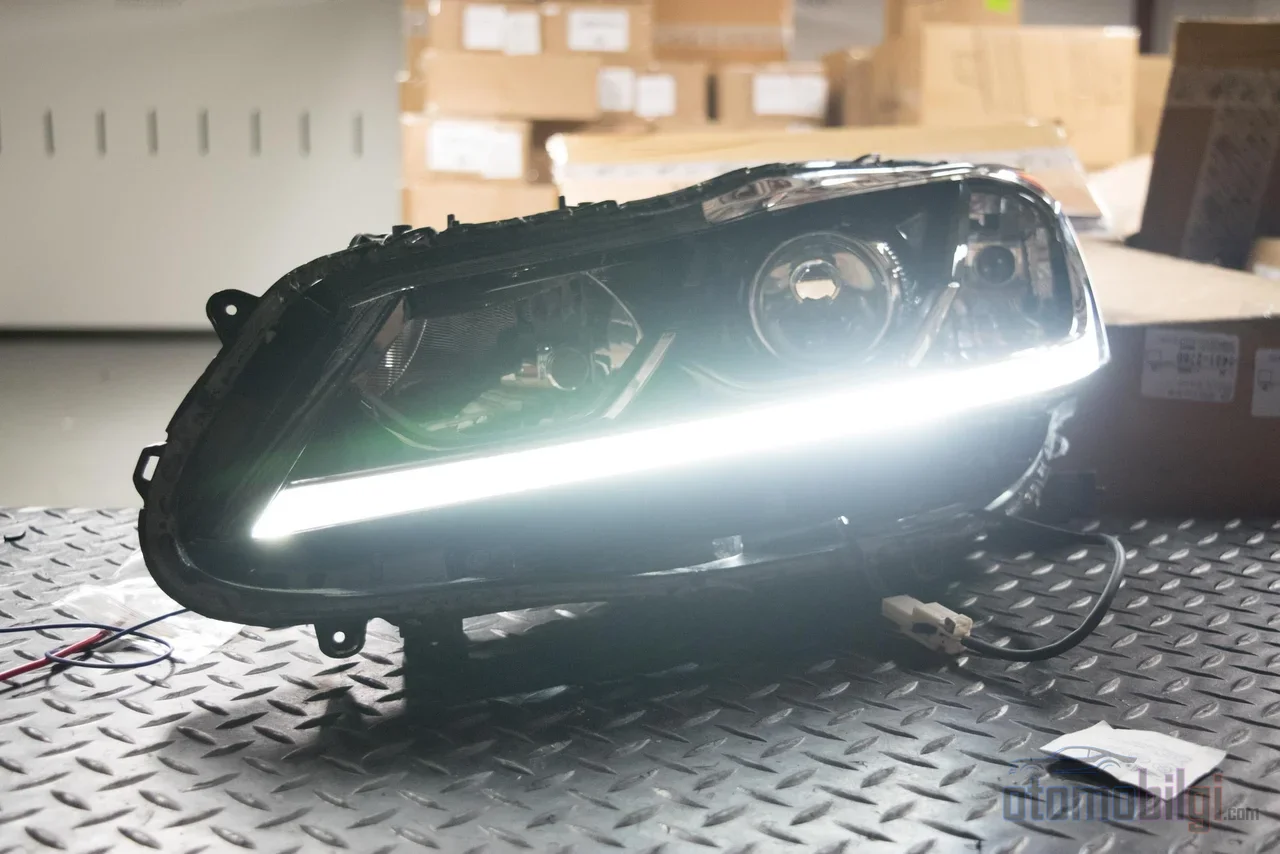
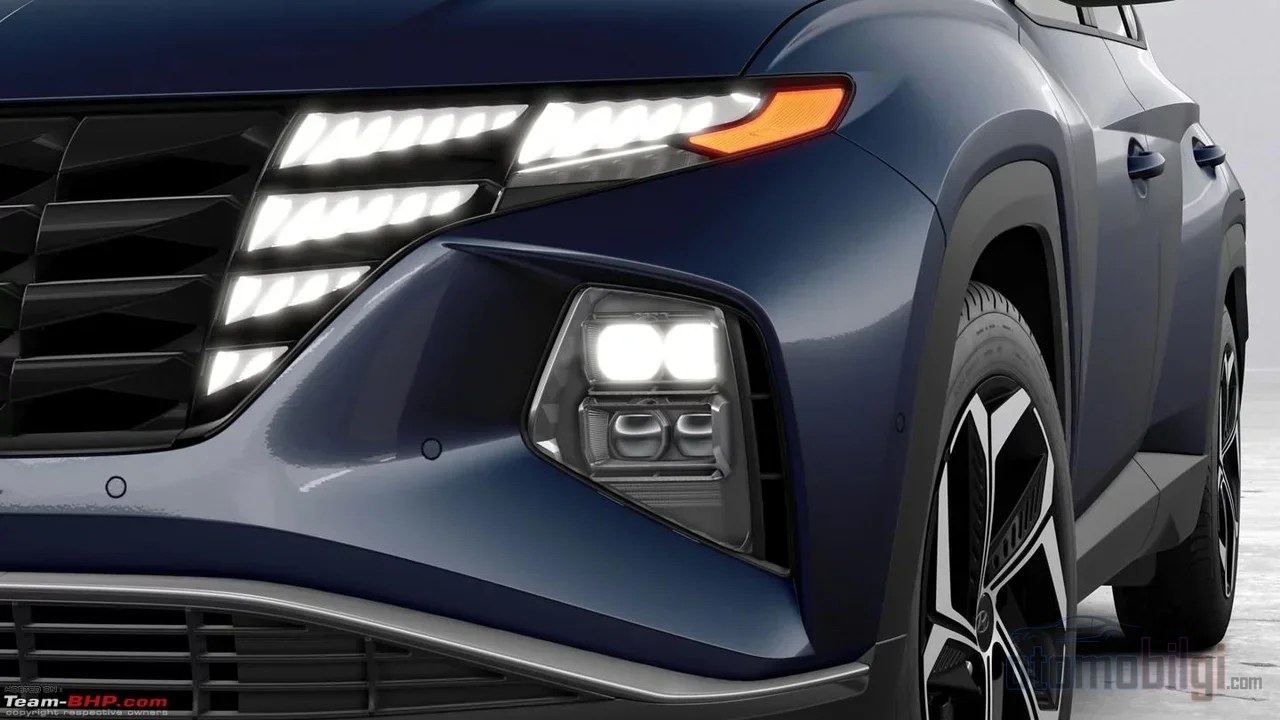
Now let's come to the really fun part. DRL was born out of safety, but its fate changed with LED. Compact LED packages gave designers a freedom that had never even been imagined before: thin strips, full-width light bars, vertical light elements, even pixel-style lighting. The result? Today DRLs are also called signature lights, and that name is well deserved. If you can tell from a distance at night which brand is approaching just by looking at the light pattern, that vehicle has turned its DRL into an identity. Some manufacturers set the DRL into the grille like a jewel; when the driver unlocks the car, that pattern lights up and the vehicle practically opens its eyes. That is exactly what it means for a safety feature to become a brand ambassador.
DRL or headlight? Two lamps confused at night
Let's resolve the most common confusion in a single sentence: DRL makes the vehicle visible, while the headlight enables the driver to see the road. DRL does not illuminate the road and in most jurisdictions does not meet nighttime lighting requirements. When the headlights come on, the DRL is dimmed or goes out; many vehicles continue to use the dimmed DRL as the front parking lamp. Automatic headlights, via a light sensor, turn on by themselves when natural light drops below a certain level.
But the medal has a dark side too - literally. When DRLs are on, the instrument panel also lighting up creates the misconception in many drivers that their headlights are on. A driver can set off in the middle of the night with headlights off and only the DRLs lit; this is a common problem frequently complained about on driver forums, and one of the main justifications for calls to regulate DRL brightness. So when driving your car, get into the habit of looking not at the dashboard illumination but at the headlight symbol on the instrument cluster; it's a small detail, but it can make a difference at night.
The period ahead looks exciting too. Regulators are focused on reducing headlight glare and modernizing vehicle lighting standards; the new rule-making efforts announced in 2026 are the most recent proof of this. On the technology side, OLEDs that provide thinner and more homogeneous light, micro-LED arrays capable of drawing programmable patterns, and the use of DRLs for vehicle-to-vehicle communication or autonomous mode signaling are being discussed. The light signature seems poised to become a language spoken on the road.
So the verdict: safety or design?
Both - but the order matters. The DRL was born as a safety device, was engineered into a tightly defined framework with brightness limits and homologation rules, and only then, with the design freedom LED offered, was it transformed into a brand identity. That elegant line of light you see on the road today is also a contrast tool that enables oncoming drivers to notice you 7% earlier. Think of it as a handshake for both the eye and one that doesn't blind. How do you see this issue - are DRLs making vehicle design more beautiful, or are they now brighter than necessary? See you in the comments!
Sources
- An Assessment of the Crash-Reducing Effectiveness of DRL - NHTSA
- UN Regulation No. 148 (UNECE)
- Guide To: UNECE R87 - Daytime Running Lamps
- New Regulations Will Examine Headlight Glare - NHTSA
- Daytime Running Light Solutions for Automotive - ams OSRAM
- Designing daytime running lights, part 1 - Texas Instruments
- The Safety Effects of Daytime Running Lights - SWOV
- Functional Requirements for Daytime Running Lights - University of Michigan
- DRL luminance requirements - Transportation Research Board
- The Evolution of Car Headlights - Hyundai Newsroom
- What Are Daytime Running Lights - KBB
- Daytime running lamp - Wikipedia